
How to Rank Your Website on ChatGPT: A Practical SEO Guide for AI Search
Ranking in ChatGPT is not a magic button. It is a visibility system built on crawl access, search quality, answer clarity, entity trust, structured data and continuous execution.
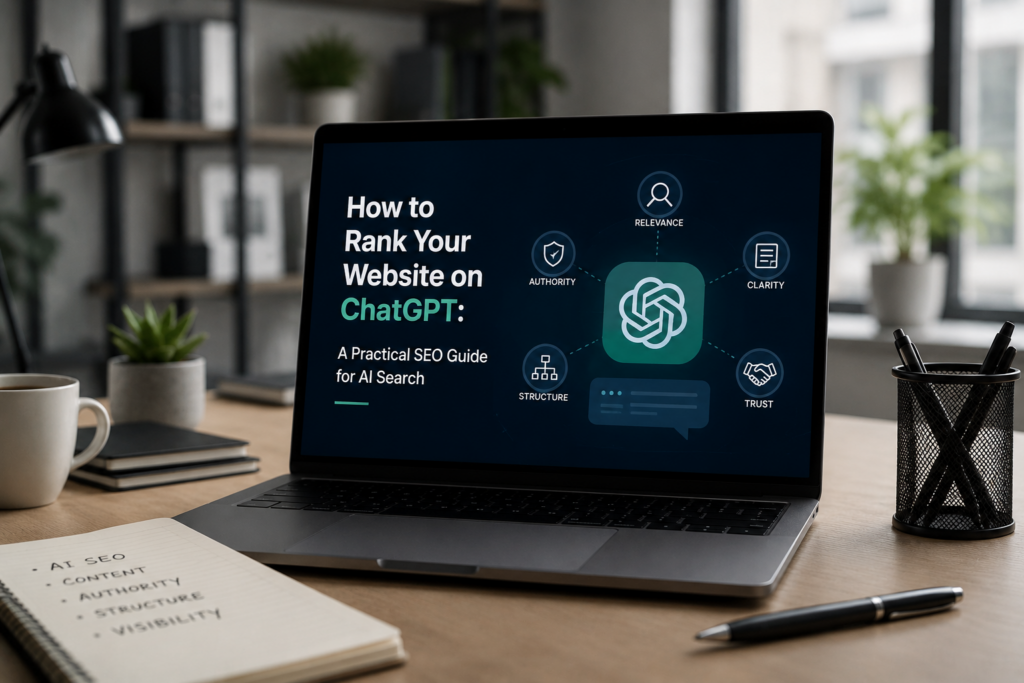
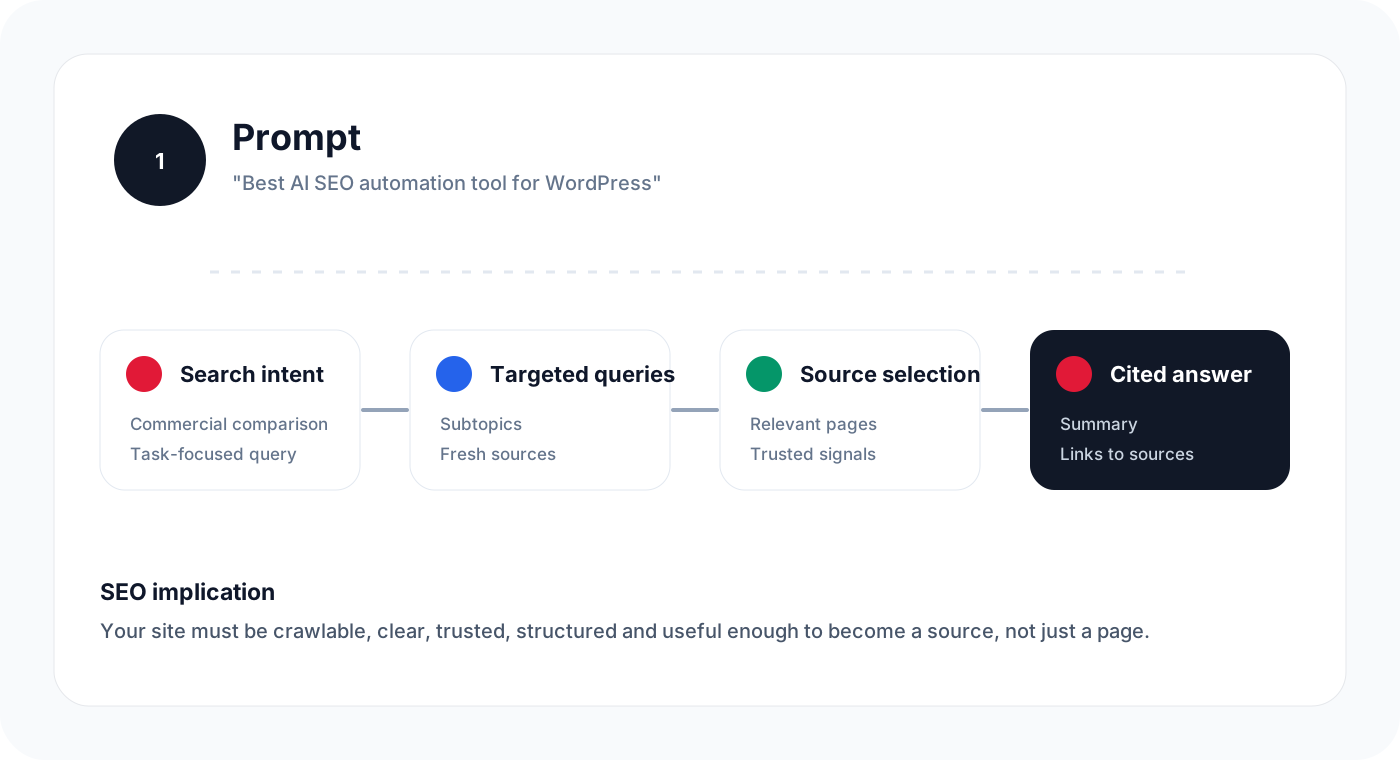
If you want your website to rank on ChatGPT, the first thing to understand is that there is no single “ChatGPT Ranking factor” you can manipulate. ChatGPT Search visibility is closer to a discovery system than a classic search result page. The model can interpret a user’s prompt, generate search queries, retrieve web results, read sources, synthesize an answer and cite or reference pages when they help the response.
That makes the opportunity real, but it also makes the advice noisy. Some articles reduce the problem to “get backlinks” or “write FAQs.” Others imply that there is a secret way to rank inside ChatGPT the same way you rank in Google. The truth is more operational: you need a website that can be crawled, understood, trusted, cited and continuously improved.
Neil Patel recently published a useful guide on Ranking a website on ChatGPT. It is a good starting point because it recognizes that ChatGPT visibility connects SEO, Content quality, authority and answer readiness. This AYSA guide goes deeper into the system behind the advice: how ChatGPT search works, what OpenAI officially says about Crawling and product discovery, what Google and Bing still tell us about search quality, and how businesses should turn AI visibility from theory into approved Website Execution.
The short version: ranking on ChatGPT is not about tricking an AI model. It is about making your business the kind of source an AI system can safely use when answering real questions.
What “ranking on ChatGPT” actually means
In Google Search, “ranking” usually means your page appears in a position on a search results page. In ChatGPT, the idea is less fixed. A user might ask for “the best SEO automation tools for WordPress,” “how to prepare a website for AI Overviews,” “recommend a pediatric clinic in Bucharest,” or “which platform can handle SEO execution after approval.” ChatGPT may answer directly, cite web sources, list options, summarize pros and cons, or use search results to ground the response.
So “ranking on ChatGPT” can mean several things:
- Your website is cited as a source in a ChatGPT answer.
- Your brand is mentioned when the model compares options.
- Your content is used to support an answer, even when the click path is different from a classic SERP.
- Your products, services or entities are understood well enough to be included in recommendations.
- Your pages are accessible to OpenAI crawlers and to the search systems ChatGPT relies on.
That distinction matters because the strategy is not simply “optimize for one keyword and one position.” You are optimizing for discoverability across prompts, entities, questions, citations, search partners and answer surfaces.
What OpenAI says about ChatGPT search and discovery
OpenAI’s documentation and product discovery guidance give us a useful baseline. OpenAI has explained that ChatGPT may generate multiple search queries from a user’s prompt, that search results can be organically determined by third-party search providers, and that there is no guaranteed top placement. For merchants and publishers, OpenAI also points to crawl access: websites can improve eligibility by allowing OpenAI’s crawlers, including OAI-SearchBot where appropriate, to access content.
This is important because it corrects two myths at once. First, ChatGPT search is not a paid placement system where every answer can be bought. Second, it is not a closed black box where website owners have no technical responsibilities. If your content is blocked, thin, unclear or absent from the broader search ecosystem, your chances are weaker.
OpenAI’s crawler documentation also distinguishes between different bots. GPTBot is associated with model improvement and training controls, while OAI-SearchBot is associated with search and linking to sites in ChatGPT search experiences. Site owners should review their robots.txt rules intentionally instead of blocking everything out of fear or allowing everything without understanding the implications.
For practical SEO work, that means your AI search checklist starts with a simple question: can the systems that need to discover your public content actually reach it?
Why classic SEO still matters for ChatGPT visibility
AI search did not erase SEO fundamentals. It made them more connected. ChatGPT search can rely on web search, and web search still depends on crawlability, indexability, relevance, authority and quality. Google’s guidance for AI features also points website owners back to the same fundamentals: make useful content available to Search, ensure pages can be crawled and indexed, use structured data when it accurately reflects visible content, and build pages for people first.
Bing’s webmaster guidance follows similar principles: useful content, accessible pages, clear site structure, high-quality links, user value and avoidance of manipulative tactics. These are not old-school details. They are the infrastructure that lets AI systems find and assess your content.
The new layer is that AI systems may not simply send users to a list of ten links. They may summarize, compare, extract and cite. That means the page has to work at two levels:
- It must satisfy search engines as a high-quality, accessible page.
- It must be clear enough for an answer engine to extract meaning without guessing.
This is where many websites are weak. They publish content that is technically indexed but hard to use. The answer is hidden behind vague copy. The service area is unclear. The author has no credibility signals. Pricing is missing. The page does not define the problem. Related pages are not linked. The schema does not match the visible content. The brand is not consistently named. In classic SEO, those issues already hurt. In AI search, they make the website harder to cite or recommend.
The practical framework: how to make your website more visible in ChatGPT
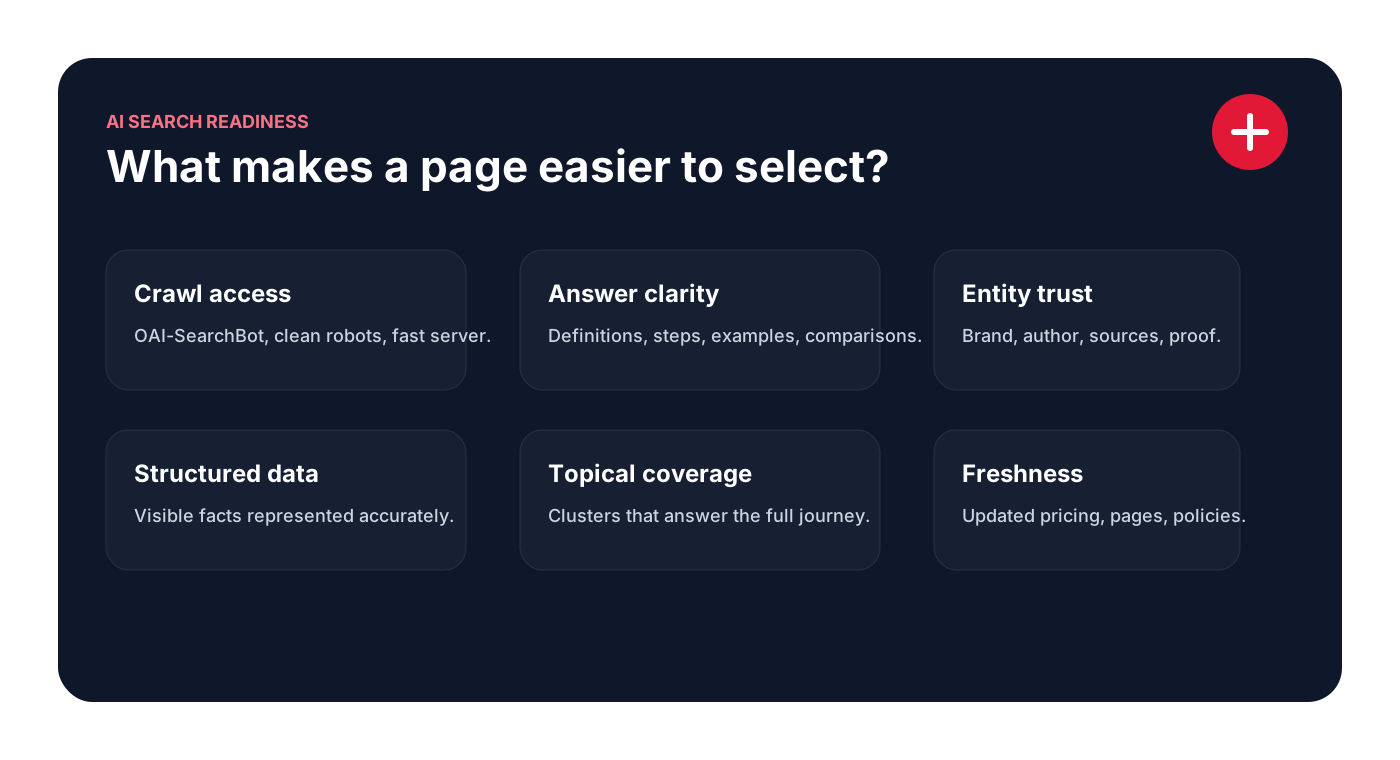
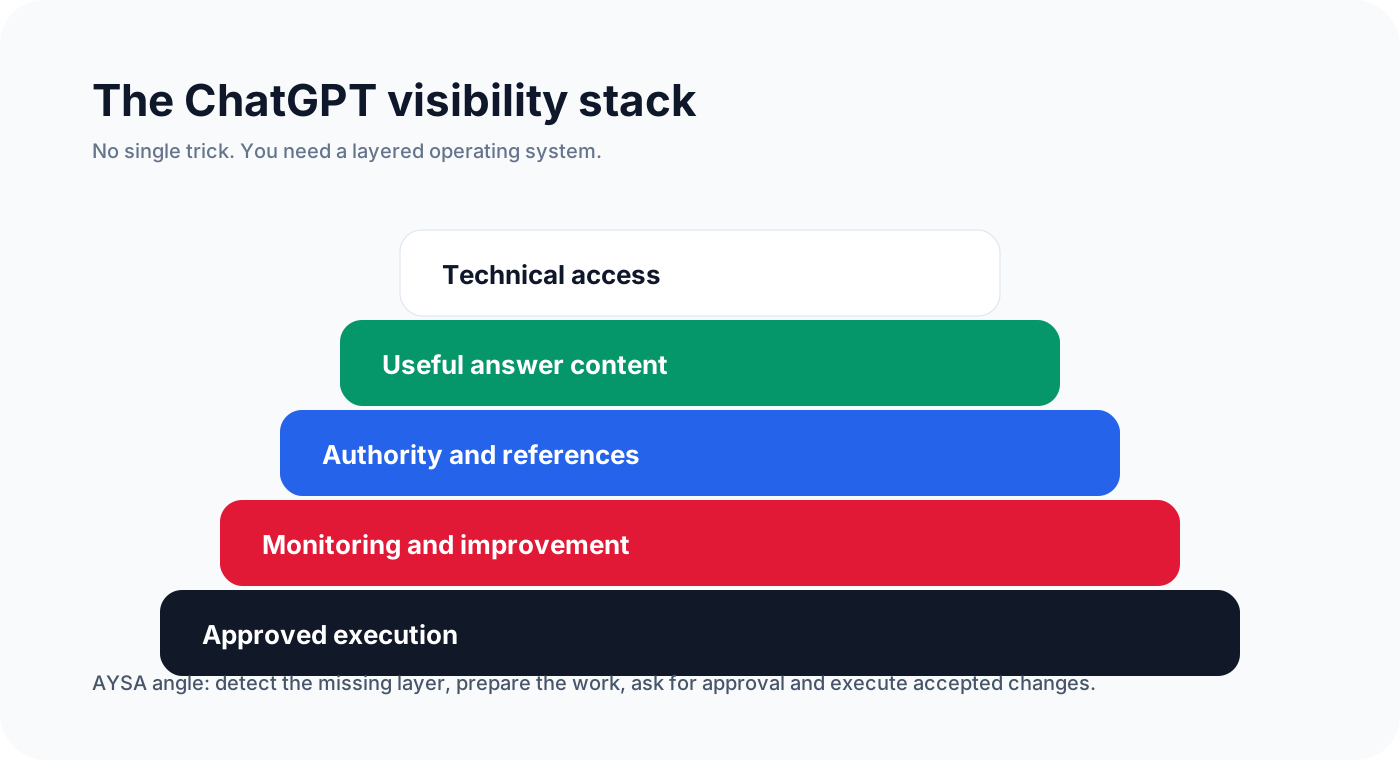
There is no guaranteed recipe, but there is a responsible operating model. Think of ChatGPT visibility as six layers: access, relevance, answer clarity, entity trust, authority and execution. If one layer is weak, the whole system becomes less reliable.
1. Allow the right crawlers to access public content
Start with robots.txt and server behavior. If OpenAI’s search crawler, Googlebot, Bingbot or other legitimate search crawlers cannot access important pages, those pages are less likely to become discoverable through AI search experiences. This does not mean every private or low-value URL should be open. Cart pages, account areas, internal search pages, staging URLs and thin filtered pages should usually be controlled. But public commercial, educational and product pages should be intentionally accessible.
Review these technical points:
- Robots.txt does not block important public pages.
- Meta robots tags do not accidentally noindex pages you want discovered.
- Canonical tags point to the correct preferred pages.
- Internal links expose important pages within a reasonable click depth.
- XML sitemaps include valuable pages and exclude junk.
- Pages return proper status codes and avoid redirect chains.
- Important content is rendered in a way crawlers can access.
For ChatGPT specifically, review OpenAI’s bot documentation and decide how you want to handle GPTBot and OAI-SearchBot. The decision should be deliberate. Blocking search-oriented crawlers while wanting AI search visibility is a contradiction many businesses will need to resolve.
2. Build pages that answer prompts, not only keywords
Keyword research still matters, but AI search starts from prompts. A prompt is often more conversational, more comparative and more context-heavy than a keyword. Someone may not ask “SEO automation software.” They may ask, “What is the best SEO automation tool for a small business that does not want to hire an agency?” That prompt includes audience, pain, category, constraint and intent.
Your website should answer those richer questions. This does not mean stuffing pages with artificial Q&A blocks. It means building content around real decision points:
- Who is this for?
- What problem does it solve?
- What is included?
- What is not included?
- How does it work?
- What does it cost?
- How does it compare with alternatives?
- What proof or examples support the claim?
- What should the user do next?
For AYSA, this is why pages are written around execution, approval, monitoring, AI visibility and workflow. A generic “AI SEO tool” page is less useful than a page that explains what AYSA monitors, what it prepares, what the user approves and what gets executed inside the website workflow.
3. Create answer-ready content without becoming thin
AEO, or Answer Engine Optimization, is not a license to publish hundreds of shallow definition pages. Answer-ready content should be concise where the answer needs to be concise, but supported where nuance matters. A good answer section gives a direct response, then explains the conditions, examples, risks and next steps.
For example, a weak answer says: “ChatGPT SEO is optimizing for ChatGPT.” A useful answer says: “ChatGPT SEO is the practice of making a website easier for ChatGPT and related AI search experiences to find, understand, cite and recommend. It combines technical crawl access, search visibility, entity clarity, answer-ready content, structured data and authority signals. It does not guarantee citation in AI answers.”
That second answer is more useful because it defines the concept, includes the main components and avoids false promises.
4. Strengthen entity clarity
AI systems need to understand what your business is. That sounds obvious, but many websites are surprisingly ambiguous. They use inconsistent brand names, vague product descriptions, weak about pages, missing author information and disconnected service pages.
Entity clarity means the site consistently communicates:
- The official business name.
- The product or service category.
- The people behind the business.
- The audience served.
- The locations served, where relevant.
- The relationship between products, services, articles, glossary pages and use cases.
- External references that support credibility.
For a local clinic, entity clarity might include doctors, locations, specialties, reviews, contact information and medical service pages. For ecommerce, it might include product categories, policies, reviews, brand pages and structured product data. For AYSA, it includes the relationship between AYSA.ai, AI SEO execution, WordPress execution today, AI visibility, approval-first automation and the broader ecosystem around Adverlink and authority building.
5. Use structured data carefully
Structured data can help search systems understand the type of content on a page, but it must match visible content. Google’s structured data policies are clear about this principle. Do not use schema to claim what the page does not show. Do not add fake ratings, fake FAQs or invisible information only for search engines.
The most relevant structured data types depend on the page. Organization, WebSite, BreadcrumbList, Article, Product, FAQPage where visible, LocalBusiness where appropriate, VideoObject where real videos exist, and SoftwareApplication for software pages can all be useful. But schema should be an annotation of a good page, not a replacement for one.
In AI search, structured data may not guarantee a citation, but it reduces ambiguity. It helps connect visible text to machine-readable facts. That is valuable when systems need to identify entities, offers, authors, publication dates, products and relationships.
6. Build topical coverage, not isolated posts
AI search visibility is stronger when a website covers a topic with depth and internal structure. One article about ChatGPT SEO is useful. A connected set of pages about AI search, AEO, GEO, AI Overviews, answer engines, SEO automation, technical SEO, schema, internal linking and authority is stronger.
Topical coverage helps because it gives search systems more context. It also helps users. A person who lands on one page can move to definitions, examples, comparisons and product workflows. Internal links are not only SEO mechanics; they are the map of your expertise.
The most common mistake is publishing disconnected content. A blog post mentions “AI visibility” but does not link to a glossary definition. A product page mentions “technical SEO” but does not link to the technical SEO pillar. A pricing page mentions “credits” but does not explain how credits work. AI systems and users both benefit when the site is connected.
7. Earn references beyond your website
Authority still matters. ChatGPT and other AI search experiences can draw on web sources, and the broader web helps establish whether a brand is real, known and trustworthy. Backlinks are part of this, but not the whole story. Mentions in relevant publications, founder profiles, product reviews, partner pages, local citations, social profiles, business listings and consistent brand references all contribute to the external entity picture.
This is why authority building should be treated carefully. The goal is not to buy random links. The goal is to earn and approve relevant publisher opportunities that help people and search systems understand the business. AYSA’s connection with Adverlink fits here: authority building can be surfaced, reviewed and approved as part of a controlled workflow, not treated as messy outreach hidden in spreadsheets.
8. Monitor prompts, queries and mentions over time
ChatGPT visibility is not a one-time project. Prompts evolve. Competitors publish new pages. Search engines change AI layouts. Google expands AI Overviews and AI Mode. OpenAI changes product behavior. Your website grows. Your content decays. A page that was clear six months ago may be incomplete today.
Monitoring should include:
- Search Console query groups and impression changes.
- Pages with high impressions and low click-through rate.
- Questions users ask in sales, support and chat.
- AI Overview and answer-engine visibility where measurable.
- Brand mentions in AI search results and public web sources.
- Competitor pages that are being cited or recommended.
- Technical issues that reduce crawlability or indexability.
- Content gaps around entities, comparisons, locations and use cases.
Monitoring is where the strategy becomes operational. It is not enough to say “we need more AI visibility.” The work must become a list of specific actions: update this page, add this comparison, clarify this entity, fix this schema, improve this internal link, write this answer, approve this authority opportunity.
What not to do if you want ChatGPT visibility
AI search creates temptation. Whenever a new surface appears, marketers look for shortcuts. Most shortcuts are either useless or risky.
Do not publish AI content at scale without editorial control
Large volumes of low-quality generated content will not make a site trustworthy. Google’s guidance focuses on helpful, reliable, people-first content, regardless of whether AI was used in the production process. The issue is not the tool. The issue is whether the page has value, accuracy, originality and usefulness.
If you use AI to produce content, use it inside a workflow: research, draft, edit, verify, improve, approve and publish. That workflow should be even stricter for YMYL topics such as health, finance and legal content.
Do not block crawlers blindly
Some site owners react to AI by blocking every AI-related crawler. That may be the right decision for certain publishers with specific licensing strategies, but it conflicts with the goal of being discoverable in AI search. If your business wants ChatGPT search visibility, review crawler access with nuance.
Do not invent fake authority
Fake reviews, fake author profiles, fake awards and fake citations are bad strategy. AI search increases the importance of trust, but fabricated trust is fragile. Build real proof: case studies, press mentions, founder expertise, product documentation, customer support content, original research and relevant third-party references.
Do not chase hallucinated metrics
There are many emerging “AI visibility scores.” Some are useful directional indicators. Some are guesses. Treat them as monitoring inputs, not truth. The business question is not whether a dashboard number went up. The question is whether the website is becoming easier to understand, cite, recommend and convert.
Do not treat ChatGPT as a separate SEO universe
ChatGPT visibility is connected to the wider search ecosystem. Google, Bing, publisher sites, structured data, crawler access, brand mentions and user demand all matter. A strategy that optimizes only for one AI interface will be weaker than a strategy that improves the underlying website and entity.
A page-level checklist for ChatGPT search visibility
If you are improving one important page, use this checklist. It is intentionally practical.
- Can the page be crawled? Check robots.txt, noindex, canonical tags, redirects and status codes.
- Does the page answer the main question quickly? Put the direct answer near the top, then expand.
- Does the page explain who it is for? AI systems need audience context.
- Does the page include concrete details? Pricing, steps, examples, locations, limitations and use cases help.
- Does the page link to related pages? Connect definitions, product pages, guides and examples.
- Does the page use accurate structured data? Add only schema that matches visible content.
- Does the page show trust? Add author, company, sources, dates and external proof where relevant.
- Is the page fresh? Update content when product, market or search behavior changes.
- Does the page have a next action? Make the conversion path clear.
This checklist sounds simple. The hard part is doing it consistently across a real website. That is where most companies lose momentum.
Where AYSA fits: from AI search audit to approved execution
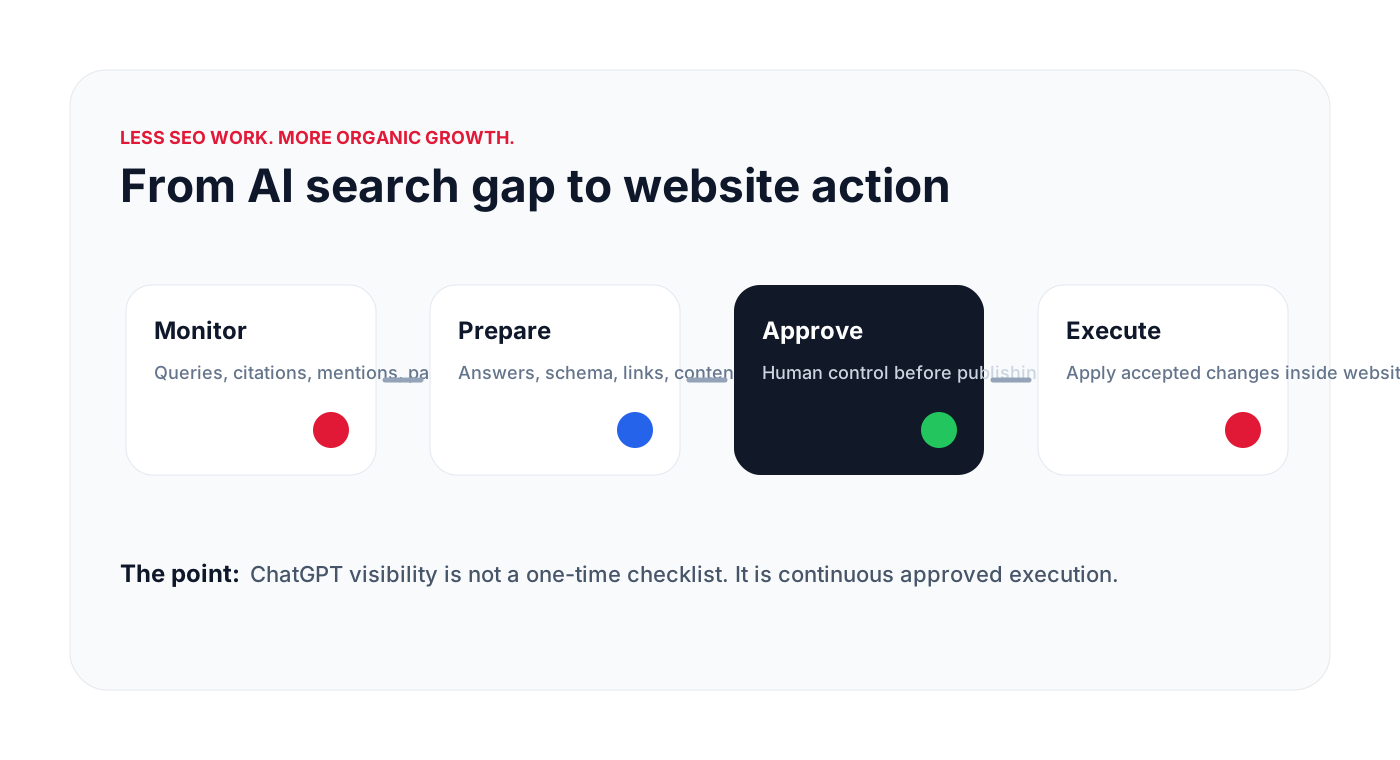
AYSA’s position is that AI search visibility should not become another dashboard that creates more work for the business owner. The useful workflow is: monitor, prepare, approve, execute.
For ChatGPT visibility, AYSA can help identify pages that are technically blocked, pages that do not answer user questions clearly, missing glossary definitions, weak internal links, schema opportunities, authority-building opportunities, content gaps, outdated pages and AI visibility risks. But the important part is what happens next. AYSA prepares the work, explains why it matters, asks for approval and can execute accepted changes inside the website workflow where integration is available.
That makes AYSA different from a generic chat model. ChatGPT can help brainstorm, draft and explain. AYSA is built as an execution agent connected to the website context, approval workflow and SEO operating system. The goal is not to replace judgment. The goal is to remove the gap between knowing what should be done and getting the approved work published.
How to build a ChatGPT visibility roadmap
If you are starting from zero, do not try to optimize every page at once. Build a roadmap around business value.
Step 1: Identify the prompts that matter
Start with buyer questions, support questions, sales objections, comparison queries and high-intent keywords. For AYSA, examples might include “best SEO automation tool for WordPress,” “AI SEO agent for small business,” “alternative to SEO agency,” “how to improve AI search visibility,” and “SEO tool that applies approved changes.”
For a clinic, prompts may involve symptoms, services, locations, doctors, appointments, prices and insurance. For ecommerce, prompts may involve product comparisons, sizing, alternatives, use cases and delivery. The prompt universe should reflect real customer decisions.
Step 2: Map prompts to existing pages
Do not create new pages before you know what already exists. Map prompts to current URLs. Some pages may only need improvement. Others may reveal gaps. This is also where you find cannibalization: multiple pages competing for the same concept without a clear role.
Step 3: Fix technical eligibility
Before rewriting content, make sure the page can be crawled and indexed. Check noindex tags, canonical rules, internal links, XML sitemaps, response codes, rendering and page speed. Technical SEO is not glamorous, but it is the base layer for AI search visibility.
Step 4: Rewrite for clarity and extraction
Improve the content so the page answers the prompt directly. Use descriptive headings. Add examples. Explain limitations. Include short answer sections where useful. Connect the page to related terms and guides. Add dates and author context where appropriate.
Step 5: Add accurate structured data
Add schema only where it matches the content. For articles, Article schema and author data can help. For product and software pages, product or software-oriented markup may be relevant. For local pages, LocalBusiness details may be appropriate. For visible FAQs, FAQPage markup can support machine understanding even though Google is reducing FAQ rich result support.
Step 6: Build authority around the entity
Look for relevant mentions, partner pages, directories, publisher opportunities and original content that reinforce the entity. Authority is not only link count. It is whether the web has enough credible signals to understand and trust the business.
Step 7: Monitor and repeat
AI search visibility changes. Your roadmap should be a loop, not a launch checklist. Monitor queries, pages, prompts, AI mentions, source citations and competitor movement. Then turn what you learn into the next approved action.
What businesses should measure
Measuring ChatGPT visibility is still an emerging field, so be careful with certainty. But you can measure useful signals:
- Organic impressions and clicks for AI-search-related queries.
- Growth in pages that answer specific prompts.
- Internal link coverage across topic clusters.
- Indexation of important commercial and educational pages.
- Presence of brand mentions in AI search monitoring tools.
- References from credible external sources.
- Conversions from pages designed for AI-assisted discovery.
- Approved and executed SEO actions per month.
The last metric is underrated. Many SEO programs track visibility but not execution. If the work does not get approved and published, the strategy remains theoretical.
Frequently asked questions
Can you guarantee ranking in ChatGPT?
No. OpenAI’s own product discovery guidance says there is no guaranteed top placement. Responsible AI search optimization improves eligibility, clarity, authority and usefulness. It does not guarantee citations or rankings.
Is ChatGPT SEO different from Google SEO?
It is connected but not identical. Google SEO focuses on search visibility across Google surfaces. ChatGPT visibility also depends on prompt interpretation, web search sources, answer synthesis, crawl access and source usefulness. The strongest approach improves the website for both classic search and AI-assisted discovery.
Should I allow OAI-SearchBot?
If your goal is to be discoverable through ChatGPT search experiences, you should review OpenAI’s crawler documentation and consider allowing search-oriented access to public content. The final decision depends on your content strategy, licensing concerns and risk tolerance.
Do I need schema for ChatGPT?
Schema can help reduce ambiguity, but it is not a magic requirement. Use structured data that accurately reflects visible content. Strong visible content, crawl access, internal links and authority remain essential.
Can ChatGPT replace SEO tools?
ChatGPT can help with ideas, explanations and drafts. It does not automatically monitor your website, map every technical issue, maintain approval history or execute accepted changes inside your website. That is why AYSA is positioned as an execution system rather than a generic chat assistant.
The AYSA point of view
The websites that win in AI search will not be the ones chasing every new acronym. They will be the ones that turn search visibility into a repeatable operating system. They will make content accessible, answer questions clearly, strengthen entity trust, build authority and keep improving as search behavior changes.
For business owners, that is good news and bad news. The good news is that the work is understandable. You do not need mystical AI tricks. The bad news is that the work is continuous. A one-time audit will not keep a website visible across Google, ChatGPT, AI Overviews, answer engines and future search surfaces.
That is the reason AYSA exists. Less SEO work. More organic growth. Not because SEO disappears, but because the manual gap between research and execution has to disappear. AI search rewards websites that are clear, trusted and maintained. AYSA helps turn that requirement into approved website action.
Sources and further reading
- Neil Patel: How to Rank Your Website on ChatGPT
- OpenAI: Product discovery in ChatGPT search
- OpenAI Platform Docs: Bots and crawler user agents
- Google Search Central: AI features and your website
- Google Search Central: Creating helpful, reliable, people-first content
- Google Search Central: Structured data general guidelines
- Google Search Central: SEO Starter Guide
- Bing Webmaster Guidelines