
Traditional SEO vs AI SEO: What Changes, What Stays and What Businesses Should Do
Traditional SEO is not dead. AI SEO adds new surfaces, new measurements and a faster execution rhythm. This guide explains how rankings, citations, AI visibility and approved website execution now work together.
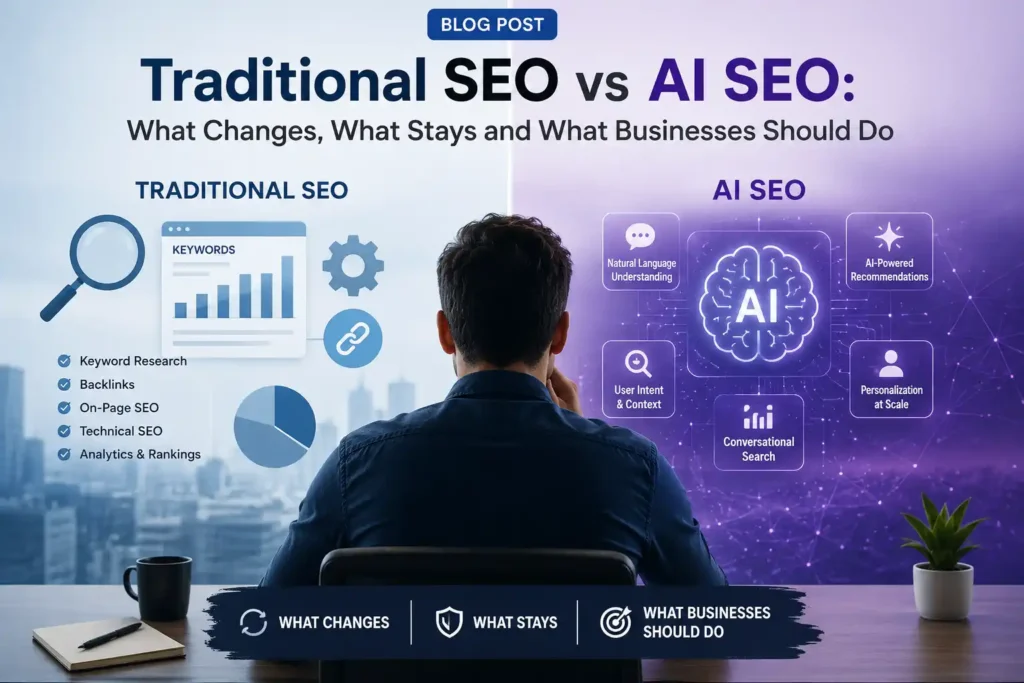
Traditional SEO is not dead. AI SEO is not a replacement for everything that came before it. The real change is that search visibility now happens across more surfaces: classic search results, AI Overviews, AI Mode, ChatGPT search, answer engines, product discovery systems and conversational journeys. Businesses still need crawlable pages, useful content, internal links, authority and technical health. But they also need to be easy for AI systems to understand, cite, compare and recommend.
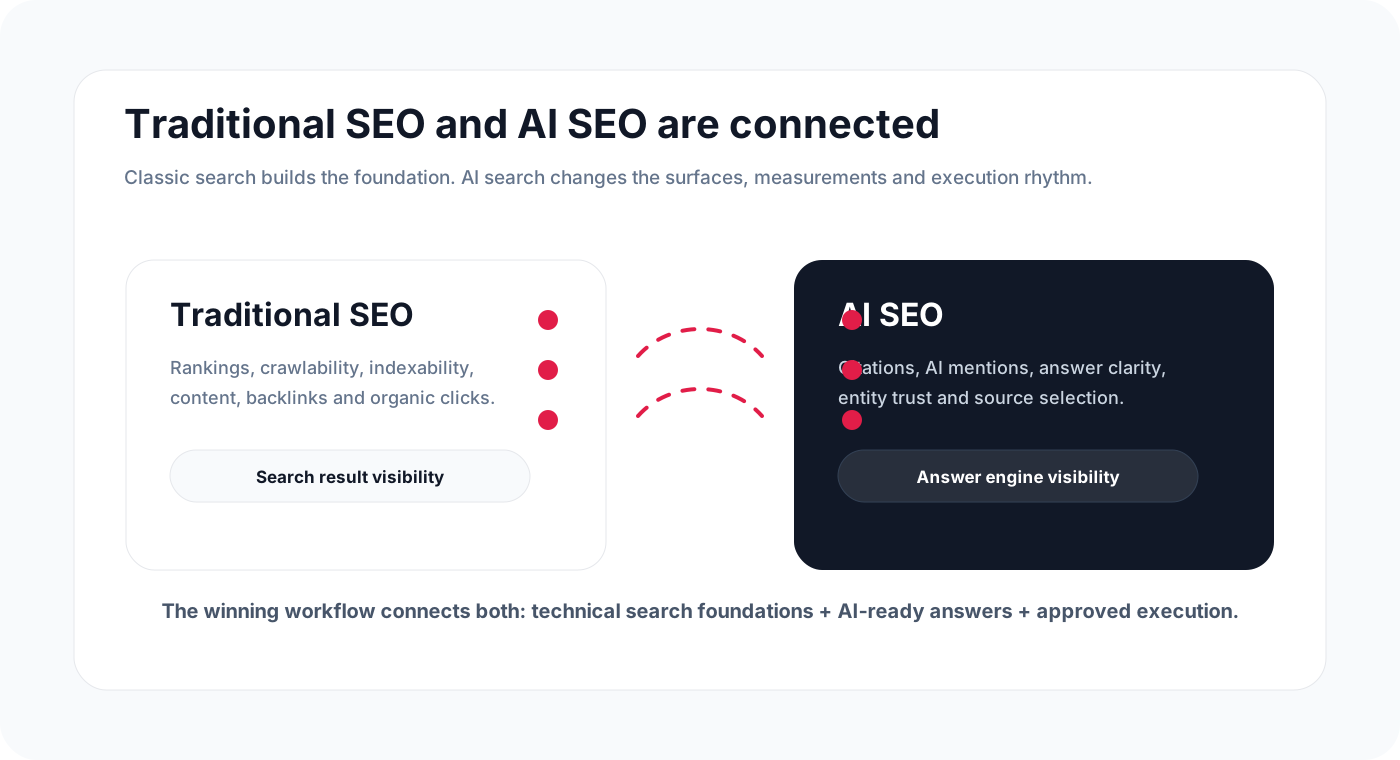
Semrush recently published a useful article comparing traditional SEO and AI SEO. The core distinction is right: traditional SEO focuses on search engines and rankings, while AI SEO expands the work toward AI-generated answers, entity understanding, structured information and visibility across Generative search experiences. But the operational conclusion deserves more attention. The winners will not be the companies that debate acronyms forever. The winners will be the companies that turn SEO and AI visibility work into approved Website Execution.
This guide explains what traditional SEO still does, what AI SEO adds, where AEO and GEO fit, what metrics change, what sources say officially, and how AYSA approaches the problem as an execution workflow rather than another reporting layer.
What traditional SEO means
Traditional SEO is the practice of improving a website so it can be crawled, indexed, understood and ranked in search engines such as Google and Bing. It includes technical SEO, keyword research, content strategy, on-page optimization, internal linking, backlinks, local SEO, ecommerce SEO, structured data, page experience and measurement through tools like Google Search Console and analytics platforms.
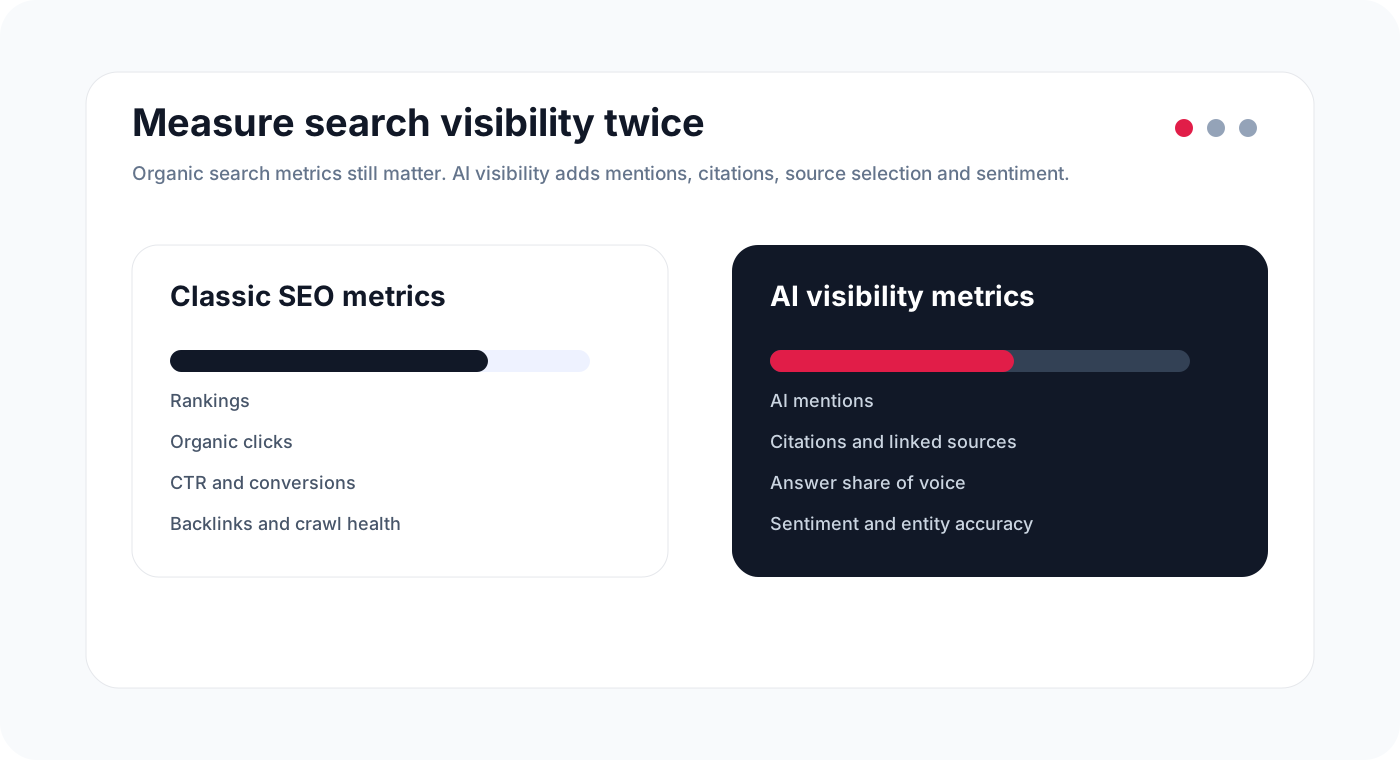
Traditional SEO usually measures success through rankings, impressions, clicks, click-through rate, organic traffic, conversions, backlinks, indexed pages and technical health. These metrics still matter because most AI search experiences are connected to the web. Google AI features still rely on Google’s ability to crawl and index content. ChatGPT search can use web results and source links. Bing’s ecosystem also depends on crawlable, useful pages.
In other words, traditional SEO is the infrastructure layer. If your website is blocked by robots.txt, full of duplicate pages, missing useful content, slow on mobile, weak on internal links and unclear about what it offers, AI SEO will not magically fix it.
What AI SEO means
AI SEO is the practice of making a website easier to discover, understand, cite, summarize and recommend across AI-assisted search experiences. It includes classic SEO foundations, but it adds emphasis on answer clarity, entity trust, structured information, topical coverage, citations, brand mentions, AI visibility monitoring and content that can be used in synthesized answers.
AI SEO overlaps with several terms:
- AEO: Answer Engine Optimization, or making content easier to use in direct answers.
- GEO: Generative Engine Optimization, or preparing content for generative search and synthesized responses.
- AI visibility: monitoring whether a brand, page or source appears in AI search surfaces and answer engines.
- LLM visibility: how well a brand or source is represented in large language model outputs.
- Entity SEO: improving how clearly a business, person, product or concept is understood as an entity.
The vocabulary is still evolving, and not every term is equally useful. But the business problem is real: customers are asking AI systems for recommendations, comparisons, summaries and decisions. If your website is not understandable, credible or connected to the right topics, you may be absent from those journeys.
What changes between traditional SEO and AI SEO
The biggest change is not that keywords disappear. The biggest change is that the search interface becomes more interpretive. In classic search, a user enters a query and chooses from links. In AI search, the system may rewrite the query, combine sources, summarize the answer, mention brands, cite pages or guide the user through a decision.
That changes the work in several ways.
From keywords to prompts
Traditional SEO often starts with keywords. AI SEO still uses keyword data, but it also studies prompts, questions, comparisons and decision contexts. A person may not search “AI SEO software.” They may ask, “What is the best SEO automation tool for a WordPress business that does not want to hire an agency?” That prompt includes category, platform, pain point and desired outcome.
From rankings to source selection
Classic SEO asks where a page ranks. AI SEO asks whether the page is selected, cited, summarized or used as supporting evidence. A brand can be visible without a traditional blue link click, and a page can be useful to an answer even if the user journey looks different.
From pages to entities
AI systems need to understand entities: companies, people, products, locations, services, topics and relationships. A website that uses inconsistent naming, weak author information and vague product descriptions becomes harder to trust. Entity clarity becomes a strategic asset.
From content volume to answer usefulness
AI SEO punishes shallow scale. Publishing hundreds of thin AI-written pages is not a durable strategy. Helpful content, clear answers, original perspective, examples, sources and visible expertise matter more. Google’s guidance on helpful, reliable, people-first content remains relevant here.
From audits to execution
This is the change AYSA cares about most. Traditional SEO tools often find issues. AI SEO tools may add AI visibility monitoring. But a business still needs someone to update pages, add internal links, improve schema, fix technical issues, refresh content, clarify offers and approve authority work. The operational bottleneck remains execution.
What stays the same
Many fundamentals remain stable because AI systems still need good sources. Google’s AI features documentation tells site owners that content eligible for Search can be eligible for AI features, assuming it follows Search essentials and is accessible. Google’s SEO Starter Guide still emphasizes crawlability, useful content, links, site structure and user value. Bing’s Webmaster Guidelines still warn against manipulation and focus on quality, accessibility and relevance.
The following foundations still matter:
- Clean crawlability and indexability.
- Useful content that satisfies search intent.
- Clear titles, headings and page structure.
- Internal links between related pages.
- Technical performance and mobile usability.
- Structured data that matches visible content.
- Authority signals such as relevant backlinks and mentions.
- Local and business profile accuracy where relevant.
- Measurement through Search Console, analytics and rank tracking.
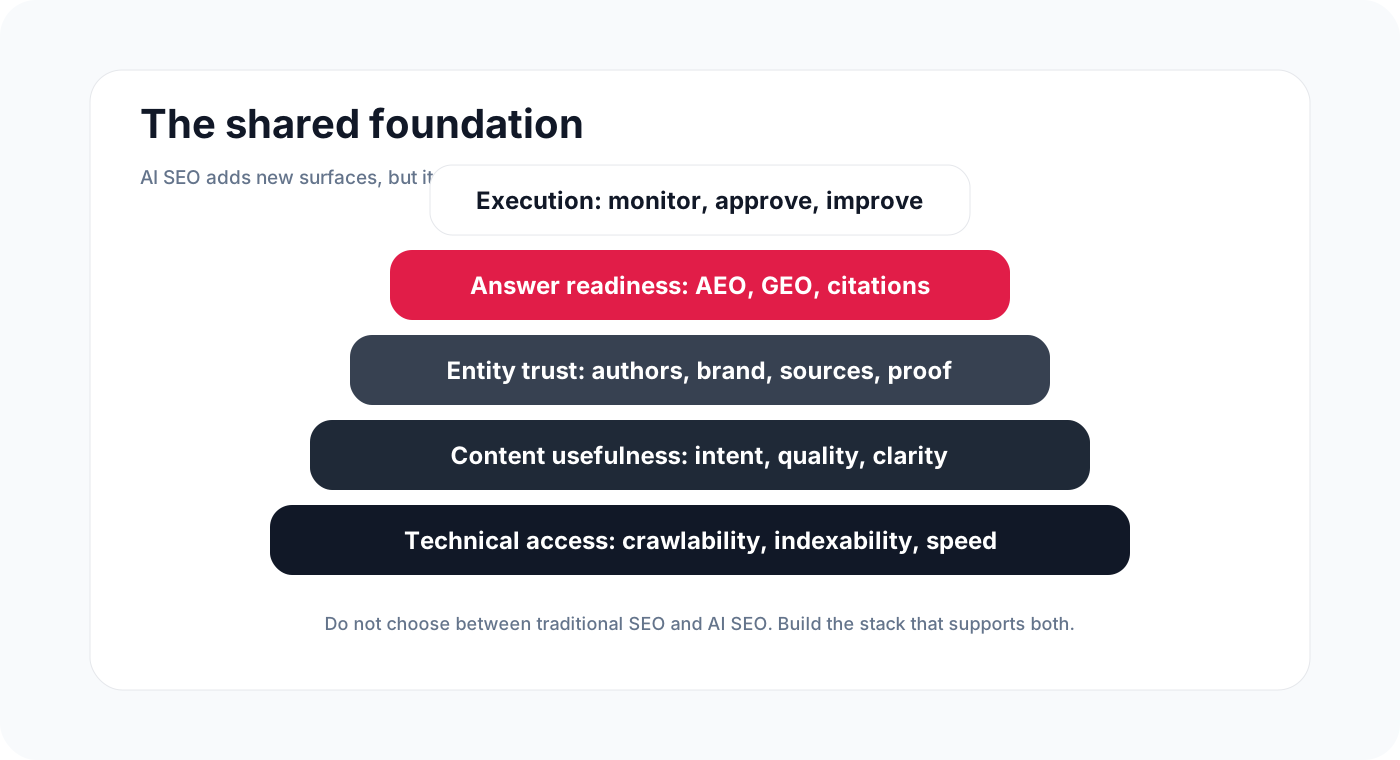
AI SEO adds layers on top of these. It does not excuse a broken website.
How AI Overviews changed the conversation
Google’s AI Overviews made AI search visible to mainstream users. Instead of only scanning organic listings, users may see an AI-generated summary above or within the search experience. Google has stated that AI features can show links to relevant web pages and that site owners do not need special markup to appear, beyond following normal Search guidance and making content accessible.
That does not mean AI Overviews are easy to influence. Google chooses sources algorithmically. Inclusion is not guaranteed. But it does mean websites need to be ready for a world where the answer layer appears before the click. The page must be useful enough to support an answer, credible enough to be cited and clear enough to be understood.
The same logic applies to ChatGPT search and other answer engines. OpenAI’s product discovery guidance explains that ChatGPT can generate search queries from a prompt and that there is no guaranteed top placement. That is a helpful reminder: AI visibility is earned through eligibility, usefulness and authority, not through a secret button.
Traditional SEO vs AI SEO: a practical comparison
Here is the cleanest way to compare them.
Goal
Traditional SEO aims to increase visibility, clicks and conversions from search engine results. AI SEO aims to increase visibility, citations, mentions, recommendations and conversions across AI-assisted discovery surfaces.
Primary inputs
Traditional SEO relies heavily on keyword research, search intent, technical audits, content optimization and link building. AI SEO adds prompts, entity mapping, answer readiness, structured data accuracy, AI visibility monitoring and source selection analysis.
Content style
Traditional SEO content often targets keyword clusters and search intent. AI SEO content must also answer specific questions clearly, define entities, compare options, explain limitations and provide extractable, source-backed information.
Technical focus
Traditional SEO focuses on crawlability, indexability, site architecture, rendering, performance and structured data. AI SEO still needs all of that, plus attention to machine-readable clarity, canonical entity signals and crawl access for relevant AI/search bots.
Authority
Traditional SEO values backlinks and referring domains. AI SEO broadens the view to include citations, brand mentions, press, author credibility, business profiles, reviews and publisher references.
Measurement
Traditional SEO measures rankings, impressions, clicks, CTR, backlinks and conversions. AI SEO adds AI mentions, citations, answer share of voice, prompt visibility, source inclusion and entity accuracy.
Workflow
Traditional SEO can survive as a project. AI SEO requires continuous monitoring and faster execution because AI surfaces, query patterns and competitor coverage evolve quickly.
Why AI SEO is not just prompt engineering
One of the lazy interpretations of AI SEO is that it is all about prompt engineering. Prompt research can be useful, but it is not enough. You can know exactly what customers ask in ChatGPT and still fail if your website does not answer those questions, if your pages are blocked, if your brand has no authority signals, or if your content is too vague to cite.
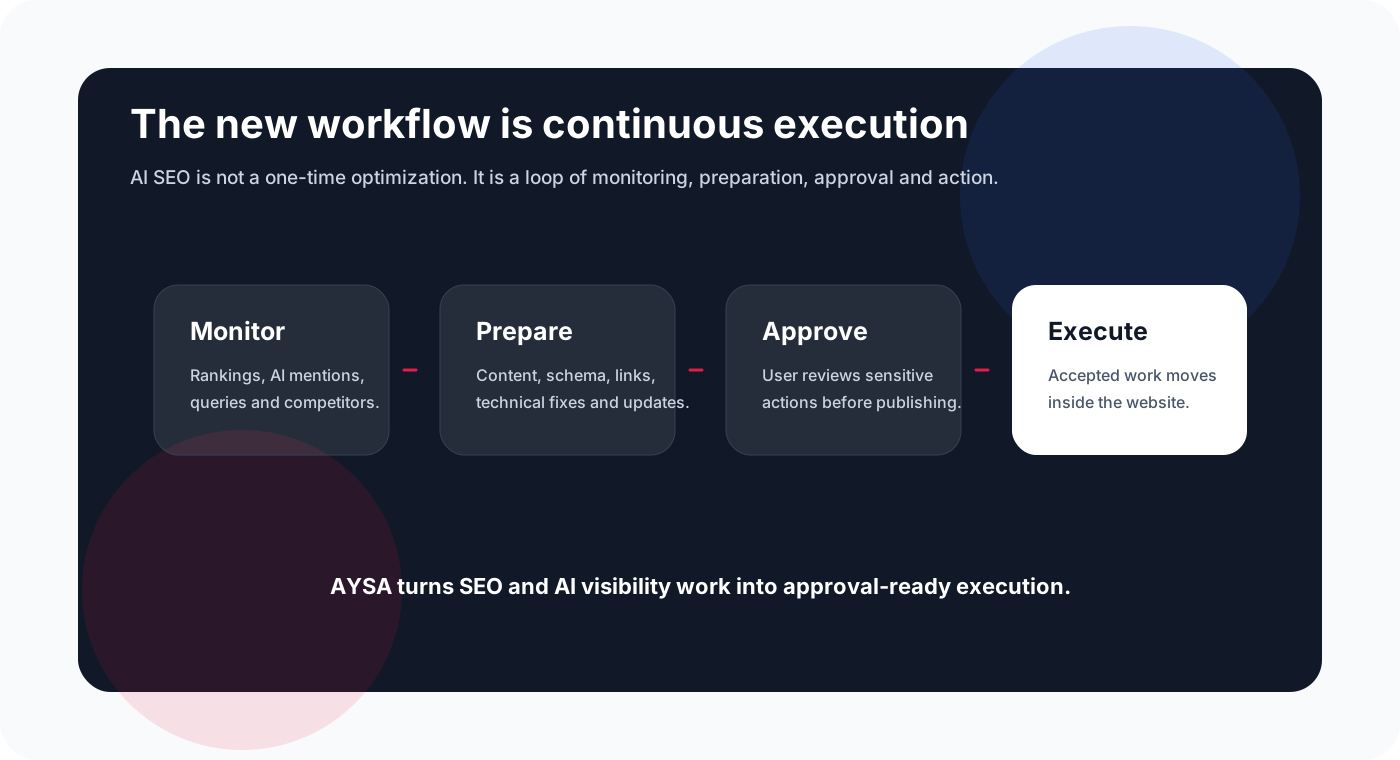
AI SEO is closer to an operating system:
- Monitor what people ask and how AI systems respond.
- Identify pages that should answer those prompts.
- Prepare content improvements, structured data and internal links.
- Fix technical issues that reduce crawlability or indexability.
- Build authority through relevant mentions and backlinks.
- Track AI visibility changes and repeat.
Prompt engineering may help you discover opportunities. It does not execute them.
The content difference: SEO pages vs AI-ready pages
A traditional SEO page might rank because it targets the right keyword, has enough depth, earns links and satisfies the query. An AI-ready page needs those strengths, but it also needs a structure that helps extraction and synthesis.
AI-ready pages tend to include:
- A clear direct answer near the top.
- Definitions for important terms.
- Examples, use cases and comparisons.
- Pricing, limitations or eligibility when relevant.
- Evidence, sources and author context.
- Related internal links to supporting pages.
- Structured data that reflects visible content.
- Freshness signals when the topic changes often.
This does not mean every page should look like a dictionary. It means every important page should reduce ambiguity. AI systems are very good at summarizing clear content. They are less reliable when the page hides the answer behind generic marketing language.
The authority difference: links plus entity proof
Traditional SEO often talks about backlinks. AI SEO still cares about backlinks, but it also cares about the broader entity footprint. A brand that appears in relevant publications, has consistent profiles, receives credible mentions, publishes useful content and connects to known people or products is easier to evaluate.
For example, AYSA’s authority story is not only a backlink profile. It includes founder expertise, press coverage, the relationship with Adverlink, product pages, glossary content, blog analysis, help documentation and examples of SEO execution workflows. Those signals work together to explain what AYSA is and why it belongs in conversations about SEO automation and AI search visibility.
For a local business, the authority story may include Google Business Profile, reviews, local citations, chamber of commerce listings, local press, service pages, author expertise and relevant backlinks. For ecommerce, it may include product reviews, category content, comparison pages, returns policy, merchant profiles and publisher mentions.
The technical difference: bots, rendering and structured clarity
Technical SEO is not less important in AI search. It is more exposed. If Googlebot cannot crawl a page, Google AI features cannot reliably use it. If Bing cannot access important content, Bing-powered experiences lose context. If OpenAI search-oriented crawlers are blocked from public pages, ChatGPT search visibility may be affected. If content depends on fragile rendering, systems may miss important facts.
Technical AI SEO includes:
- Robots.txt decisions for search and AI crawlers.
- Clean indexation rules.
- Canonical consistency.
- Crawlable internal links.
- Structured data validation.
- Fast, stable page rendering.
- Accessible content that does not hide key facts.
- Consistent entity markup and organization signals.
These are not glamorous tasks, but they are the foundation for both classic rankings and AI source selection.
What businesses should do first
If you are a business owner or marketing team, do not start by renaming your SEO program “AI SEO.” Start with the work that improves both worlds.
1. Audit your current search foundation
Check crawlability, indexability, page speed, mobile usability, internal links, redirects, canonical tags, schema, sitemap coverage and Search Console data. AI SEO cannot stand on a broken technical base.
2. Map your business entities
Clarify your business name, product categories, services, locations, team, founder, author profiles, pricing, integrations, partnerships and proof points. Make sure these are consistent across the website and external profiles.
3. Convert keywords into questions and prompts
Take your main keywords and expand them into real questions. What would a customer ask ChatGPT, Google AI Mode or an answer engine? What comparisons would they make? What objections would they raise?
4. Improve answer readiness on commercial pages
Important pages should answer practical questions: who it is for, what it does, how it works, how much it costs, what is included, what is not included and what the user should do next.
5. Build topic clusters
Connect product pages, guides, glossary definitions, use cases, examples, help articles and blog posts. Internal linking helps both users and machines understand expertise.
6. Strengthen authority
Earn relevant mentions, links and citations. Avoid low-quality link schemes. Authority building should be reviewed and approved, especially when it involves paid or sponsored placements.
7. Monitor AI visibility
Track not only rankings but also AI mentions, source citations, competitor visibility, prompt performance and changes in AI search surfaces. Treat AI visibility as a monitoring layer, not a one-time report.
Where AYSA fits
AYSA is built around a simple idea: search work should move from research to approved execution. That matters even more in AI SEO because the work is broader and faster. A business may need technical fixes, content updates, schema improvements, internal links, glossary expansion, authority opportunities, AI visibility monitoring and page refreshes all at the same time.
A generic SEO tool can show reports. A generic AI chat can draft ideas. AYSA is designed to connect the workflow: monitor the website, identify opportunities, prepare the work, explain why it matters, ask for approval and execute accepted changes inside the website workflow where integration is available.
This is the practical bridge between traditional SEO and AI SEO. It is not enough to know that AI visibility matters. The website has to change. AYSA’s role is to reduce the manual gap between knowing and doing.
Traditional SEO vs AI SEO: the wrong debate
The wrong debate is whether traditional SEO or AI SEO will win. The right answer is that businesses need both. Traditional SEO gives the website a technical and content foundation. AI SEO prepares the business for answer engines, AI Overviews, ChatGPT search and generative discovery. They are not separate departments. They are layers of the same visibility system.
If a company abandons traditional SEO, it loses the crawlable, indexable foundation. If it ignores AI SEO, it risks becoming invisible in new discovery journeys. The practical strategy is to connect them.
A 90-day roadmap for combining traditional SEO and AI SEO
The easiest way to make this practical is to divide the work into three phases. The goal is not to redesign the whole website in one sprint. The goal is to build an operating rhythm that improves classic search visibility and AI visibility at the same time.
Days 1-30: fix the foundation
Start with technical access and measurement. Confirm that important pages are crawlable, indexable, internally linked and included in the sitemap. Review robots.txt, canonical tags, redirects, broken links, page speed, structured data errors and Search Console coverage. At the same time, define the business entities that matter: brand, founder, products, services, locations, integrations, use cases and authority signals.
This phase is not glamorous, but it prevents wasted AI SEO work. If a page cannot be crawled or does not clearly explain what it is, it will struggle in both traditional and AI search.
Days 31-60: upgrade content for answer readiness
Take the most valuable commercial and informational pages and rewrite them for clarity. Add direct answers, better headings, examples, FAQs where useful, pricing or process details where relevant, and internal links to supporting glossary terms or guides. Build topic clusters around the subjects that matter commercially. For AYSA, examples include SEO automation, AI search visibility, technical SEO, approval-first execution and authority building.
This is where AEO and GEO become practical. You are not writing for a robot. You are making the page easier for humans, search engines and AI systems to understand.
Days 61-90: monitor, approve and execute continuously
Once the foundation and content are improved, start monitoring outcomes. Look at rankings, impressions, CTR, conversions, AI mentions, cited sources, competitor movement and prompt visibility. Then turn the findings into approved actions. Some actions will be content updates. Some will be schema fixes. Some will be internal links. Some will be authority opportunities. The important part is that the workflow keeps moving.
This is the shift from SEO as a project to SEO as an operating system. AI search rewards websites that keep becoming clearer, more useful and more trustworthy over time.
Frequently asked questions
Is AI SEO replacing traditional SEO?
No. AI SEO extends traditional SEO. Crawlability, indexability, useful content, internal links, backlinks and technical health still matter. AI SEO adds answer readiness, entity clarity, AI visibility monitoring and source selection.
What is the difference between AEO and GEO?
AEO focuses on making content suitable for direct answers and answer engines. GEO focuses on visibility in generative search systems that synthesize responses from multiple sources. In practice, both require clear, useful, well-structured and trustworthy content.
Can AI SEO guarantee inclusion in AI Overviews?
No. No responsible SEO strategy can guarantee inclusion in AI Overviews, ChatGPT answers or answer engines. The goal is to improve eligibility, clarity, authority and usefulness.
Should every business invest in AI SEO now?
Every business should at least prepare. That means making important pages clearer, improving technical health, strengthening entity signals, adding useful answers and monitoring how AI search changes customer discovery.
How does AYSA help?
AYSA monitors SEO and AI visibility signals, prepares approval-ready actions and helps execute accepted changes inside the website workflow. It is designed for businesses that want SEO execution without manually living in tools, dashboards and copy-paste workflows.
The AYSA point of view
Traditional SEO was about being found. AI SEO is about being found, understood, selected and trusted in more places. The work is not simpler. It is more operational. Businesses need fewer static reports and more approved action.
The companies that adapt will not be the ones that chase every AI acronym. They will be the ones that build a repeatable search operating system: technical access, useful content, entity trust, authority, monitoring and execution. That is the future AYSA is building for.
Sources and further reading
- Semrush: Traditional SEO vs. AI SEO
- Google Search Central: AI features and your website
- Google Search Central: Creating helpful, reliable, people-first content
- Google Search Central: SEO Starter Guide
- Google Search Central: Structured data general guidelines
- Search Engine Land: How ChatGPT search ranks products and merchants
- OpenAI Platform Docs: Bots and crawler user agents
- Bing Webmaster Guidelines
Continue the AI search topic inside AYSA.
Use these pages to connect the article with AI SEO tools, AI visibility monitoring, AI Overviews and approved website execution.
Turn this topic into a website action plan.
Use these AYSA hubs to move from reading to technical fixes, AI visibility monitoring, research, glossary context and approval-first SEO execution.

