
What Are Backlinks? A Practical SEO Guide to Authority, Relevance and Risk
Backlinks are still important, but not because every link is equal. This guide explains how links work, what quality means, what risks to avoid and how AYSA treats authority building as an approval-first workflow.
Backlinks are links from one website to another. In SEO, they matter because they can act as signals of trust, discovery, relevance and authority. But the useful definition is not “more links equals better rankings.” The modern definition is stricter: backlinks help when they come from relevant, trustworthy, crawlable pages and point to content that deserves to be referenced.
Neil Patel’s guide on backlinks gives a solid beginner-friendly explanation: backlinks are links pointing to your site, and they have historically helped search engines understand authority. That is still true, but the practical SEO conversation in 2026 needs more nuance. Google has become much better at detecting Link Spam. AI Search systems need credible sources, not just link counts. Businesses need Authority Building that is visible, controlled and approved, not messy Outreach hidden in inboxes and spreadsheets.
This guide explains what backlinks are, how they work, why quality matters more than volume, what makes a Backlink good or risky, how Google and Bing officially talk about links, and how AYSA treats authority building as an approval-first workflow through relevant publisher opportunities, including Adverlink where appropriate.
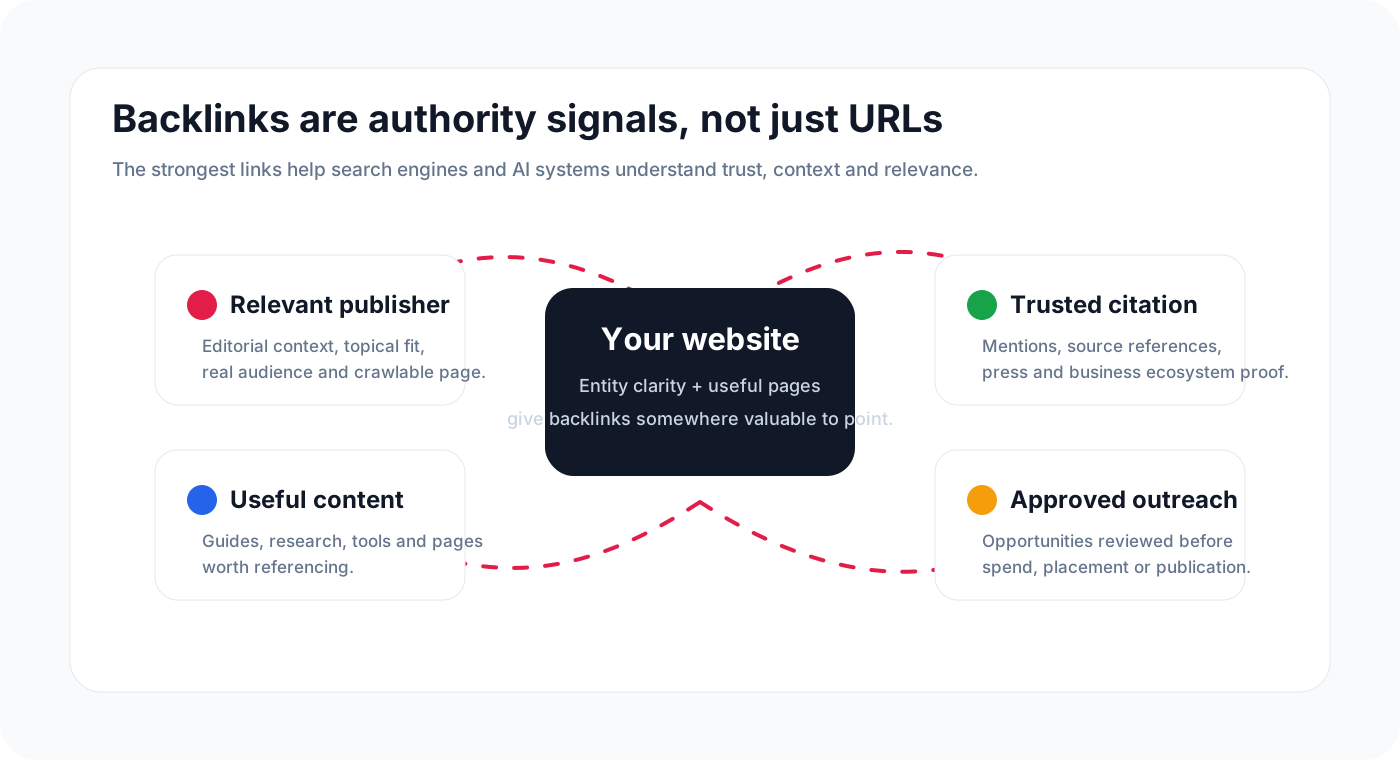
What are backlinks?
A backlink is a hyperlink from an external website to your website. If a publisher writes an article about SEO Automation and links to AYSA.ai, that link is a backlink for AYSA. If a local newspaper links to a clinic’s website from an article about healthcare services, that link is a backlink for the clinic. If a partner page links to your company as a technology provider, that is also a backlink.
Search engines use links in several ways. Links help crawlers discover pages. Links help users move between sources. Links can indicate relationships between pages, brands, authors, publishers and topics. Links can also signal that one website considers another page useful enough to reference.
In simple terms, backlinks answer three questions:
- Discovery: can search engines find your page through the web?
- Context: what topic, entity or audience is your page associated with?
- Authority: do other relevant sources reference your website?
That is why backlinks became one of the foundations of search. Google’s original PageRank system was built around the idea that links can help evaluate the importance of pages. Modern search is far more complex than early PageRank, but links remain part of the web’s trust and discovery graph.
Why backlinks still matter
Backlinks matter because the web is relational. A website does not exist in isolation. Search engines and AI systems evaluate pages in the context of other pages, mentions, citations, brands, entities and user signals. A business that is never referenced anywhere else on the web is harder to evaluate than a business that is cited by relevant publications, partners, directories, customers and industry sources.
Google’s SEO Starter Guide still discusses links because links help Google discover pages and understand relationships. Google’s link best practices also emphasize useful anchor text, crawlable links and links that help users. Bing’s Webmaster Guidelines similarly warn against manipulative link schemes while encouraging content that earns natural links and provides value.
The important point is that backlinks are not magic. A link is not valuable just because it exists. A backlink is useful when it supports a real relationship between the linking page, the linked page and the user who might click it.
For a business, good backlinks can help with:
- Faster discovery of important pages.
- Stronger topical association around products, services or expertise.
- Referral traffic from relevant audiences.
- Entity trust when credible sources mention the brand.
- Authority signals that support competitive SEO work.
- AI search readiness, because answer systems often prefer credible, cited sources.
Backlinks and AI search
Backlinks are usually discussed in classic SEO terms, but they also matter for AI-assisted search. ChatGPT, Google AI Overviews, AI Mode, Perplexity-style answer engines and other discovery systems do not evaluate a website only by reading one page. They rely on web sources, search results, entity signals and external references to decide what is safe or useful to mention.
This does not mean that every AI answer is directly ranking pages by backlink count. That would be too simplistic. But a strong external footprint helps a brand become easier to identify, verify and contextualize. If your company is mentioned by relevant publishers, connected to known entities, cited by trusted sources and supported by useful content, the machine-readable picture becomes clearer.
That is why authority building is part of SEO, AEO and GEO. Search engines need signals. Answer engines need sources. Users need proof. Backlinks, citations and brand mentions help connect those layers.
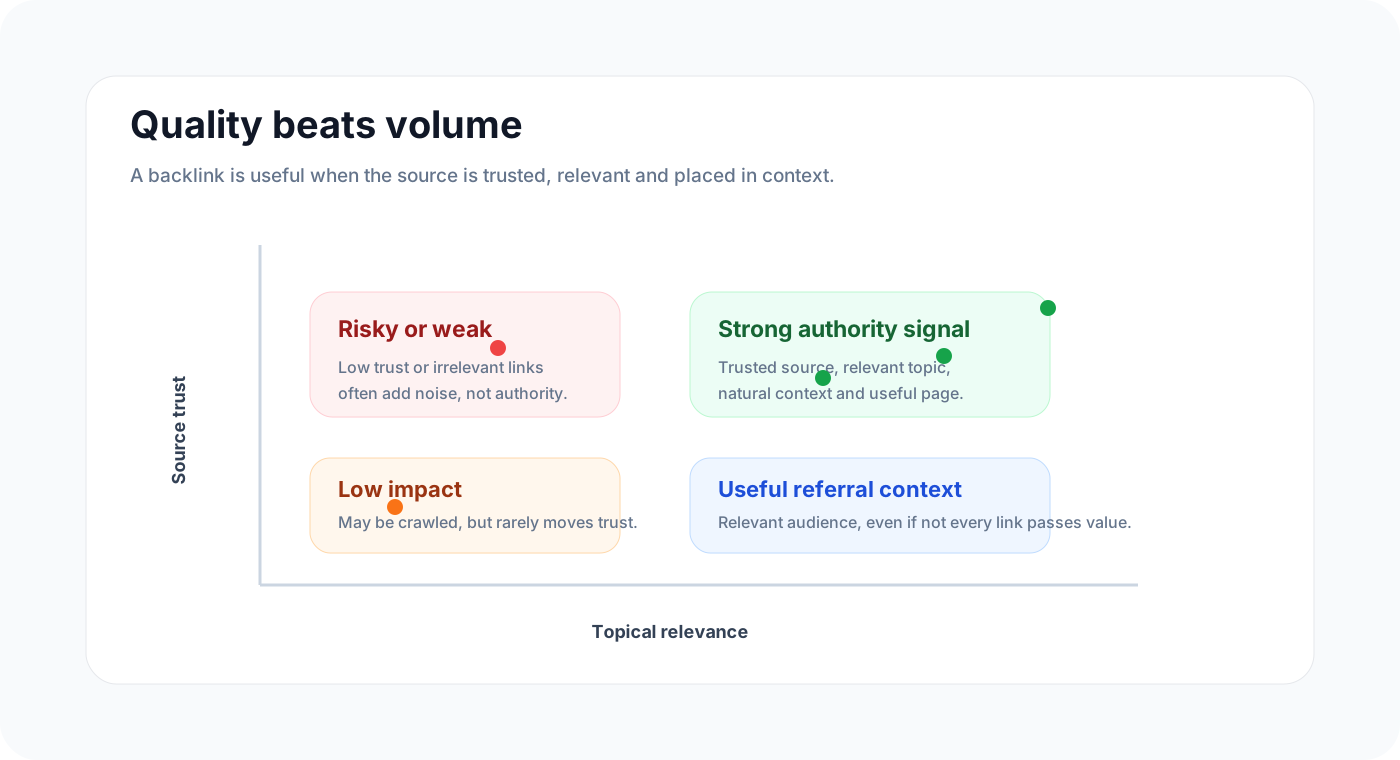
What makes a backlink high quality?
A high-quality backlink is not defined by one metric. Domain authority, domain rating, traffic estimates and spam scores can be useful directional checks, but they are not official ranking guarantees. A backlink should be evaluated like a business asset, not like a collectible number.
Relevance
The linking page should be topically related to your website or to the specific page being referenced. A link from a respected medical publication to a pediatric clinic is relevant. A link from a random casino blog to that same clinic is not. Relevance helps search systems understand context, and it helps users understand why the link exists.
Trust
The linking website should have a real audience, real editorial standards and a reasonable reputation. Trust is not always easy to measure, but you can often see the difference between a genuine publication and a site built only to sell links. Good questions include: Does the site publish real content? Does it have authors? Is the content indexed? Does it serve an audience? Does it link out responsibly?
Placement context
A link inside a relevant article, guide, resource page or partner profile usually carries more meaningful context than a hidden footer link or random sidebar. Context matters because it explains why the link exists. Search engines are trying to understand the relationship between pages, not merely count HTML anchors.
Anchor text
Anchor text is the clickable text of a link. Google’s link best practices recommend writing anchor text that is descriptive and useful. Over-optimized anchor text can look manipulative, especially when repeated unnaturally across many websites. A natural backlink profile includes branded anchors, URL anchors, descriptive anchors and occasional keyword-relevant anchors where they make sense.
Crawlability
If search engines cannot crawl the linking page or the link itself, the SEO value may be limited. JavaScript-only links, blocked pages, noindex pages or pages behind login screens can reduce discoverability. A link should be accessible to users and crawlers.
Link attributes
Not all links are meant to pass ranking value. Google recommends qualifying certain outbound links with attributes such as rel=”sponsored” for paid or sponsored links and rel=”ugc” for user-generated content. Nofollow can also be used when a publisher does not want to imply endorsement. These attributes do not make a link useless for referral or brand visibility, but they clarify the nature of the relationship.
What makes a backlink risky?
Backlinks become risky when they are created primarily to manipulate search rankings rather than to help users, cite useful sources or support real business relationships. Google’s link spam policies explicitly target manipulative link practices. These include buying or selling links that pass ranking credit, excessive link exchanges, large-scale article marketing with keyword-rich anchor text, automated link creation and other schemes designed to distort search results.
Risky backlink patterns include:
- Links from obvious link farms or networks with no real audience.
- Large numbers of exact-match keyword anchors.
- Paid links that are not properly qualified.
- Irrelevant guest posts created only for links.
- Sitewide footer or sidebar links created at scale.
- Automated directory submissions with low editorial quality.
- Private blog networks built to manipulate rankings.
- Links from hacked websites or injected content.
The danger is not only a manual penalty. The more common problem is wasted effort. Search engines can ignore low-quality links, devalue manipulative patterns or treat them as noise. A business may spend money on links that do not improve authority, do not bring customers and may create cleanup work later.
Do backlinks guarantee rankings?
No. Backlinks do not guarantee rankings. They are one part of a larger SEO system that includes technical health, content quality, search intent, page experience, internal linking, entity clarity, freshness, user value and competition. A strong backlink to a weak page may not overcome poor content. A useful page with no authority may struggle in competitive spaces. SEO works when the whole system improves together.
This is especially true in AI search. A site can have links and still fail to answer the user’s question clearly. A page can be authoritative but outdated. A brand can be known but technically blocked. Backlinks help, but they do not replace content strategy or technical SEO.
Backlinks vs referring domains
One website can link to you many times. A referring domain is the unique external domain that links to your site. If one publisher links to you from five articles, that may be five backlinks but one referring domain. Both numbers can be useful, but referring domains often give a cleaner view of how broad your authority footprint is.
However, the same rule applies: quality matters. Ten strong referring domains from relevant publications may be more valuable than hundreds of low-quality directory links. A backlink audit should look at source quality, topical relevance, placement, anchor text, follow attributes, traffic potential and the page being linked to.
Backlinks, internal links and topical authority
Backlinks bring external signals into your website. Internal links distribute context and authority inside your website. Both matter. If an important external link points to a strong guide, that guide should connect internally to relevant product pages, glossary terms, examples and conversion paths. Otherwise, the authority and user attention may stop at one page.
Topical authority grows when external references, internal links and useful content reinforce the same subject. A business that wants visibility for “SEO automation tools” should not rely on one landing page. It should connect product pages, comparison pages, glossary definitions, blog articles, examples, pricing and help documentation. Backlinks then support a broader topic cluster rather than a lonely page.
How to earn backlinks the right way
Ethical link building starts with something worth linking to. That can be original research, practical guides, tools, case studies, data, expert commentary, product documentation, local resources, templates, calculators, glossaries or strong opinion pieces. Outreach works better when the page genuinely helps the publication’s audience.
Create linkable assets
A linkable asset is a page that gives other websites a reason to reference you. Examples include industry research, a complete glossary, a comparison guide, a free tool, a benchmark report, a detailed tutorial, a public methodology or a strong editorial analysis. The asset should be useful even if no one links to it.
Use digital PR and expert commentary
Journalists and publishers often need expert context. If your team has real experience, contribute useful commentary. For AYSA, founder expertise around ecommerce, SEO automation, Adverlink and authority building creates a natural editorial angle. That is stronger than generic link requests.
Build partnerships that make sense
Partners, integrations, agencies, technology vendors and ecosystem companies can link to each other when the relationship is real and useful for users. The key is relevance and transparency. A partner link should explain the relationship, not hide it.
Fix unlinked brand mentions
If a publication mentions your brand but does not link to your website, a polite request can sometimes turn that mention into a link. This is usually safer and more natural than cold outreach because the editorial mention already exists.
Use controlled publisher opportunities
Some authority opportunities involve sponsorship, native advertising or publisher placements. These should be handled carefully, with proper disclosure and link attributes where needed. The business value can still be real: visibility, referral traffic, brand awareness, entity reinforcement and controlled authority building. But purchases or placements should be approved with full context.
How to evaluate a backlink opportunity
Before accepting, buying, requesting or approving a backlink opportunity, evaluate it like an investment. A simple scorecard can prevent bad decisions.
- Relevance: Is the publication related to your industry, audience or topic?
- Audience: Would a real potential customer or industry reader find the link useful?
- Editorial quality: Does the site publish real, readable content?
- Indexability: Is the page likely to be crawlable and indexable?
- Link placement: Is the link placed in a useful context?
- Anchor text: Is the anchor natural and not manipulative?
- Disclosure: If paid or sponsored, are attributes and disclosures handled correctly?
- Destination page: Does the linked page deserve the reference?
- Risk: Does the opportunity look like a link scheme?
- Tracking: Can you confirm delivery and monitor the live placement?
How to monitor backlinks
Backlink monitoring should combine multiple sources. Google Search Console provides a Links report that shows external links, top linked pages, top linking sites and top linking text. Third-party tools such as Ahrefs, Semrush, Majestic, Moz and others can provide additional backlink discovery, quality metrics, anchor analysis and competitor comparisons. No tool has a perfect copy of the web, so serious audits often compare more than one source.
The key is to monitor changes, not just totals. Watch for:
- New referring domains from relevant sources.
- Lost links from important pages.
- Unnatural spikes in exact-match anchor text.
- Links pointing to redirected or broken pages.
- Mentions that could become links.
- Competitors earning links from publishers you should know about.
- Authority opportunities around topics where your website lacks external proof.
Monitoring is also useful for AI visibility. If your brand is becoming more cited across relevant sources, it may become easier for AI systems to understand who you are and why your content matters. That does not guarantee AI recommendations, but it improves the evidence layer around the entity.
Backlink cleanup and disavow
Many businesses worry about toxic backlinks. The concern is understandable, but cleanup should be careful. Google has said for years that its systems can ignore many low-quality links. The disavow tool is intended for cases where you have a considerable number of spammy, artificial or low-quality links and you believe they are causing issues, especially if you have a manual action or a history of manipulative link building.
Do not disavow links simply because a third-party tool labels them “toxic.” Tool metrics are not Google penalties. Review the actual pattern, source quality, history and risk. When in doubt, document the reasoning. Over-aggressive disavow work can remove signals that were not causing a problem.
Where AYSA fits: authority building without messy outreach
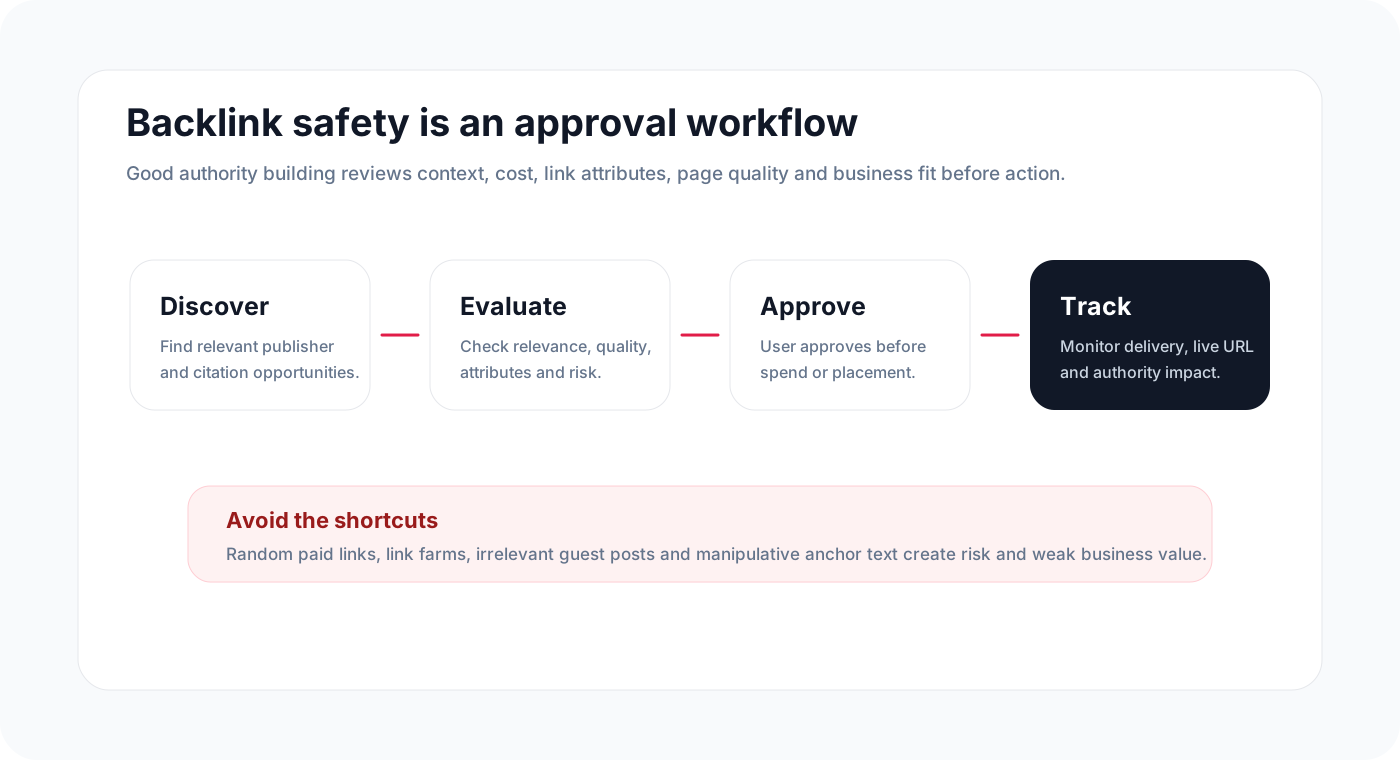
AYSA’s approach to backlinks is simple: authority building should be visible, controlled and approved. The user should not have to live in spreadsheets, chase publishers manually or approve vague link packages without context.
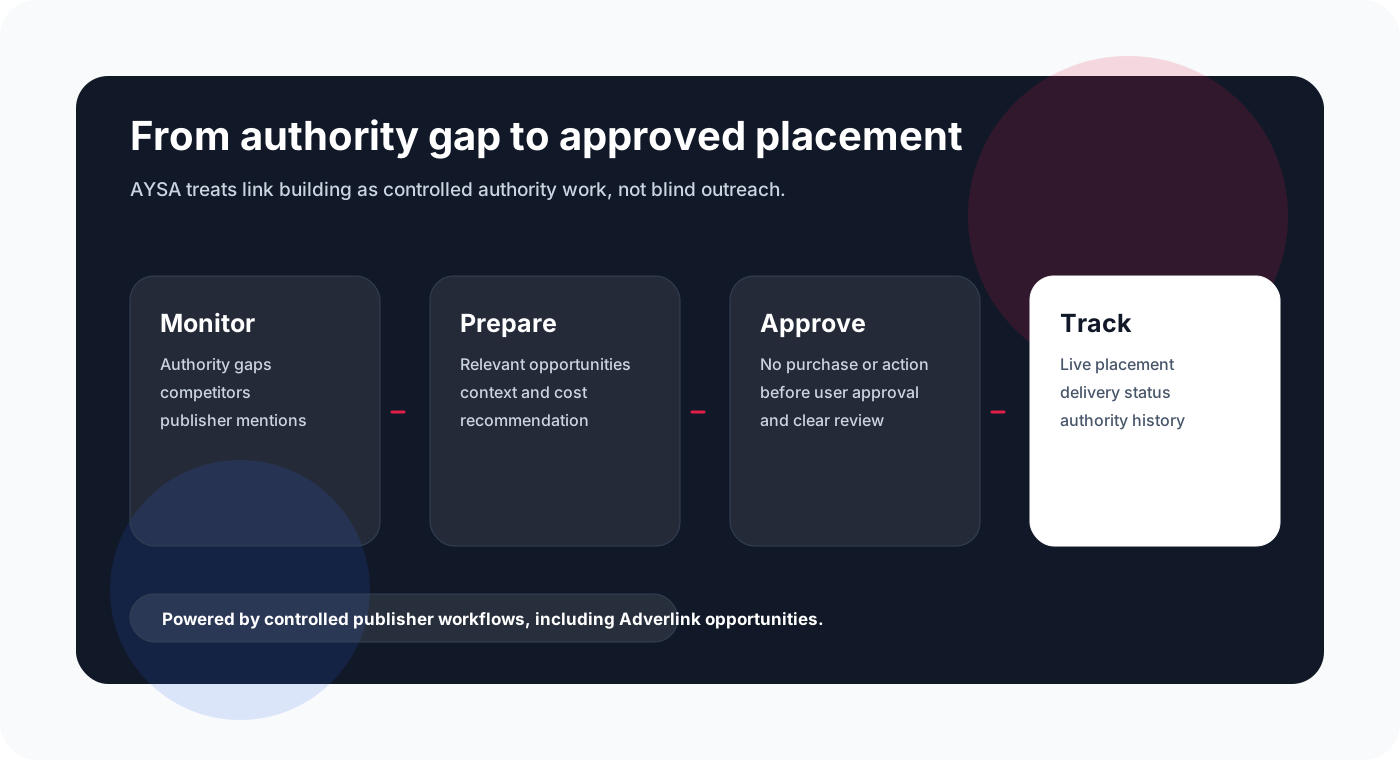
AYSA can help by connecting backlink and authority work to the broader SEO execution workflow. It can identify authority gaps, surface publisher opportunities, explain why an opportunity may matter, show context and cost, ask for approval and track delivery. Through integrations such as Adverlink, additional publisher opportunities can be reviewed as part of a structured workflow. Purchases or authority actions should require approval before execution.
This matters because backlinks are not isolated from the rest of SEO. A link to a weak page is less useful. A strong article with no internal links wastes attention. A publisher placement without tracking becomes a loose end. AYSA connects authority building to content, technical SEO, monitoring, AI visibility and approved website execution.
A practical backlink strategy for businesses
If you run a business, do not start with “we need 100 backlinks.” Start with business relevance.
Step 1: Fix the website first
Before building links, make sure the destination pages are worth linking to. Fix technical issues, clarify services, improve titles and descriptions, add useful content, connect internal links and make conversion paths clear. Authority should support a strong website, not compensate for a weak one.
Step 2: Identify the pages that deserve authority
Not every page needs backlinks. Prioritize commercial pages, strong guides, research assets, glossary hubs, local pages, comparison pages and content that supports important revenue goals.
Step 3: Map relevant publishers and ecosystems
Look for publications, directories, partners, associations, local media, industry blogs, review sites, software ecosystems and resource pages that genuinely relate to your business. Relevance should lead the list.
Step 4: Create assets worth referencing
Backlink outreach is easier when the page deserves attention. Publish helpful resources, original data, expert explanations, practical tools and strong editorial content.
Step 5: Approve opportunities deliberately
Review the source, context, cost, link attributes, destination page and risk. Do not buy blind packages. Do not approve irrelevant placements. Make decisions with enough information to defend them later.
Step 6: Track outcomes
Track live URLs, anchor text, link attributes, referral traffic, ranking changes, page performance and authority growth. If a link is removed or changed, you should know.
Frequently asked questions
Are backlinks still important for SEO?
Yes, backlinks are still important, but quality, relevance and context matter more than raw volume. Search engines also evaluate many other signals, including content quality, technical health, intent match and user value.
Are paid backlinks bad?
Paid or sponsored links are not automatically bad as marketing placements, but they should be properly disclosed and qualified with appropriate link attributes such as rel=”sponsored” when they are paid placements. Buying links to manipulate rankings violates Google’s spam policies.
How many backlinks do I need?
There is no universal number. The right answer depends on competition, topic, website quality, existing authority, content depth and business goals. A few relevant links can be more useful than many weak links.
What is the difference between dofollow and nofollow?
“Dofollow” is an informal term for a normal link without a nofollow-style attribute. Nofollow, sponsored and ugc attributes tell search engines more about the nature of a link. Even qualified links can have referral or brand value, but they are treated differently for ranking signals.
Can AYSA buy backlinks automatically?
No authority purchase should happen blindly. AYSA can surface additional publisher opportunities through integrations such as Adverlink, but extra purchases or authority actions require separate approval before execution.
The AYSA point of view
Backlinks are not dead, but lazy link building is. The future belongs to authority systems that combine useful content, clean technical SEO, entity trust, publisher relevance, approval controls and monitoring. The question is no longer “how many links can we get?” The better question is: “Which authority signals help users, search engines and AI systems understand why this business deserves attention?”
That is where AYSA fits naturally. Less SEO work. More organic growth. Not through shortcuts, but through approved execution: monitor the website, prepare the work, review the opportunity, approve the action and track the result.
Sources and further reading
- Neil Patel: What Are Backlinks?
- Google Search Central: SEO Starter Guide
- Google Search Central: Make your links crawlable
- Google Search Central: Qualify your outbound links to Google
- Google Search Central: Link spam policies
- Google Search Console Help: Links report
- Bing Webmaster Guidelines