
Search Central Live Shanghai 2026: The Practical International SEO Playbook for Teams Targeting Customers Outside China
Google is bringing Search Central Live to Shanghai on May 15, 2026—with a clear focus on sites that target users outside China. Here’s what that signals, why international SEO is getting harder (not easier), and a concrete execution plan SMEs and agencies can run—using an approved-change system like AYSA to turn guidance into shipped improvements.

Google is bringing Search Central Live to Shanghai on May 15, 2026—and the detail that matters is the event’s emphasis: helping the local community optimize sites that target users outside of China.
That sounds like a simple event announcement. It’s not. It’s a signal about where International SEO is headed: global growth is increasingly about operational excellence—technical consistency, content clarity, and measurable execution—across many countries, many languages, and now many search experiences (classic results, AI-assisted results, and everything in between).
I’m writing this as Marius Dosinescu from AYSA.ai, and I’ll be direct: most international SEO failures don’t happen because teams don’t know what to do. They happen because teams don’t ship what they know—safely, repeatedly, and with clear accountability.
This editorial is a practical playbook for SMEs and agencies building search visibility across borders, with Shanghai 2026 as the moment to get serious. You’ll find what’s changing, why it matters, and a step-by-step plan you can run—plus where AYSA fits as an Approved Execution system that monitors, prepares changes, asks for approval, and executes the accepted improvements.
Concise summary

- Search Central Live Shanghai 2026 is focused on helping teams optimize sites targeting users outside China, which puts international SEO operations front and center.
- International SEO is harder now: you’re optimizing for multiple countries, languages, devices, and increasingly AI-driven answer experiences.
- The fundamentals still decide outcomes: Crawling/Indexing control, Canonicalization, redirects, JavaScript rendering, structured Site architecture, and clean localization signals.
- SMEs need execution systems more than more advice: change control, monitoring, and repeatable release cycles.
- AYSA fits as a practical bridge: monitoring + recommendations + approval workflow + execution for ongoing technical and content improvements.
Key takeaways (what to do with this right now)
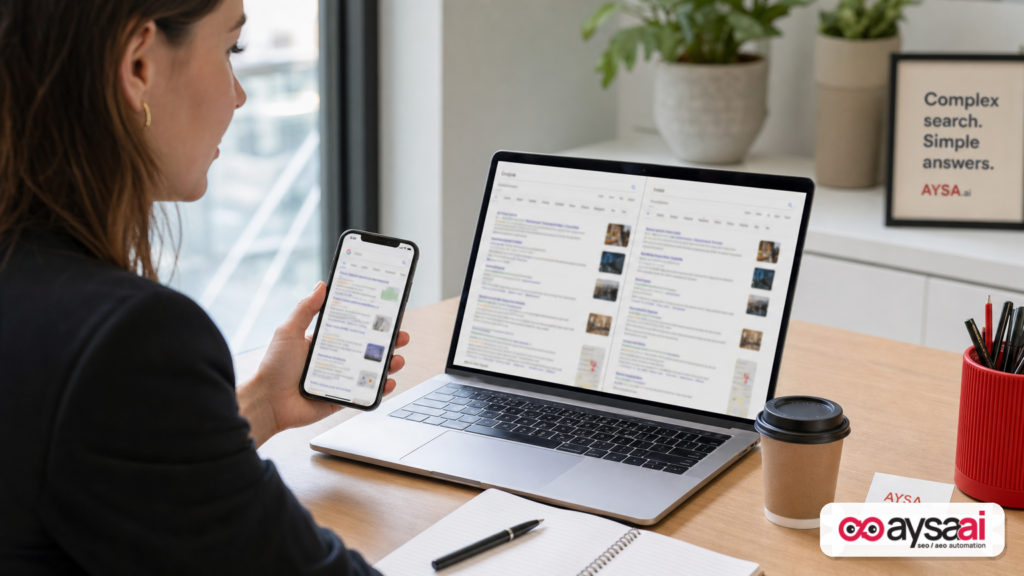
- Pick your expansion model (one global site, multi-country folders/subdomains, or multi-site) and document it—before you translate a single page.
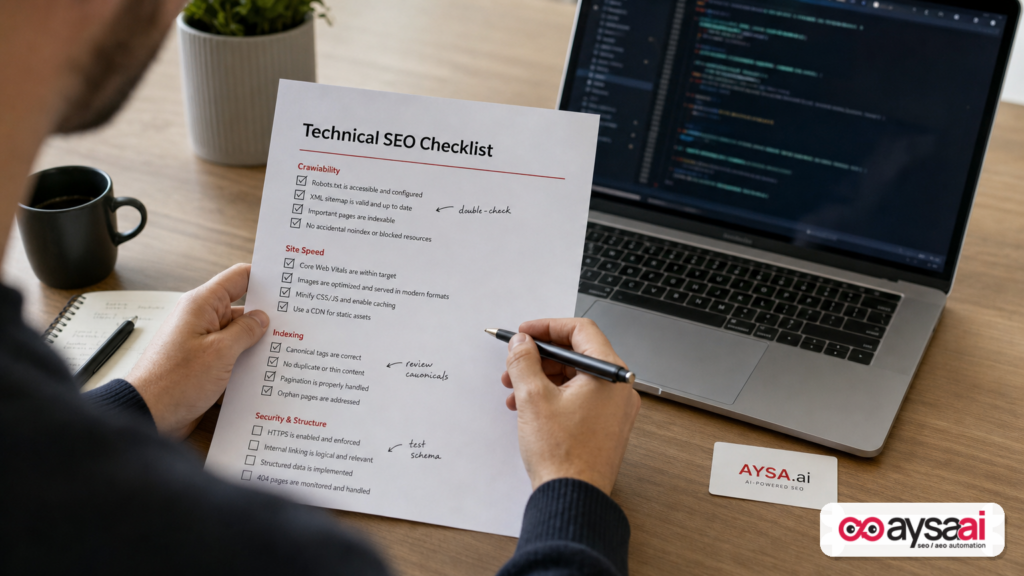
- Audit crawl/index signals (robots, sitemaps, canonicals, redirects) and fix “silent killers” that erase international pages from search.
- Design localization for users, not for stakeholders: adapt intent, terminology, FAQs, units, shipping/returns, and trust signals per market.
- Measure by country + page type in Search Console, with a weekly cadence and annotations for releases.
- Operationalize execution: use an approval-based workflow so changes get shipped without breaking revenue pages.
Table of contents
- Why Shanghai, and why “target users outside China” matters
- Why Search Central Live matters (even if you never attend)
- The new international SEO reality: one site, many audiences, many search experiences
- A field guide to the fundamentals Google keeps rewarding (and punishing when ignored)
- International site architecture: folders vs subdomains vs domains (and the hidden tradeoffs)
- Localization that works: translation is the floor, not the strategy
- AI search, AEO, and GEO: what changes for international visibility
- Measurement: how to use Search Console as your international control tower
- SME scenario: a Shanghai-based B2B manufacturer selling into the EU and US
- What agencies should rethink for cross-border SEO delivery
- Where AYSA fits: monitoring → preparing changes → approval → execution
- A 90-day action plan (practical, shippable work)
- What to do next
- Sources and further reading
Why Shanghai, and why “target users outside China” matters
Shanghai is one of the world’s biggest business hubs. When Google’s Search Central team chooses to host a Live event there, with a stated focus on “optimizing sites that target users outside of China,” it points to a very real market dynamic:
- There are many businesses in China serving global customers—manufacturers, SaaS startups, consumer brands, and B2B service providers.
- Those businesses often operate with cross-border constraints: multi-language sites, distributed teams, approvals, compliance reviews, and sometimes complex hosting or tooling choices.
- They compete for attention in a search environment that is fragmenting—by language, by market, and by AI experiences.
In other words: this isn’t “SEO as a channel.” This is SEO as a cross-functional operating system.
Even if your company isn’t China-based, the lesson still applies. The growth pattern is global. The constraints are global. The execution problems are global.
Why Search Central Live matters (even if you never attend)
Search Central Live events aren’t product launches. They’re a public-facing window into what Google wants site owners to understand and do next—especially about:
- How crawling and indexing actually work in practice
- Which site quality problems keep repeating across industries
- How to use tooling (like Search Console) to debug issues instead of guessing
Google’s SEO documentation has matured into a pragmatic set of fundamentals and playbooks. If you’re building international visibility, your baseline should include:
But reading isn’t the bottleneck. Implementation is. That’s why this editorial focuses on turning those fundamentals into an execution plan you can actually run.
The new international SEO reality: one site, many audiences, many search experiences
International SEO used to be framed as a mostly linear problem:
- Pick markets
- Translate pages
- Add hreflang
- Build some links
- Wait
That approach fails in 2026 for a simple reason: your customers don’t follow one path anymore.
1) Your audience fragments by country and intent
“International” isn’t a single segment. Even within English, intent varies massively:
- US searchers may prioritize speed and reviews
- UK searchers may prioritize returns policy clarity and VAT-inclusive pricing
- Australia may show seasonality differences and different terminology
If your content treats these markets as identical, you may rank—but you’ll convert poorly. And poor conversion reduces the business value of ranking, which makes SEO budgets unstable, which makes consistency impossible. This is how international SEO programs die: not with a traffic drop, but with internal doubt.
2) Search interfaces fragment (classic results, rich results, AI answers)
Google continues to provide guidance on how to be eligible for richer appearances (titles, snippets, images, and more) through its documentation on search appearance. For example:
Now layer on AI-driven experiences. Google has published guidance such as Optimizing for generative AI search. Regardless of how any single interface evolves, the trend is durable: users increasingly want answers, comparisons, and next steps—faster.
International teams must therefore optimize for:
- Indexing (can you be found?)
- Ranking (will you be chosen?)
- Selection in answer-style experiences (are you a reliable source to reference?)
- Conversion (does your market-specific page close the deal?)
3) Operations becomes the differentiator
Most teams can write content. Fewer teams can ship clean technical changes across many locales without breaking:
- canonicalization
- internal linking
- language targeting
- structured navigation
- analytics consistency
When you’re targeting users outside your home market, you cannot afford “SEO as occasional projects.” You need a release cadence.
A field guide to the fundamentals Google keeps rewarding (and punishing when ignored)
International growth amplifies every technical mistake. A minor canonical problem on a single-market site becomes a multi-market disaster when you have 10,000 localized URLs.
Here are the core fundamentals worth obsessing over, with direct ties to Google’s documentation.
Crawling and indexing control: make it easy to discover and understand your site
If Google can’t reliably crawl and understand your international URLs, none of the rest matters.
- Sitemaps — Use them to surface international URL sets, especially when internal linking is imperfect.
- robots.txt — Don’t accidentally block locale folders, parameter handling, or assets required for rendering.
- Meta tags — Ensure indexability and consistent directives; avoid contradictory signals across templates.
- Crawler management — When you ship international changes, plan recrawl expectations and monitor indexing lag.
Common failure mode: teams “launch” translations but accidentally noindex them, block them, or orphan them. The content exists. Search never really sees it.
Canonicalization: prevent self-cannibalization across countries
When multiple versions of the same product exist across locales, canonicals become the difference between “clean” and “chaos.” Google’s canonical guidance matters more at scale:
What goes wrong internationally:
- All localized pages canonicalize to the US version (so the other locales never rank)
- Canonical tags disagree with internal links and sitemaps
- Parameter variants leak duplicate pages across many languages
Redirects: migrate and expand without losing equity
International expansion often includes URL restructuring (e.g., adding /en-us/ folders, moving from subdomains to subfolders). Redirect quality decides whether you keep or lose momentum:
Rule of thumb: treat international redirects like payments infrastructure. Test, log, and monitor them.
JavaScript SEO: if your international content is client-rendered, prove it’s accessible
Modern sites frequently render key content via JavaScript. That can work, but international variants add complexity. Google provides baseline guidance here:
Common failure mode: the default language renders server-side, while other languages are loaded client-side after consent banners, geolocation, or script conditions—resulting in incomplete indexing for international pages.
Removals and control: know how to clean up mistakes safely
International launches are messy. You may publish the wrong language, expose staging environments, or accidentally index internal search pages. It helps to know how to remove content responsibly:
This is not about hiding problems; it’s about damage control while you fix root causes.
International site architecture: folders vs subdomains vs domains (and the hidden tradeoffs)
If you only take one strategic lesson from this editorial, take this: international SEO is mostly decided by architecture and governance.
Yes, there are “best practices.” But at scale, what matters is what your organization can execute consistently for years.
The three most common models
- One domain with country/language folders (example: /en-us/, /en-gb/, /fr-fr/)
- Pros: consolidated authority and easier cross-market internal linking
- Cons: governance gets complex; mistakes propagate fast
- Subdomains per locale (example: us.example.com, uk.example.com)
- Pros: operational separation, can align with different teams
- Cons: can fragment signals; requires disciplined linking and consistency
- Separate country domains (example: example.co.uk, example.fr)
- Pros: maximum local identity and autonomy
- Cons: costly to maintain; authority building becomes harder across many domains
The hidden variable: governance and approvals
Here’s the part most “international SEO guides” underplay: a model fails when no one owns it.
Ask these uncomfortable questions before you expand:
- Who owns URL conventions across all locales?
- Who approves canonical/hreflang template changes?
- Who can ship fixes quickly when indexing drops in one market?
- Who owns localized conversion elements (shipping, returns, currencies, trust badges, contact details)?
If you don’t have clean answers, your “international SEO strategy” is really just “international content production.”
This is also where execution tooling matters, which we’ll come back to when we discuss AYSA’s approved execution model.
Localization that works: translation is the floor, not the strategy
Most companies treat localization as a procurement exercise: translate the site, publish, move on. That’s the floor. Real international growth comes from localization that matches local intent.
Local intent beats direct translation
In market after market, the same product can be searched in different ways:
- Different terms for the same category
- Different concern hierarchy (warranty vs delivery vs compliance)
- Different “proof needs” (case studies, certifications, reviews, return policies)
Translation preserves meaning. Localization optimizes for decisions.
International trust signals are content, too
Teams often invest in blog posts while forgetting that the pages that convert need localized credibility:
- clear shipping and returns language (and not hidden in PDFs)
- market-specific support information
- local compliance or standards references where applicable
- clear pricing/currency presentation and tax handling
If you want to be referenced by AI answer experiences and chosen by users, trust signals must be structured and easy to extract—not buried.
Templates are your scale lever
For SMEs, the fastest way to improve international performance is rarely “write 200 new articles.” It’s usually:
- improving product/service templates
- fixing internal linking between localized equivalents
- making titles/snippets clearer per market
- adding market-specific FAQs directly on money pages
Google’s guidance on titles and snippets exists for a reason: your snippet is often your first sales pitch.
AI search, AEO, and GEO: what changes for international visibility
International SEO used to be mostly about “ranking a page.” Now it’s increasingly about “being the best source to cite and send users to.”
Google has published a dedicated resource on optimizing for generative AI search. We won’t over-interpret any single document—but we can take a durable operational lesson:
AI answer experiences reward clarity, structure, and credibility.
AEO basics (Answer Engine Optimization) for international teams
If you want to show up as the “explained” brand (not just a blue link), your content must be:
- Direct: define terms, answer questions early
- Structured: headings, lists, tables where useful
- Consistent across locales: do not contradict yourself market to market
- Maintainable: keep it fresh with a process, not a hero effort
GEO basics (Generative Engine Optimization) without hype
GEO, in practice, becomes an extension of content quality and technical accessibility:
- Make your best answers easy to crawl and interpret
- Use consistent terminology per locale
- Strengthen internal linking so important pages are obviously central
Most “AI optimization” advice becomes nonsense when it ignores the fundamentals. If you can’t get your localized page indexed, you’re not optimizing for AI—you’re optimizing for disappointment.
Where AYSA fits in AI search visibility
AYSA’s stance is practical: treat AI visibility as a continuous improvement program, not a one-time rewrite. Our resources on AI search visibility and tooling are built for that:
Measurement: how to use Search Console as your international control tower
International SEO measurement fails when teams track the wrong level of detail—or track it too late.
The minimum viable measurement system is:
- Market-by-market performance checks
- Index coverage / indexing checks for new locales
- Template-level analysis (category pages vs product pages vs articles)
- Release annotations so you can connect cause and effect
If you’re not using Google Search Console deeply, start with the official platform hub: Google Search Central.
Country + page type is the highest-leverage lens for SMEs
Instead of asking “How is SEO doing?”, ask:
- How are EU product pages performing vs US product pages?
- Are French category pages indexed and getting impressions?
- Do German support pages attract the long-tail queries that reduce sales friction?
International wins come from focusing on the specific page types that map to revenue and trust.
Monitoring beats reporting
Reporting tells you what happened. Monitoring tells you what’s happening. That difference is everything internationally, where issues may affect one locale silently for weeks.
This is why we emphasize AYSA Monitoring as a core layer: you want early detection on technical regressions, content drift, and missed opportunities—then a workflow that turns those findings into approved changes.
SME scenario: a Shanghai-based B2B manufacturer selling into the EU and US
Let’s make this concrete with a realistic scenario that mirrors the “Shanghai optimizing for outside China” theme.
The business
A mid-sized Shanghai-based manufacturer sells specialized industrial components to:
- US distributors (English)
- Germany and France (German and French)
The company has:
- a WordPress marketing site + a custom product catalog
- a small marketing team (2 people)
- engineering support available only two days a week
The initial problem
They translated 300 product pages into German and French. Six months later:
- US pages drive leads
- EU pages get almost no impressions
- Sales blames “SEO,” marketing blames “Google,” engineering blames “content quality”
The likely diagnosis (what we’d check first)
Without inventing metrics, here’s the order of operations that tends to surface the root cause quickly:
- Indexing check: are the /de/ and /fr/ URLs indexed at all?
- Canonical check: are EU pages canonicalized to the English version?
- Robots/sitemap check: are EU folders in the sitemap and crawlable?
- Internal linking check: can crawlers and users reach those pages from the main nav and category structure?
- Snippet check: are titles and meta descriptions localized, or are they duplicated/garbled?
- Conversion trust check: do EU pages answer EU buyer questions (shipping, compliance, lead times)?
Most SMEs discover the same pattern: the content exists, but the site signals are conflicting or weak.
The fix (what to ship in 30 days)
- Correct canonicals per locale
- Ensure sitemaps include international URL sets
- Build consistent internal linking between language variants
- Rewrite titles for clarity and intent (per market)
- Add localized FAQs on top product templates
The important part isn’t the list. It’s the workflow: prepare changes, get approval, ship, monitor.
What agencies should rethink for cross-border SEO delivery
If you run an agency, international SEO is a margin trap unless you fix delivery.
Stop selling “audits” as the primary deliverable
Audits are necessary. But the client doesn’t buy an audit. They buy the outcome of implementation.
In international SEO, implementation is hard because:
- changes touch multiple templates
- multiple stakeholders need to sign off
- risk tolerance is lower (a mistake can impact revenue across many markets)
Agencies that win internationally increasingly sell:
- systems
- cadence
- change governance
- measurement and monitoring
Make approval and rollback part of the product
International changes should ship like software:
- staged rollouts
- template-level testing
- measured impact windows
- clear rollback steps
If your agency workflow is still “send a spreadsheet and hope,” you’ll lose to teams that can actually execute.
Position around operational wins
International SEO is often decided by:
- preventing duplicates
- fixing canonicals
- improving crawl paths
- cleaning redirect chains
- aligning titles/snippets to intent
These aren’t flashy. They’re profitable. Agencies that can repeatedly deliver these wins will outperform content-only competitors.
Where AYSA fits: monitoring → preparing changes → approval → execution
At AYSA.ai, we think the future of SEO—especially international SEO—is execution with governance.
Here’s the operating model we believe teams need:
1) Monitor continuously (not monthly)
International sites change constantly—new products, new translations, CMS updates, dev deploys. Monitoring catches:
- indexing drops in specific locales
- template regressions (titles, canonicals, pagination)
- new duplicate URL patterns
- missed internal linking opportunities
Start here: AYSA Monitoring
2) Prepare changes in a format teams can approve
Most organizations don’t lack ideas. They lack a “shippable” representation of those ideas—what exactly changes, where, and why.
AYSA is built to prepare changes (technical and content) so stakeholders can review them quickly and safely.
3) Ask for approval (because trust is a feature)
In international environments, approvals are not bureaucracy—they’re risk management. A canonical or redirect mistake can wipe out a market’s visibility.
AYSA’s “approved execution” approach is designed for that reality: the right people sign off, then changes move forward.
4) Execute accepted website changes
This is where the strategy becomes real. Execution is the difference between “we should” and “we did.”
If you want to explore whether this model fits your team’s needs, pricing and packaging start here: AYSA Pricing
Related AYSA resources
A 90-day action plan (practical, shippable work)
This is a pragmatic, execution-first plan for SMEs and agencies expanding internationally or cleaning up an existing global footprint. Adjust timelines, but keep the sequence.
Days 1–15: Baseline and risk reduction
- Inventory markets and languages
- List current locales, planned locales, and the business priority for each.
- Indexability sweep
- Verify robots rules and meta directives aren’t blocking locales.
- Confirm locale pages appear in sitemaps.
- Canonical sanity check
- Spot-check top templates (homepage, categories, product/service, articles).
- Confirm localized versions don’t all canonicalize to one market.
- Redirect hygiene
- Fix broken redirects and remove unnecessary chains on high-value pages.
Days 16–45: Architecture and template improvements
- Decide and document your international URL model (and don’t drift).
- Consistency beats theoretical perfection.
- Template-level snippet optimization
- Rewrite titles for clarity per market.
- Ensure snippet text matches local buyer language and units.
- Internal linking across locales
- Make the crawl path obvious and shallow for priority pages.
Days 46–90: Intent localization and AI-readiness
- Localize “money page” trust elements
- Shipping/returns, support, warranties, lead times, compliance info—market-appropriate and visible.
- Add FAQ sections where intent demands it
- Not fluff FAQs—real sales objections and usage questions.
- Publish a market-specific comparison or buyer guide
- One strong guide per priority market often beats dozens of generic translations.
- Establish monitoring and a release cadence
- Weekly checks, monthly improvements, quarterly reviews.
If you want this to run as a repeatable system rather than a one-off project, pair it with monitoring and approved execution—this is exactly where AYSA is designed to fit.
What to do next
- Bookmark the official event announcement and use it as a forcing function to plan your next quarter: Search Central Live is Coming to Shanghai in 2026!
- Confirm your fundamentals using Google’s own docs (sitemaps, robots, canonicals, redirects, JS SEO).
- Pick one priority market and fix templates end-to-end before expanding further.
- Set up monitoring so you detect international regressions early: AYSA Monitoring
- Build an approval workflow for technical and content changes so your team can ship fast without breaking revenue pages.
- Align on AI visibility goals and turn them into structured content improvements: AI Search Visibility
Sources and further reading
- Google Search Central Blog: Search Central Live is Coming to Shanghai in 2026!
- Google Search Central
- Google Search Central Documentation
- Search Essentials
- SEO Starter Guide
- How Google Search Works
- Optimizing for generative AI search
- Sitemaps
- robots.txt
- Canonicalization
- Redirects
- JavaScript SEO basics
Note: This editorial is an independent AYSA.ai analysis based on the publicly available Google Search Central materials linked above. Where international SEO choices depend on market constraints, platform limitations, or internal governance, the recommendations are framed as practical guidance rather than universal rules.
Continue the AI search topic inside AYSA.
Use these pages to connect the article with AI SEO tools, AI visibility monitoring, AI Overviews and approved website execution.
Turn this topic into a website action plan.
Use these AYSA hubs to move from reading to technical fixes, AI visibility monitoring, research, glossary context and approval-first SEO execution.

