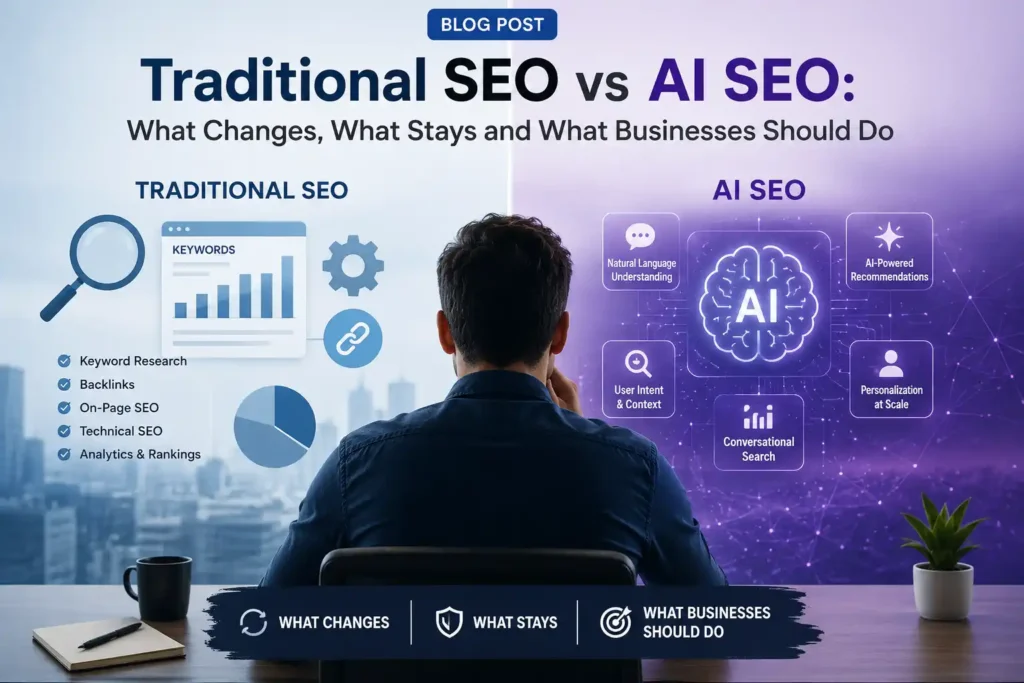
On-Page SEO: A Practical Guide to Better Pages, AI Readiness and Approved Execution
On-page SEO is more than titles and keywords. It is the discipline of making every important page clearer, more useful, easier to understand and ready for approved execution.
On-page SEO is the work of making a page easier to understand, rank, click, read, trust and act on. It includes titles, headings, Content quality, Search intent, internal links, images, schema, Page experience and the way a page answers real customer questions. In 2026, it also includes AI readiness: the page must be clear enough for AI Overviews, ChatGPT search and answer engines to understand what it is about and why it deserves to be cited.
Semrush’s on-page SEO guide is a strong starting point because it explains the classic elements: content, title tags, meta descriptions, headings, URLs, internal links and user experience. But the modern business problem is not only knowing what on-page SEO is. The hard part is execution. Someone has to identify weak pages, prepare better titles, rewrite sections, add internal links, improve schema, ask for approval and publish the accepted changes.
This guide explains on-page SEO as a practical operating system. It covers the classic elements, the AI Search layer, the approval workflow and how AYSA helps turn recommendations into approved website updates.
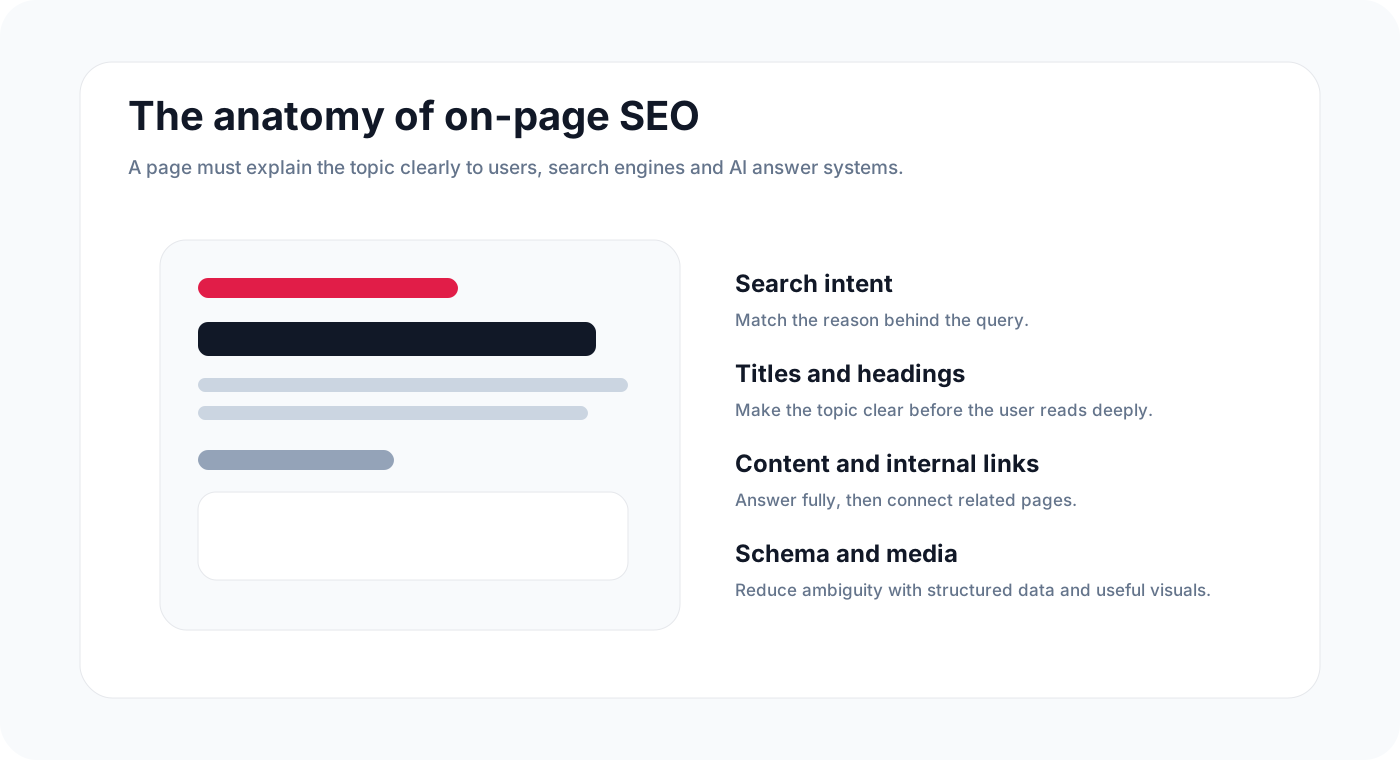
What is on-page SEO?
On-page SEO refers to the optimization of individual pages on a website so they can perform better in search and serve users more effectively. It is called “on-page” because the work happens on the page itself: the title, headings, text, images, links, schema, layout, user experience and the way the content satisfies intent.
On-page SEO is different from technical SEO, which focuses on crawlability, indexability, performance, architecture and site-wide Technical Health. It is also different from off-page SEO, which focuses on authority signals such as backlinks, mentions and citations. In practice, all three work together. A technically clean page with poor content will struggle. A brilliant article that cannot be crawled will struggle. A useful page with no authority may struggle in competitive spaces.
The job of on-page SEO is to make every important page answer three questions:
- What is this page about?
- Who is it for?
- Why is it useful enough to rank, cite or convert?
Why on-page SEO still matters
Search engines need to understand pages before they can rank them. Users need to understand pages before they can trust them. AI answer systems need to understand pages before they can cite or summarize them. That is why on-page SEO has not become less important. It has become more exposed.
Google’s SEO Starter Guide still emphasizes helpful content, descriptive links, clear page structure and making the site useful for people. Google’s helpful content guidance focuses on content that is original, reliable, people-first and satisfying. Google’s structured data policies also make clear that structured data should match visible content. Those principles all connect to on-page SEO.
The modern page has to serve several audiences at once:
- The human visitor who wants a clear answer.
- The search engine crawler that needs to parse the page.
- The ranking system that evaluates relevance and quality.
- The AI answer system that may summarize or cite the content.
- The business owner who needs the page to convert.
Good on-page SEO does not mean writing for robots. It means reducing ambiguity for everyone.
Start with search intent
Search intent is the reason behind a query. A page that targets the wrong intent can have a good title, clean headings and many words, but still fail. If someone searches “on-page SEO checklist,” they probably want practical steps. If someone searches “on-page SEO services,” they may want a provider. If someone searches “what is a title tag,” they want a definition and examples.
Before optimizing a page, ask:
- Is the user trying to learn, compare, buy, fix or decide?
- What does the current top-ranking content provide?
- What is missing from those pages?
- What would make this page more useful than the alternatives?
- Does the page have a clear next action?
Intent also matters for AI search. A prompt often contains more context than a keyword. A user may ask, “How can I improve a WordPress page so it can rank in Google and be useful for AI Overviews?” That prompt expects a practical workflow, not a generic definition. Your page must be able to answer the real task.
Title tags and meta descriptions
The title tag is one of the clearest signals of page topic. It appears in browser tabs and can be used by search engines when generating search result titles. A good title is specific, readable and aligned with the page’s purpose. It should not be a list of keywords. It should tell the user what the page is and why it is relevant.
A weak title says: “SEO Services | SEO | Best SEO.” A stronger title says: “AI SEO Automation for WordPress Websites | AYSA.” The stronger version names the category, platform and brand clearly.
Meta descriptions do not directly guarantee rankings, but they can influence click-through rate because they help explain the page in search results. A good meta description summarizes the value of the page, includes the topic naturally and gives the user a reason to click.
For AI search, titles and descriptions also help reduce ambiguity. They are part of the page’s metadata layer. If your titles are duplicated, vague or disconnected from the content, both users and machines have to work harder.
Headings and page structure
Headings help readers scan and help search systems understand the hierarchy of ideas. The H1 should identify the main topic. H2s should divide the page into major sections. H3s should support H2 sections with details, examples or steps.
Common heading problems include:
- Multiple H1s used for visual styling rather than structure.
- Generic headings such as “Overview” or “Learn More” with no topic clarity.
- Skipping logical hierarchy.
- Stuffing keywords unnaturally into every heading.
- Using headings for design elements that are not content sections.
A good page structure tells a story. It moves from definition to problem, from problem to solution, from solution to examples, and from examples to action.
Content quality and usefulness
Content quality is not the same as content length. A 500-word page can be excellent if it answers a narrow question completely. A 3000-word article can be weak if it repeats generic advice. Google’s helpful content guidance asks creators to focus on original, useful, reliable content made for people rather than search engines.
Useful on-page content usually includes:
- A direct answer to the main question.
- Examples that make the concept concrete.
- Details specific to the audience or business type.
- Clear explanations of trade-offs and limitations.
- Internal links to related pages.
- Sources or proof where claims need support.
- A practical next step.
For AYSA, this is why a page about SEO automation should not only say “we use AI.” It should explain how the agent monitors, prepares, asks for approval and executes accepted work. Specificity is more useful than hype.
Internal links and anchor text
Internal links connect pages within your own website. They help users discover related content, help search engines crawl deeper pages and help distribute context across topic clusters. Google’s link guidance emphasizes crawlable links and useful anchor text. That applies to internal links as much as external links.
Good internal links answer the question: “What should the user read next?” If a pricing page mentions credits, it should link to a page explaining credits. If an article mentions technical SEO, it should link to the technical SEO product page or glossary definition. If a glossary term mentions internal linking, it should link to related terms such as anchor text, crawl depth and topic clusters.
Common internal linking mistakes include:
- Important pages with no internal links pointing to them.
- Generic anchor text like “click here.”
- Too many irrelevant links in one section.
- Navigation links only, with no contextual links in content.
- Broken internal links after URL changes.
Internal linking is also important for AI readiness because it helps define relationships between topics. A site with connected clusters is easier to understand than a site made of isolated posts.
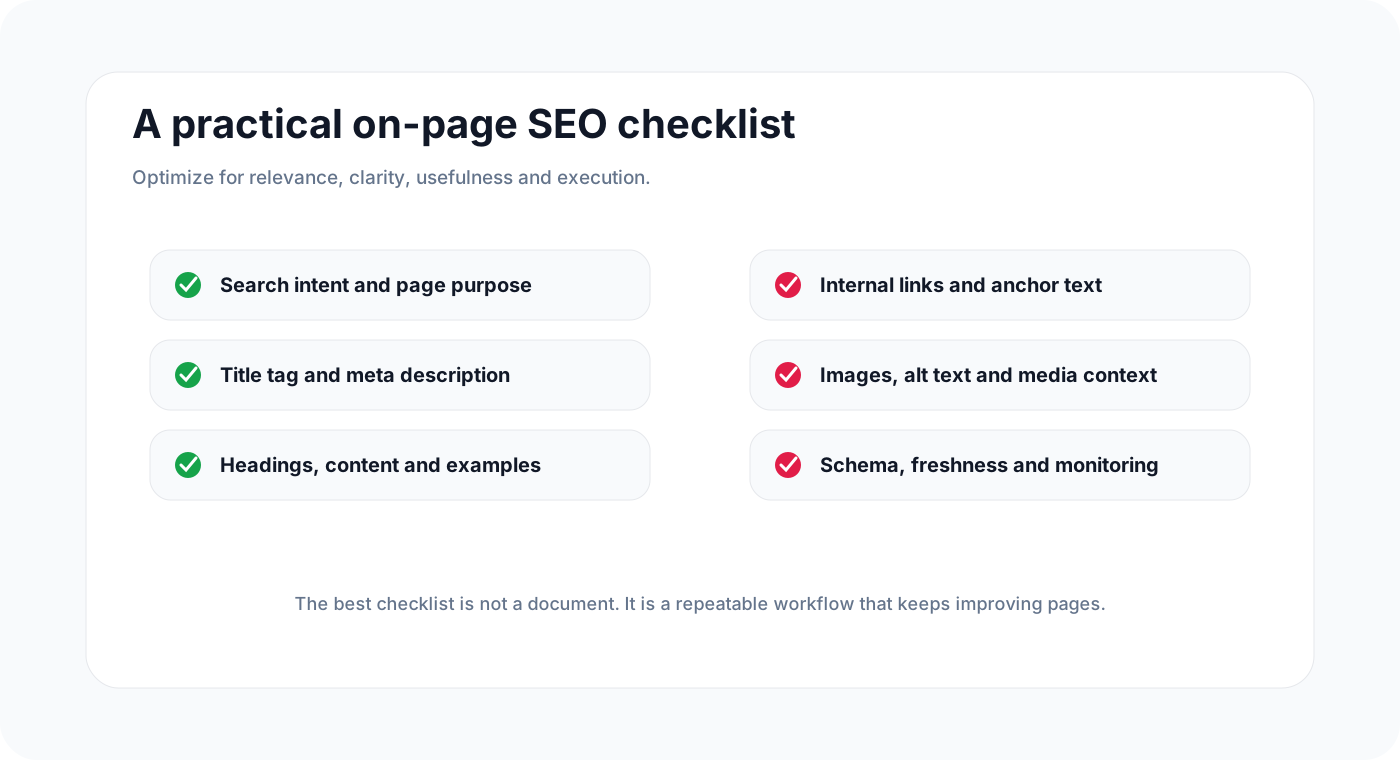
Images, alt text and media context
Images can improve comprehension, but they should support the page rather than decorate it randomly. Use images, diagrams, screenshots or illustrations when they help explain a process, example or comparison. Compress images, set dimensions, use modern formats where appropriate and avoid layout shifts.
Alt text should describe the image for users who cannot see it and for systems that need image context. It should be specific and useful, not stuffed with keywords. If an image is decorative, alt text can be empty. If an image explains a workflow, the alt text should summarize that workflow.
For AI search, visual context can also matter because pages that clearly explain complex ideas with diagrams may be more useful to readers and easier to cite.
Structured data and schema
Structured data helps search engines understand page content in a machine-readable format. It can support rich results and reduce ambiguity. But structured data must match visible content. Google’s structured data policies are clear: do not mark up content that users cannot see, and do not use markup to misrepresent the page.
Useful schema types depend on the page:
- Article or BlogPosting for editorial content.
- BreadcrumbList for navigation context.
- FAQPage where visible FAQs exist and the policy context allows it.
- Product or SoftwareApplication for software pages where details are visible.
- Organization and Person for entity clarity.
- LocalBusiness for local service pages where appropriate.
Schema is not a replacement for good content. It is an annotation layer. The page must still answer the question well.
On-page SEO for AI Overviews and answer engines
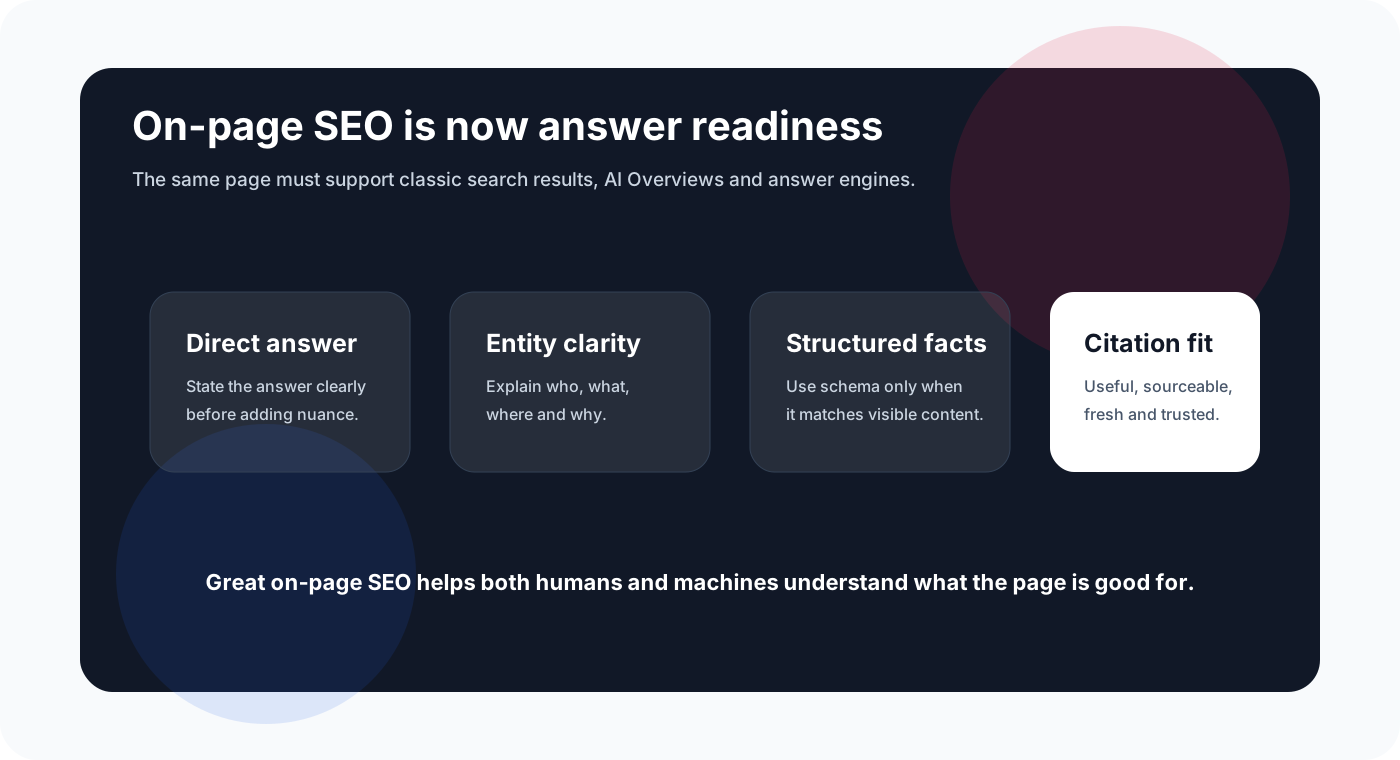
AI Overviews, ChatGPT search and answer engines increase the need for answer-ready pages. A page that only uses broad marketing language may be hard to summarize. A page that answers questions clearly, names entities consistently, provides examples and cites sources is easier to understand.
AI-ready on-page SEO includes:
- Short direct answers where appropriate.
- Clear definitions of important terms.
- Specific examples and use cases.
- Visible author or company credibility signals.
- Fresh publication or update dates where relevant.
- Internal links to related concepts.
- Structured data aligned with visible content.
- External sources for factual claims.
This is not about writing robotic content. It is about making expertise easier to extract and trust.
On-page SEO mistakes to avoid
Most on-page SEO mistakes are not dramatic. They are small clarity failures repeated across many pages.
Writing for keywords instead of users
If the page repeats a phrase but does not answer the real question, it is weak. Keywords help you understand demand. They should not replace useful explanations.
Duplicating titles and descriptions
Duplicate metadata makes pages harder to distinguish. Each important page should have a unique purpose and unique metadata.
Ignoring internal links
Publishing content without linking it into the site wastes value. Every important page should belong to a cluster.
Adding schema without visible content
Schema should clarify what is already visible. It should not invent facts or hide content from users.
Letting content decay
Pages age. Prices change. Features evolve. Search behavior changes. A page that was strong two years ago may now be incomplete.
How AYSA handles on-page SEO
AYSA approaches on-page SEO as execution, not only analysis. The agent can monitor pages, identify weak titles, missing descriptions, content gaps, internal link opportunities, answer-readiness issues and schema opportunities. Then it prepares specific improvements for review.
The important part is approval. AYSA can prepare a better title, rewrite a meta description, suggest internal links, generate content sections or propose schema improvements, but important changes should be reviewed before publishing. After approval, accepted work can be executed inside the website workflow where integration is available.
This is the difference between a report and an operating system. A report says, “Your title could be better.” AYSA prepares the title, explains why it matters, asks for approval and moves the accepted change toward execution.
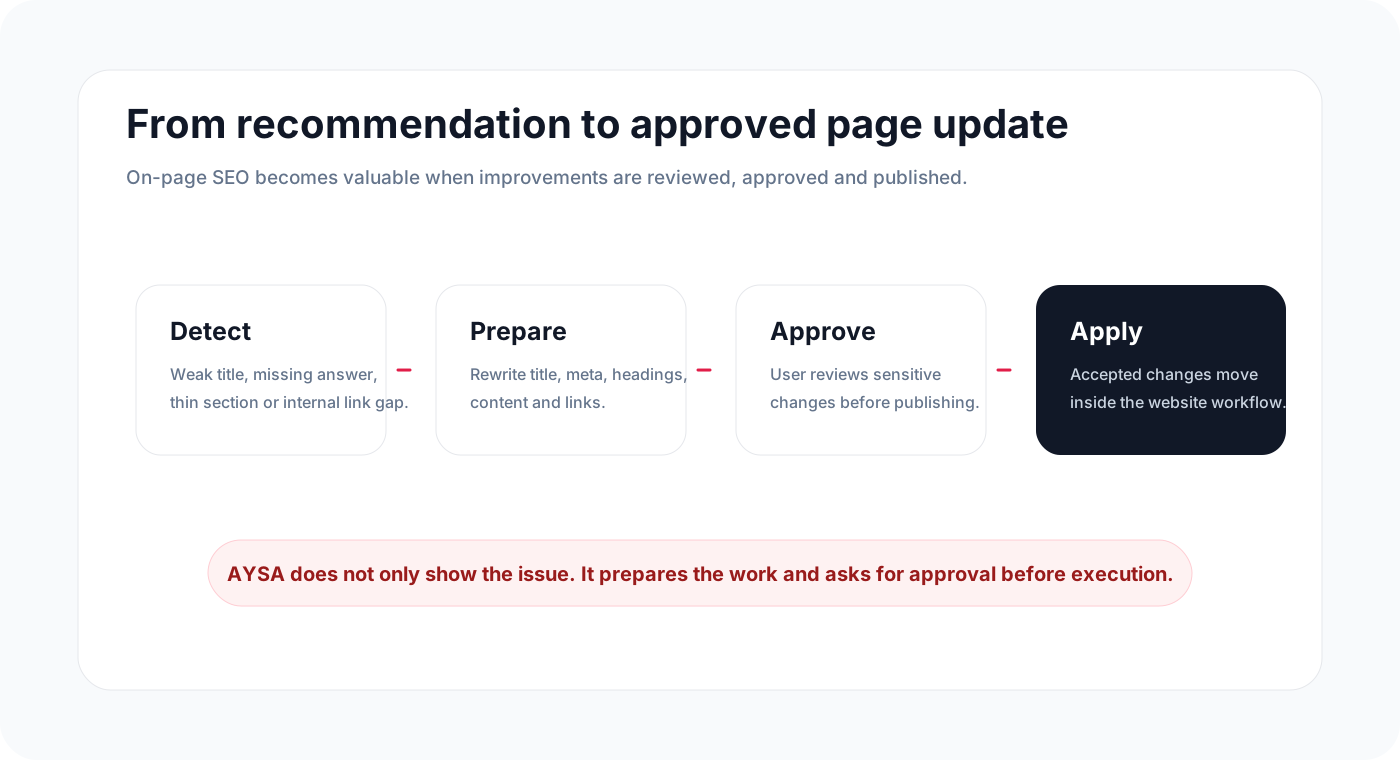
A practical on-page SEO workflow
For a real business website, use this workflow instead of treating on-page SEO as a one-time checklist.
Step 1: Prioritize pages
Start with pages that matter commercially: homepage, service pages, product pages, pricing, location pages, comparison pages and high-impression blog posts. Do not optimize random pages first.
Step 2: Read the search data
Use Search Console to identify queries, impressions, CTR, average position and pages with opportunity. A page with many impressions and low CTR may need a better title or meta description. A page ranking on page two may need stronger content, internal links or authority.
Step 3: Compare intent and content
Look at what the page promises and what the user expects. If the page targets a commercial query but reads like a generic article, it may not satisfy intent. If the page targets an informational query but pushes a sale too early, it may underperform.
Step 4: Prepare improvements
Create specific changes: title rewrite, meta description, H1 adjustment, new section, FAQ, internal links, image alt text, schema update, content refresh or clearer CTA.
Step 5: Review and approve
On-page changes affect messaging, compliance and conversion. Important updates should be approved before publishing, especially in regulated or high-value industries.
Step 6: Publish and monitor
After changes go live, monitor impressions, CTR, rankings, conversions and AI visibility signals. On-page SEO is a loop.
On-page SEO by page type
The same principles apply across websites, but the execution changes depending on page type. A homepage, product page, category page, service page and article should not be optimized the same way.
Homepage
The homepage should make the business immediately understandable. It needs a clear positioning statement, links to the main product or service areas, trust signals, a logical heading structure and a strong conversion path. For AYSA, the homepage needs to communicate AI SEO automation, approved execution, WordPress availability today and broader AI search visibility.
Service pages
Service pages should explain the problem, who the service is for, how the process works, what is included, expected outcomes, proof and next steps. A local service page should also make the service area clear and connect to Google Business Profile context where relevant.
Product and ecommerce pages
Product pages need unique descriptions, specifications, images, FAQs, availability, delivery details, reviews where applicable, structured product data and internal links to categories or buying guides. Ecommerce category pages should not be thin lists. They should include useful buying guidance, filters that do not create index bloat and links to supporting content.
Blog articles
Articles should answer informational queries with depth and clarity. They should cite sources when discussing factual changes, link to related glossary terms, include examples and connect naturally to product or service pages when relevant. A blog should not be a dead end.
Glossary pages
Glossary pages should define the term accurately, explain why it matters, provide examples, warn about common mistakes and link semantically to related terms. Thin glossary pages can become low-value content if they only contain a sentence or two.
Examples of on-page improvements
The easiest way to understand on-page SEO is to look at before-and-after examples.
Weak title to stronger title
A weak title might say: “Services – Home.” It gives almost no context. A stronger title says: “Technical SEO Audit for WordPress Websites | AYSA.” The improved version names the service, the platform and the brand.
Weak intro to stronger intro
A weak intro says: “We offer high quality solutions for your business.” A stronger intro says: “AYSA analyzes your WordPress website, finds technical SEO issues, prepares fixes for approval and executes accepted changes inside your website workflow.” The stronger version explains what happens, where it happens and why it matters.
Weak internal link to stronger internal link
A weak link says “read more.” A stronger link says “learn how AYSA handles technical SEO audits.” The stronger anchor tells users and search systems what the destination page is about.
Weak FAQ to stronger FAQ
A weak FAQ asks “Is this good?” A stronger FAQ asks “Does AYSA publish SEO changes without approval?” and answers clearly: “No important website changes are published before approval; after approval, AYSA can execute accepted work inside the website workflow.” Specific questions reduce ambiguity.
On-page SEO for local businesses, ecommerce and SaaS
On-page SEO is not one-size-fits-all. The page needs to reflect the business model.
Local businesses
Local pages should make location, service area, phone, opening hours, services, reviews, directions and business profile consistency clear. They should avoid doorway-style location pages that only swap city names without adding real local value. A good local page explains what the business does in that area and why a local customer should trust it.
Ecommerce
Ecommerce on-page SEO depends on category clarity, product uniqueness, faceted navigation control, image optimization, internal links, reviews, stock information, delivery details and comparison content. Thin product pages are a common weakness. So are duplicate category pages created by filters or parameters.
SaaS and software
SaaS pages need clear positioning, use cases, integrations, pricing, security information, comparison pages, documentation links and proof. AI search systems often compare software products, so SaaS pages should be specific about who the product is for and what it does differently.
How to prioritize on-page SEO work
Most websites have more possible improvements than time. Prioritization matters. Start with pages where improvements can produce business impact.
- High impressions, low CTR: improve title and meta description.
- Ranking positions 8-20: improve content depth, internal links and answer clarity.
- Important commercial pages with weak content: rewrite around intent and conversion.
- Pages with no internal links: connect them into relevant clusters.
- Outdated pages: refresh facts, examples, dates and next steps.
- Pages mentioned in AI visibility gaps: make entity and answer signals clearer.
This is where an execution agent becomes useful. The challenge is not finding a possible optimization. The challenge is deciding which optimization matters now, preparing it correctly and getting it approved.
Frequently asked questions
Is on-page SEO still important in 2026?
Yes. On-page SEO is still essential because search engines and AI systems need clear, useful pages to understand and surface. It now supports both classic rankings and AI answer readiness.
What is the most important on-page SEO factor?
There is no single factor. Search intent, useful content, clear titles, strong headings, internal links, technical accessibility and trust signals all work together.
How often should on-page SEO be updated?
Important pages should be reviewed regularly, especially when rankings change, CTR drops, products evolve, AI search behavior changes or competitors improve their pages.
Can AI write on-page SEO content?
AI can help draft and prepare content, but the output should be reviewed for accuracy, usefulness, tone and business fit. The best workflow is AI-assisted preparation with human approval.
How does AYSA help with on-page SEO?
AYSA monitors pages, prepares on-page SEO improvements, asks for approval and can execute accepted changes inside the website workflow where integration is available.
The AYSA point of view
On-page SEO is where strategy becomes visible. Users do not experience your audit. They experience the page. Search engines do not rank your intentions. They evaluate what the page actually says, how it is structured, how it connects and whether it is useful.
The future of on-page SEO is not more manual spreadsheets. It is approved execution. Less SEO work. More organic growth. AYSA exists to help businesses move from knowing what should be improved to getting approved improvements live.
Sources and further reading
- Semrush: On-Page SEO
- Google Search Central: SEO Starter Guide
- Google Search Central: Creating helpful, reliable, people-first content
- Google Search Central: Make your links crawlable
- Google Search Central: Structured data general guidelines
- Google Search Central: AI features and your website