
ChatGPT Ads Drops Max CPC & Max Bid: What Cost Targets Mean For Performance, Predictability, And SME Marketing Ops
OpenAI is replacing Max Bid and Max CPC in ChatGPT Ads with Target CPA and Target CPC—shifting advertisers from per-auction caps to average cost goals. Here’s what changed, why it matters for SMEs and agencies, what can go wrong, and how to operationalize measurement and execution with AYSA’s approved changes workflow.

OpenAI’s ChatGPT Ads platform is moving away from manual bid caps like Max Bid and Max CPC and toward average cost targets: Target CPA (cost per acquisition) and Target CPC (cost per click). That sounds like a subtle UI change, but operationally it’s a major shift: you’re giving the system more freedom to bid higher (or lower) in individual auctions in exchange for hitting an average cost goal over time.
For small and mid-sized businesses (SMEs), this change can be positive—if you run your marketing like a system, not like a set of knobs. But it can also create the exact problems owners hate: “Why did we pay that much for a click?” “Why did conversions slow down?” “Why didn’t the campaign spend the full budget?” “Why did the API integration suddenly behave differently?”
I’m Marius Dosinescu, and at AYSA.ai we care about the part that most teams underestimate: execution. If bidding becomes more automated, the controllable advantage shifts to (1) measurement quality and (2) the website’s ability to convert the traffic the platform decides to buy. AYSA is designed to monitor, prepare recommendations, ask for approval, and then execute accepted website changes—so you can turn paid traffic volatility into predictable growth.
Concise Summary
- What changed: ChatGPT Ads is replacing Max Bid and Max CPC with Target CPA and Target CPC (average targets, not per-auction caps).
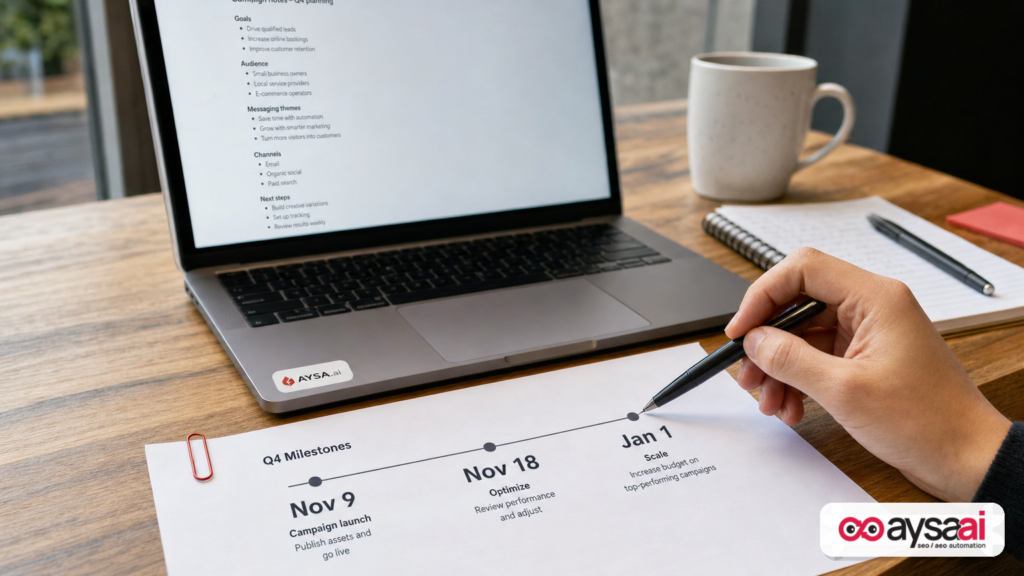
- Key dates: New campaign options began Nov. 9; legacy API behavior changes Nov. 18; Max Bid/Max CPC stop applying to existing campaigns on Jan. 1, 2027.
- Why it matters: Individual Clicks/conversions can exceed your target; campaigns can underspend if targets are too restrictive or data is weak; API-based campaign creation may silently shift from “max” to “average.”
- What to do: Re-baseline targets using recent averages, improve Conversion tracking, watch learning volatility, and treat landing page/CRO as part of the bidding strategy.
Key Takeaways (The Business Version)

- You’re losing a safety rail. Max CPC felt like a hard ceiling. With average targets, you’re buying outcomes over time, not controlling each auction.
- Your website matters more. Automated bidding systems reward strong conversion signals. Weak tracking and weak landing pages make automation look “expensive.”
- Expect uneven days. Cost targets can produce spikes and dips. The question becomes: are you improving the average over a meaningful window?
- Operations beat opinions. If you don’t have Monitoring, change control, and a workflow for continuous website improvements, you’ll feel like the platform is driving and you’re just paying.
Table of Contents

- What Changed In ChatGPT Ads (And The Dates You Can’t Ignore)
- Why Ad Platforms Keep Removing Manual Controls
- The Practical Meaning Of “Average Targets” (And Why Your CPA Can Spike)
- Budget, Delivery, And The Quiet Ways Campaigns Underspend
- Bidding Goals vs. Billing Events: The Confusing Part That Matters
- API Partners: The Nov. 18 Behavior Change That Can Break Assumptions
- What You Actually Pay: Auction Pricing And Why Wording Changes Matter
- Measurement: The #1 Reason Cost Targets Fail For SMEs
- SME Scenario: A Local Clinic And An Ecommerce Brand Under Target CPA
- What Agencies Should Rethink (Reporting, Promises, And Control)
- A Risk Playbook: What Can Go Wrong And How To Reduce Damage
- A Practical Action Plan For The Next 30 Days
- Where AYSA Fits: Turning Cost-Target Volatility Into Website Wins
- What To Do Next
- Sources And Further Reading
What Changed In ChatGPT Ads (And The Dates You Can’t Ignore)
According to reporting by Search Engine Journal (SEJ), OpenAI updated its help documentation and is changing how bidding controls work in ChatGPT Ads: manual caps (Max Bid and Max CPC) are being replaced with average cost goals (Target CPA and Target CPC).
Here are the operational milestones that matter if you manage ads directly—or through an agency or API-based tool:
- Nov. 9 (already in effect): For new campaigns, advertisers can use Target CPA for conversion campaigns and Target CPC for click campaigns.
- Nov. 18: If an API partner sends a Max Bid/Max CPC value using legacy fields, that number begins behaving like an average target, not a per-auction maximum.
- Jan. 1, 2027: Max Bid/Max CPC stop applying to existing campaigns, and legacy API fields are deprecated.
This isn’t just a feature swap; it’s a philosophy shift: from “protect me from overbidding” to “let the system bid flexibly to hit a goal.” SEJ’s coverage is the best single reference point in the supplied research context, and you should read it for the platform-specific details: Search Engine Journal: ChatGPT Ads Is Replacing Max Bid & Max CPC With Cost Targets.
Why Ad Platforms Keep Removing Manual Controls
Ad platforms have been converging on the same idea for years: the more they can optimize toward an objective (conversions, revenue, qualified leads), the more they want advertisers to provide:
- a clear goal (CPA/CPC/ROAS),
- a budget, and
- enough conversion data to learn.
Manual caps are attractive because they feel like control. But they can also work against automated bidding systems by artificially constraining auctions that the algorithm believes are high value. SEJ notes Microsoft has taken similar steps in Microsoft Ads, arguing that Max CPC can interfere with optimizations in goal-based strategies. (In this assignment’s research context, that Microsoft detail is referenced via SEJ’s reporting; for official Microsoft documentation, you should validate directly before treating it as policy.)
From a business perspective, platforms do this because it aligns incentives:
- The platform wants stable spend and stable outcomes, not campaigns that “choke” when a cap is too low.
- Advertisers want predictable unit economics (CPA, CPL, CAC). Average targets fit that narrative better than per-auction limits.
- Automation needs freedom to bid up on high-intent inventory and bid down elsewhere.
The trade-off is predictability at the micro level. You gain potential efficiency at the macro level, but you lose the comfort of “never pay more than X for a click.”
The Practical Meaning Of “Average Targets” (And Why Your CPA Can Spike)
Target CPA and Target CPC are described as average cost goals, not hard limits. That distinction is where most frustration will come from—especially for founders who check campaigns daily.
Average ≠ cap
Under a Max CPC model, you might assume:
- “If my Max CPC is $4, no click costs more than $4.”
Under a Target CPC model, the platform may bid above your target in some auctions and below it in others, trying to land at your average goal over time. SEJ quotes language to that effect from OpenAI’s help page: the system can bid above/below the target in individual auctions to maximize clicks from your budget while working toward your desired average.
Why spikes happen even if the system is “working”
Spikes can occur for reasons that are not necessarily “bugs”:
- Market dynamics: Competitors raise bids, inventory tightens, or intent surges (seasonality, news, promotions).
- Learning: Early in a strategy shift, the system explores to find pockets of performance.
- Conversion lag: If you measure conversions late (or inaccurately), the system may overvalue clicks that look good initially.
- Data sparsity: Low conversion volume can make averages unstable.
Your job changes: from bidding control to system management
When bid caps disappear, the lever you still control is the quality of the signal and the efficiency of the funnel. This is where teams either mature fast—or churn through “new strategies” until budgets get cut.
Budget, Delivery, And The Quiet Ways Campaigns Underspend
One of the most under-discussed outcomes of cost targets is underspend. SEJ’s source context highlights a key warning: if a target is set below what recent performance suggests is achievable, delivery may be restricted. In plain English: the system can’t find enough auctions that meet your goal, so it buys less traffic.
That creates a leadership trap:
- Finance sees less spend and thinks “good, efficiency.”
- Sales sees less volume and thinks “marketing is broken.”
- Marketing sees no learning and thinks “the platform is throttling us.”
Common reasons for underspend under cost targets
- Targets are unrealistic relative to your offer, market, and historical data.
- Conversion data is weak (misattribution, missing events, low volume).
- Landing page mismatch causes low Conversion rate, making the inventory “too expensive” for your target.
- Creative fatigue lowers CTR and conversion rate, raising effective cost per result.
When your campaign underspends, don’t just lower targets and hope. Use it as a diagnostic signal: something in the system (offer, funnel, tracking, intent match) is off.
Bidding Goals vs. Billing Events: The Confusing Part That Matters
SEJ’s coverage includes an important nuance from OpenAI documentation: the bidding goal and the billing event are different settings. That means a campaign can be optimized for conversions (Target CPA) while being charged per click or per impression, depending on how the campaign is billed.
For SME operators, this distinction matters because it changes how you diagnose performance:
- If you’re billed per click but optimizing for conversions, you may see click costs swing while the system searches for conversion-efficient traffic.
- If you’re billed per impression, you may see spend patterns that look unfamiliar if you only think in CPC terms.
If your reporting dashboard only tells you “CPA went up,” you may miss the reason: billing mechanics, Attribution windows, or conversion quality changes.
API Partners: The Nov. 18 Behavior Change That Can Break Assumptions
If you use an agency tool, a bid management platform, or any custom integration, the Nov. 18 date is the one that can create the most confusion because it changes meaning without changing the field name.
Per SEJ’s summary of OpenAI’s updated documentation:
- API partners will get new Target CPA/Target CPC fields.
- Legacy fields (Max Bid/Max CPC) remain active until end of December.
- But starting Nov. 18, values sent in those legacy fields behave like average targets.
- On Jan. 1, 2027, legacy fields are deprecated.
What to ask your agency or software vendor
- Which field(s) are you using after Nov. 18 for new campaigns and bid type changes?
- How do you prevent accidental “max-to-target” semantic shifts in templates?
- Do you set targets based on historical averages, or do you default to old max values?
- What’s your rollback plan if targets cause underspend or CPA inflation?
SMEs often assume “the tool handles it.” This is exactly the sort of platform shift where “handled it” can still mean “we mapped the old field to the new behavior and moved on,” without rethinking whether the numeric values still make sense.
What You Actually Pay: Auction Pricing And Why Wording Changes Matter
SEJ notes OpenAI’s help documentation describes pricing as: “The final winning auction bid sets the price you pay.” It also notes prior wording about a relevance-weighted, second-price auction was removed from an advertiser basics page.
I’m not going to over-interpret a wording change without the underlying official documentation in hand and validated. But here’s what you should take away operationally:
- You’re paying what the winning bid resolves to under the platform’s rules.
- When the platform gives the system more bidding freedom (targets), you must assume price dispersion increases.
- That makes measurement and on-site conversion efficiency even more important, because you can’t “cap your way” out of a weak funnel.
If you’re procurement-minded, you may dislike this. If you’re growth-minded, you can still win—by building a stronger machine around it.
Measurement: The #1 Reason Cost Targets Fail For SMEs
Cost targets only work as well as the conversion signal. If the platform doesn’t see conversions accurately—or if it sees the wrong thing as a conversion—Target CPA becomes a fantasy number.
Three levels of conversion quality (SME-friendly)
- Counting: Are conversions being recorded at all? (Basic tracking installed, events firing reliably.)
- Attribution: Are conversions attributed to the right traffic source/campaign? (So the system learns the right patterns.)
- Value: Are we optimizing for the right outcomes? (Leads that answer, purchases that don’t refund, bookings that show.)
What to fix first if you want targets to behave
- Define a conversion that represents business value. Don’t optimize for “contact page views” when you need qualified leads.
- Reduce conversion friction. Faster pages, clearer offers, fewer form fields, stronger proof.
- Separate micro and macro conversions. Use micro events for diagnostics, but optimize bidding around outcomes.
This is also where SEO and AEO/GEO intersect with paid search: the same clarity and structure that helps organic visibility often improves landing page comprehension and conversion rate—especially when AI-driven experiences summarize and pre-qualify users.
If your team is actively building for AI-era discovery, start here: AI Search Visibility.
SME Scenario: A Local Clinic And An Ecommerce Brand Under Target CPA
Let’s make this real with two scenarios—because the same bid strategy can behave very differently depending on the business model.
Scenario A: Local clinic buying appointment leads
Business: A regional clinic running click and conversion campaigns to drive appointment requests.
What changes with Target CPA:
- The system may pay more for some clicks if it predicts higher appointment likelihood (time of day, device, query intent).
- If the clinic’s website form is slow, confusing, or doesn’t build trust, conversion rate stays low—forcing the system to either overspend to hit volume or underspend to try to hit the target.
What can go wrong fast:
- Calls and forms become the “conversion,” but many are unqualified. Target CPA looks great on paper, but the schedule is empty.
- Targets are set too low compared to recent averages, and delivery drops—front desk blames marketing.
Practical fix: Improve lead quality signals. If you can’t pass offline qualification back into the system, you at least need tighter on-site filtering and better content that sets expectations. This is where consistent content + structured pages matter.
Scenario B: Ecommerce brand selling a seasonal product
Business: An ecommerce shop running conversion campaigns for purchases.
What changes with Target CPA:
- The system may bid aggressively during peak intent moments (e.g., evenings/weekends, payday, or seasonal demand) to capture purchase-ready users.
- You may see some expensive conversions if the algorithm believes the user is high intent—and it may be right.
What can go wrong fast:
- Out-of-stock variants or slow shipping pages tank conversion rate and quality signals, making CPA blow out.
- Product pages are thin, unclear, or missing trust, increasing returns/refunds (which the platform may not “see”).
Practical fix: Treat on-site UX as part of the bid strategy. If your conversion rate rises, the algorithm can afford more auctions at the same target CPA. That’s how you turn “automation took control” into “automation scaled us.”
To operationalize this across your site, you need continuous monitoring and prioritized fixes. AYSA’s monitoring foundation is here: AYSA Monitoring.
What Agencies Should Rethink (Reporting, Promises, And Control)
If you run paid media for clients, this platform shift forces a reset in client communication. Many clients interpret Max CPC as a contractual promise: “we will never pay more than X per click.” Cost targets remove that comfort.
Reporting needs to shift from “controls” to “system health”
When an average target is the strategy, your reporting should highlight:
- Average CPA/CPC over a defined window (not daily panic).
- Spend pacing vs. budget (are we underspending because targets are too tight?).
- Conversion rate trends by landing page and by intent segment.
- Lead/purchase quality (as best as you can measure).
Agency operations: the hidden challenge
The agencies that win in automated bidding eras are the ones who can move fast on the website—without creating chaos. That’s why “approved execution” matters. Clients want control over what changes on their site, but they also want speed.
AYSA is built for that: it monitors, prepares fixes, requests approval, and executes only what’s accepted. That makes it easier to connect campaign learnings to landing page improvements without endless ticket threads. Explore the workflow concept via AYSA tools: AI SEO Tools.
A Risk Playbook: What Can Go Wrong And How To Reduce Damage
Here’s a practical risk register you can use internally. No drama—just the issues that show up when “max” becomes “target.”
Risk #1: Sticker shock from expensive clicks
What it looks like: Someone spots a single click that costs 2–5x the old max and freaks out.
Why it happens: The system is allowed to bid above target in individual auctions to meet average goals over time.
What to do: Set expectations upfront: evaluate by average over a window. Put guardrails in budget and monitor average cost trends, not single-line items.
Risk #2: Underspend and volume collapse
What it looks like: Budget isn’t spent; leads/sales drop; everyone blames the platform.
Why it happens: Targets are too restrictive or conversion data is insufficient.
What to do: Re-baseline target to recent averages, then fix the funnel to lower CPA sustainably (landing pages, forms, content clarity).
Risk #3: Wrong conversion definition
What it looks like: CPA is “good,” but business outcomes are weak.
Why it happens: You’re optimizing toward easy-to-get actions, not valuable outcomes.
What to do: Audit conversions. Decide what the platform should learn from. If you can’t measure true quality, add on-site qualification and clearer intent-setting copy.
Risk #4: API semantics shift causes unexpected performance
What it looks like: Campaign templates that used Max CPC start behaving differently after Nov. 18.
Why it happens: Legacy fields start being treated as average targets.
What to do: Audit integrations now. Confirm field mappings with vendors. Keep a change log and compare performance before/after field changes.
Risk #5: Team focuses on bidding and ignores the site
What it looks like: Endless “bid strategy tweaks,” minimal CRO or content improvement.
Why it happens: Bidding is familiar; websites feel slow to change.
What to do: Treat the website as the highest-leverage variable you control. Create a weekly cadence of approved fixes tied to performance data.
If you need that cadence, start with AYSA’s approach to monitoring and execution: AYSA Monitoring.
A Practical Action Plan For The Next 30 Days
This is the part most articles skip: the operational checklist that actually protects your budget and builds performance.
Week 1: Get aligned on definitions and dates
- Write down your current average CPA/CPC (last 30–60 days) as your baseline.
- Confirm whether you are a direct Ads Manager user or an API tool user.
- If API-based, schedule a vendor/agency check-in specifically about the Nov. 18 field behavior change and Jan. 1 deprecation.
Week 2: Build a “targets” strategy that won’t choke delivery
- Set initial targets close to recent reality (don’t jump straight to “wishful CPA”).
- Decide your evaluation window (e.g., weekly averages) and communicate it to stakeholders.
- Define “failure signals”: underspend, conversion volume drop, or sustained CPA drift.
Week 3: Fix the funnel like it’s part of bidding (because it is)
- Review top landing pages: do they match ad intent? Is the offer obvious in 5 seconds?
- Reduce friction: shorter forms, clearer CTAs, stronger trust signals.
- Improve page clarity for AI-era discovery and summarization (strong headings, FAQs, structured content).
AYSA can help identify and manage these improvements without turning your site into a constant experiment: recommendations are prepared, you approve changes, and AYSA executes what you accept. Start here: AI SEO Tools.
Week 4: Create a continuous optimization loop
- Hold a weekly “system health” review: spend pacing, average costs, conversion rate, lead/purchase quality.
- Ship at least 2–5 approved site improvements per week (copy, structure, internal linking, FAQs, speed fixes).
- Document changes so you can separate “platform learning” from “site change” effects.
If you need an operational home for this loop, AYSA’s product and pricing context is here: AYSA Pricing.
Where AYSA Fits: Turning Cost-Target Volatility Into Website Wins
When ad platforms remove manual bidding controls, the best operators shift attention to what they can control:
- Signal quality (measurement, conversion definitions, on-site actions that matter)
- Conversion efficiency (CRO, clarity, trust, speed)
- Content and structure that supports both paid conversion and AI-era visibility (AEO/GEO)
AYSA is not an ad bidding tool. It’s the system that helps you win the part advertisers routinely neglect: your website as a performance asset. AYSA:
- Monitors site health and visibility signals: AYSA Monitoring
- Prepares prioritized recommendations based on what’s changing in search and AI discovery: AI Search Visibility
- Asks for approval so you keep control and avoid “AI changed my site unexpectedly.”
- Executes accepted changes so improvements actually ship, not just live in tickets.
This matters more now because if your cost targets create volatility, the fastest path back to predictability is usually not “more bidding tricks.” It’s better conversion rates, better intent matching, and better measurement—so the system can learn and stabilize.
For more on how we think about modern search, AI answers, and execution, browse the AYSA blog: AYSA Blog.
What To Do Next
- Audit your baselines: Write down your recent average CPA/CPC and conversion rate by landing page.
- Confirm your path: Are you using Ads Manager directly or an API partner? If API, escalate the Nov. 18 behavior change immediately.
- Reset expectations internally: Targets are averages; single clicks/conversions can exceed them.
- Protect volume: If delivery drops, don’t celebrate underspend—diagnose unrealistic targets and weak conversion signals.
- Invest in the funnel: Improve landing pages and conversion clarity so the system can hit targets without sacrificing scale.
- Operationalize execution: Use an approved workflow so changes ship safely and consistently. Start with AYSA monitoring: AYSA Monitoring.
Sources And Further Reading
- Search Engine Journal: ChatGPT Ads Is Replacing Max Bid & Max CPC With Cost Targets
- Search Engine Journal: Paid Media section (context and ongoing updates)
- Search Engine Journal: AI Search coverage (broader AI discovery context)
- Search Engine Journal: SEO section (how organic and AI discovery intersect with paid)
- AYSA: AI Search Visibility (AEO/GEO foundation)
- AYSA: AI SEO Tools (monitor → recommend → approve → execute)
- AYSA: Monitoring (ongoing measurement and alerts)
- AYSA: Pricing
- AYSA: Blog
Continue the AI search topic inside AYSA.
Use these pages to connect the article with AI SEO tools, AI visibility monitoring, AI Overviews and approved website execution.
Turn this topic into a website action plan.
Use these AYSA hubs to move from reading to technical fixes, AI visibility monitoring, research, glossary context and approval-first SEO execution.