
ChatGPT Atlas Is Being Shut Down: What OpenAI’s “One Desktop App” Strategy Means for AI Search, Brand Discovery, and SEO Execution
OpenAI is retiring ChatGPT Atlas on Aug. 9 and consolidating browsing + agentic workflows into the ChatGPT desktop app. This isn’t just a product cleanup—it’s a signal that AI-driven discovery is moving from “browser experiments” into everyday work surfaces. Here’s what changes, why it matters, and how SMEs and agencies should adapt their AEO/GEO and SEO execution.

OpenAI is retiring ChatGPT Atlas on Aug. 9—less than a year after it launched—and shifting Atlas-style browsing and task automation into the main ChatGPT desktop app. On paper, this looks like a normal product consolidation. In practice, it’s a loud signal: AI-driven discovery is moving out of “experimental browsers” and into the default work surface people already use.
I’m writing this from the perspective of someone who cares less about what a feature is called and more about what it does to your pipeline. If customers are researching in AI interfaces—and those interfaces can browse, summarize, compare, and recommend—your brand will increasingly win (or lose) before a traditional search click even happens.
This editorial unpacks what changed, why it matters for SMEs and agencies, what can go wrong, and how to respond with an execution-first approach. I’ll also explain where AYSA fits as an Approved Execution system: we monitor, prepare changes, ask for approval, and execute accepted improvements so you can keep up without creating new operational risk.
Concise summary
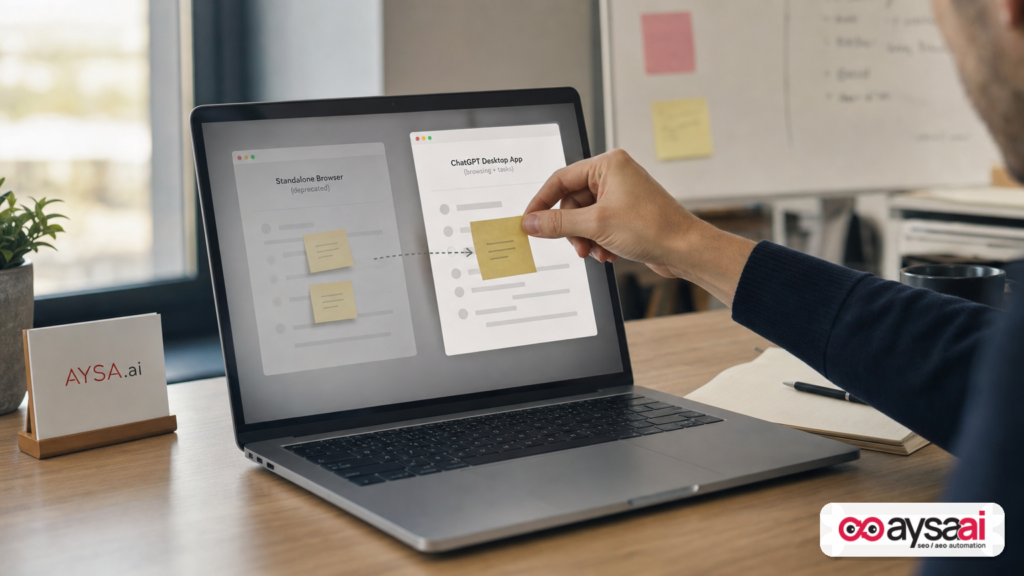
- What changed: OpenAI is discontinuing the Atlas standalone browser and consolidating browsing + work-agent features into the ChatGPT desktop app. The deprecation date reported is Aug. 9.
- Why it matters: AI browsing becoming “default” inside a primary app accelerates the shift from SEO as “rank and click” to AI discovery as “decide and recommend”.
- Business impact: You’ll see more users get answers without visiting your site. Your job becomes: be the brand AI can find, verify, and confidently recommend—across your site, your entities, and your reputation footprint.
- What to do: Strengthen your “AI-readable” fundamentals (site structure, factual clarity, schema, FAQs, policies, reviews, entity signals), then build Monitoring and a shipping cadence.
- Where AYSA fits: Use AYSA to monitor, generate a prioritized plan, prepare safe website changes, route them for approval, and execute—so you don’t get stuck in strategy with no follow-through.
Table of contents
- What actually changed: Atlas is ending, browsing is moving into the ChatGPT desktop app
- Why the consolidation matters more than the product name
- Why this matters for businesses: discovery is shifting from “search results” to “decision layers”
- The new risk model: fewer clicks, more invisible evaluation
- The practical SEO/AEO/GEO implications: what to optimize when AI browsing becomes “default”
- A concrete SME scenario: the local clinic that loses leads without losing rankings
- What agencies should rethink: deliver systems, not slide decks
- How to measure what’s happening (without inventing metrics)
- Defensive vs. offensive moves: protect revenue now, build AI visibility next
- How AYSA fits: monitor → prepare → approve → execute (because strategy without execution is noise)
- What to do next: a 30-day action list
- Sources and further reading
What actually changed: Atlas is ending, browsing is moving into the ChatGPT desktop app
According to reporting by Search Engine Land, OpenAI is discontinuing ChatGPT Atlas—its standalone desktop browser—with a targeted deprecation date of Aug. 9. The stated direction is to move the browsing and task automation capabilities into a consolidated ChatGPT desktop app that also includes work-focused agent features and Codex-related functionality. Atlas launched on Mac in October (less than a year ago), and OpenAI has been iterating quickly since then.
Here’s the part to internalize: OpenAI is not abandoning browsing. It’s removing the standalone browser wrapper. That’s a meaningful distinction for businesses. Instead of asking users to adopt an “AI browser,” OpenAI wants AI browsing to happen inside the app people already open to ask questions and get work done.
Source: Search Engine Land – “OpenAI sets Aug. 9 end date for ChatGPT Atlas”.
What users will actually do (behaviorally)
Most customers don’t care whether a capability lives in a browser or an app. They care that they can:
- Ask a question and get a confident answer
- Compare options (products, providers, prices, reviews)
- Complete a task (book, buy, request a quote, generate an email, draft a plan)
If the ChatGPT desktop app becomes the “one place” to do this, it increases the likelihood that research and evaluation happen in the AI layer first. That changes the economics of visibility.
A note on Chrome extensions (and why it’s not the core story)
The same Search Engine Land report mentions that OpenAI also offers ChatGPT/Codex extensions for Chrome, allowing users to keep their existing browser. That’s useful context, but it doesn’t change the strategic direction: the primary product is the ChatGPT desktop app. Extensions are distribution; the app is the hub.
Why the consolidation matters more than the product name
Atlas retiring quickly isn’t just “OpenAI being OpenAI.” This fits a broader pattern in fast-moving AI product cycles:
- Standalone tools get absorbed into platforms once the platform has enough users.
- AI features become default utilities, not special apps that require behavior change.
- Workflow beats novelty: the winning products reduce friction, not add another destination.
If you’re a business owner, here’s the translation: AI-driven browsing and research is going to scale faster when it’s embedded in the default app. You should expect more prospective customers to arrive at a shortlist before they ever visit your site.
This is also a clue about where platform value is going: not just in the model’s answers, but in the actions the model can take once it has context (work tasks, automation, code, browsing, document handling). When AI can browse and complete multi-step tasks, visibility becomes less about a single Keyword and more about being the “trusted, retrievable option” across a chain of questions.
Why this matters for businesses: discovery is shifting from “search results” to “decision layers”
In classic search, your goal was to win a click. Your ranking position, Title tag, and snippet earned attention, and the website did the persuading.
In AI-driven discovery, a lot of persuasion happens before the click—or without a click at all. Users ask:
- “What’s the best option for X under $Y?”
- “Compare A vs. B for my use case.”
- “Which provider near me has the best reviews and offers Z?”
- “Summarize the return policies and shipping times for these stores.”
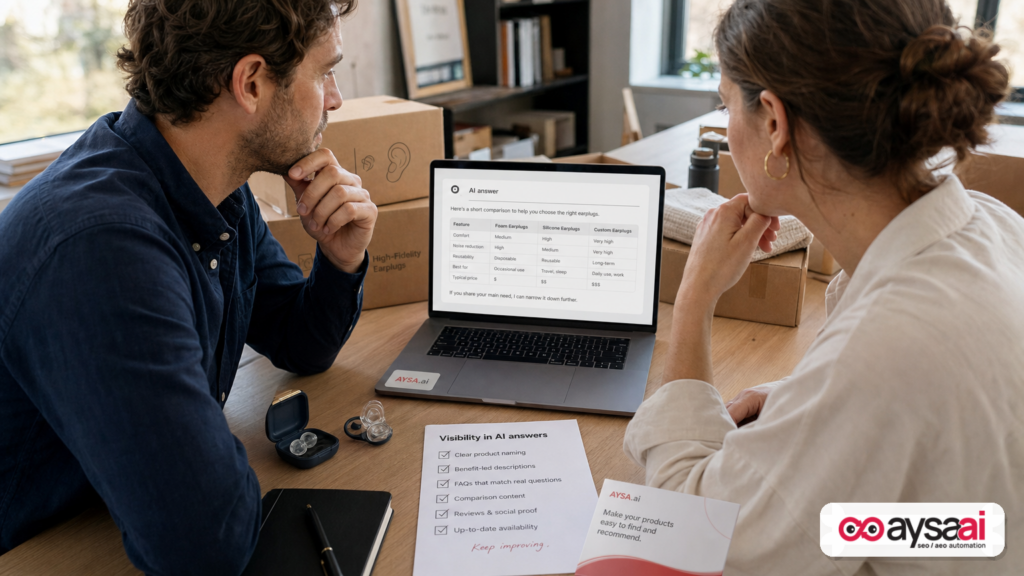
When an AI interface can browse and synthesize, it becomes a decision layer: it compresses research, filters options, and frames tradeoffs. Your job is no longer just to rank—it’s to become easy for the AI to:
- Find (crawlable, indexable, discoverable)
- Understand (clear structure, entities, unambiguous claims)
- Verify (consistent facts, trust signals, policies, reputation)
- Recommend (credible differentiation, coverage of user intents)
Search Engine Land’s “why we care” framing is on point: moving AI browsing into the core app gives ChatGPT another channel to shape discovery beyond traditional search results. That’s not theoretical—it’s a distribution upgrade.
A parallel trend: AI features inside existing surfaces
Even if you ignore OpenAI’s product lineup, the broader market direction is clear: AI features are being integrated into the places users already are. Search Engine Land has been covering the changing landscape across search and AI discovery—if you want adjacent context, their site’s recent topics around AI and search are useful starting points:
- ChatGPT AI referral traffic analysis (Search Engine Land)
- Google Search Console reporting updates (Search Engine Land)
I’m not repeating any numbers from those headlines here because the supplied source context doesn’t provide details I can verify directly. But the editorial point stands: measurement and visibility are shifting across multiple surfaces, not just Google’s classic SERP.
The new risk model: fewer clicks, more invisible evaluation
For SMEs, the scariest part of AI discovery isn’t that “traffic might go down.” It’s that your lead flow can get disrupted without obvious warning if you’re still using old dashboards and old assumptions.
Three ways this shows up operationally:
1) Your brand gets evaluated without visiting your website
If AI can browse, summarize, and compare, it can form an opinion about you from:
- Your site’s public pages (pricing, policies, FAQs, product pages)
- Third-party reviews and listings
- Inconsistent information across the web (hours, services, locations)
If your site is vague (“contact us for pricing”), missing key policies, or inconsistent across pages, an AI may “choose” a competitor that is easier to verify—even if your offering is better.
2) You can lose “consideration share” while rankings stay stable
Rankings are not the only distribution channel anymore. If users get a shortlist from AI, then run a quick Branded Search (or navigate directly), you might see:
- Stable rankings, but fewer discovery clicks
- More branded search going to competitors
- More “no-click” journeys
This is why “we still rank #3” is becoming a weak comfort metric. Visibility now includes whether you’re being cited, compared, and recommended in AI answers.
3) The time-to-correct gets shorter
When distribution changes quickly (like moving browsing into the main app), you have less time to diagnose and respond. The teams that win are the ones that can:
- Detect changes early
- Ship fixes safely
- Iterate continuously
That’s why I’m pushing an execution-first mindset throughout this piece.
The practical SEO/AEO/GEO implications: what to optimize when AI browsing becomes “default”
Let’s get concrete. If AI browsing is being embedded into the default ChatGPT desktop experience, what should businesses actually do?
Think in layers: retrieval, comprehension, trust, and conversion.
Layer 1: Retrieval — make it easy to find you
This is still classic SEO hygiene, but with higher stakes:
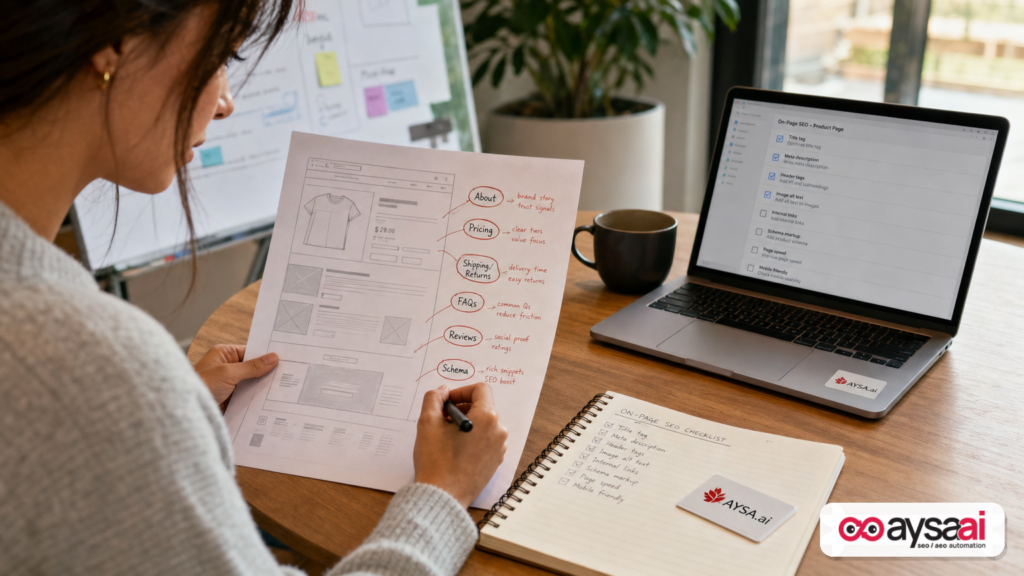
- Indexability: Ensure key pages are crawlable and not blocked by robots/noindex mistakes.
- Information architecture: Clear categories, logical internal linking, and consistent navigation help both humans and machines.
- Canonicalization and duplicates: Reduce confusion about which page represents the “true” version of a product/service.
- Fast, stable pages: Performance is not just for Google; it reduces friction for any browsing system.
AYSA’s approach starts here: monitoring the basics continuously so the “plumbing” doesn’t silently break while you’re focused on campaigns. See: AYSA Monitoring.
Layer 2: Comprehension — make it easy to understand what you do
AI systems do better when your website states facts plainly and consistently. Many SMEs unknowingly sabotage themselves with marketing fog.
Examples of clarity improvements that tend to matter:
- Service/product definitions: Say what you do, who it’s for, and what outcomes to expect.
- Constraint disclosure: Where you do (and don’t) serve; what’s included; what’s excluded.
- Pricing transparency: If you can’t publish full pricing, publish ranges, typical projects, or “starting at” with clear scope.
- Operational details: Shipping times, returns, warranties, appointment availability, response times.
This is AEO/GEO in practice: not “write content for bots,” but reduce ambiguity so a system can represent you correctly.
Layer 3: Trust — make it easy to verify you
When an AI browses, it’s effectively doing due diligence at scale. Trust signals are not optional.
Trust often comes down to boring pages that are wildly under-optimized:
- About page (real story, team, credentials)
- Contact page (real address if applicable, real phone, clear support path)
- Policies (returns, shipping, privacy, guarantees)
- Reviews/testimonials (properly presented and consistent with off-site reputation)
- Case studies (specific outcomes, constraints, industries—without exaggeration)
If your site lacks these, AI may still mention you, but it’s less likely to recommend you confidently.
Layer 4: Structured data — help machines parse the obvious
I’m deliberately not listing a dozen schema types and pretending that’s the whole answer. But structured data remains a practical tool to reduce ambiguity for machines.
Common, broadly useful structured data opportunities include:
- Organization / LocalBusiness
- Product / Offer (for ecommerce)
- FAQ (where appropriate and truthful)
- Review markup (only when compliant with guidelines)
The key: implement it correctly, keep it consistent, and avoid “spammy” markup that doesn’t match visible content.
Layer 5: Conversion — design for the post-AI click
As AI answers absorb top-of-funnel queries, the clicks you do get may be more qualified—or more “last-mile.” Your pages need to convert that intent quickly:
- Above-the-fold value proposition that matches what AI likely summarized
- Clear CTAs for the next step (book, buy, request a quote)
- Friction reduction: fewer form fields, clear next steps, transparent expectations
If your page takes too long to “prove” the basics, you’ll leak the AI-qualified traffic you worked to earn.
A concrete SME scenario: the local clinic that loses leads without losing rankings
Let’s make this real with a scenario I see constantly in small and mid-sized businesses.
Business: A multi-location physical therapy clinic.
Old model: They ranked well for “physical therapy near me,” “knee pain PT,” and a handful of condition pages. Leads came from organic traffic to service pages and a contact form.
New model (AI discovery): A prospective patient uses an AI desktop app to ask:
- “What’s the best PT clinic for runners with knee pain in [city]?”
- “Which clinics accept [insurance] and have evening hours?”
- “Compare these clinics’ reviews and specialties.”
The AI can browse the clinics’ sites and third-party listings. Here’s what determines whether the clinic gets recommended:
- Specialty clarity: Do they clearly describe sports rehab, runner programs, knee protocols, and clinician experience?
- Insurance transparency: Do they list accepted insurance (or at least the major ones) and how billing works?
- Hours and availability: Are evening hours explicit and consistent across pages?
- Location accuracy: Are addresses, service areas, and phone numbers consistent?
- Reviews and proof: Do they have verifiable reviews and credible clinician bios?
Notice what’s missing: keyword density tricks. The clinic can keep its rankings, but still lose consideration if the AI can’t confirm basics quickly—or if competitors have clearer evidence.
The fix: Not a “content blitz.” A targeted credibility + clarity build:
- Update location pages with consistent hours, parking info, and insurance/billing FAQs
- Add clinician bios with credentials and specialties
- Create condition pages that answer the actual patient questions (treatment approach, timeline, what to expect)
- Improve internal linking between conditions, services, and locations
This is exactly the kind of work that benefits from a system that can monitor, propose changes, and execute safely—because it’s dozens of small improvements, not one big redesign.
What agencies should rethink: deliver systems, not slide decks
If you run an agency (or you’re hiring one), the Atlas retirement is another reminder that the AI/search ecosystem will continue to reorganize fast. Strategy decks expire quickly.
What clients will need from agencies is:
- Fast diagnosis: What changed? What channel is impacted?
- Prioritization: Which fixes protect revenue first?
- Execution capacity: Who ships the changes? How quickly? With what QA?
- Governance: What gets approved, by whom, and how do we avoid risky automation?
This is where “SEO Automation” becomes a loaded term. The future isn’t uncontrolled auto-changes. The future is approved execution: automate the analysis and preparation, but keep humans accountable for what goes live.
That’s the operating philosophy behind AYSA: we help teams move from “we should do X” to “X is live and measured,” without turning your website into an experiment with no rollback plan.
Explore AYSA’s positioning and tools here:
How to measure what’s happening (without inventing metrics)
One of the biggest mistakes I see is teams trying to force AI discovery into old reporting templates. You can’t manage what you can’t see—but you also shouldn’t make up KPIs that sound modern and aren’t measurable.
Here’s a practical measurement stack that stays honest:
1) Keep your baseline search instrumentation solid
- Google Search Console for query/page trends, indexing issues, and performance changes
- Analytics (e.g., GA4) for lead and revenue outcomes
The Search Engine Land context we were given includes a related item about Search Console reporting expanding to other platform types. I’m not going beyond the headline because the details aren’t in the provided text. Still, the key idea stands: measurement is expanding beyond classic web search, and you should expect more tools to bridge that gap over time.
2) Track AI referrals where available
If your analytics shows referral traffic from AI tools, create a segment and watch:
- Landing pages AI sends users to
- Conversion rate vs. other channels
- Time-to-conversion (do AI-referred users convert faster?)
Do not over-interpret small numbers. Use it directionally until you have volume.
3) Run repeatable “visibility tests” for your priority intents
Pick 20–50 high-intent prompts/questions customers ask. Then, on a schedule (monthly or biweekly), check whether your brand appears and how it’s described.
Two rules:
- Document prompts and outcomes so it’s not anecdotal.
- Focus on business intents (buy, book, compare), not vanity queries.
This is the kind of workflow you should systematize—because if it only happens when someone remembers, it won’t happen when it matters.
4) Measure “proof page” performance
AI discovery increases the importance of pages that prove trust and reduce friction:
- Pricing pages
- Policy pages
- Case studies
- Comparison pages (truthful and substantiated)
Watch whether these pages are getting more entrances, more assisted conversions, and more engagement. This often changes before your blog traffic does.
Defensive vs. offensive moves: protect revenue now, build AI visibility next
When platforms shift, you need two plans: a defensive plan that protects current revenue, and an offensive plan that builds future distribution.
Defensive plan (next 2–4 weeks)
- Fix indexability and technical breakpoints (noindex accidents, broken canonicals, blocked resources).
- Make key facts explicit on core money pages: pricing, shipping, service areas, hours, availability.
- Strengthen trust pages: About, Contact, Policies, Reviews display, credentials.
- Reduce ambiguity: consolidate duplicate pages that say similar things differently.
Offensive plan (next 2–3 months)
- Build intent coverage for your top customer questions (comparison, “best for,” “how to choose,” “what to expect”).
- Create decision-support assets that AI can summarize accurately (buying guides, checklists, transparent pricing explainers).
- Improve entity coherence: consistent naming, locations, staff credentials, product identifiers.
- Operationalize iteration: monthly shipping cadence with QA and approvals.
If you’re unsure where to start, that’s exactly where a monitoring + execution system helps: it prevents you from spending 6 weeks debating while competitors ship.
How AYSA fits: monitor → prepare → approve → execute (because strategy without execution is noise)
Most businesses don’t fail at SEO or AEO because they lack ideas. They fail because implementation is slow, fragmented, or risky.
AI discovery increases the cost of slow execution. When the surface changes—like browsing moving into a primary desktop app—teams that can ship controlled improvements win visibility faster.
AYSA is built around a practical operating model:
1) Monitor
Continuous monitoring helps you catch technical regressions, content decay, and visibility shifts before they become pipeline problems.
2) Prepare
AYSA prepares recommended updates—think: structured improvements, content clarifications, internal link opportunities, on-page fixes—based on what’s changing and what’s likely to move the needle.
3) Ask for approval
This is the governance layer most “automation” tools skip. Your site is a revenue asset. Changes should be reviewed—especially in regulated industries, multi-location businesses, or high-volume ecommerce.
4) Execute accepted changes
Execution is where strategies become outcomes. AYSA executes the approved updates so your team isn’t stuck coordinating tickets across five tools and three contractors.
If you want to dig deeper into how AYSA approaches AI visibility specifically, start here:
And if you’re evaluating whether this fits your stage and resources:
What to do next: a 30-day action list
This is the part you can hand to a team and actually execute. The goal isn’t perfection—it’s momentum with control.
Week 1: Establish your AI discovery baseline
- List your top 20 “money intents” (buy, book, compare, best-for).
- Run manual AI visibility checks for those intents and document outcomes.
- Identify the top 10 pages that should represent you (core services/products, pricing, locations, policies).
Week 2: Fix the “verification gap”
- Update pricing transparency (ranges, examples, what’s included).
- Make policies explicit and easy to find (shipping/returns, cancellations, guarantees).
- Strengthen About/Contact credibility signals.
- Ensure consistency across location pages (hours, addresses, phone).
Week 3: Improve AI-readable structure
- Audit internal links from high-authority pages to key money pages.
- Clean up duplicates and unclear canonicals.
- Implement or correct structured data where appropriate (without spam).
Week 4: Build one “decision-support” asset
- Create one high-value page that helps users choose (buyer’s guide, comparison framework, checklist, “how to pick”).
- Make it factual, scannable, and aligned with what customers ask in AI tools.
- Link it prominently from navigation or relevant money pages.
Then: set a shipping cadence
The teams that win AI discovery will be the ones with a steady cadence: monitor → prioritize → ship → measure. Not quarterly overhauls.
Sources and further reading
- Search Engine Land: OpenAI sets Aug. 9 end date for ChatGPT Atlas
- Search Engine Land: ChatGPT AI referral traffic (headline/context link)
- Search Engine Land: Google Search Console reporting (headline/context link)
- AYSA: AI search visibility
- AYSA: Monitoring
- AYSA: AI SEO tools
- AYSA blog
- AYSA pricing
Note on sourcing: The core factual claims about Atlas deprecation and the consolidation into the ChatGPT desktop app are based on the provided Search Engine Land source. Where the market analysis goes beyond that, I’ve framed it as editorial interpretation rather than asserting unverifiable numbers or internal OpenAI details not included in the supplied context.
Continue the AI search topic inside AYSA.
Use these pages to connect the article with AI SEO tools, AI visibility monitoring, AI Overviews and approved website execution.
Turn this topic into a website action plan.
Use these AYSA hubs to move from reading to technical fixes, AI visibility monitoring, research, glossary context and approval-first SEO execution.

