
Search Central Live Canada 2026: Why This Event Matters (and What SMEs Should Do Before the Next Wave of AI Search Changes)
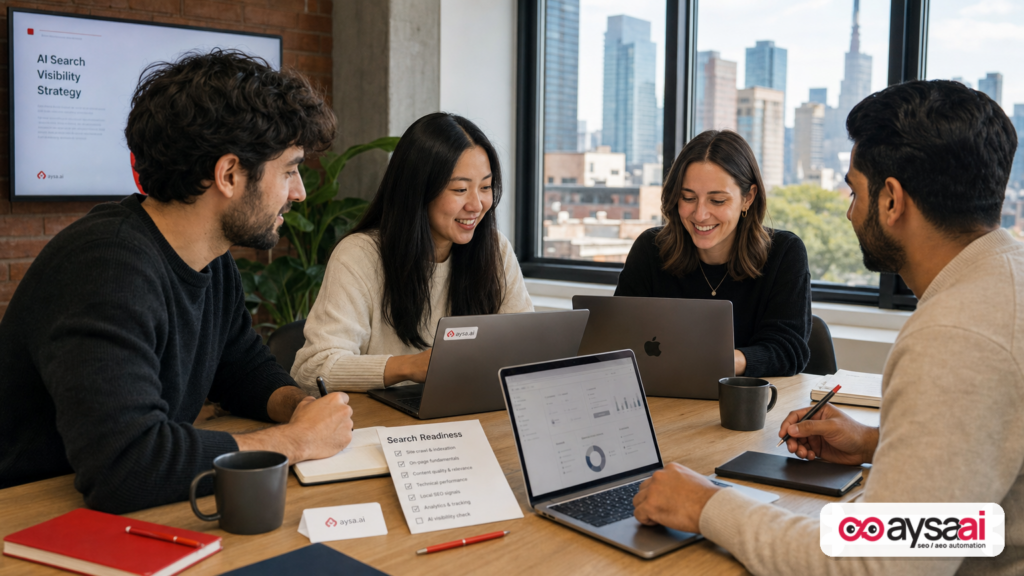
Google’s Search Central Live is coming to Toronto on April 21, 2026—its first Canada stop. For business owners and marketers, this isn’t just a calendar item; it’s a signal. Search is being reshaped by generative AI experiences, spam policies, and deeper technical expectations. Here’s what to watch, what to fix now, and how an approved-execution system like AYSA turns guidance into real site changes.
By Marius Dosinescu, AYSA.ai
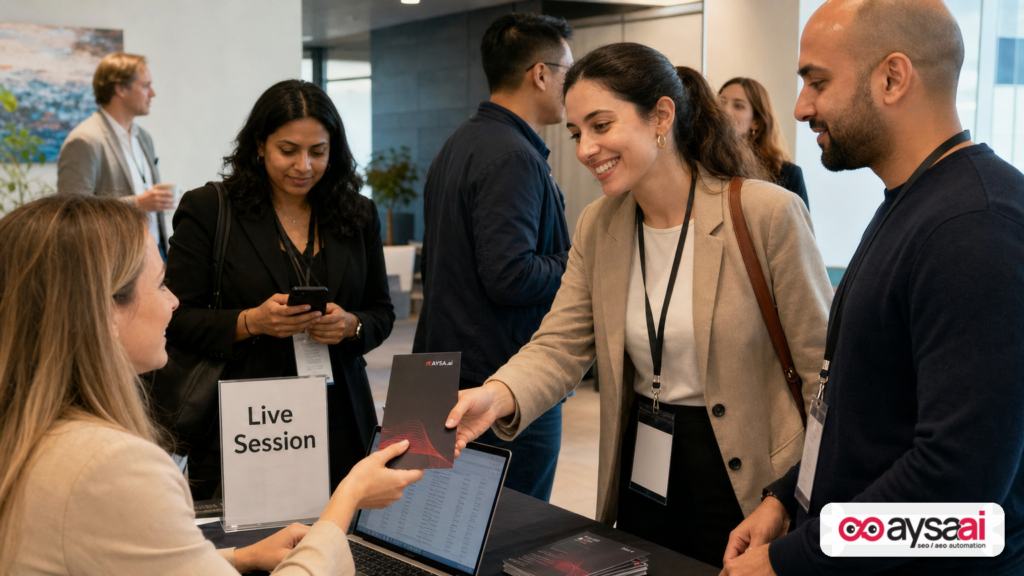
Google just announced that Search Central Live is coming to Canada—Toronto, April 21, 2026—its first time in the country. You can read the announcement on the Google Search Central Blog.
At face value, this is “just” an event. But if you run a business that depends on organic visibility—local services, ecommerce, SaaS, publishing, marketplaces—this is also a signal: Google knows the web ecosystem needs more direct contact, more shared understanding, and more practical guidance because search is being reshaped fast.
And here’s the uncomfortable truth most SMEs (and plenty of agencies) are still living with: knowing what to do is no longer the hard part. The hard part is operationalizing it—Monitoring what changed, translating guidance into work items, getting approval, and shipping changes safely and consistently.
This editorial is not a recap of an event. It’s a playbook for what to do before, during, and after Search Central Live (or any major search ecosystem shift), with a practical perspective on AI Search, Crawling/Indexing realities, and the execution gap that kills performance.
Concise summary
- Search Central Live Canada is a major community moment: direct access to Search Relations guidance and peer operators.
- AI-driven search experiences increase the value of clear, authoritative, well-structured pages—and increase the penalty for ambiguity, duplication, and weak UX.
- Search fundamentals still matter: crawling, indexing, Canonicalization, redirects, robots rules, titles/snippets, and Structured data hygiene.
- Most businesses lose in search operationally: they don’t notice issues early, they don’t prioritize correctly, and they don’t ship changes consistently.
- AYSA fits as an execution system: monitor → prepare changes → ask for approval → execute accepted changes, so guidance becomes outcomes.
Table of contents
- What’s happening: Search Central Live arrives in Canada
- Why Google does these events—and why you should care
- The bigger context: Search is changing faster than most businesses can operationalize
- What actually changed in search (and what hasn’t)
- How to think about the event: what to listen for (and what to ignore)
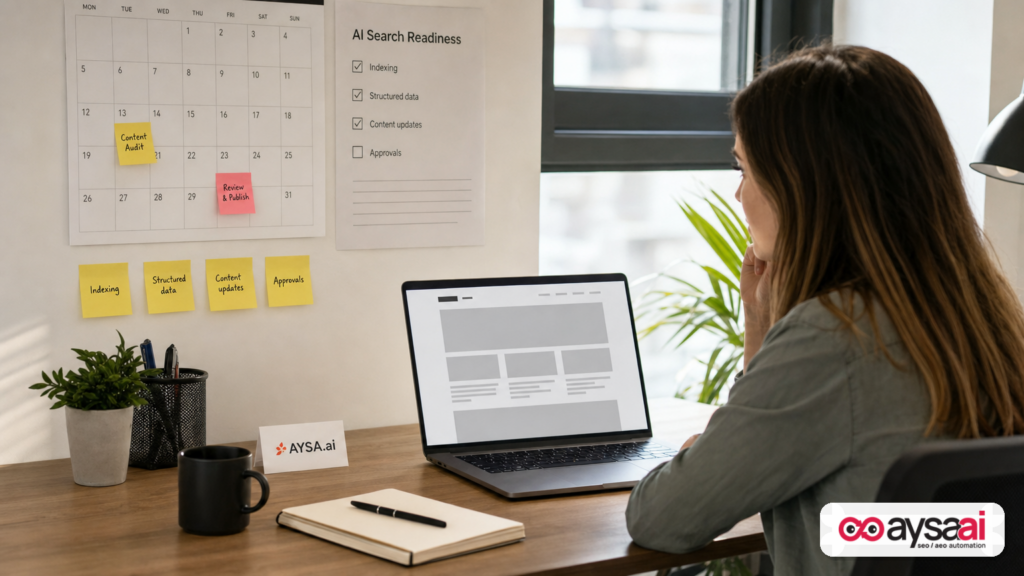
- Pre-event readiness checklist for SMEs and lean teams
- During the event: questions worth asking Google (and yourself)
- After the event: a 30–60–90 day execution plan
- A concrete SME scenario: the Toronto clinic that loses demand without noticing
- What agencies should rethink in 2026
- What can go wrong: common failure modes in modern search
- The operational answer: approved execution (not more advice)
- What to do next
- Sources and further reading
What’s happening: Search Central Live arrives in Canada

Google’s Search Central Live (SCL) is coming to Toronto on April 21, 2026. If you’ve never attended an SCL event, the best way to understand it is not as a sales conference—but as a community operations meeting for the web ecosystem: site owners, developers, SEOs, marketers, publishers, ecommerce operators, and Googlers sharing how things work, what’s changing, and what people are struggling with.
Google describes SCL as a way for communities to connect and for Googlers to learn more about the web ecosystem and share how Google Search works, exchanging ideas along the way (per the announcement post).
That framing matters. It means the event is partly educational, partly feedback loop, and partly alignment. If you run a business, your job is to turn that alignment into decisions and changes.
Important: even if you never attend, the presence of SCL in Canada suggests the same thing we’ve seen globally: search is evolving quickly enough that it’s worth bringing the conversation closer to operators. That’s a signal to treat 2026 as an execution year, not a “we’ll fix it later” year.
Register now, get support, and use resources/tools
The source page’s outline calls out “Register now,” “Get support,” “Resources,” and “Tools.” That’s basically the lifecycle: attend (or follow along), ask questions, learn, then implement.
On the implementation side, Google’s public documentation remains the primary reference. If you’re building your internal playbook, start here:
- Google Search Central
- Documentation
- Search Essentials
- SEO Starter Guide
- Optimizing for generative AI search
- How Google Search Works
Those links aren’t “nice to have.” They are the ground truth for how to interpret most advice you’ll hear—at SCL, from agencies, from consultants, and from your own internal team.
Why Google does these events—and why you should care
When Google invests in in-person community events, it’s usually because the ecosystem needs:
- Clarity (too much misinformation; too many half-truths)
- Feedback loops (what’s breaking; what’s confusing; where the docs aren’t enough)
- Capacity building (helping more people do the basics correctly so the web stays indexable and useful)
For SMEs, the mistake is treating SCL as “SEO news.” It’s more like operating system updates for demand generation. If you’re not prepared to implement, you’ll leave inspired and return to the same backlog.
The real value is: you can use the event as a forcing function to fix what you’ve been postponing—technical debt, content debt, measurement debt, and governance debt.
The bigger context: Search is changing faster than most businesses can operationalize
Search is no longer only “10 blue links.” Even without relying on any single feature, the direction is clear: more direct answers, more synthesis, and more emphasis on content that is easy to interpret and trust.
From an operator’s standpoint, this shifts the goal from “rank for a Keyword” to “be the best candidate for a user’s task.” That requires:
- Strong fundamentals so Google can crawl, render, and understand your pages reliably.
- Clear intent mapping so each page serves a purpose and isn’t a duplicate of another page.
- Demonstrated expertise and experience so you’re the credible source for the topic.
- Measurement and monitoring so you detect problems early (indexing, canonicalization mistakes, template regressions, snippet/title shifts).
- Execution velocity with safety: you need to ship improvements quickly without breaking revenue pages.
Most teams can do one or two of these. Winning in 2026 requires doing all five, consistently.
What actually changed in search (and what hasn’t)
Let’s separate “new behavior” from “new expectations.”
What hasn’t changed: fundamentals still decide if you’re eligible to win
No matter how AI evolves, you still have to be crawled and indexed properly. If you get this wrong, everything else is a distraction. Start with these official references:
- How Google Search Works (a must-read for any operator)
- robots.txt
- Sitemaps
- Meta tags
- Canonicalization
- Redirects
Those aren’t “SEO tricks.” They’re how you avoid the silent killers: duplicate URLs, index bloat, wrong canonical hints, broken redirects after migrations, blocked resources, and inconsistent rendering across environments.
What changed: the bar for clarity and usefulness went up
When search experiences can synthesize information, the advantage shifts toward content that is:
- Unambiguous (clear definitions, clear claims, clear scope)
- Structured (good headings, consistent entity names, and where relevant, structured data)
- Credible (identifiable authorship/ownership, verifiable policies, consistent business information)
- Maintained (updated when facts change; not a content graveyard)
Google has published a dedicated guide to Optimizing for generative AI search. Whether you’re enthusiastic or skeptical about AI features, use that doc as the reference point for how Google wants you to think about performance in AI-influenced search experiences.
How to think about the event: what to listen for (and what to ignore)
When you attend SCL—or watch content and commentary that follows—filter everything through one question:
“Does this help me make my site more understandable, more useful, or more reliable?”
If the answer is no, it’s probably noise.
Listen for: signals that impact roadmaps
- Crawling/indexing nuance: anything about rendering, fetch limits, or what changes how Googlebot interacts with your site.
- Spam policy enforcement themes: not to game them, but to ensure your templates, UX, and ads don’t accidentally cross lines.
- Search appearance changes: titles, snippets, visual elements. These can change CTR even when rankings don’t move.
On appearance, the official docs are surprisingly practical:
Ignore: anything that doesn’t survive operational reality
- “One weird trick” advice that assumes you can rewrite your entire site next week.
- Tactics that depend on unstable SERP features you don’t control.
- Vanity metrics over diagnostics (e.g., obsessing over rank trackers while ignoring indexing failures).
Pre-event readiness checklist for SMEs and lean teams
If you’re an SME, you don’t need 200 tasks. You need 20 tasks that move the needle and reduce risk. Use this as your pre-April 2026 baseline.
1) Confirm you’re indexable and consolidating URLs correctly
- Do you have multiple URL versions for the same page (parameters, trailing slashes, HTTP/HTTPS, www/non-www)?
- Are canonicals consistent with internal linking?
- Do redirects create chains or loops?
Reference: Canonicalization and Redirects.
2) Verify robots.txt and meta directives aren’t blocking revenue
- Is robots.txt blocking important folders (images, JS, CSS, product pages, location pages)?
- Do templates accidentally output noindex on production?
Reference: robots.txt and Meta tags.
3) Treat titles and snippets like revenue levers
Many teams treat titles/meta as “SEO homework.” In practice, they are ad copy for organic traffic. You can have stable rankings and still lose clicks if your titles become generic, duplicated, or mismatched with intent.
Reference: Title links and Snippets.
4) Make your pages answerable (AEO/GEO mindset)
Even if you’re not “doing AEO,” you are competing with answer-like experiences. A practical approach:
- Each key page should state: what you offer, who it’s for, constraints, pricing model (when appropriate), and next step.
- Use clear headings and definitions.
- Avoid burying the answer under generic intros.
If you want a practical framing, see Google’s guidance on optimizing for generative AI search.
5) Have a “recrawl/refresh” operational plan
SMEs often fix issues and then wait—hoping Google “finds it.” That’s not a plan. You need a process for requesting recrawls, validating changes, and checking impact.
Reference: Crawler management / ask Google to recrawl (as listed in the discovered links).
During the event: questions worth asking Google (and yourself)
If you attend Search Central Live in Toronto, don’t show up with vague questions like “How do I rank higher?” Show up with operational questions that unlock decisions.
Questions to ask (or listen for) that change what you build
- Rendering and JavaScript: What patterns are causing the most crawl/render issues now? (If your site is JS-heavy, review JavaScript SEO basics.)
- Canonicalization at scale: What are the most common canonical mistakes in ecommerce and faceted navigation?
- AI search optimization: What content formats are easiest for systems to interpret accurately without over-summarizing or misrepresenting?
- Search appearance: What causes titles/snippets to be rewritten most often, and how should SMEs respond?
- Policy and spam: What UX patterns are currently risky even if they “convert” short-term?
Questions to ask yourself during every session
- What on my site is ambiguous, duplicated, or thin?
- Where are we leaking crawl budget into junk URLs?
- Which template changes would improve 1,000 pages at once?
- What do we need to measure weekly that we currently check quarterly?
After the event: a 30–60–90 day execution plan
The biggest failure mode after any conference is the “notes graveyard.” The second biggest failure mode is the “giant SEO overhaul” that never ships. Here’s the middle path: focus on high-leverage changes you can actually deliver.
First 30 days: stabilize and remove risk
- Audit robots rules and noindex usage for mistakes.
- Fix redirect chains and obvious canonical conflicts.
- Ensure sitemap coverage matches what you want indexed (Sitemaps).
- Pick 10 top pages by revenue/leads and rewrite titles/snippets for clarity and intent alignment.
Next 60 days: strengthen eligibility and interpretation
- Improve internal linking so key pages are discoverable without search.
- Standardize headings and page structure templates across categories/services.
- Fix image and media handling where it affects appearance and understanding (see Images).
- Reduce “near-duplicate” content by consolidating weak pages into stronger hubs (guided by Search Essentials and the SEO Starter Guide).
By 90 days: build a repeatable operating system
- Set a monitoring cadence: weekly checks for indexing anomalies and major CTR shifts.
- Implement a change-control workflow (propose → approve → deploy → validate).
- Define content governance: who updates what, how often, and what triggers a refresh.
This is where most SMEs need a system, not a consultant. You can understand everything and still lose because it never ships.
A concrete SME scenario: the Toronto clinic that loses demand without noticing
Let’s make this real with a scenario I’ve seen variations of across local businesses.
Business: a Toronto-based clinic offering physiotherapy, massage therapy, and sports rehab.
What they think is happening: “Bookings are a bit down—must be seasonality.”
What’s actually happening (typical pattern, not a guaranteed diagnosis):
- The clinic’s site added a new booking widget that loads key service details via JavaScript.
- The service pages still exist, but important copy is now behind scripts or loaded late.
- Google can still see the URL, but it may interpret the page differently, or it might surface less compelling titles/snippets.
- Meanwhile, the clinic also launched multiple near-duplicate service-location pages (“Sports Massage Toronto,” “Massage Therapy Toronto,” “Massage Clinic Toronto”), cannibalizing relevance and confusing intent.
What the clinic needs isn’t more content. It needs:
- A technical check against JavaScript rendering guidance (see JavaScript SEO basics).
- Canonical and internal linking cleanup so the primary service pages are clearly “the ones.”
- Title/snippet work so the search appearance communicates the real offer and differentiation.
- A monitoring setup to catch indexing or CTR shifts early.
This is exactly the type of business that benefits from Search Central Live content—because they don’t have time to become experts. They need a shortlist of actions with high confidence.
What agencies should rethink in 2026
If you run an agency, AI search and the accelerating cadence of Google updates don’t kill SEO. They kill agency theater—reports, audits, and strategy decks that don’t translate into deployed improvements.
In 2026, agencies win by becoming execution multipliers, not information brokers.
Shift 1: from deliverables to deployed outcomes
Your client doesn’t need another 80-slide audit. They need:
- 20 approved changes shipped safely
- 10 pages rewritten to match intent
- 5 templates fixed so 5,000 URLs improve
- 1 monitoring system that catches regressions in a week, not a quarter
Shift 2: from keyword lists to intent systems
Keywords still matter. But intent mapping matters more. If you create 50 pages that all answer the same thing in slightly different wording, you’re manufacturing a canonicalization and relevance problem.
Shift 3: from “AI content production” to “AI content governance”
AI can accelerate drafting. But governance is what prevents brand damage, outdated claims, and duplicative pages that bloat the index. Google’s own docs emphasize fundamentals and usefulness; the “AI optimization” framing is not permission to flood your site with variations.
What can go wrong: common failure modes in modern search
Here are the failure modes I’d put on a wall before any major search-focused initiative.
1) Index bloat and duplicate URL sprawl
If you run ecommerce, marketplaces, or any CMS with filters, tags, and parameters, you can create thousands of low-value URLs without realizing it. Then Google spends time crawling them, and your important pages compete with your own duplicates.
Mitigation: canonical strategy (Canonicalization), careful parameter handling, internal link discipline, and sitemap hygiene.
2) JavaScript dependency for core content
Modern front-ends are powerful. But if critical content or links only exist after client-side rendering, you increase risk. If your SEO depends on “it probably renders eventually,” that’s not a strategy.
Mitigation: follow JavaScript SEO basics and test pages the way bots see them.
3) Title/snippet drift and CTR collapse
Even if your rankings stay stable, changes in how titles/snippets display can reduce clicks materially. Many teams only notice after revenue drops.
Mitigation: build a process around title links and snippets, and monitor CTR by page group.
4) “Helpful content” in theory, unhelpful in practice
Content can be well-written and still fail because it doesn’t answer the real question, lacks specificity, or hides the point under fluff. AI-driven experiences raise the penalty for vague content.
Mitigation: structure, clarity, direct answers, and proof (policies, examples, constraints, next steps). Use Google’s guide on optimizing for generative AI search as a reality check.
5) No operational response to change
This is the biggest one. Teams often notice traffic drops but don’t have a method to isolate cause: indexing, crawling, content changes, competition, SERP feature shifts, or technical regressions.
Mitigation: monitoring + playbooks + execution capacity.
The operational answer: approved execution (not more advice)
Here’s my POV: the next era of search rewards teams that can operate SEO like a product—continuous improvement, measurable outcomes, and safe releases.
This is exactly where AYSA fits: we’re an execution system designed for the real world—where you don’t want an AI to change your site without oversight, but you also can’t afford endless back-and-forth between tools, agencies, and dev queues.
AYSA’s model, in plain terms:
- Monitor: detect visibility, indexing, and performance signals early. See: AYSA Monitoring
- Prepare: generate a prioritized set of recommended changes across technical SEO, content improvements, and AI-search visibility patterns. Explore: AI Search Visibility
- Ask for approval: you stay in control—approve what matches your risk tolerance and brand constraints.
- Execute accepted website changes: changes get shipped, validated, and tracked—so your strategy becomes reality.
If you want to see how we think about practical tooling, start with AI SEO Tools.
And if you’re evaluating how this fits into budgets (SME or agency), use: AYSA Pricing.
For more operator-focused playbooks, browse: AYSA Blog.
Why approved execution matters more in AI-influenced search
AI search doesn’t just reward “more content.” It rewards the sites that are easiest to interpret correctly—without hallucination, without ambiguity, without conflicting pages and policies. That means your site has to be consistent.
Consistency is an execution problem:
- Templates drift over time.
- New pages copy old mistakes.
- Product/category/service pages multiply faster than governance.
- Teams change; knowledge leaks out of the org.
Approved execution creates institutional memory: changes are proposed, approved, executed, and tracked. Over time, that is a competitive advantage.
What to do next
Use this as a practical checklist you can act on this week—whether you attend SCL Toronto or not.
- Bookmark the official docs and commit to using them as your reference point:
- Run an indexability sanity check: robots, noindex, canonicals, redirects, sitemaps.
- Pick your top 10 money pages and improve titles/snippets for clarity and intent.
- Consolidate duplicates: if you have 5 pages that answer the same question, create 1 strong page and route signals to it.
- Implement monitoring: at minimum, weekly checks for indexing anomalies and CTR shifts.
- Close the execution gap with an approved workflow. If you want that systemized, evaluate AYSA:
Sources and further reading
- Google Search Central Blog: Search Central Live is coming to Canada!
- Google Search Central
- Google Search Central Documentation
- Search Essentials
- SEO Starter Guide
- Optimizing for generative AI search
- How Google Search Works
- Sitemaps
- robots.txt
- Canonicalization
- Redirects
- JavaScript SEO basics
- Title links
- Snippets
Note: This editorial is based on publicly available Search Central resources and the SCL Canada announcement. Where the broader search landscape is discussed, it is framed as operational analysis rather than claims of undisclosed Google behavior.
Continue the AI search topic inside AYSA.
Use these pages to connect the article with AI SEO tools, AI visibility monitoring, AI Overviews and approved website execution.
Turn this topic into a website action plan.
Use these AYSA hubs to move from reading to technical fixes, AI visibility monitoring, research, glossary context and approval-first SEO execution.

