
Search Central Live APAC 2026 Is a Signal: SEO Teams Must Move From “Learning” to “Execution”
Google’s Search Central Live APAC 2026 schedule (Sydney, Shanghai, and more) isn’t just an events update. It’s a reminder that search is changing faster than most teams can implement. Here’s what SMEs and agencies should do now—technical hygiene, content structure, AI-search readiness, and an execution system that ships improvements weekly, not quarterly.

Google just published the APAC schedule for Search Central Live (SCL) 2026. On the surface, it’s an events announcement—Sydney, Shanghai, and a continued evolution of formats like “Deep Dives.” Underneath, it’s a useful signal for every business that depends on search: Google is still investing in direct education and two-way feedback with the ecosystem, because the way search works (and what “good” looks like) keeps changing.
My take, as Marius Dosinescu at AYSA.ai: if you’re an SME or an agency, the biggest risk in 2026 isn’t “not knowing.” It’s knowing—and still not shipping. Search success is increasingly a function of execution cadence: how quickly you can detect issues, prepare fixes, get approvals, deploy changes, and verify results. You can attend every event on the calendar and still lose to a competitor who simply improves their site every week.
Concise summary
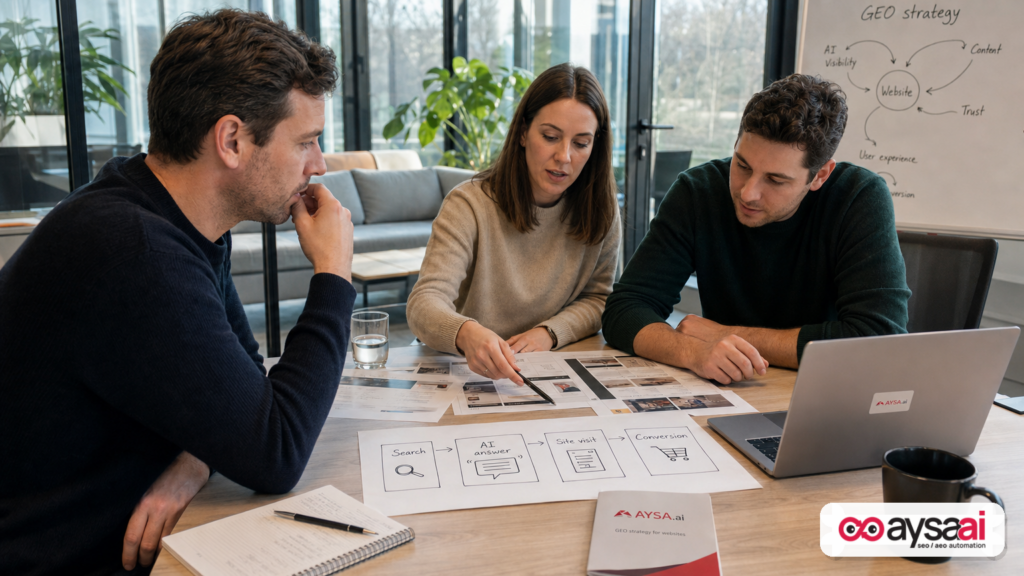
Search Central Live APAC 2026 matters less for the cities and more for the message: Google expects practitioners to keep pace with Crawling/Indexing realities, evolving search appearance, and AI-influenced discovery. If you’re running a business site, your priority should be building an operational system that keeps your site technically clean, semantically clear, and continuously updated—so it can perform in classic results and in emerging AI experiences.
Key takeaways
- Events are not the strategy—execution is. Use SCL as a forcing function to modernize your SEO operating model.
- Technical hygiene is now a growth lever. Crawlability, indexation, duplication control, and fast iteration matter more as search surfaces evolve.
- AI Search Optimization isn’t magic; it’s clarity. The best “GEO/AEO” work looks like great information architecture, trustworthy pages, and consistent entities.
- Deep dives are a clue: the industry needs fewer hot takes and more implementation detail and debugging skill.
- SMEs should build a baseline and a weekly cadence. Not quarterly “SEO projects.” Weekly shipping.
- AYSA’s model fits the moment: monitor → prepare → ask for approval → execute accepted changes.
Table of contents

- Why Search Central Live APAC 2026 matters (even if you don’t attend)
- The real takeaway: Search is now a product, not a channel
- What changed in SEO since “the last time you checked”
- Sydney, Shanghai, and the value of regional nuance
- The “Deep Dive” format update: why implementation beats inspiration
- What SMEs should do before any event: build a “Search readiness baseline”
- AI search visibility (AEO/GEO): what’s real, what’s hype
- Technical SEO that actually moves the needle in 2026
- Content SEO that survives AI summaries: structure, proof, and usefulness
- Measurement: what to monitor weekly (and why most teams miss it)
- A concrete SME scenario: a multi-location clinic preparing for AI-influenced search
- What agencies should rethink: deliverables vs. deployed outcomes
- Where AYSA fits: approved execution for SEO, AEO, and GEO
- What to do next (action list)
- Sources and further reading
Why Search Central Live APAC 2026 matters (even if you don’t attend)
The SCL APAC 2026 post is an official reminder that Google’s Search teams still prioritize direct engagement with site owners, SEOs, developers, and publishers. That matters because it’s not just “community.” It’s product reality: when the search ecosystem changes, Google needs both education and feedback loops so the web stays indexable, understandable, and useful.
For business owners, the practical interpretation is simple:
- If Google is investing in education again this year, the underlying systems and best practices are still moving.
- If the agenda emphasizes formats like deep dives, the pain is not awareness—it’s implementation detail, debugging, and operational maturity.
- If events are regional, Google recognizes that language, market structure, and site patterns differ—and your strategy should reflect that.
Whether you attend in Sydney, Shanghai, or follow remotely, the best use of an SCL announcement is to plan your execution backlog for the next 90 days.
The real takeaway: Search is now a product, not a channel
Too many teams still treat “SEO” like a single acquisition channel: rankings go up, traffic goes up, revenue follows. That mental model is dated.
Today, search is a product experience that blends classic blue links with Rich results, vertical surfaces (images, video, shopping), and AI-driven answer layers. The user’s journey might end before the click—or it might start in an AI summary and continue into deeper site engagement. That’s why SEO is no longer just “keywords and content.” It’s:
- Information architecture: can machines and humans find the right page?
- Semantic clarity: do you clearly define entities (products, services, locations, policies)?
- Technical reliability: can Google crawl, render, and index what matters?
- Trust signals: does your site demonstrate real-world credibility and accountability?
- Iteration: can you ship improvements continuously?
If you want a stable growth engine in 2026, your SEO strategy should look more like product management: a pipeline of tests, fixes, launches, measurement, and iteration.
What changed in SEO since “the last time you checked”
Even if you’ve been doing SEO for years, it’s worth acknowledging the accumulation of changes. Google’s own documentation hub is a map of what they consider foundational versus advanced. If your team isn’t aligned to these foundations, no event or tactic will save you.
Here are the big buckets of “what changed” that matter most for SMEs and agencies:
1) Foundations are now a competitive edge
In many markets, the gap isn’t between “SEO” and “no SEO.” It’s between teams who keep the basics clean and teams who let technical debt accumulate. Google’s documentation on Search documentation and Search Essentials exists for a reason: a large share of performance problems still trace back to fundamentals.
2) AI experiences increase the cost of ambiguity
When AI systems summarize information, ambiguity becomes a tax. Vague service pages, inconsistent location information, thin “category” pages, and duplicated templates become harder to interpret—and easier to ignore.
Google has begun publishing more explicit guidance for this reality, including a dedicated resource on optimizing for generative AI search. The important point: the guidance pushes you toward clarity, helpfulness, and machine-readable structure—not gimmicks.
3) Crawling and indexing are still the floor
You can’t “content strategy” your way out of crawl waste, canonical chaos, or blocked resources. If you’re not routinely validating sitemaps, robots directives, canonicals, and redirect integrity, you’re not doing modern SEO—you’re doing hope.
Start with Google’s primary references for:
- Sitemaps
- robots.txt
- Meta tags (including robots meta)
- Canonicalization and duplicate URL consolidation
- Redirects
- JavaScript SEO basics
4) Search appearance is part of the product
The modern SERP is a UI. Titles, snippets, visuals, and rich results influence whether you get the click—or whether a user is satisfied without visiting you.
Google’s documentation on title links, snippets, and images is worth revisiting with a product mindset: “How do we win the impression?” and “What does the user need to trust us?”
Sydney, Shanghai, and the value of regional nuance
The SCL APAC 2026 schedule is anchored by flagship cities like Sydney and Shanghai, and it also hints at additional locations (with more details to follow). That geographic framing matters for two reasons:
1) Regional search problems are real
APAC isn’t one market. It’s many markets with different language scripts, different CMS stacks, different ecommerce maturity, and different consumer expectations around trust and customer support. That’s why a “global” SEO playbook can underperform: it might be technically correct but operationally mismatched.
2) International SEO is no longer optional for many SMEs
Even small businesses increasingly sell cross-border (especially via ecommerce). If you’re in APAC, you may be serving users who search in multiple languages, using different intents and phrasing. This is where getting the basics right—clear page targeting, consistent canonicals, and clean site architecture—creates compounding benefits.
I’m deliberately not prescribing a single international setup here because the correct answer depends on your business model, languages, and site structure. But if you’re unsure where to start, the most productive move is to audit what Google can crawl and index and then identify where duplication or ambiguity is creeping in.
The “Deep Dive” format update: why implementation beats inspiration
The SCL post references an updated “Deep Dive” format. That’s a subtle but important signal: the community’s needs have matured. Many teams no longer need inspirational keynotes about “making helpful content.” They need to understand:
- Why a template-based page type is being crawled but not indexed.
- How canonicals are being chosen in messy URL ecosystems.
- What happens when JavaScript rendering fails or delays content discovery.
- How titles and snippets are being rewritten and how to reduce mismatches.
- How to interpret Search Console patterns without panicking.
Deep dives are also a reminder that the SEO profession is splitting into two groups:
- People who know the concepts.
- People who can ship and debug under real constraints.
In 2026, the winners will be the second group.
What SMEs should do before any event: build a “Search readiness baseline”
If you run a small or mid-sized business, you don’t need 50 SEO initiatives. You need a baseline that prevents expensive mistakes and creates a stable platform for growth.
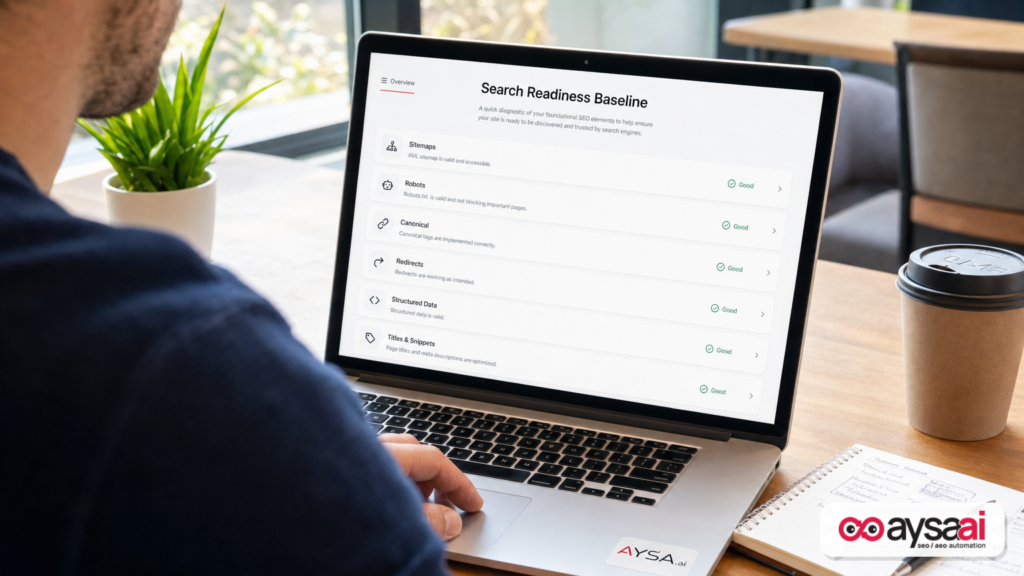
Here is a practical baseline you can build in days (not months). Use it as a pre-event checklist or as a quarterly reset:
1) Crawling controls: robots + sitemaps
- Confirm you have a valid XML sitemap strategy and that it reflects indexable URLs (not faceted duplicates).
- Confirm robots.txt is not accidentally blocking critical sections.
- Ensure parameter-heavy areas are not exploding into crawl waste.
2) Indexation quality: canonicals + duplicates
- Review duplicate URL patterns (HTTP/HTTPS, trailing slashes, parameters, pagination, sort filters).
- Implement consolidation using canonicalization guidance and sensible redirect rules.
- Fix redirect chains and loops using redirect best practices.
3) Rendering reliability (especially for JS-heavy sites)
If your pages depend on JavaScript for critical content, validate against Google’s JavaScript SEO basics. The goal is not to avoid JS; it’s to ensure content and links are discoverable in a reliable way.
4) Search appearance: titles, snippets, and visuals
- Audit title consistency and alignment with intent using title link guidance.
- Improve snippet controllability using snippet best practices (clear headings, concise summaries, avoid boilerplate above the fold).
- Validate images using Google Images guidance if visuals drive discovery.
5) Business-critical pages: policies and trust
For ecommerce and lead-gen alike, trust pages (returns, shipping, cancellations, contact, pricing transparency) influence conversion—and increasingly, how confidently systems can summarize your business. Even if this doesn’t look like “SEO,” it affects SEO outcomes.
At AYSA, we treat this baseline as a living system, not a one-time audit. That’s why we put monitoring first: AYSA Monitoring.
AI search visibility (AEO/GEO): what’s real, what’s hype
Let’s name the buzzwords:
- AEO (Answer Engine Optimization): making your content more likely to be selected and summarized in answer-like experiences.
- GEO (Generative Engine Optimization): similar goal, often framed around generative AI interfaces and summaries.
Here’s what’s real: systems that generate answers prefer sources that are clear, consistent, well-structured, and demonstrably trustworthy. Here’s what’s hype: shortcuts, “LLM hacks,” and content-volume strategies that ignore technical quality.
Google’s own guidance on optimizing for generative AI search is the right kind of boring: it pushes you back toward fundamentals. And that’s good news for SMEs—because fundamentals are attainable if you have an execution system.
What “AI-ready” content looks like (in plain English)
- It answers real questions with specific, verifiable details (not vague marketing claims).
- It has a strong page purpose (not five intents mashed into one template).
- It uses headings and structure so extraction is reliable.
- It avoids contradictory information across similar pages (a common multi-location and ecommerce problem).
- It’s maintained—because stale information gets summarized into stale answers.
The big risk in AI search: silent misrepresentation
In classic SEO, your risk was “not ranking.” In AI-influenced search, another risk emerges: being summarized inaccurately because your site is unclear or inconsistent. This is why page hygiene, canonical consolidation, and consistent factual data matter more than ever.
AYSA’s positioning here is straightforward: we help you maintain consistency and ship corrections quickly across your site, starting with visibility and monitoring: AI Search Visibility.
Technical SEO that actually moves the needle in 2026
Technical SEO advice online is often either too basic (“add a sitemap”) or too esoteric (“build an edge-rendered prefetch layer”). SMEs need a middle path: the technical work that reduces risk and increases performance without turning your website into a science project.
Here are the areas I’d prioritize for most SMEs and agencies—based on what consistently causes problems:
1) Crawl management (practical version)
You don’t need to obsess over “crawl budget” unless you’re massive, but every site can suffer from crawl inefficiency. Common culprits:
- Faceted navigation generating near-infinite URL variations
- Internal search pages that get indexed
- Sort and filter parameters that create duplicates
- Thin tag pages that multiply over time
Start with clear sitemap strategy (Sitemaps) and duplication consolidation (Canonicalization).
2) Redirect integrity as a revenue issue
Redirects aren’t just technical. They’re user experience, tracking continuity, and conversion protection. Bad redirect chains can slow users down and confuse crawlers. Follow Google’s redirect guidance and keep redirect rules intentional.
3) Meta robots and indexation control
Many sites accidentally noindex valuable pages, or index pages that should never rank. Review your usage of meta tags and ensure templates don’t propagate mistakes at scale.
4) JavaScript SEO: reduce reliance where it matters
If core content or internal links are only available after client-side rendering, you’re increasing risk. Use the principles in JavaScript SEO basics to validate that Google can discover what you think it can discover.
5) Make technical SEO executable, not theoretical
The mistake is treating technical SEO as a quarterly “project.” The correct model is:
- Monitor continuously
- Generate a prioritized fix list
- Deploy small batches weekly
- Measure impact and iterate
This is the operational gap AYSA is built to close: tools plus a governed execution loop. If you want the product view, start here: AI SEO Tools.
Content SEO that survives AI summaries: structure, proof, and usefulness
Content is still the main interface between your business and the market. But content strategy fails when it’s separated from structure and proof.
In 2026, “content that performs” generally has three properties:
1) Strong structure that reduces ambiguity
Make it easy for both users and machines to understand:
- What the page is about (one clear job)
- Who it’s for
- What the reader should do next
- What the key facts are (pricing ranges, coverage areas, specs, policies)
Google’s guidance on snippets is a good proxy for what “extractable clarity” looks like: headings, concise summaries, and content that actually answers the query.
2) Proof over adjectives
AI summaries tend to reward specificity. “Best in class” is not specificity. Examples of specificity:
- Clear service coverage (areas, timelines, process)
- Documented policies
- Real-world constraints and exceptions
- Accurate, consistent contact/location information
3) Maintenance cadence
Many SMEs write content once and never touch it again. That’s how you get stale pages, outdated pricing, and contradictory guidance across the site. If you want to show up reliably—especially as AI systems synthesize information—your site needs an update cadence.
If you need a foundational refresher that you can hand to non-SEO stakeholders, Google’s SEO Starter Guide is still one of the most durable references.
Measurement: what to monitor weekly (and why most teams miss it)
Most SEO measurement is reactive. Someone notices traffic is down, and then the organization scrambles. A better model is early detection and weekly review.
Even without going deep into tooling, here’s what an SME should monitor weekly:
1) Indexation anomalies
- Sudden drops in indexed pages for key sections
- Explosions of parameter URLs or thin pages getting indexed
- Core templates accidentally changing canonicals or meta robots
2) Title/snippet mismatch patterns
When Google rewrites titles/snippets frequently, it’s often a signal of mismatch between your page’s promise and its content structure. Review guidance on title links and snippets and fix patterns, not one-offs.
3) Crawlability regressions
CMS changes can inadvertently block resources, break internal links, or alter navigation. Keep robots.txt and template changes under change control.
4) Query-to-page alignment drift
Over time, pages start ranking for queries they weren’t designed to satisfy. Some of that is good. But often it indicates that you lack a dedicated page that better matches the user’s intent. That’s a content roadmap signal.
AYSA’s philosophy here is operational: monitoring isn’t a report, it’s the start of a shipping cycle. See how we frame it: AYSA Monitoring.
A concrete SME scenario: a multi-location clinic preparing for AI-influenced search
Let’s make this real with a scenario that shows why SCL’s themes matter—even if you never attend.
Business: a multi-location clinic (e.g., physical therapy, dental, dermatology) with 8 locations in a metro area and a mix of insurance-based and cash-pay services.
Problem: historically, the clinic relied on “location pages” that were basically the same template with an address swapped. Over time:
- Google starts choosing different canonicals than the clinic intended (duplicate templates).
- Some locations rank; others don’t.
- Users see inconsistent snippets (hours differ across pages, policies unclear).
- AI summaries may pick up the wrong hours, or the wrong service availability, because the site is inconsistent.
What the clinic should do (practical plan)
- Define a unique purpose per location page: services offered at that location, provider availability, local directions, parking, accessibility, and scheduling options.
- Consolidate duplicates: fix canonical patterns and template duplication using Google’s canonicalization guidance.
- Standardize factual data sitewide: hours, phone formats, policies, and service names. Make it consistent across location pages and contact pages.
- Improve snippet readiness: place the key info in scannable headings and paragraphs; follow snippet guidance so the right facts are easy to extract.
- Implement a weekly maintenance cadence: new providers, updated hours, seasonal scheduling changes—ship updates weekly, not “when someone remembers.”
This is exactly where an execution system matters. The clinic doesn’t need more SEO theory. It needs a workflow that catches issues early and pushes approved changes live consistently.
What agencies should rethink: deliverables vs. deployed outcomes
If you run an agency, SCL announcements can feel like “another thing to keep up with.” But the bigger opportunity is to modernize your delivery model.
Clients don’t buy audits. They buy outcomes. And outcomes require deployment.
Common agency failure modes in 2026
- The audit trap: great recommendations, no implementation authority.
- The content trap: publishing more content while indexation and duplication issues cap performance.
- The reporting trap: dashboards that describe problems but don’t produce shipped fixes.
- The quarterly cadence: too slow for modern search volatility and AI-surface changes.
The agency upgrade path
- Move from “deliverables” to “deployment pipelines.”
- Bundle monitoring + prioritized action queues into every retainer.
- Set expectations that you ship changes weekly (with approval), not monthly “roundups.”
- Use official sources as your baseline references—like Search Essentials—so debates don’t devolve into opinion.
AYSA is built to support this upgraded agency operating model as well, because “approved execution” maps cleanly to client governance.
Where AYSA fits: approved execution for SEO, AEO, and GEO
At AYSA.ai, we treat SEO and AI-search readiness as an execution discipline. The model is simple:
- Monitor your site and search visibility continuously.
- Prepare recommended changes (technical fixes, content improvements, internal linking updates, structure enhancements).
- Ask for approval so your team stays in control—especially important for regulated industries and brand-sensitive businesses.
- Execute accepted changes on your website.
That’s the core loop. Everything else is implementation detail.
Start with:
- AI Search Visibility (how you show up as search experiences evolve)
- Monitoring (catch issues before they become traffic drops)
- AI SEO Tools (the execution layer)
- Pricing (fit and packaging)
- AYSA Blog (ongoing playbooks and updates)
The reason this matters in the context of Search Central Live is straightforward: the industry has no shortage of ideas. It has a shortage of shipping.
What to do next (action list)
If you’re an SME owner, in-house marketer, or agency lead, here’s a concrete next-step list you can execute in the next 2–4 weeks:
- Create your Search readiness baseline (crawlability, indexation, duplicates, rendering, search appearance). Use the Google docs linked throughout this article as your ground truth.
- Pick one page type to fix end-to-end (e.g., product pages, service pages, location pages). Don’t boil the ocean.
- Standardize your facts across the site (policies, hours, addresses, pricing ranges where applicable, service definitions).
- Set a weekly shipping cadence (even small improvements). Momentum beats “big projects.”
- Instrument monitoring and alerts so regressions are caught early, not after revenue drops.
- Use an approved execution workflow so changes actually go live with governance.
If you want to operationalize that cadence with a system designed for it, start with AYSA monitoring: AYSA Monitoring.
Sources and further reading
- Google Search Central Blog: Search Central Live Asia Pacific 2026 schedule
- Google Search Central Documentation
- Search Essentials
- SEO Starter Guide
- Optimizing for generative AI search
- How Google Search Works
- Sitemaps
- robots.txt
- Meta tags
- Canonicalization / consolidate duplicate URLs
- Redirects
- JavaScript SEO basics
- Title links
- Snippets
- Images on Google Search
AYSA internal resources
Continue the AI search topic inside AYSA.
Use these pages to connect the article with AI SEO tools, AI visibility monitoring, AI Overviews and approved website execution.
Turn this topic into a website action plan.
Use these AYSA hubs to move from reading to technical fixes, AI visibility monitoring, research, glossary context and approval-first SEO execution.

