Agentic Commerce Is Rewiring Ecommerce SEO: Why “Being Easy to Buy” Will Beat “Ranking #1”
Agentic commerce shifts buying from websites into AI conversations—where your product is either eligible to purchase or effectively invisible. Here’s how to make your catalog agent-ready with structured data, reliable feeds, and execution you can actually ship.

Ecommerce is entering a phase where your website is no longer the default place where buying happens. That’s not a future prediction—it’s a direction already being built into the major AI platforms. If an AI agent can research, compare, and complete a purchase inside the conversation, then “getting the click” stops being the finish line. In many cases, it stops being the game.
As Marius Dosinescu from AYSA.ai, I’m going to be blunt: the next wave of Ecommerce SEO advantage won’t come from writing better category copy or squeezing out another 0.2% CTR. It will come from being the easiest product for an agent to buy—reliably, quickly, and with enough structured information to be eligible in the first place.
This editorial is based on research and ideas published by Search Engine Journal in “70% Of Top Retailers Are Invisible To Agentic Commerce – Here’s Why”, and expands it into a practical, standalone playbook for SMEs, ecommerce leaders, and agencies.
Concise Summary

Agentic commerce is the shift from “search → website → checkout” to “conversation → recommendation → purchase,” sometimes without the user visiting your site at all.
- Eligibility beats ranking. In agentic shopping, you’re often either included as a purchasable option or not shown.
- Product feeds and on-page schema are the new foundation. Agents don’t depend on your category pages or long-form product marketing copy to transact.
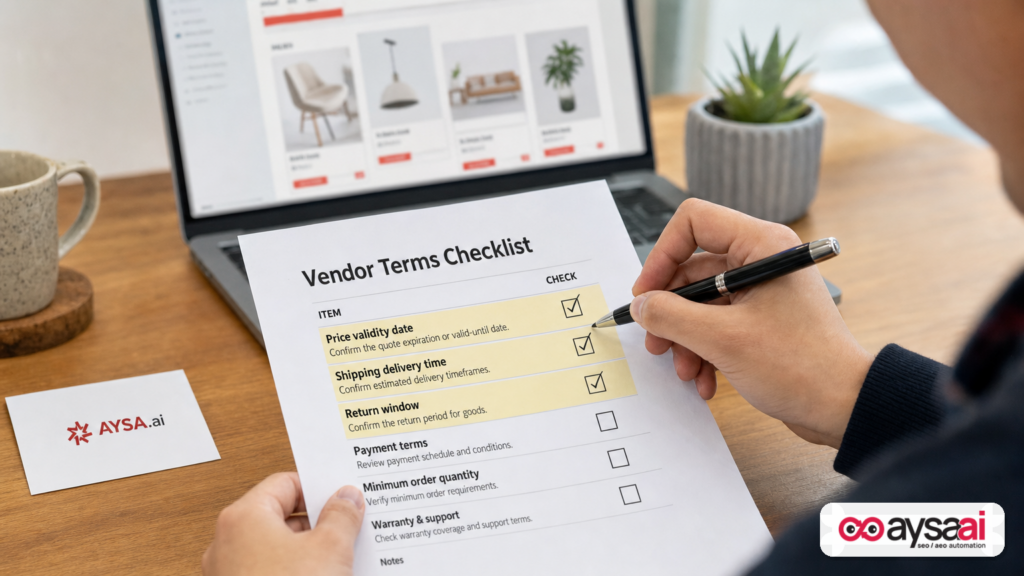
- Three Structured data fields can decide whether you’re included: price validity, shipping delivery time, and return window (as described in Google’s Universal Commerce Protocol documentation referenced by the SEJ article).
- Operational reliability matters. Slow, stale, or inaccurate data can train an agent to avoid your store.
- This is a systems problem. The fix is “data plumbing” across PIM/ERP/inventory, merchant feeds, and schema templates—plus the ability to execute changes safely and consistently.
Key Takeaways (Read This If You’re Busy)

- Stop treating your merchant feed like an ad side project. It is becoming storefront infrastructure.
- Update your schema templates. Many sites still ship schema that was “good enough” for 2014–2019 SEO, but incomplete for agentic commerce selection.
- Get GTINs right where possible. Without them, agents struggle to compare identical products across retailers.
- Don’t accidentally block the agents. Anti-bot defenses can make your catalog invisible to legitimate commerce agents.
- Build a cross-functional owner model. SEO can’t do this alone; merchandising, ops, and engineering must align.
- Use an execution system. Readiness isn’t a one-time project—it’s ongoing Monitoring and approved deployment.
Table of Contents
- What Changed: From “Traffic-First Ecommerce” to “Conversation-First Buying”
- What Agentic Commerce Actually Is (And What It Is Not)
- Why the Traditional Ecommerce SEO Playbook Breaks
- The New Gatekeepers: Product Feeds + On-Page Schema (Not Your Category Pages)
- The Eligibility Checklist: Three Fields That Quietly Decide Whether You’re Included
- GTINs: The Comparison Layer Most Retailers Still Underestimate
- Reliability as a Ranking Factor (Even If Nobody Calls It That)
- The Bot-Blocking Trap: When Security Makes You Unbuyable
- A Concrete SME Scenario: “Why Are Our Bestsellers Not Showing Up in AI Shopping?”
- What Agencies and In-House Teams Should Rethink Now
- The Agentic Commerce Readiness Action Plan (90 Days)
- Where AYSA Fits: Monitoring + Approved Execution for Agent Readiness
- What to Do Next
- Sources and Further Reading
What Changed: From “Traffic-First Ecommerce” to “Conversation-First Buying”
For roughly three decades, ecommerce strategy has been anchored to a simple assumption: the transaction happens on your website. That assumption shaped everything:
- SEO became the discipline of earning visits (often through category pages).
- CRO became the discipline of improving onsite conversion.
- Lifecycle marketing became the discipline of bringing people back to the site.
- Merchandising became the discipline of optimizing product pages for humans.
Agentic commerce flips the default. The buyer’s journey can happen in an AI interface—from discovery to a decision to a transaction—without a click to your PDP. In Search Engine Journal’s analysis, the critical point is not that AI will “mention your brand.” The point is that the agent must have enough structured product and policy data to confidently recommend and complete a purchase.
That’s why the competitive axis shifts from persuasion (content and UX) to eligibility and reliability (data completeness, speed, accuracy).
What Agentic Commerce Actually Is (And What It Is Not)
“Agentic commerce” is a label for systems where an AI agent performs commerce tasks on behalf of a user: finding products, comparing options, checking availability, understanding shipping/returns, and potentially completing a checkout sequence.
Two protocol efforts were highlighted in the SEJ piece:
- OpenAI + Stripe’s Agentic Commerce Protocol (ACP) announced in 2025 (as summarized in the source article). The SEJ reporting notes the product direction changed over time, moving away from a specific embedded checkout experience and focusing more on discovery and merchant-controlled checkout.
- Google’s Universal Commerce Protocol (UCP) announced in 2026 (as summarized in the source article), presented as an open standard spanning discovery, buying, and post-purchase support.
Two important clarifications for business owners:
- This isn’t “just SEO for AI.” Standard AI visibility work—citations, mentions, informational content—can help brand discovery, but it doesn’t automatically make products purchasable by an agent.
- This isn’t a marketplace resale model. As described in the SEJ piece, the intent is for retailers to remain merchant-of-record. That means the agent needs your data and systems to work cleanly.
If you want a mental model: treat agentic commerce like a new checkout channel—but one where the UI is not yours, and the gating criteria are machine-verifiable fields, not marketing copy.
Why the Traditional Ecommerce SEO Playbook Breaks
The old ecommerce SEO loop is familiar:
- Rank category pages for “best X” and “X under $Y.”
- Use internal links to funnel to PDPs.
- Convert on PDP with reviews, copy, imagery, trust badges, and offers.
- Retarget and email to close the sale.
But in agentic commerce, the agent isn’t scrolling your Category page. It isn’t admiring your hero image. It isn’t reading your long-form buying guide. It’s trying to answer one job:
“Can I confidently recommend and purchase this item for this user right now?”
That job is solved with structured data and dependable system responses. When the agent can’t get what it needs, it doesn’t “rank you #8.” It often excludes you because it can’t complete the task with acceptable certainty.
This is the quiet strategic danger: companies can keep winning the old game (traffic, rankings) while losing the new one (eligibility to be bought).
The New Gatekeepers: Product Feeds + On-Page Schema (Not Your Category Pages)
In the SEJ research, the key mechanism is that agentic commerce protocols pull product truth from merchant feeds/product feeds and on-page schema, not from your customer-facing copy.
This matters because most businesses treat feeds as “paid media plumbing”:
- Just enough fields to run Shopping ads.
- Updated on a schedule that’s “good enough” for ad platforms.
- Owned by whoever happens to touch the ad account.
Agentic commerce turns feeds into transaction infrastructure. A feed isn’t just describing a product; it’s describing whether an agent can buy it safely:
- Is the price current?
- Is it in stock now?
- What is the shipping window?
- What is the return policy window?
- Is this the same item as the one other retailers sell (GTIN)?
And here’s the uncomfortable part for many SEO programs: category SEO often won’t help if the agent requires product-level structured fields. The SEJ piece explicitly calls out that many retailers’ category pages drive far more Organic traffic than PDPs—but agentic selection depends on product-level data, not category copy.
So if your entire organic strategy is category-led, you might be “visible to humans” and “invisible to agents.”
The Eligibility Checklist: Three Fields That Quietly Decide Whether You’re Included
Based on Google’s UCP documentation as referenced in the SEJ article, three fields are positioned as key selection signals for whether a product can be recommended in Gemini-driven shopping:
- priceValidUntil (is the price still valid?)
- shippingDetails.deliveryTime (what shipping timeframe can the customer expect?)
- hasMerchantReturnPolicy.merchantReturnDays (what is the return window?)
These are “basic” from a customer trust standpoint. But they’re often missing because many schema templates were built years ago and never upgraded. The SEJ audit found low adoption rates for these newer attributes across high-traffic PDPs—even among brands that are otherwise doing everything “right” for traditional SEO.
What’s new is the consequence: in agentic commerce, missing these fields isn’t a minor schema warning. It’s an eligibility failure.
Why these three fields matter more than you think
From the agent’s perspective:
- Price validity reduces the risk of quoting a price that changes at checkout (a trust break and a support cost).
- Shipping delivery time reduces the risk that the purchase doesn’t match the user’s urgency (“I need it by Friday”).
- Return window reduces buyer risk and increases confidence to purchase without reading pages of policy content.
If you want to win in agentic shopping, you need to treat these as front-of-house product attributes, not backend compliance details.
GTINs: The Comparison Layer Most Retailers Still Underestimate
One of the most practical insights from the SEJ research is the role of GTIN (Global Trade Item Number). The audit found a majority of evaluated pages were missing GTIN identifiers in schema.
Why does that matter?
- GTIN is how systems understand that your “Brand X Model Y 12oz” is the same physical item as a competitor’s listing.
- Without GTIN, the agent may treat products as incomparable—even when they’re identical.
- That breaks the user request that will become incredibly common: “Where’s the best price for this exact item?”
This is especially relevant for:
- Resellers and multi-brand retailers (sporting goods, beauty, electronics, home goods).
- Any store competing on price for the same SKUs others sell.
- Manufacturers whose products appear across multiple channels.
There are edge cases: custom products, bundles, private label items, or made-to-order goods may not have GTINs in the same way. But where GTIN exists, not using it is basically opting out of “apples-to-apples” comparison.
Reliability as a Ranking Factor (Even If Nobody Calls It That)
In the SEJ framing, speed and accuracy affect whether agents continue to trust your data. This isn’t classic SEO “ranking”—it’s more like vendor reliability in supply chain terms.
Think of how you choose suppliers:
- If they deliver late, you stop using them.
- If their inventory reports are wrong, you stop trusting them.
- If their communication is slow, you build redundancies around them.
Agents will do the same. If an agent repeatedly sees:
- items marked in stock that are not actually available,
- prices that change unexpectedly,
- shipping times that don’t match reality,
- slow API responses,
…then your store becomes the “unreliable supplier” in the agent’s internal decisioning. You may still exist on the web. But you’ll be recommended less.
This is where the conversation shifts from “SEO best practices” to data operations maturity:
- How frequently do you update stock status?
- How do you handle backorders?
- Are shipping SLAs generated by rules or manually maintained tables?
- Do returns differ by category, and is that encoded per product or only in a policy page?
In other words: agentic commerce forces you to encode the business honestly and precisely.
The Bot-Blocking Trap: When Security Makes You Unbuyable
The SEJ audit surfaced a practical complication: a portion of URLs could not be fetched due to HTTP 403 Forbidden responses. The article notes that major retailers block bots to reduce scraping risk—especially around real-time pricing.
That’s a legitimate business concern. But it creates a new question you probably haven’t asked yet:
Are we blocking the exact agents we want to sell through?
If a commerce agent can’t fetch your product data, it can’t recommend or transact. If your anti-bot layer doesn’t differentiate between abusive scrapers and legitimate platform agents, you can accidentally turn off an entire emerging channel.
Security without self-sabotage
I’m not going to pretend there’s a one-line fix here (and I’m not going to invent official allowlist requirements when they weren’t provided in the source). But the operational takeaway is clear:
- Audit how your catalog appears to bots. Not just Googlebot, but commerce agent fetch patterns when available.
- Coordinate security decisions with revenue goals. “Block all unknown bots” may be safe—but it may also be an intentional opt-out of agentic commerce.
- Document exceptions. If you choose to participate, you’ll need a governed method to allow the right access without exposing everything.
This is exactly where cross-functional ownership becomes non-negotiable: security, engineering, and commerce must be in the same room.
A Concrete SME Scenario: “Why Are Our Bestsellers Not Showing Up in AI Shopping?”
Let’s make this real with a scenario I see constantly with SMEs—just updated for the agentic era.
Scenario
You run a $3–10M/year direct-to-consumer ecommerce brand selling fitness accessories and apparel. Your top categories rank well. Your paid social drives consistent demand. Your PDPs have great photos and hundreds of reviews.
Then you start hearing customers say:
- “I asked an AI assistant for the best adjustable dumbbells under $300 and it didn’t show your brand.”
- “It recommended a competitor with slower shipping.”
You check your site. Everything looks fine. You assume it’s a content problem, so you:
- update category copy,
- publish a new buying guide,
- add FAQs to PDPs.
But nothing changes, because the issue isn’t persuasion—it’s eligibility.
What’s actually wrong
One or more of these is true:
- Your JSON-LD product schema doesn’t include
priceValidUntil,shippingDetails.deliveryTime, ormerchantReturnDays. - Your shipping promise is only described on a policy page, not expressed per product/offer in structured data.
- Your return window varies by category, but your schema doesn’t specify it.
- Your feed updates once per day, but inventory changes hourly.
- Your WAF/CDN blocks non-browser agent fetches, returning 403.
What fixing it actually looks like (SME version)
- Merch/ops: define shipping delivery time rules by warehouse + carrier + cutoff times.
- Customer experience: standardize return window rules and exceptions.
- Data owner: ensure every SKU has a distinct identifier (SKU/MPN) and GTIN where applicable.
- Web team: update schema templates across PDPs to emit the needed attributes on every offer.
- Monitoring: continuously verify that the fields exist, stay accurate, and load fast.
This isn’t glamorous work. But it’s exactly the kind of work that becomes a durable moat once agents prefer your store because it’s easy to transact with.
What Agencies and In-House Teams Should Rethink Now
If you’re an agency or an in-house leader, this shift changes your operating model more than your keyword research tool.
1) Shift your mental model: from “pages” to “products as data objects”
Traditional SEO audits grade pages. Agentic commerce audits must grade products and offers as structured objects:
- Is the product uniquely identifiable?
- Is the offer complete and current?
- Can the agent evaluate risk (returns, delivery)?
2) Stop thinking “content fixes” first
Content still matters for brand discovery and trust. But for agentic purchasing, content is not the primary input. Your first wins will come from:
- schema completeness,
- feed completeness,
- data freshness,
- accessibility to agents.
3) New deliverables you should add to client roadmaps
- Schema template modernization (especially newer fields that weren’t standard when the site was built).
- Offer-level policy encoding (shipping time, return days, price validity).
- GTIN coverage mapping (what exists in ERP/PIM vs what is published).
- Bot access governance (what to allow, what to block, and why).
- Monitoring and regression prevention (because templates change and feeds drift).
4) SEO needs supply chain thinking
The SEJ article closes with a framing I strongly agree with: this is supply chain strategy applied to SEO.
To make a product purchasable by an agent, you must:
- source data from multiple systems (PIM/ERP/inventory/returns/shipping rules),
- validate it,
- publish it through structured interfaces (feed + schema),
- keep it synchronized over time.
This is not “optimize a page.” It’s “run a data pipeline.”
The Agentic Commerce Readiness Action Plan (90 Days)
Most teams need a plan that can be executed without waiting a year for a platform rebuild. Here’s a practical sequence that works for SMEs and for enterprise teams that need fast wins.
Days 1–15: Establish baseline readiness
- Pick a scope: start with your top 50 revenue-driving SKUs or top 50 organic PDPs.
- Audit on-page Product structured data: verify you output Product/Offer essentials plus the newer eligibility fields highlighted above (price validity, shipping delivery time, return days).
- Audit identifiers: confirm SKU/MPN and GTIN presence where applicable.
- Check fetchability: confirm PDPs can be accessed by legitimate crawlers/agents and that you’re not returning 403 to everything non-browser.
If you want an execution system to help manage and automate this, start with AYSA Monitoring so you can track changes, regressions, and coverage over time rather than relying on one-off audits.
Days 16–45: Fix schema and templates (the fastest leverage)
- Update JSON-LD templates across PDPs so the fields are present consistently.
- Make shipping delivery time machine-readable (even if it’s rule-based, publish an explicit value where required).
- Publish return window as a structured attribute per product/offer where appropriate.
- Attach price validity logic (if price changes frequently, define a conservative validity window and keep it refreshed).
AYSA’s model is built for this kind of work: it can prepare changes, request approval, and execute accepted updates—turning “we should fix schema” into shipped improvements. Learn more about our approach at AYSA AI SEO tools.
Days 46–75: Tighten feed completeness and freshness
- Identify the system of record for inventory and availability.
- Increase update cadence for inventory and pricing where possible (the SEJ article emphasizes freshness to prevent failed transactions and reliability degradation).
- Run mismatch checks: compare what your PDP says vs what the feed says for price/availability.
This is where “AI visibility” becomes operational. For broader AI presence (not only commerce), see AYSA AI search visibility.
Days 76–90: Put governance in place (so it stays fixed)
- Assign owners: who owns schema templates, who owns feeds, who owns shipping/returns rules.
- Set QA rules: define what “ready” means for a product (required fields + acceptable freshness + no blocking).
- Build a regression alarm: templates change; plugins update; feeds drift. You need monitoring.
If you’re an agency, this is also where you productize the service: “Agentic Commerce Readiness” becomes a recurring retainer, not a one-time technical SEO project.
Where AYSA Fits: Monitoring + Approved Execution for Agent Readiness
Most businesses don’t lose in the next era because they don’t know what to do. They lose because they can’t consistently execute across teams and systems.
AYSA is designed to close that gap:
- Monitors your site for issues that impact search and AI visibility over time (coverage, regressions, changes that break structured data). Start here: AYSA Monitoring.
- Prepares changes (like structured data fixes, on-page updates, and technical adjustments) in a controlled way.
- Asks for approval so you keep governance—especially important when changes touch pricing, shipping, and returns information.
- Executes accepted changes so fixes don’t die in a backlog.
If you’re evaluating whether this is the right operational model for your team, you can review options at AYSA pricing or explore more tactical guidance on the AYSA blog.
What I like about an approved-execution workflow in this context is that it respects business reality: shipping promises and return windows can’t be “auto-changed” without oversight. But they also can’t wait six months for a release cycle. You need a system that can propose, validate, and ship—safely.
What to Do Next
- Audit 20–50 PDPs this week for structured data completeness—specifically price validity, shipping delivery time, and return days.
- Map GTIN availability: is it stored anywhere (PIM/ERP)? If yes, publish it consistently.
- Review bot-blocking rules with security/IT: what are you returning to non-browser fetches, and is that intentional?
- Pick one “agent-ready” product line and fix it end-to-end (schema + feed + freshness + access) before scaling.
- Set up continuous monitoring so improvements don’t regress during routine site changes.
- Adopt an execution workflow (internal or via AYSA) so readiness becomes a process, not a one-time project.
Sources and Further Reading
- Search Engine Journal: 70% Of Top Retailers Are Invisible To Agentic Commerce – Here’s Why
- Search Engine Journal: SEO section (ongoing coverage and context)
- Search Engine Journal: SEO News
- AYSA: AI Search Visibility
- AYSA: AI SEO Tools
- AYSA: Monitoring
- AYSA Blog
- AYSA Pricing
Note on primary documentation: The SEJ source references Google’s Universal Commerce Protocol documentation and OpenAI/Stripe’s Agentic Commerce Protocol context. Those official protocol links were not included in the provided research excerpt, so I’m not linking to them directly here to avoid guessing URLs. When you evaluate implementation, use the latest official documentation from Google and OpenAI/Stripe and confirm field requirements and access policies, since these standards are evolving quickly.
Continue the AI search topic inside AYSA.
Use these pages to connect the article with AI SEO tools, AI visibility monitoring, AI Overviews and approved website execution.
Turn this topic into a website action plan.
Use these AYSA hubs to move from reading to technical fixes, AI visibility monitoring, research, glossary context and approval-first SEO execution.