You Can Change What AI Says About Your Brand — If You Stop Treating AI Like Google
LLMs don’t “hate” your business—they default to risk. When they only see scattered complaints without scale, they warn users away. Here’s the practical playbook: publish a sourced brand record, make it easy for AI crawlers to fetch repeatedly, and measure recommendation lift like you would any other growth channel.

AI didn’t suddenly become “mean” to brands. It became conservative.
As large language models (LLMs) moved from novelty to default interface, they inherited a new job: helping people make decisions. And whenever AI is asked to recommend a vendor, product, clinic, agency, hotel, or service—especially in higher-stakes categories—it often tries to reduce risk by surfacing anything negative it can find.
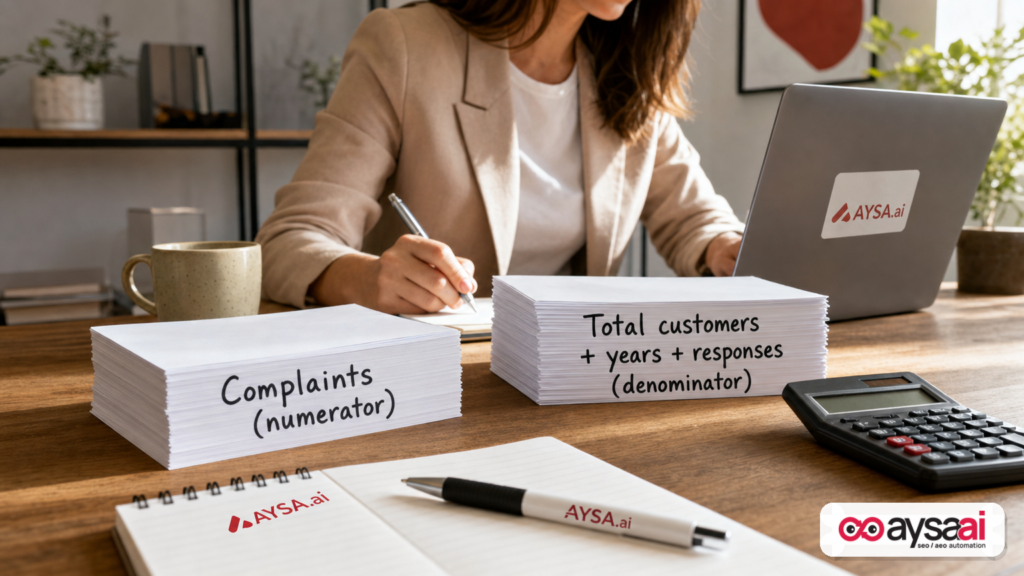
If your brand has a handful of complaints online (and almost every brand does), AI may disproportionately amplify them. Not because the model is biased against you, but because it lacks context: the denominator (how many customers you’ve served, how long you’ve operated, what happened after the complaint, whether the issue was resolved, and how representative it is).
This editorial is based on research and experimentation discussed in a sponsored post on Search Engine Journal, “Yes, You Can Change AI’s Opinion. Here’s How.” We’re not here to repeat it. We’re here to operationalize the core idea for real businesses: treat AI crawlers as a real audience, publish a sourced public brand record, measure outcomes, and run it as an ongoing system—not a one-time SEO trick.
Concise summary

- AI answers overweight negative signals when they don’t have scale/context (the “missing denominator” problem).
- You can influence AI outputs by publishing a public, sourced brand record that directly addresses known negatives and adds verifiable context.
- Delivery matters: AI crawlers may fetch some endpoints far more frequently than others, so making the right content reliably accessible to machines is a distribution problem as much as a writing problem.
- This is not about tricking models. Promotional language and omissions often backfire as “marketing slop.”
- Execution beats intent: Monitoring, approvals, versioning, and consistent publishing cadence are the difference between a one-off experiment and durable AI visibility.
Key takeaways (what to remember when you close this tab)
- Recommendation risk is the new ranking risk. Getting mentioned isn’t enough; the question is whether AI advises for or against you.
- Context must be sourced. If you claim “35,000 customers served,” label it as company-reported and back it up where possible.
- Don’t hide negatives. Address them clearly, with dates, scope, and what changed—then add the missing denominator.
- Machines reward clarity. A structured, well-attributed brand record is easier to retrieve and reuse than scattered web pages.
- Measure like a growth channel. Track prompts, models, dates, and sentiment/recommendation outcomes over time.
Table of contents

- What Changed: AI Answers Became The First Recommendation Layer
- Why Models Surface Complaints Without Context (The Missing Denominator Problem)
- The Safety Policies Driving Conservative Answers (And Why That Hits Brands)
- What The Search Engine Journal Source Adds To The Conversation
- The “Machine Layer” Idea: Treat AI Crawlers As A Real Audience
- Is This Cloaking? The Ethical/Operational Line Businesses Must Respect
- What To Publish: A Public, Sourced Brand Record That AI Can Use
- How To Write It Without Triggering “Marketing Slop”
- A Practical SME Scenario: The Local Clinic That Keeps Getting “Caution” Answers
- How To Measure If AI “Changed Its Mind” (Without Fooling Yourself)
- What Can Go Wrong: Failure Modes, Risks, And Non-Negotiables
- What Agencies And In-House Teams Must Rethink
- Where AYSA Fits: Monitoring + Approved Execution For AI Search
- What To Do Next (Action List)
- Sources And Further Reading
What Changed: AI Answers Became The First Recommendation Layer
For two decades, most marketing teams had a relatively clean funnel:
- Rank in Google
- Earn the click
- Convert on-site
AI Search compresses that flow.
Now a buyer may ask:
- “Should I hire this agency?”
- “Is this clinic trustworthy?”
- “Which vendor is safest?”
- “What are the top alternatives?”
And they may get an answer that pre-decides the shortlist—before your website ever loads.
That’s why “AI visibility” isn’t a vanity metric. Being mentioned as “an option” is table stakes. The new battleground is recommendation posture: does AI warn about you, neutralize you, or endorse you?
In the Search Engine Journal source, AnswerShare describes running the same neutral prompts before and after publishing more complete brand context. Their claim is that warnings fell and recommendations rose after adding sourced context, and they outline a technical approach: a public brand record plus a machine-layer delivery mechanism that makes it easy for AI crawlers to ingest repeatedly.
Even if you’re skeptical of any vendor’s test design (you should be), the underlying direction is correct: AI answers are now reputation infrastructure.
Why Models Surface Complaints Without Context (The Missing Denominator Problem)
If you’re a business owner, you already understand the math intuitively.
Seven complaints is either:
- a crisis (if you served 20 customers), or
- an exceptional record (if you served 35,000 customers over 13 years).
The same numerator means wildly different things depending on the denominator.
LLMs often see the numerator because negative signals are:
- highly duplicated (scraped, reposted, discussed)
- emotionally salient (strong language)
- easy to quote
But they frequently lack the denominator because it tends to live in places models don’t reliably retrieve or trust:
- internal metrics (customers served, refund rate, complaint rate)
- buried “About” pages
- PDFs
- content blocked by scripts, heavy front-ends, or inconsistent rendering for crawlers
- unattributed claims (which models treat as marketing)
The result is not “bias” in the human sense. It’s a data-shape problem. The model is trying to be safe. And absent context, “safe” often means “cautious.”
The Safety Policies Driving Conservative Answers (And Why That Hits Brands)
The SEJ source points out something important: frontier model makers explicitly instruct systems to be cautious when errors could cause real-world harm—especially in health, finance, and safety contexts.
Even without quoting any proprietary internal training docs, we can acknowledge the public-facing reality: these models are designed with guardrails that discourage reckless recommendations.
The SEJ piece references policy language and “constitutional” safety framing across major model providers. The practical business implication is simple:
- If AI is unsure, it hedges.
- If AI sees negatives and not scale, it warns.
- If AI fears liability, it points to alternatives.
So the goal isn’t to “convince AI to like you.” The goal is to remove uncertainty with attributable facts and clear boundaries, so the model can give a balanced answer without feeling like it’s making a dangerous leap.
What The Search Engine Journal Source Adds To The Conversation
The SEO industry has spent most of 2023–2026 arguing about tactics: schema, citations, PR, Content refresh, topical authority, and so on. Those still matter. But the SEJ post contributes a different lens:
- AI crawlers behave differently than Googlebot.
- LLM-friendly files can be crawled far less frequently than other endpoints.
- Edge delivery and “machine layer” routing can shape what gets ingested repeatedly.
- Repetition and consistency may matter in practice.
Importantly, the post emphasizes publishing a sourced, public record and not hiding it from humans or search engines. That’s the ethical anchor: this isn’t “show bots one thing, users another.” It’s “make the public record accessible, and deliver it cleanly to machines that struggle with modern web complexity.”
If you take nothing else from the SEJ source, take this: AI reputation management is not PR spin. It’s structured disclosure.
The “Machine Layer” Idea: Treat AI Crawlers As A Real Audience
Most websites today are built for:
- humans (design, persuasion, UX), and
- Googlebot (indexation, SEO fundamentals).
AI crawlers are a third audience with different failure modes:
- they may not execute JavaScript reliably
- they may not wait for client-side rendering
- they may crawl atypical URLs (like “LLM” resource files)
- they may crawl some endpoints far more often than others
The SEJ post describes using edge logic (“workers”) to route machine traffic and to serve a consistent, machine-readable brand briefing at the CDN edge, which was reportedly crawled far more frequently than a standalone file.
You don’t need to copy any vendor’s architecture to learn from the principle:
- Distribution is part of content. If your best brand context is rarely fetched, it’s effectively invisible.
- Machine readability is not optional. If the model can’t parse your modern front-end, it will rely on whatever it can parse elsewhere (often reviews and aggregator snippets).
For SMEs, the strategic upgrade is to treat AI crawlers as a legitimate “channel” with:
- a target asset (public brand record)
- a delivery mechanism (accessible, consistent URLs, lightweight output)
- a monitoring loop (prompt logs and change tracking)
Is This Cloaking? The Ethical/Operational Line Businesses Must Respect
Every time a new “SEO-like” technique emerges, the same fear appears: “Is this Cloaking?”
Here’s the line I use as an operator:
- If the facts are public and accessible to anyone (human, search engine, AI crawler) and you’re simply presenting them in a more machine-readable format, you’re in defensible territory.
- If you show materially different claims or facts to different audiences—or you hide the content from humans while feeding it to bots—you’re stepping into deceptive territory.
The SEJ source argues that delivering the same “byte-for-byte” public content via an edge layer is not cloaking, framing it as analogous to Responsive Design or formatting differences. Regardless of implementation details, the safest operational stance for brands is:
- Publish the brand record openly on your site.
- Ensure any machine-facing delivery is the same content, not a different story.
- Keep sources visible and verifiable.
This matters because the real risk isn’t a philosophical debate—it’s that AI systems (and users) increasingly recognize manipulation patterns. Even if a tactic “works” for a week, it can poison trust longer-term.
What To Publish: A Public, Sourced Brand Record That AI Can Use
Most websites already have the ingredients for a trustworthy brand record—just not assembled in a way machines can reliably use.
The SEJ post outlines a structured brief with five parts. That structure is a strong starting point for SMEs and agencies because it mirrors how a careful human evaluator thinks.
Here’s a practical, SME-friendly version of what to publish as a single, machine-readable resource (and yes, humans should be able to read it too):
1) Business identity (who you are)
- Legal entity name and “doing business as” names
- Where you operate
- Years in business (with a source or clear label if self-reported)
- Ownership/leadership (only what you’re comfortable disclosing publicly)
- Primary contact channels (support email, phone, address)
Why AI cares: ambiguity increases caution. A clear identity reduces the chance you’re confused with similarly named companies.
2) Offering (what you sell and what “good” looks like)
- Products/services and common use cases
- Who it’s for and who it’s not for (boundaries)
- Where and how to buy
- Pricing model ranges if public (or how quotes are generated)
- Refund/cancellation policy link
Why AI cares: models try to match user intent to fit. Being explicit reduces “maybe risky” hedging.
3) Evidence (what an evaluator can check)
- Licenses/certifications (where applicable)
- Case studies (with verifiable details)
- Independent reviews (quote snippets only with links)
- Media mentions and reputable profiles (only if real and linkable)
Why AI cares: the more claims you can anchor to third-party sources, the less “marketing” your story feels.
4) Reputation record (the part everyone wants to skip)
This is the section that changes outcomes when done honestly.
For each known concern:
- Describe the concern in plain language
- Include the source and date (link it)
- Clarify scope (one location? one employee? one product batch?)
- Add the missing denominator (customers served, orders shipped, years, etc.)
- Describe what changed (process fix, policy update), and when
- State what is unknown or disputed
Why AI cares: this transforms a negative snippet into an evaluable event with boundaries.
5) Boundaries and limitations (what the record does not prove)
- What data is self-reported
- What data is independently verified (and where)
- What’s out of date
- What open questions remain
Why AI cares: models are trained to be cautious; explicit limitations let them be useful without overreaching.
How To Write It Without Triggering “Marketing Slop”
If you want AI to take your brand record seriously, write it like a high-quality Wikipedia editor, not like a landing page.
That means:
- Neutral tone: fewer adjectives, more facts.
- Inline attribution: place the source right next to the claim.
- Clear labeling: “Company-reported” vs “Third-party reported.”
- Dates everywhere: when the claim was true matters as much as whether it’s true.
- Directly address negatives: do not pretend they don’t exist.
A practical test: if your brand record reads like it could survive a skeptical journalist’s review—because it contains sources and boundaries—it’s in the right zone.
This is also where many content teams trip: they try to “optimize” language for persuasion. In AI search, persuasion often looks like manipulation. And manipulation produces caution.
A Practical SME Scenario: The Local Clinic That Keeps Getting “Caution” Answers
Let’s make this real.
Imagine a local clinic (dental, dermatology, urgent care—pick your category). They have:
- Years of operation
- Thousands of patients
- Mostly positive reviews
- Two bad reviews about billing confusion
A prospective patient asks an AI assistant: “Is [Clinic Name] trustworthy?”
What the model may do today:
- Quote the two billing complaints
- Generalize risk (“some patients report issues”)
- Suggest competitors “just to be safe”
Not because the clinic is untrustworthy—because the model is operating under “avoid harm” logic.
What the clinic should publish as a brand record:
- Total patients served (labeled company-reported)
- How billing works (insurance, estimates, dispute process)
- The exact policy update made after those reviews (if any)
- Links to the reviews (don’t hide them)
- Staff credentials (where appropriate)
- Any regulatory identifiers that are publicly checkable (if applicable)
Then, they make sure that record is:
- publicly accessible
- machine-readable
- kept current
What changes in outcomes isn’t “AI loves the clinic.” It’s that AI can answer with proportionality:
- Yes, there were billing complaints.
- They appear limited in scope.
- Here’s the clinic’s process and what patients should ask upfront.
- Overall review patterns appear positive.
That is exactly the kind of “useful but safe” answer models are designed to produce—when you give them enough grounded context.
How To Measure If AI “Changed Its Mind” (Without Fooling Yourself)
Measuring AI reputation is new for most teams, so they default to vibes (“it feels better now”). That’s not acceptable if revenue is on the line.
Borrow the discipline of paid media and technical SEO:
1) Build a fixed prompt set
Create 10–30 prompts a real buyer would ask. Examples:
- “Do you recommend [Brand] for [use case]?”
- “What are the biggest complaints about [Brand]?”
- “Is [Brand] legit or a scam?”
- “Compare [Brand] vs [Competitor]”
Keep them stable for 30–90 days so you can compare over time.
2) Log everything
- Model name (and version if available)
- Date/time
- Prompt
- Full response
- Sources cited (if shown)
The SEJ source stresses consistent, neutral prompting and avoiding leading conversations that can cause “sycophancy.” That’s correct. Your goal is repeatability, not winning an argument.
3) Score with a rubric, not feelings
Create simple boolean/scale fields:
- Did the answer raise concerns? (Y/N)
- Did it provide context/scale? (Y/N)
- Did it warn against using the brand? (Y/N)
- Did it recommend or include the brand in a shortlist? (Y/N)
This mirrors the kind of signals the SEJ post claims to have tracked. Whether you use their exact categories or your own, the point is to quantify change.
4) Expect time lag
AI systems ingest, retrieve, and update on schedules you don’t fully control. The SEJ source suggests they saw shifts within days and stabilization within weeks. Your mileage will vary. The operational lesson is: publish, wait, test again—then iterate.
What Can Go Wrong: Failure Modes, Risks, And Non-Negotiables
If you do this poorly, you can make outcomes worse. Here are the most common failure modes I see in the market (and the ones you should design against):
Unverifiable claims
“Best-in-class.” “Thousands of happy customers.” “Industry-leading.”
Humans ignore this language. Models often downgrade it as promotional noise. If you can’t verify it, remove it or label it as opinion.
Trying to bury negatives
AI systems are increasingly trained to detect omission patterns. If you have known complaints in the public corpus, and your record pretends they don’t exist, you look less trustworthy, not more.
Publishing once and never updating
A brand record is not a “set it and forget it” page. New complaints appear. Policies change. Staff changes. If your record becomes stale, AI will treat it as less useful than fresh third-party chatter.
Technical fragility
If your “machine-readable” asset is behind scripts, broken by caching, blocked by robots rules accidentally, or inconsistent in delivery, crawlers may not fetch it reliably.
This is where technical SEO meets AI search: availability, status codes, content consistency, and edge delivery patterns can matter as much as copywriting.
Crossing the deception line
If you show materially different content to machines than to humans, you increase regulatory, platform, and reputational risk. Even if you avoid penalties, you may lose user trust the moment someone compares outputs.
What Agencies And In-House Teams Must Rethink
AI search changes the agency and in-house operating model in three big ways:
1) “Rankings” aren’t the only KPI anymore
Traditional SEO reporting focuses on positions, clicks, sessions. But AI answers often produce zero-click outcomes—and sometimes “zero-visit outcomes,” where the buyer never reaches your site at all.
Teams need new reporting artifacts:
- prompt visibility and recommendation rate
- brand sentiment in answers (with rubrics)
- citation presence (where the model points)
2) Reputation and content can’t be separated
The “About” page used to be a conversion page. Now it’s training data.
The best-performing brand records look like well-sourced documentation, not marketing collateral. That requires collaboration between:
- marketing
- operations (the people who know what actually changed after a complaint)
- legal/compliance (for boundaries)
- engineering (for delivery)
3) Execution and governance are the new moat
Writing a brand brief is easy. Keeping it accurate, sourced, updated, and consistently delivered is hard.
That’s where systems win over one-off consulting: monitoring, approvals, controlled changes, and repeatable workflows.
Where AYSA Fits: Monitoring + Approved Execution For AI Search
At AYSA.ai, our point of view is straightforward: the future of SEO/AEO/GEO is not “more ideas.” It’s approved execution at scale.
In practical terms, that means:
- Monitor what AI systems are saying (and how that changes week to week), not just what Google ranks.
- Prepare the right assets: sourced brand records, machine-readable context, structured content updates.
- Ask for approval before pushing changes—because reputation content is sensitive, and businesses need governance.
- Execute accepted website changes reliably, then re-measure.
If you want the product view of how we think about this, start here:
And if you’re trying to operationalize this across multiple locations, brands, or client sites, the governance and rollout model matters as much as the content. You can’t “prompt your way” into reputation safety. You need a repeatable publishing and measurement loop.
AYSA is designed to sit in that loop: identify issues, propose fixes, get stakeholder approval, ship improvements, and document what changed—so your AI presence becomes a managed asset, not an ongoing surprise.
What To Do Next (Action List)
Here’s the practical checklist I’d use if I were responsible for an SME or a multi-location brand right now.
1) Run a baseline AI reputation audit
- Choose 15–30 neutral prompts buyers would ask.
- Collect outputs from the models your customers use.
- Log date/model/output and score with a rubric.
2) Identify missing context (the denominator)
- Total customers/patients/orders served (label company-reported)
- Years in operation
- Response to complaints and what changed
- Policy links that matter (refund, cancellation, billing)
3) Build a public, sourced brand record
- Write in a neutral tone.
- Use inline sources and dates.
- Address negatives explicitly, with scope and context.
4) Make it reliably accessible to machines
- Ensure it’s on your public domain (not gated).
- Prefer lightweight, crawlable rendering.
- Verify status codes, canonicalization, and consistency.
If you don’t have engineering support, start simple: a clean public page with straightforward HTML and clear links is better than an inaccessible “perfect” solution.
5) Re-test on a schedule
- Re-run the same prompt set weekly for 4–6 weeks.
- Track the trend, not the one-day swing.
- Iterate your record as new concerns appear or as you find missing data.
6) Productize the workflow (so it doesn’t die)
- Assign an owner.
- Set review cadence (monthly/quarterly).
- Implement approvals.
- Document changes.
If you want help building this into a system—monitoring plus approved execution—evaluate AYSA’s approach and pricing here: AYSA Pricing.
Sources and further reading
- Search Engine Journal (source): Yes, You Can Change AI’s Opinion. Here’s How.
- Search Engine Journal topic hub: AI Search
- Search Engine Journal topic hub: Technical SEO
- Search Engine Journal report referenced in extracted page content: State Of Search 2027
- AYSA.ai product pages: AI Search Visibility, Monitoring, AI SEO Tools
- AYSA.ai blog: AYSA Blog
Continue the AI search topic inside AYSA.
Use these pages to connect the article with AI SEO tools, AI visibility monitoring, AI Overviews and approved website execution.
Turn this topic into a website action plan.
Use these AYSA hubs to move from reading to technical fixes, AI visibility monitoring, research, glossary context and approval-first SEO execution.