Google’s New Branded Search Controls in AI Max: What SMEs, Agencies, and Marketers Must Know (And Do) Now
Google’s experimental branded search controls in AI Max campaigns signal a major shift in how advertisers can manage branded vs. non-branded search traffic. This extensive AYSA.ai editorial unpacks the evolution, practical risks, SME scenarios, agency strategies, and how to future-proof your marketing with automation, monitoring, and actionable steps.

By Marius Dosinescu, AYSA.ai
Introduction: Google’s AI Max Branded Search Controls Are Here—Why This Is a Big Deal
The search advertising landscape is in the midst of a seismic shift. Google’s new Branded Search controls in AI Max campaigns—currently in limited pilot—promise something advertisers have demanded for years: the ability to cleanly separate branded from non-branded search traffic (Search Engine Land). For small businesses, agencies, and marketers, this could mean more transparent reporting, improved budget allocation, and a way to finally measure the true incremental value of AI-powered campaigns.
But as with any major update, the details matter. This editorial unpacks the context, what’s new, the risks, practical implications, and how to future-proof your digital marketing as automation and AI reshape the rules. We’ll go beyond the headlines, offering actionable insights, SME scenarios, and an Execution Plan—plus where AYSA.ai fits as your Monitoring, automation, and search visibility partner.
Summary
Google is piloting new branded search controls in AI Max campaigns, allowing advertisers to specify whether campaigns target branded, non-branded, or both search queries. This addresses a long-standing pain point: AI-driven campaigns mixing branded and non-branded traffic, leading to higher costs, Attribution headaches, and lost transparency. For SMEs and agencies, the new controls promise cleaner segmentation, better budget allocation, and clearer measurement of campaign impact. But the rollout is limited, and execution, monitoring, and adaptation remain critical. This guide covers everything you need to know to prepare and win in this new era.
Table of Contents
- Key Takeaways: A New Era for Branded Search in AI Max
- Background: Branded vs. Non-Branded Search—Why the Distinction Matters
- The Evolution of Branded Search Control in Google Ads
- What’s New: Branded Search Controls in AI Max
- Why This Matters for SMEs, Agencies, and Marketers
- Risks, Pitfalls, and What Could Go Wrong
- SME Scenario: A Florist Navigates Branded vs. Non-Branded Campaigns
- Practical Implications: Monitoring, Measurement, and Adaptation
- Agency Perspective: Restructuring, Reporting, and Client Value
- AYSA.ai Perspective: Automation, Monitoring, and Future-Proofing Search
- Action Plan: What to Do Next
- Sources and Further Reading
Key Takeaways: A New Era for Branded Search in AI Max

- Google’s AI Max campaigns are testing branded search controls. Advertisers may soon choose whether campaigns target branded, non-branded, or both query types.
- This directly addresses a major pain point: AI Max previously mixed branded and non-branded traffic, leading to budget waste and unclear reporting.
- SMEs and agencies gain more transparency and control. Expect cleaner campaign segmentation, improved ROI, and more actionable data.
- Execution and monitoring are critical. New controls require careful adaptation—automation platforms like AYSA.ai can help.
- Rollout is limited. This is not a global launch; monitor official channels and test incrementally.
Background: Branded vs. Non-Branded Search—Why the Distinction Matters
In search advertising, not all Clicks are created equal. Branded searches—queries that include your business, product, or service name—are typically high-intent, low-cost, and convert well. Non-branded searches (e.g., “best florist in Chicago” vs. “Roses by Rita Chicago”) are more competitive, expensive, and represent new customer acquisition opportunities.
For years, marketers have known that mixing these two types of traffic in the same campaign muddies the data, inflates costs, and makes it nearly impossible to measure the true impact of prospecting efforts. Yet, with the rise of AI-powered campaigns like Performance Max and AI Max, Google’s automation often blurred the lines—making it difficult for businesses to control or even see how their budget was being allocated.
Why does this matter? For SMEs, every marketing dollar counts. If your AI Max campaign is scooping up branded searches you would have captured anyway, you’re paying twice. For agencies, it means you can’t clearly report on what’s driving growth.
The Evolution of Branded Search Control in Google Ads
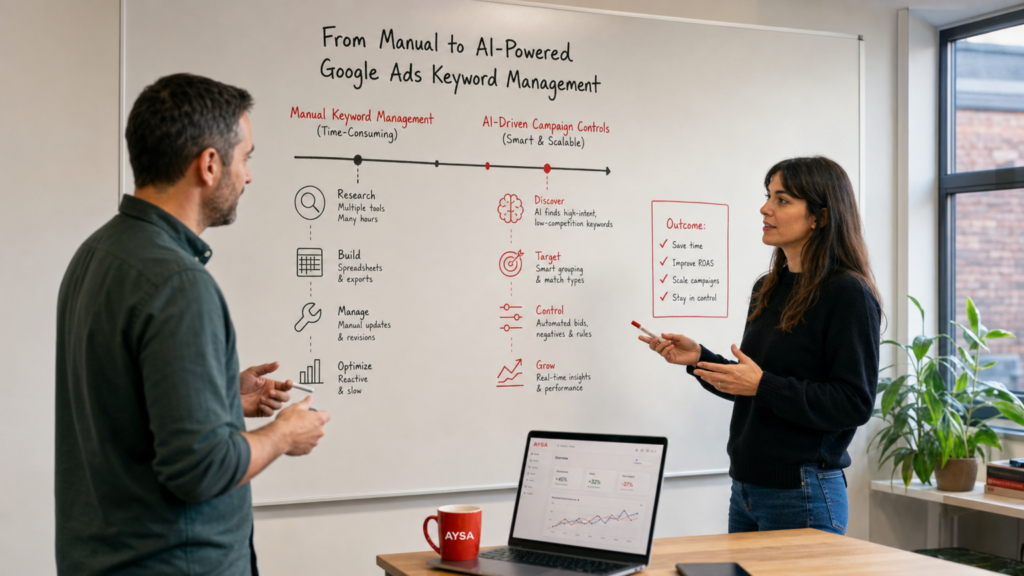
To appreciate the significance of Google’s new controls, let’s walk through how branded search management has evolved:
- The Manual Era: Advertisers built separate campaigns for branded and non-branded keywords, using negative Keyword lists to keep them distinct. This was labor-intensive and prone to error, but it worked.
- The PMax Era: With the introduction of Performance Max, Google promised efficiency through automation. But PMax campaigns often ignored manual exclusions, mixing branded and non-branded traffic and leaving advertisers frustrated.
- The AI Max Era: AI Max campaigns took automation further, but at the cost of transparency. Marketers relied on brand exclusion lists, which were clunky and not always effective.
- The New Branded Search Controls: Now, Google is piloting a native campaign-level setting that lets advertisers choose how AI Max handles branded queries. This could finally restore clarity and control (if it works as intended).
What’s New: Branded Search Controls in AI Max
According to Search Engine Land, some advertisers have spotted a new “Branded Searches” control in their AI Max campaign settings. This setting offers three options:
- Show ads on all relevant searches (default): The campaign serves ads on both branded and non-branded queries.
- Control branded searches using brand inclusions and exclusions: Advertisers can specify which branded terms to include or exclude.
- Show ads only on unbranded searches: The campaign ignores queries containing your brand, focusing solely on new customer acquisition.
This is a significant departure from the previous reliance on exclusion lists. The new setting is more direct, less error-prone, and—if rolled out globally—would allow businesses to align campaign structure with business goals.
As of now, this feature is in limited testing. There is no official word from Google on a broad rollout, so monitor your account and industry news closely. For more background, see How to get your Google Ads seen in AI Overviews and Google AI Overviews & AI Mode gain preferred sources.
Why This Matters for SMEs, Agencies, and Marketers
The ability to separate branded from non-branded search traffic isn’t just a technical improvement—it’s a business-critical shift. Here’s why:
- Cleaner segmentation: You can finally see which campaigns are driving new customer growth versus capturing existing demand.
- Improved ROI: Budgets can be allocated more efficiently, focusing prospecting spend where it matters and protecting branded campaigns from cannibalization.
- More actionable reporting: Agencies and in-house teams can deliver clearer, more credible results to stakeholders.
- Reduced attribution headaches: With clean data, it’s easier to measure true incremental performance.
- Competitive protection: By clearly separating branded campaigns, you can better monitor and defend against competitors bidding on your brand.
For SMEs, this means less wasted spend and more growth. For agencies, it’s a chance to reinforce your value as strategic partners, not just campaign executors. For more on the difference between AI-driven and organic search, see The SEO-GEO gap: How AI search traffic differs from organic traffic.
Risks, Pitfalls, and What Could Go Wrong
No new feature is without risk. Here’s what to watch for as branded search controls roll out:
- Incomplete or inconsistent rollout: Not all advertisers will see the new controls at once. Relying on them prematurely could disrupt campaign performance.
- Misclassification of queries: Google’s AI may not always correctly identify branded vs. non-branded searches, especially for ambiguous or generic brand names.
- Performance volatility: Adjusting campaign targeting can impact volume, CPC, and conversion rates. Expect some fluctuation as you adapt.
- Attribution confusion: Clean separation is only valuable if your analytics and attribution models are set up to reflect it.
- Overreliance on automation: Automated controls are powerful, but require vigilant monitoring—especially during early rollouts.
Careful monitoring and incremental testing are key. Platforms like AYSA.ai Monitoring can help you spot anomalies quickly.
SME Scenario: A Florist Navigates Branded vs. Non-Branded Campaigns

Let’s ground this in a real-world example:
Rita owns “Roses by Rita,” a local florist in Austin. She advertises on Google to attract new customers searching for “florist near me” (non-branded) and wants to capture those searching specifically for “Roses by Rita” (branded).
Previously, Rita’s AI Max campaign sometimes showed ads to people searching her shop name—even though she had a dedicated branded campaign. This led to:
- Paying for clicks she likely would have received organically
- Difficulty measuring how many new customers her ads were really attracting
- Confusion in reporting about which campaigns were driving growth
With the new branded search controls, Rita can set her AI Max campaign to “show ads only on unbranded searches.” Her prospecting budget is now focused on acquiring new customers, while her branded campaign efficiently captures loyal repeat visitors. She can clearly see the incremental value of her AI-driven campaigns—and optimize accordingly.
Practical Implications: Monitoring, Measurement, and Adaptation
Whether you’re an SME or an agency, here’s what you should be watching as branded search controls roll out in AI Max:
- Campaign settings: Check your AI Max campaigns regularly for the new “Branded Searches” option. Document any changes and monitor their impact.
- Performance metrics: Track Impressions, clicks, conversions, and cost for both branded and non-branded campaigns. Look for shifts in volume or efficiency.
- Attribution models: Ensure your analytics platform can differentiate between branded and non-branded conversions. Update your reporting dashboards as needed.
- Budget allocation: Revisit how much you spend on each campaign type. Shift spend toward channels and audiences delivering true incremental growth.
- Competitor activity: Use tools like the AYSA.ai AI Search Visibility checker to monitor how you and your competitors appear in both branded and non-branded queries.
- Brand protection: Be vigilant about competitors bidding on your branded terms. The new controls can help, but ongoing monitoring is essential.
For more on monitoring and reporting, see AYSA.ai Monitoring.
Agency Perspective: Restructuring, Reporting, and Client Value
Agencies managing multiple clients should see this update as an opportunity to revisit campaign architecture. With clearer controls, you can:
- Build more transparent campaign structures that align with client objectives (acquisition vs. retention).
- Deliver cleaner, more actionable reporting that separates branded and non-branded results.
- Advise clients on budget reallocation based on true incremental performance, not just blended averages.
- Automate monitoring and alerting for campaign anomalies using platforms like AYSA.ai.
- Develop new service offerings around branded search optimization and AI campaign governance.
This is a chance for agencies to reinforce their value as strategic partners. Agencies should also educate clients about the risks of early adoption, especially during limited rollouts. For more on campaign testing and creative strategies, see How to structure paid social creative testing for better performance.
AYSA.ai Perspective: Automation, Monitoring, and Future-Proofing Search
At AYSA.ai, we see the introduction of branded search controls in AI Max as part of a broader trend: advertisers demanding more transparency, control, and automation in an AI-dominated landscape. The future of digital marketing lies in the seamless integration of automation, monitoring, and human oversight.
Our platform is designed to:
- Monitor campaign changes and alert you when new features or settings appear in your account.
- Prepare and recommend campaign adjustments—such as splitting branded and non-branded targeting—based on your business goals.
- Request your approval before executing changes, giving you the final say and peace of mind.
- Track performance across SEO, AEO, and GEO dimensions to ensure you’re capturing both organic and paid visibility where it matters most.
- Automate repetitive tasks so your team can focus on strategy and growth.
For SMEs and agencies alike, leveraging automation and monitoring tools is no longer optional—it’s essential for staying competitive as Google and other platforms continue to evolve. Learn more about our approach at AYSA.ai AI SEO Tools, AYSA.ai Monitoring, and AYSA.ai Pricing.
We believe the winners in this new era will be those who combine the best of AI automation with vigilant oversight and a relentless focus on business outcomes.
Action Plan: What to Do Next
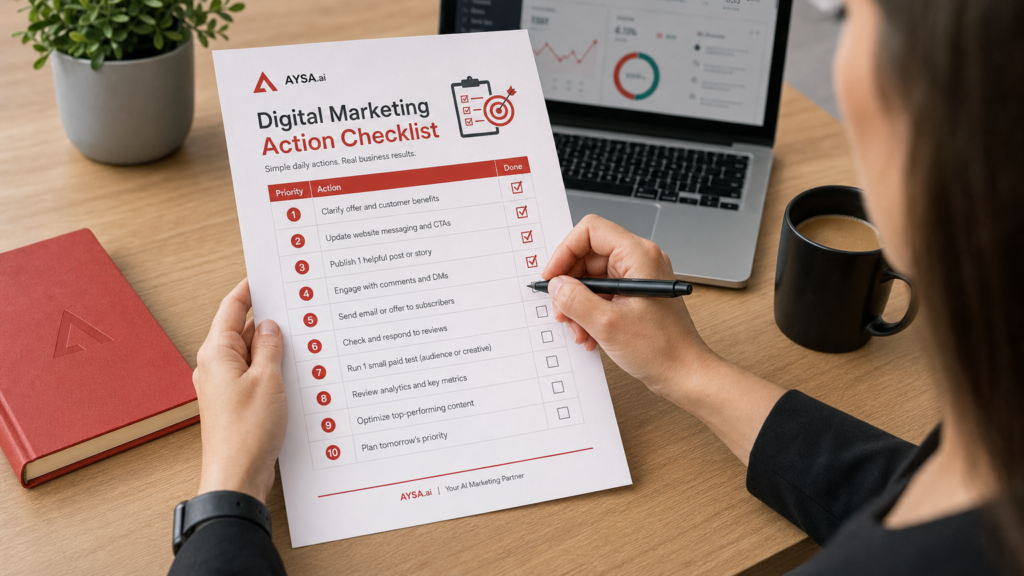
- Audit your current campaigns: Identify where branded and non-branded traffic is being mixed. Document your current settings and performance.
- Monitor for new features: Regularly check your AI Max campaign settings for the “Branded Searches” control. Stay updated via official Google Ads announcements and trusted industry news.
- Test incrementally: If you gain access to the new controls, make changes in a controlled way. Monitor performance closely before rolling out across all campaigns.
- Update your reporting: Ensure your analytics and attribution models can accurately reflect branded vs. non-branded results.
- Educate your team and clients: Communicate the benefits and limitations of the new controls. Set expectations for performance shifts.
- Leverage automation: Use platforms like AYSA.ai to monitor, recommend, and execute campaign changes with confidence.
- Monitor competitors: Use AI-powered tools to ensure your branded terms aren’t being poached by rivals and to benchmark your visibility.
- Stay agile: As Google continues to iterate, remain flexible in your campaign structures and ready to adapt as new controls become available.
Sources and Further Reading
- Search Engine Land: Google appears to be testing new branded search controls in AI Max campaigns
- How to get your Google Ads seen in AI Overviews
- The SEO-GEO gap: How AI search traffic differs from organic traffic
- Google AI Overviews & AI Mode gain preferred sources, plus new perspectives carousel and highly cited labels
- AYSA.ai AI SEO Tools
- AYSA.ai AI Search Visibility
- AYSA.ai Monitoring
- AYSA.ai Pricing
- AYSA.ai Blog
Note: As this feature is still in testing, monitor Google Ads’ official documentation and trusted industry news for the latest developments.
Practical Strategies for SMEs: Navigating AI-Driven Search and Advertising
Small and medium-sized enterprises (SMEs) face unique challenges in the rapidly evolving landscape of AI-powered search and advertising. While large brands may have the resources to experiment with every new feature, SMEs must be more strategic with their investments. The introduction of AI Max campaigns and branded search controls by Google, as reported by Search Engine Land, offers new opportunities—and new complexities—for SMEs seeking to maximize their visibility and return on ad spend.
For example, consider a regional e-commerce retailer specializing in eco-friendly home goods. Historically, their Google Ads campaigns targeted both branded and non-branded keywords, but with limited ability to segment performance data. With the new branded search controls in AI Max, this retailer can now isolate branded traffic (searches for their store name or proprietary product lines) from non-branded traffic (generic searches like “sustainable kitchenware”). This enables more precise budget allocation: branded campaigns can focus on customer loyalty and retention, while non-branded campaigns drive new customer acquisition.
Practical steps for SMEs include:
- Auditing current campaigns: Identify which keywords and ad groups are branded versus non-branded.
- Testing AI Max controls: If available, enable branded search controls and compare performance metrics.
- Monitoring overlap: Use negative keyword lists to prevent cannibalization between branded and non-branded campaigns.
- Leveraging automation: Allow AI-powered bidding strategies to optimize for conversions, but set clear boundaries to avoid budget waste.
SMEs should also keep a close eye on AI-generated ad placements and messaging, ensuring that brand voice and compliance standards are maintained. For more on brand voice in AI, see How to train Claude to sound like your brand.
Measuring Success in the Era of AI Search
Measurement is more critical—and more complex—than ever in AI-driven search environments. Traditional metrics like click-through rate (CTR) and cost per acquisition (CPA) remain important, but AI-powered search and ad platforms introduce new layers of abstraction. For instance, AI Overviews in Google Search may surface ads in conversational contexts, blurring the line between organic and paid visibility (How to get your Google Ads seen in AI Overviews).
To adapt, SMEs should expand their measurement toolkit:
- Impression share in AI Overviews: Track how often your ads appear in AI Overviews versus traditional search results.
- Brand lift studies: Use surveys or platform-provided tools to measure changes in brand awareness resulting from AI-powered campaigns.
- Attribution modeling: Adjust attribution models to account for multi-touch, conversational journeys enabled by AI search.
- Lead quality tracking: Integrate with platforms like the Google Ads built-in lead management dashboard to monitor not just quantity but quality of leads generated.
For SMEs, it’s also important to benchmark against industry peers and historical data. For example, a B2B SaaS provider might notice a decline in direct clicks but an increase in assisted conversions attributed to AI-powered ad placements. By analyzing these patterns, the provider can adjust creative and bidding strategies to maximize overall ROI.
Risks and Mitigation: What SMEs Need to Watch Out For
While AI-powered search and advertising platforms promise greater efficiency, they also introduce new risks—especially for resource-constrained SMEs. Key challenges include:
- Loss of transparency: As AI platforms automate more decisions, it becomes harder to understand why certain ads are shown or budgets are spent in particular ways.
- Brand safety: AI-generated content and placements may inadvertently misrepresent your brand or appear alongside inappropriate content.
- Data privacy: Increased automation often means more data sharing with platforms, raising compliance and privacy concerns.
- Over-reliance on automation: Without regular oversight, AI-driven campaigns can drift from business objectives, leading to wasted spend.
To mitigate these risks, SMEs should:
- Regularly review campaign reports and ad placements.
- Set clear brand guidelines for AI-generated messaging.
- Limit automated changes to critical campaigns or budgets without human review.
- Stay informed about evolving platform policies and updates.
For additional insights on the implications of AI-driven search for organic and paid traffic, see The SEO-GEO gap: How AI search traffic differs from organic traffic.
The AYSA Perspective: Executing AI Search Strategies for SMEs
At AYSA.ai, we recognize that the intersection of AI and search marketing is both an opportunity and a challenge, especially for SMEs. Our platform is designed to empower businesses to navigate this complexity with confidence. Here’s how AYSA supports effective execution in the AI search era:
- Unified campaign management: AYSA integrates with leading ad platforms, allowing SMEs to manage branded and non-branded campaigns from a single dashboard. This streamlines reporting and makes it easier to spot trends or anomalies.
- AI-powered insights: Our analytics engine surfaces actionable recommendations, such as when to adjust bidding strategies or segment campaigns based on performance in AI Overviews.
- Brand safety controls: AYSA provides customizable brand safety filters, ensuring that AI-generated ads and content align with your business values and compliance requirements.
- Education and support: We offer tailored resources—like our AI Search Guide—to help SMEs stay ahead of industry changes and leverage new features as they become available.
For example, a boutique travel agency using AYSA was able to quickly adapt to Google’s AI Max branded search controls. By segmenting their campaigns and leveraging AYSA’s cross-channel attribution tools, they increased non-branded lead generation by 27% while maintaining a strong return on ad spend for branded queries.
Ultimately, success in AI-powered search requires a blend of automation, measurement, and human oversight. AYSA.ai is committed to helping SMEs strike the right balance, turning emerging technology into a competitive advantage.
Next Steps for SMEs: Building Resilience in AI Search
As AI continues to reshape search and advertising, SMEs must remain agile. Key recommendations include:
- Experiment with new platform features like branded search controls—but start with pilot budgets and clear KPIs.
- Invest in measurement infrastructure that can track both direct and assisted conversions.
- Regularly review AI-generated content for brand consistency and compliance.
- Leverage platforms like AYSA.ai to simplify campaign management and surface actionable insights.
By embracing these practices, SMEs can not only survive but thrive in the age of AI-powered search marketing. For more in-depth guidance, explore our AYSA blog or reach out to our team for a personalized strategy session.
Continue the AI search topic inside AYSA.
Use these pages to connect the article with AI SEO tools, AI visibility monitoring, AI Overviews and approved website execution.
Turn this topic into a website action plan.
Use these AYSA hubs to move from reading to technical fixes, AI visibility monitoring, research, glossary context and approval-first SEO execution.