
Microsoft Ads’ Biggest Bidding Upgrade In A Decade: What It Really Changes (And How SMEs Should Respond Without Breaking Performance)
Microsoft Advertising is automatically rolling out rebuilt automated bidding models for Target CPA and Target ROAS. Here’s what changes in pacing, how fast targets adjust, what conversion history you actually need, the hidden tracking risks (especially values), and a practical action plan for SMEs and agencies—with an execution angle that connects paid search to AI-era SEO/AEO via AYSA.

Microsoft Advertising is rolling out what it calls its biggest automated bidding upgrade in a decade—rebuilt models that use more signals, adjust targets faster, and pace budgets more smoothly. The important part for businesses: this is being applied automatically as it reaches more accounts, which means your campaigns can begin behaving differently even if you touch nothing.
That can be good news. It can also create “invisible” risk if your measurement isn’t ready—especially for value-based bidding (Target ROAS) when conversion values are estimated, fixed, or simply wrong.
I’m writing this as Marius Dosinescu at AYSA.ai, from the perspective that paid search isn’t just a channel—it’s a feedback loop. When bidding models change, the winners aren’t the advertisers who react the fastest; they’re the ones who monitor the right signals, make controlled changes, and fix the website + tracking bottlenecks that bidding automation can’t fix for you.
Concise summary
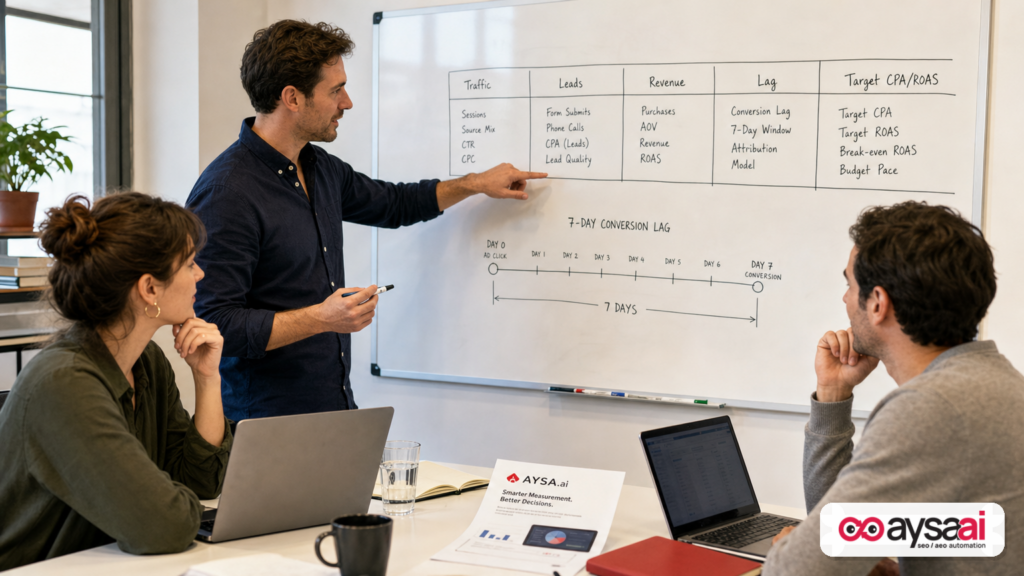
- Microsoft Ads is upgrading automated bidding models for Target CPA and Target ROAS, with faster adjustments and smoother pacing, rolling out automatically. Source: Search Engine Journal.
- Expect behavior changes without setting changes: pacing, bid aggressiveness after target updates, and how consistently targets are hit.
- “Faster bidding” doesn’t remove conversion lag. If your sales cycle is 7–14 days, you still need to evaluate changes on that timeline.
- ROAS bidding is only as smart as your conversion values. Fixed/estimated values can manufacture “success” in-platform while the business loses money.
- SMEs should run a controlled 30-day test: verify tracking + values, limit target changes, evaluate after a full conversion cycle, and avoid stacking changes.
- Where AYSA fits: monitor search demand and landing page behavior, prepare SEO/AEO updates that align with new auction mixes, ask for approval, and execute accepted changes to keep the site converting as paid traffic shifts.
Key takeaways (what to do in the next 60 minutes)
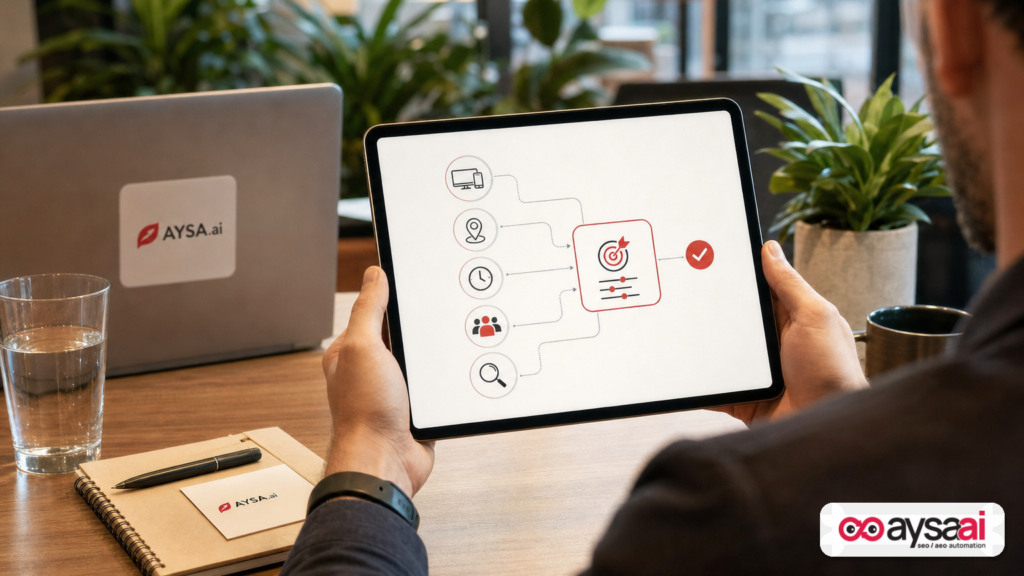
- Check whether your campaign pacing changed this week (spend earlier in the day, fewer “dead” hours, faster ramp to budget).
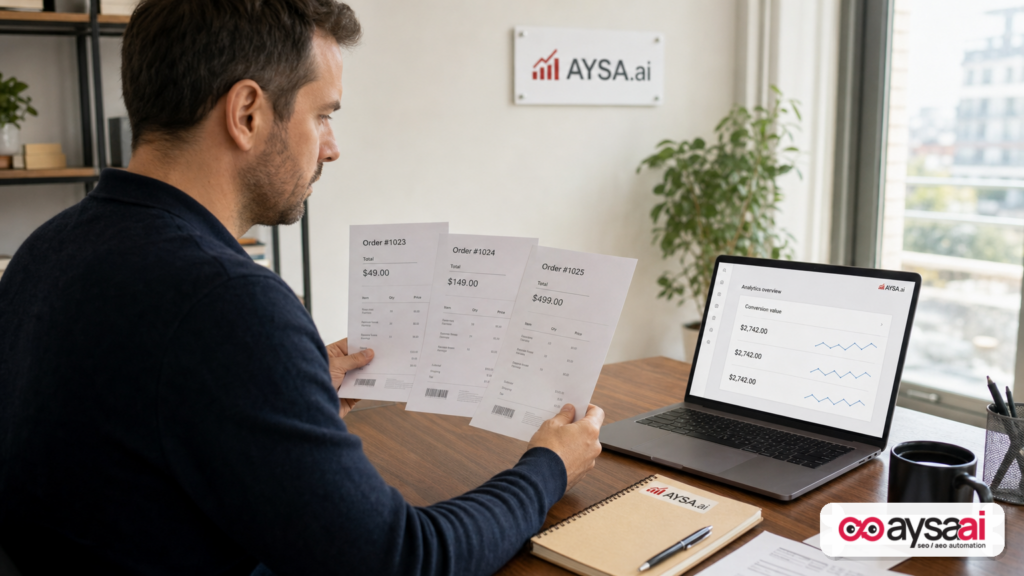
- If you use Target ROAS or Maximize Conversion Value, spot-check 10 recent conversions and confirm the value matches real order totals (not a placeholder).
- If you’re tempted to change targets, do it once, in a small step (Microsoft suggests ~15% increments), then wait one conversion cycle before changing again (per Microsoft’s guidance reported by SEJ).
- If you’re low volume, decide what “enough data” means for you: Microsoft suggests starting conversion-based bidding once the account has at least five conversions, but judging performance may require around 30 conversions in 30 days at the campaign or portfolio level (as summarized by SEJ).
- Write down one business truth the algorithm can’t know: refund rate, call quality, lead qualification, seasonality, or margin differences—then plan how you’ll feed that truth back via tracking (offline imports / APIs) or by adjusting your targets accordingly.
Table of contents
- What Microsoft changed: rebuilt bidding models (and why that matters)
- Why this matters now: automation is getting “tighter” while measurement is still messy
- What could change in your campaigns (pacing, target response, volume)
- The hidden constraint: conversion lag and delayed truth
- How much conversion history you really need (and what “low volume” means)
- The most common failure mode: “ROAS bidding” with fake values
- Lead gen: when the platform optimizes for the wrong lead
- A concrete SME scenario: local clinic vs ecommerce—same tools, different risks
- What agencies should rethink: fewer knobs, more operations
- A practical 30-day test plan (without thrashing your account)
- Where AYSA fits: connecting paid bidding changes to SEO/AEO execution
- What to do next (action list)
- Sources and further reading
What Microsoft changed: rebuilt bidding models (and why that matters)
According to reporting by Search Engine Journal, Microsoft Advertising is rolling out new automated bidding models it describes as its biggest upgrade in a decade, designed to use more signals to predict whether a click will convert and what that conversion might be worth. The rollout is automatic as it reaches more accounts, meaning you may see different spending and performance patterns without touching settings.
Let’s translate “rebuilt bidding models” into operator language:
- The model’s idea of a “good click” may shift. Even if your Keyword list doesn’t change, the system may weigh signals differently (time of day, audience, device, query nuance, contextual inventory).
- The speed of reaction to target changes increases. SEJ reports Microsoft says target adjustments can happen nearly twice as fast when you change CPA/ROAS targets.
- Budget pacing becomes a bigger lever than you think. If a campaign ramps earlier and spreads spend more evenly, you’ll see a different distribution of Impressions/Clicks across the day—and often across query variants.
This isn’t a “new feature” you opt into. It’s closer to a platform engine swap while you’re driving. Most of the time you’ll be fine. But if you’re already operating on thin margins, weak tracking, or low volume, small engine differences can push you into the ditch before you realize what happened.
Why this matters now: automation is getting “tighter” while measurement is still messy
Paid search has been marching toward more automation for years. The promise is simple: let the platform decide bids in real time using more signals than any human can process. The trade-off is also simple: the platform can only optimize toward the goals and data you provide.
What’s different about a major bidding model upgrade is that it puts pressure on all the weak links you could previously “get away with”:
- Loose conversion definitions (counting any form fill as equal)
- Inaccurate values (fixed values for purchases, missing taxes/shipping, wrong currency, partial revenue)
- Lagging reporting (sales happen offline; the platform sees only the initial lead)
- Landing pages built for humans but not for intent segmentation (one generic page for every query)
As automation improves, these issues don’t stay “minor.” They become the difference between scaling profitably and scaling waste.
This is also where SEO/AEO operations matter. When paid bidding changes the mix of users arriving at your site, you’ll often need to update landing pages, internal links, and content to match that new intent mix. That’s execution work—and it tends to be the bottleneck.
AYSA exists to remove that bottleneck: we monitor your search ecosystem, prepare changes, ask for approval, and execute accepted updates so the site keeps converting while the platforms keep changing.
What could change in your campaigns (pacing, target response, volume)
SEJ’s coverage highlights three practical areas Microsoft calls out: budget pacing, speed of target adjustments, and consistency against targets. Here’s what those look like in the real world—and what you should monitor.
1) Budget pacing: earlier ramp, fewer “spend cliffs”
If your campaign historically spent slowly in the morning and then rushed in the afternoon, smoother pacing can look like a win. But it can also change performance if the morning inventory behaves differently than late-day inventory.
What to monitor:
- Hour-of-day performance trends (even if you can’t perfectly attribute, watch for sudden shifts)
- Impression share changes (if you track it) and whether you’re exhausting budget earlier
- Search term mix: more top-of-funnel queries can appear when pacing expands reach
2) Faster target adjustments: good for control, risky for over-control
Microsoft says bids can adjust nearly twice as fast after you change CPA/ROAS targets (per SEJ’s reporting). That’s useful when you need to respond to real business constraints—like a temporary margin change or a sales team capacity issue.
But faster adjustment also makes it easier to “thrash” a campaign: you change target Monday, again Wednesday, again Friday, and never learn what any change did because the system never stabilizes.
Operator rule: decide the evaluation window based on your conversion cycle, not your anxiety level.
3) More consistent target hitting: great… if the target is meaningful
One subtle point in the source coverage: Microsoft notes that campaigns can hit targets more consistently without giving up conversion volume or value, and that constraints like max CPC caps can limit flexibility.
This is a frequent SME mistake: running “Target CPA” while also pinning the system with extra constraints (tight max CPC, restrictive budgets, narrow GEO, limited hours). The result is a campaign that can’t bid into the auctions it needs to hit the business goal.
What to monitor:
- Average CPC changes after the model upgrade (it may rise while CPA improves—or vice versa)
- Conversion volume vs CPA/ROAS stability
- Whether constraints (CPC caps, limited budgets) are preventing learning
The hidden constraint: conversion lag and delayed truth
One of the most important reminders in the SEJ summary is also the easiest to ignore: faster bidding doesn’t make customers buy faster.
If you raise your CPA target on Monday but your typical buyer takes a week to purchase, by Friday you might see spend and clicks, but you still won’t know the full conversion outcome. That’s not a Microsoft problem—it’s a time problem.
Here’s the practical implication:
- Do not judge changes on the same day. You’re mostly measuring noise, not outcome.
- Pick a “conversion cycle” definition for your business. Ecommerce might be 1–3 days. B2B SaaS might be 14–45 days. Local services could be 3–10 days depending on booking behavior.
- Align change frequency to that cycle. Microsoft suggests reviewing after one conversion cycle, and allowing one to two cycles for bigger changes like switching bid strategies or adding a conversion goal (as reported by SEJ).
This is also why you need strong Monitoring. At AYSA, we think in terms of “early indicators” and “late indicators.” Early: Bounce Rate shifts, time-on-page, form starts, call clicks, add-to-cart. Late: qualified leads, revenue, repeat purchases. When paid auction behavior changes, early indicators tell you if the landing experience still matches intent—days or weeks before revenue attribution settles.
How much conversion history you really need (and what “low volume” means)
Microsoft’s guidance, as summarized in the source coverage, is pragmatic:
- Start conversion-based bidding for new campaigns once the account has at least five conversions (they can come from other campaigns).
- If you’re still gathering early conversions, Enhanced CPC is an option.
- To judge performance, Microsoft recommends around 30 conversions in 30 days at the campaign or portfolio level (per SEJ’s summary).
Here’s my editorial take: “five conversions” is a technical minimum. It’s not a business minimum.
When you have low volume, the real problem is variance. If you get 8 conversions a month, one good week or one bad week can change CPA by 30–50%. That makes it dangerously easy to declare victory or failure too soon.
A better approach for low-volume accounts
- Use portfolio-level thinking where possible. If individual campaigns are low volume, consider whether consolidating goals or structure gives the model more consistent signals (but do this cautiously; structure changes can break comparability).
- Define a “decision threshold.” For example: “We won’t declare a strategy change successful until we have at least X conversions and one full cycle has elapsed.”
- Separate learning from scaling. Run learning with a limited budget risk envelope; scale once tracking + value signals are trustworthy.
If you’re unsure whether your measurement is solid enough to let automation run, that’s a signal to invest in your analytics foundation. This isn’t glamorous—but it’s the work that makes the platform’s improvements actually pay you back. (More on this in the ROAS section.)
The most common failure mode: “ROAS bidding” with fake values
Value-based bidding (Target ROAS / Maximize Conversion Value) can be extremely effective—if you provide actual transaction values. Microsoft, per the source coverage, reported its largest gains among advertisers sending real transaction values and suggests advertisers verify reported values match order totals.
In the SME world, here are the most common value problems I see in principle (not specific to Microsoft):
- Fixed values for purchases. Every purchase is assigned “1” or “100” regardless of order size.
- Partial revenue. The system captures subtotal but not shipping/tax—or captures only a portion of product revenue.
- Currency or rounding issues. A $400 order looks like 400 cents, or vice versa.
- Refunds and cancellations not accounted for. ROAS looks great until finance reconciles.
- Duplicate conversions. Thank-you pages firing multiple times or both client-side and server-side events counted incorrectly.
When your values are wrong, Target ROAS doesn’t “optimize for profit.” It optimizes for the fiction you fed it.
A simple audit any business owner can do
- Pick 10 recent orders (or leads if you assign values).
- Open your ad platform’s conversion reporting and locate those conversions.
- Confirm: do the values match the real order totals you care about?
- If not: do not “tune ROAS.” Fix values first.
This is why the bidding model upgrade matters: as the model gets better at finding “high value” users, the cost of incorrect values increases. Garbage in becomes expensive garbage out.
Lead gen: when the platform optimizes for the wrong lead
Lead gen businesses have a harder problem than ecommerce: a conversion (form submit) is not the same thing as revenue. Two people can fill out the same form; one becomes a great customer, the other never answers the phone.
In the source coverage, there’s a discussion (via LinkedIn Q&A referenced in the article) about sending an estimated value at submission and later updating it once CRM data is available, using Conversions API or offline imports.
Even without getting into platform-specific implementations, the strategic takeaway is clear:
- If you can’t measure quality, you can’t optimize for quality.
- If you can’t update values post-conversion, you need conservative targets. Otherwise the platform will scale the cheapest “conversions,” not the best customers.
Lead gen playbook for this upgrade
- Define at least two conversion layers. Example: “Lead Submitted” (primary volume) and “Qualified Lead” (quality signal), even if the qualified one comes in later via offline import.
- Align bidding with what you can measure reliably today. If qualification arrives weeks later, don’t overreact to early CPA shifts.
- Use landing pages that pre-qualify. Bidding can’t fix weak forms, vague offers, or missing pricing ranges.
This is where site execution becomes the limiting factor. If bidding drives more volume and your sales team complains about quality, the answer is often content, form flow, qualification copy, and trust elements—not “turn the ROAS knob.”
A concrete SME scenario: local clinic vs ecommerce—same tools, different risks
Let’s make this real with two businesses that might both use Microsoft Ads, but should react differently to the model upgrade.
Scenario A: ecommerce home goods brand (fast conversion, variable cart values)
Business reality: conversion lag is 0–3 days; order values vary widely; margins vary by category.
Risk with the upgrade: if purchase values are fixed or inaccurate, Target ROAS will chase the wrong users. If pacing changes, the brand could spend earlier on broad queries and crowd out high-intent later-day traffic.
Best response:
- Verify transaction values are accurate before leaning harder into Target ROAS.
- Segment campaigns by margin sensitivity if needed (e.g., exclude low-margin categories from value-based scaling until values/margins are accounted for).
- Use a controlled target adjustment cadence (no stacking changes).
Scenario B: local clinic (slower cycle, lead quality variance)
Business reality: leads convert to appointments over 3–14 days; not all leads are qualified; capacity constraints exist.
Risk with the upgrade: faster target adjustments tempt you to chase weekly CPA fluctuations and accidentally train the system into low-quality lead volume (or starve spend and lose qualified leads).
Best response:
- Track at least one quality signal (appointment booked, qualified consult) if possible via offline imports/APIs.
- Evaluate changes only after the conversion cycle, not after a day or two.
- Improve landing page qualification (services, pricing guidance, insurance info, eligibility) so the platform has a better “conversion” to optimize toward.
Same automation tools. Completely different operational discipline required.
What agencies should rethink: fewer knobs, more operations
If you run an agency, this upgrade is a reminder of where the industry is going: less time spent micro-managing bids, more time spent on system design.
That means:
- Measurement architecture becomes a competitive advantage. If you can’t prove value accuracy, you can’t safely run ROAS strategies.
- Change management becomes billable skill. Clients want stability. Platforms want learning. Your job is to manage change frequency, isolate variables, and communicate why you’re waiting.
- Landing page and content ops become paid media performance levers. The more the model expands reach, the more you need intent-matched pages and clear offers.
This is one reason AYSA’s “approved execution” model is so relevant for agencies: you can monitor what’s changing, prepare the site/content fixes that will actually improve conversion quality, route them for approval, and implement—without turning every update into a multi-week dev ticket.
- See how AYSA approaches monitoring: AYSA Monitoring
- See our view on AI-era visibility (AEO/GEO context): AI Search Visibility
- Explore tools: AI SEO Tools
A practical 30-day test plan (without thrashing your account)
Because Microsoft’s upgrade rolls out automatically, you may be “in the test” whether you like it or not. The goal is to respond with structure—not panic.
Week 0 (today): lock your baseline and audit tracking
- Write down your current state: bid strategy, targets, budgets, any max CPC limits, conversion goals.
- Audit conversion values: spot-check against real order totals (ecommerce) or agreed lead values (lead gen).
- Confirm your primary KPI: CPA, ROAS, conversion volume, or value—pick one “north star” and one guardrail.
Week 1: observe pacing and query mix
- Look for earlier budget ramp and smoother distribution (as Microsoft suggests may occur per SEJ).
- Check whether search term mix is shifting toward broader intent.
- On-site: watch bounce rates, conversion rate, and form starts/add-to-carts as early indicators.
Week 2: make one controlled change (if needed)
If you must change targets, follow the guidance cited in the source: adjust in smaller increments (Microsoft suggests ~15%) and then wait a full conversion cycle before changing again.
- Only one change: either CPA target, ROAS target, or a structural change—not all.
- Document the hypothesis: “We expect smoother pacing to increase volume; we’ll tolerate a 10% CPA increase for 20% more conversions.”
Week 3: hold steady and measure quality
- Do not “optimize” daily unless there’s a true business constraint.
- If lead gen: check downstream quality signals (sales acceptance, booked calls), even if informal.
- If ecommerce: check margin impact and category mix, not just ROAS.
Week 4: evaluate after a full cycle
- Compare to baseline period with similar demand where possible.
- Decide: keep, revert, or iterate (one change at a time).
If you’re consistently under the “30 conversions in 30 days” guideline Microsoft suggests for evaluation (per SEJ), extend the window rather than forcing a conclusion.
Where AYSA fits: connecting paid bidding changes to SEO/AEO execution
The Microsoft bidding upgrade is paid search news. But the operational lesson is broader: as platforms automate more, your competitive edge moves to the assets you control—your site, your content, your measurement, your execution speed.
Here’s how AYSA fits without hype:
1) Monitor the right signals when the platform behavior shifts
When campaigns start spending differently, you need monitoring that catches second-order effects:
- New query themes arriving on landing pages
- Shifts in engagement by page and intent
- Content gaps that create pogo-sticking (user returns to search)
AYSA provides monitoring workflows designed for this kind of change: AYSA Monitoring.
2) Prepare SEO/AEO updates that match the new auction mix
If smoother pacing expands reach, you often need:
- Clearer intent segmentation (service pages, category pages)
- Better “decision support” content (pricing, comparisons, FAQs)
- Stronger trust signals (policies, reviews, credentials)
AYSA’s approach is execution-first: it prepares recommended changes and routes them for approval—then implements accepted updates.
3) Align paid learnings with AI-era search visibility (AEO/GEO)
Paid search is a laboratory for intent. The queries and objections you see in ads should feed your organic strategy—especially as AI-generated answers and recommendations become more common.
If you want the broader view of AI visibility and how brands get chosen, start here: AI Search Visibility.
4) Make execution predictable for SMEs and agencies
If you’re an SME, the problem is usually time. If you’re an agency, the problem is throughput and approvals. AYSA is built around an “approved execution” model—monitor, prepare, approve, execute—so improvements actually ship.
- AI SEO tools overview: AI SEO Tools
- Pricing: AYSA Pricing
- More editorials and playbooks: AYSA Blog
What to do next (action list)
Use this as a checklist you can hand to a marketing manager, agency partner, or yourself.
- Confirm whether the upgrade has affected you. Watch for pacing shifts and faster response after target changes, even if you didn’t touch settings.
- Audit conversion values before leaning into ROAS. If values don’t match reality, fix that first.
- Define your conversion cycle. Put it in writing and align your evaluation window to it.
- Stop stacking changes. One meaningful change at a time; wait a full cycle before judging.
- Reduce conflicting constraints. If you run Target CPA/ROAS but cap CPCs tightly, understand you may be blocking the model from doing its job.
- For lead gen, build quality feedback loops. Consider offline conversion imports/CRM updates if feasible; otherwise keep targets conservative and focus on landing page qualification.
- Fix the site bottlenecks that bidding can’t fix. Better intent pages, clearer offers, stronger trust, faster UX.
- Operationalize monitoring and execution. If you can’t ship improvements quickly, you’ll keep trying to solve site problems with bidding settings.
Sources and further reading
- Search Engine Journal: Microsoft Rolls Out Its Biggest Bidding Upgrade In A Decade (primary research input for this editorial)
- Search Engine Journal: Paid Media section (context on ongoing paid media changes)
- Search Engine Journal: AI Search coverage (broader context on AI-driven discovery)
- AYSA: AI Search Visibility
- AYSA: Monitoring
- AYSA: AI SEO Tools
- AYSA Blog
- AYSA Pricing
Editorial note on verification: This article uses Search Engine Journal’s reporting as the core research input. Where additional official documentation would normally be linked (e.g., Microsoft Advertising help docs for conversion imports/APIs), it was not included in the supplied research context, so I’ve described the concept cautiously rather than citing specifics.
Continue the AI search topic inside AYSA.
Use these pages to connect the article with AI SEO tools, AI visibility monitoring, AI Overviews and approved website execution.
Turn this topic into a website action plan.
Use these AYSA hubs to move from reading to technical fixes, AI visibility monitoring, research, glossary context and approval-first SEO execution.