From Listening Tours to Better Rankings: What Search Central Live APAC 2025 Really Signals (and What SMEs Should Do Next)
Google’s Search Central Live APAC 2025 recap reads like an end‑of‑year thank you—but for operators, it’s also a roadmap: technical hygiene, clearer communication, and readiness for generative AI search. Here’s what changed, why it matters, and an execution-first plan SMEs and agencies can run in weeks (not quarters).

By Marius Dosinescu / AYSA.ai
Google’s year-end recap of Search Central Live APAC 2025 is framed as gratitude—cities visited, communities met, conversations had. But for business operators, the subtext is more important than the thank you: Google’s Search team is telling you where the friction is right now between “what publishers do” and “what Search needs to understand and represent your site.”
That friction isn’t theoretical. It shows up as pages that don’t get indexed when you need them, products that don’t qualify for Rich results, titles that are rewritten into something unhelpful, and—now—content that doesn’t get selected as a reliable source for generative AI Search experiences.
This editorial uses Google Search Central’s recap as a research lead (not as something to paraphrase), then translates the implications into an operator-grade plan for SMEs and agencies. We’ll cover what changed, why it matters, what breaks in the real world, and how to run an execution loop that actually ships improvements.
Primary reference: Google Search Central Blog, Search Central Live APAC 2025 Recap: A Note of Gratitude.
Concise summary
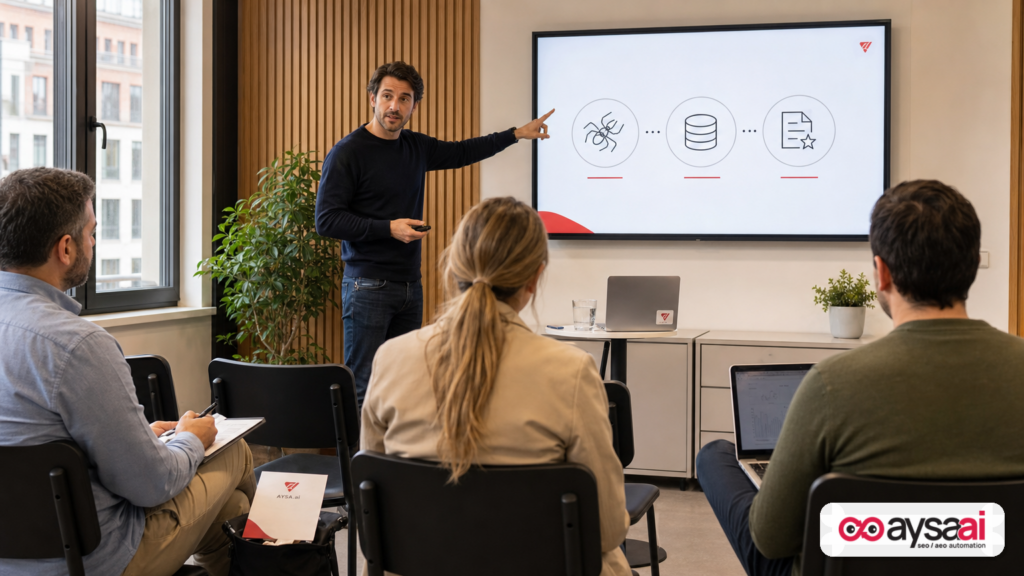
Search Central Live APAC 2025 isn’t just an event recap—it’s a signal that Google’s Search Relations team is heavily focused on (1) technical clarity (Crawling, Indexing, canonicals, Structured data), (2) content that is genuinely helpful and well-presented, and (3) readiness for AI-driven search surfaces. If you run an SME website, you don’t win by chasing hacks—you win by making it easy for Google to fetch, understand, and trust your pages, then by consistently improving what users experience after the click (or after the AI answer).
Key takeaways (for busy operators)
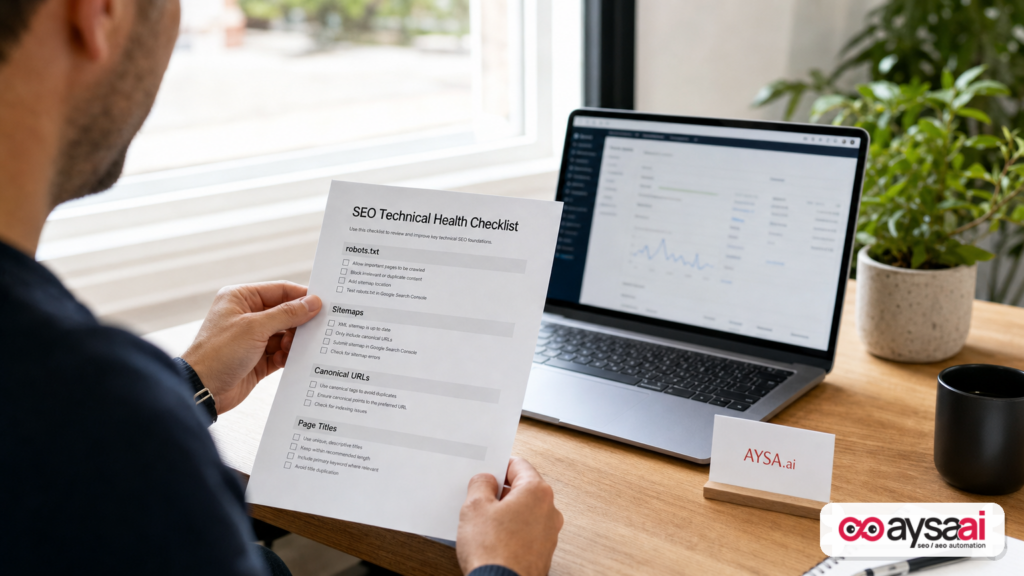
- Search is a system; your site has to be legible to the system. Technical SEO is not “developer busywork”—it’s how you keep your pages eligible to appear at all.
- AI search raises the bar on clarity. If your pages are inconsistent, duplicated, or vague, they’re harder to cite or summarize accurately in generative experiences.
- Events and documentation don’t implement themselves. Most businesses already “know” what to do. The gap is execution: ownership, approvals, and a cadence.
- Measurement needs to evolve. Classic SEO KPIs still matter, but you also need to monitor eligibility, indexing health, and whether key pages are “AI-ready.”
- AYSA’s stance: strategy is useless without Approved Execution. We monitor, prepare changes, ask for approval, then execute the accepted updates—consistently.
Table of contents

- The real message behind a “gratitude recap”
- Why APAC matters to the rest of the world (even if you’re not in APAC)
- What we learned from the APAC roadshow—translated into operator language
- The fundamentals that still decide whether you show up: crawling, indexing, and interpretation
- Generative AI search: why AEO/GEO changes the cost of ambiguity
- Where things go wrong in real businesses (and why it’s rarely “Google hates me”)
- A concrete SME scenario: a clinic, an ecommerce brand, and a hotel
- What agencies should rethink in 2026: from deliverables to outcomes
- What to monitor weekly: the operator dashboard (without obsession)
- A practical 30/60/90-day action plan
- How AYSA turns guidance into approved execution (without chaos)
- What to do next
- Sources and further reading
The real message behind a “gratitude recap”
When Google’s Search Relations team spends months traveling, doing deep dives, and repeatedly emphasizing “we’re listening,” I don’t read that as PR fluff. I read it as a product signal: the system is changing quickly enough that (a) the documentation alone can’t address the lived reality of every market, and (b) Google needs higher bandwidth feedback from people shipping sites in messy environments—multiple languages, multiple platforms, inconsistent dev resources, and business constraints.
Search Central Live APAC is a public example of that feedback loop. And the most practical conclusion for SMEs is simple:
You are not competing only on content. You are competing on your ability to implement clarity.
Clarity means Google can crawl your site efficiently, understand which URLs are canonical, interpret your page titles and snippets correctly, and recognize what the page is about. In a generative AI world, clarity also means a model can extract the right facts, attribute them to your site, and represent them without distortion.
That’s why the “thank you” matters: it’s a reminder that the best SEO posture in 2026 is not “game the algorithm,” it’s “align your operations with how Search works.”
Documentation is necessary—but implementation is the moat
Most business owners I speak to have already heard the basics: have a sitemap, avoid duplicate pages, write good titles, create helpful content, be fast. What they don’t have is an operating model that turns those truths into shipped improvements.
Google has the docs (and they’re worth using). The issue is execution discipline. Start with the official baselines:
But don’t stop at reading. Put it into a cycle of monitoring → proposals → approvals → execution. We’ll come back to that.
Why APAC matters to the rest of the world (even if you’re not in APAC)
APAC is not “just another region.” It tends to stress-test the web in ways that reveal what’s coming everywhere:
- Language and script diversity forces Search systems to handle multilingual intent, mixed-language pages, and localized entities at scale.
- Platform diversity (different ecommerce stacks, super-app ecosystems, and publishing platforms) increases edge cases for crawling and rendering.
- High mobile usage amplifies issues around performance, UX, and page experience—especially when sites are heavy or ad-loaded.
- Fast-moving markets mean sites change frequently (inventory, travel availability, promos), which makes freshness and crawl management operationally important.
So when Google invests heavily in listening tours across Bangkok, Hong Kong, and Tokyo, it’s not only about those cities. It’s also an early warning system for the rest of us: the operational problems seen there are the ones that will define SEO “winners” globally—especially as AI search expands.
What we learned from the APAC roadshow—translated into operator language
Google’s recap highlights community connection and learning. For operators, the most useful way to read it is as a set of recurring themes that show up in Q&A after Q&A worldwide:
Theme 1: Technical mastery is not optional anymore
If your site is difficult to crawl or ambiguous to index, you are losing before ranking even begins. That includes:
- Robots rules that block important assets or sections.
- Sitemaps that list non-canonical or redirected URLs.
- Faceted navigation or parameters creating near-infinite URL combinations.
- JavaScript rendering patterns that hide content until after complex client-side execution.
Google provides official guidance on these exact topics. Use them as your “source of truth,” not a blog post from 2019:
Theme 2: Search appearance is a product, not an accident
SMEs often treat titles, snippets, and image results like “Google will figure it out.” Sometimes it will. Often it won’t—especially if your site is inconsistent.
Google has specific documentation on how titles and snippets work and how to help Search show the right thing:
Theme 3: AI changes the incentives—but doesn’t erase the basics
Google now maintains a resource on “Optimizing for generative AI search.” That tells you something: the system is evolving, and the surface area of visibility is expanding beyond ten blue links.
But here’s the operator translation: AI doesn’t reward confusion. If your site has contradictory pricing, unclear policies, or thin “me too” pages, you’re harder to select and harder to cite. AI increases the penalty for ambiguity.
The fundamentals that still decide whether you show up: crawling, indexing, and interpretation
Most SEO advice collapses into “create great content.” That’s incomplete. Search has an order of operations. If you fail early, later excellence doesn’t matter.
1) Crawling: can Google fetch what matters?
Crawling is not guaranteed. It’s allocated. Your job is to avoid wasting crawl on junk URLs and to make important URLs discoverable.
Common SME issues:
- Blocking entire folders with overly broad robots.txt rules.
- Allowing infinite URL combinations through filters (size, color, sort, pagination, tracking params).
- Using internal search results pages as primary navigation (often messy and thin).
- Not linking important pages internally (or burying them behind forms).
What to do:
- Audit robots.txt for precision: block what’s truly useless, not what’s important.
- Ensure your sitemap contains canonical, indexable URLs only.
- Use internal links as “crawl hints”—especially for high-margin pages.
2) Indexing: does Google store and keep your page?
Indexing is not a reward for publishing—it’s a decision based on what Google can access, interpret, and deem worth keeping available.
Common SME issues:
- Duplicate pages (near-identical location pages, product variants, copy-pasted service pages).
- Soft 404s (pages that look like errors but return 200).
- Canonical conflicts (declaring one URL but internally linking another).
- Indexing the wrong version (parameters, http/https, www/non-www).
What to do:
- Implement consistent canonicalization and clean redirects (301 redirect guidance).
- Where you changed content and need Google to revisit, use official recrawl guidance (crawler management / recrawl).
3) Interpretation: does Search understand what your page is and why it’s the best match?
This is where titles, snippets, structured data, and content quality interact. Many SMEs lose here because they treat metadata and page templates as an afterthought.
What to do:
- Align title links with on-page headings and the real topic (title link guidance).
- Write meta descriptions as “sales copy for the right click,” while respecting snippet realities (snippet guidance).
- Use images intentionally and make them discoverable and descriptive (images guidance).
Where most SEO programs accidentally fail: the missing middle
The missing middle is “site hygiene.” Businesses jump from strategy to content production, skipping the unsexy work of ensuring the site is technically coherent. That’s why they publish more and see less impact than expected.
At AYSA, we see the same pattern repeatedly: a business has enough authority and demand to grow—but their platform generates duplicates, their sitemap is messy, and their internal linking is inconsistent. Fixing those doesn’t just help rankings. It improves the reliability of every future content investment.
Generative AI search: why AEO/GEO changes the cost of ambiguity
Let’s talk about the part everyone is anxious about: AI answers, AI summaries, and the sense that “clicks will disappear.” I’m not here to sensationalize that. I’m here to help you operate in reality.
Google has published a guide explicitly about generative AI optimization. That’s a major clue that the company expects site owners to evolve from classic SEO to a broader discipline that includes:
- AEO (Answer Engine Optimization): being the source that answers questions clearly and credibly.
- GEO (Generative Engine Optimization): being the source that generative experiences can summarize accurately and cite confidently.
Start with Google’s resource, not with random LinkedIn hot takes:
What changed (in practice)
In classic search, you could often “get away” with a page that ranks because it roughly matches intent and has some backlinks. In AI-influenced search surfaces, “roughly” is dangerous. If your page is vague, contradictory, or overly templated, an AI system may:
- Skip it (not trustworthy or not specific enough).
- Misrepresent it (pulling the wrong details).
- Blend it into generic output (no unique contribution).
Why it matters to SMEs
SMEs don’t have infinite brand gravity. You win by being the best answer for a specific situation: a procedure, a product type, a local policy, a shipping rule, a price range, an availability window, a warranty condition.
AI search rewards sites that are “extractable”:
- Clear headings that map to user questions.
- Explicit policies (shipping, returns, booking changes) in plain language.
- Consistent entity information (business name, address, service area, product naming).
- Pages that demonstrate firsthand experience and real-world constraints.
New mental model: write for humans, format for machines
You don’t need to write like a robot. But you do need to structure your information so a machine can reliably interpret it without guessing. That means fewer “marketing fog” paragraphs and more concrete statements, tables, and FAQs that reflect real customer questions (without stuffing).
Where things go wrong in real businesses (and why it’s rarely “Google hates me”)
When I audit an SME site that’s underperforming, I usually find one of five operational failure patterns. None of them require conspiracy theories.
Failure pattern 1: The CMS creates duplicates faster than you can fix them
Filters, tags, internal search, parameterized URLs, multiple category paths to the same product—these are normal. But if you don’t control canonicalization and internal linking, you’ll fragment relevance across dozens of URLs.
Fix: decide which URLs you want indexed, then enforce it with canonicals, internal links, and sitemaps (Google canonicalization guidance).
Failure pattern 2: Titles and snippets don’t match the page (or the business intent)
Google may rewrite titles when it believes another representation is more useful. If your titles are templated, repetitive, or missing key descriptors, you lose control of your first impression.
Fix: follow the principles in Google’s title link documentation (Title links) and audit templates at scale.
Failure pattern 3: JavaScript hides the “meaning” until it’s too late
Modern frontends can be great for users, but they can also delay content rendering. Google can render JavaScript, but that doesn’t mean you should assume perfect parity with what a user sees instantly.
Fix: design with rendering in mind; use Google’s JavaScript SEO basics to avoid common pitfalls.
Failure pattern 4: “Helpful content” is treated as a volume game
Publishing more is not the same as publishing better. If you’re producing pages that are interchangeable with competitors, you’re training your business to invest in content that won’t compound.
Fix: build fewer pages, each with a clear purpose: answer a question, compare options, show pricing boundaries, demonstrate experience, provide policy clarity.
Failure pattern 5: No one owns SEO execution end-to-end
This is the big one. SEO becomes everyone’s part-time job: marketing writes briefs, devs are backlogged, the agency sends audits, and nothing gets implemented.
Fix: install an execution system that produces changes ready to ship, routes them for approval, and pushes them live. This is where automation should focus—not on generating endless content drafts.
A concrete SME scenario: a clinic, an ecommerce brand, and a hotel
If you’re an SME owner, you don’t need more theory. You need to see how the same “Search Central themes” hit different business models.
Scenario A: A local clinic expanding services
A clinic adds new service pages: dermatology, allergy testing, and minor procedures. They want to show up for “near me” and for condition-specific queries.
What goes wrong:
- Each page uses the same template text with only a few words swapped.
- Location info is inconsistent across pages (suite number, phone format).
- Titles are “Clinic Name – Services” everywhere.
- Pages don’t clearly explain who the service is for, what happens at the appointment, and what to bring.
What to do:
- Create distinct, patient-first content with explicit eligibility and steps.
- Fix titles and snippets so each page is uniquely described (see title link guidance).
- Ensure Google can crawl and index the right pages (sitemap hygiene: Sitemaps).
Scenario B: An ecommerce brand with fast-changing inventory
An ecommerce store sells seasonal goods and runs frequent promos. Inventory changes weekly.
What goes wrong:
- Old promo URLs linger and compete with current category pages.
- Products appear under multiple collections, generating multiple URLs.
- Filters generate crawl traps (sort orders, sizes, colors).
What to do:
- Consolidate duplicates with canonicals (Canonicalization).
- Use redirects properly when retiring promos (Redirects).
- Control crawl space with robots rules where appropriate (robots.txt).
Scenario C: A boutique hotel competing with aggregators
A hotel needs direct bookings and wants to reduce dependency on OTAs.
What goes wrong:
- Room pages are thin and don’t answer questions about policies.
- Images are beautiful but poorly described, limiting image discovery.
- Availability info is confusing, leading to pogo-sticking.
What to do:
- Make each room page a complete decision page: features, capacity, check-in/out, cancellation rules, parking, accessibility.
- Implement image best practices (Images in Search).
- Write snippets that set accurate expectations (Snippets).
Different industries, same meta-lesson: the win is operational clarity—for users and for machines.
What agencies should rethink in 2026: from deliverables to outcomes
If you run an agency, Search Central Live themes should push you to rethink your product. The market is tired of audits that don’t get implemented and content calendars that don’t move revenue.
Stop selling “SEO tasks.” Start selling a system.
Clients don’t buy canonicals. They buy outcomes: more qualified leads, more bookings, more product sales, more predictable growth. Your agency’s job is to build the operational bridge from guidance to implementation.
That means:
- Fewer PDFs, more pull requests.
- Fewer generic content briefs, more topic ownership and expert inputs.
- Fewer monthly “reporting calls,” more weekly execution and change logs.
AI search doesn’t kill SEO—it exposes weak operations
The agencies that win won’t be the ones shouting “GEO” the loudest. They’ll be the ones who can repeatedly ship improvements: fix crawl waste, reduce duplication, improve page templates, and refine content until it’s the best answer.
This is also where an “approved execution” system becomes a strategic asset. When you can propose changes and get them approved quickly, you can out-iterate competitors.
What to monitor weekly: the operator dashboard (without obsession)
Monitoring isn’t about staring at graphs. It’s about catching breakage early and proving that improvements shipped.
1) Indexing and crawl signals
- Are key pages indexed?
- Are new pages discovered quickly?
- Did a template change accidentally noindex pages?
Use official tooling and guidance where applicable, and keep your basics clean (sitemaps, robots, canonicals).
2) Search appearance quality
- Are titles being rewritten in ways that reduce clarity?
- Do snippets match what users actually get?
- Are images eligible and represented well?
3) Content usefulness (measured by behavior and conversion)
- Do users convert after landing, or bounce and search again?
- Do service pages answer questions that reduce call volume and improve lead quality?
4) AI readiness (practical, not hype)
- Are key facts and policies easy to extract?
- Is information consistent across pages?
- Do you have “decision pages” rather than “marketing pages”?
If you need a system that keeps watch and turns issues into executable changes, that’s exactly what we built at AYSA: Monitoring as a driver of action, not anxiety.
A practical 30/60/90-day action plan
Most SMEs can’t overhaul everything. You need sequencing. Here’s a realistic plan that matches the themes Search Central Live events consistently surface.
Days 1–30: Stabilize crawl and indexing fundamentals
- Robots.txt audit: remove accidental blocks; confirm important sections are crawlable (robots.txt).
- Sitemap cleanup: ensure it contains only canonical, indexable URLs (Sitemaps).
- Duplicate URL map: identify top duplication sources and decide canonical targets (Canonicalization).
- Redirect hygiene: fix chains, loops, and outdated campaign URLs (Redirects).
Days 31–60: Improve search appearance and template-level clarity
- Title template audit: make titles unique and aligned to intent (Title links).
- Snippet hygiene: rewrite meta descriptions for key pages; reduce mismatch (Snippets).
- Image optimization baseline: ensure key images are accessible, descriptive, and relevant (Images).
Days 61–90: Build AI-ready decision content and strengthen internal linking
- Decision-page rebuilds: update top revenue pages to answer real questions with clear structure.
- Internal links: connect supporting content to commercial pages; reduce orphaned pages.
- AI optimization pass: use Google’s generative AI search guidance as a checklist, not a buzzword (AI optimization guide).
This plan is intentionally boring. Boring works. It’s what lets your content and brand actually compound.
How AYSA turns guidance into approved execution (without chaos)
Here’s my bias, and it’s earned: SEO doesn’t fail because of a lack of ideas. It fails because the web is operationally messy, and organizations are approval-driven.
That’s why AYSA is built as an execution system, not a dashboard.
AYSA’s model (in plain English)
- Monitor: track the signals that indicate breakage or opportunity (indexing anomalies, template drift, content gaps). See: AYSA Monitoring
- Prepare: generate specific, page-level or template-level recommendations and proposed changes.
- Ask for approval: nothing goes live without your review (or your client’s). This avoids “automation chaos.”
- Execute accepted changes: ship what was approved, log it, and keep iterating.
That’s how you turn Search Central guidance into a competitive advantage: you implement it faster and more consistently than others.
Where AYSA fits in the AI search era
AI search visibility isn’t a separate project; it’s the outcome of disciplined fundamentals plus content clarity. AYSA supports that operationally:
- AI search visibility initiatives that complement classic SEO.
- AI SEO tools that help teams prioritize and execute.
- Clear packaging and scalability for SMEs and agencies (see pricing).
Why “approved execution” matters more than ever
AI increases the speed of change in search surfaces, but businesses are still constrained by approvals. If your SEO process requires three meetings and a quarterly dev cycle, you lose to the team that can propose, approve, and deploy improvements weekly.
If you want more on our approach and practical playbooks, start at the AYSA blog.
What to do next
- Pick 10 revenue-critical URLs (services, categories, top products, booking pages) and confirm they are crawlable, indexable, and canonical.
- Clean your sitemap so it reflects what you actually want indexed (Sitemaps).
- Fix duplication before you publish more content (Canonicalization).
- Rewrite titles for intent clarity and reduce templated repetition (Title links).
- Make one “decision page” undeniably useful—not longer, but clearer: policies, steps, constraints, and real answers.
- Install an execution loop (monitor → propose → approve → deploy). If you want that systemized, explore: Monitoring and AI search visibility.
Sources and further reading
- Google Search Central Blog: Search Central Live APAC 2025 Recap: A Note of Gratitude
- Google Search Central: Search Central home
- Google Search Central documentation: Documentation
- Search Essentials: Search Essentials
- SEO Starter Guide: SEO Starter Guide
- How Search Works: How Google Search Works
- Optimizing for generative AI search: AI optimization guide
- Sitemaps: Sitemaps overview
- robots.txt: robots.txt intro
- Canonicalization: Consolidate duplicate URLs
- Redirects: 301 redirects
- JavaScript SEO basics: JavaScript SEO basics
- Title links: Title links
- Snippets: Snippets
- Images: Images
Where AYSA fits (internal links):
Note: This editorial is based on the Search Central Live APAC 2025 recap and the official documentation links present in that context. We did not rely on undisclosed browsing or private sources. Where claims cannot be verified from the provided research context, they are framed as operational analysis rather than fact.
Continue the AI search topic inside AYSA.
Use these pages to connect the article with AI SEO tools, AI visibility monitoring, AI Overviews and approved website execution.
Turn this topic into a website action plan.
Use these AYSA hubs to move from reading to technical fixes, AI visibility monitoring, research, glossary context and approval-first SEO execution.