
Bing’s New “Citation Share” Dashboard Signals the Next SEO Battle: Being Cited (Not Just Ranked)
Microsoft is rolling out Citation Share, Intents, Topics, and Compare in Bing Webmaster Tools’ AI Performance dashboard. Here’s what changed, why “AI citations” are becoming a measurable growth lever for SMEs and agencies, and the practical playbook to earn and protect citations with approved, auditable execution.
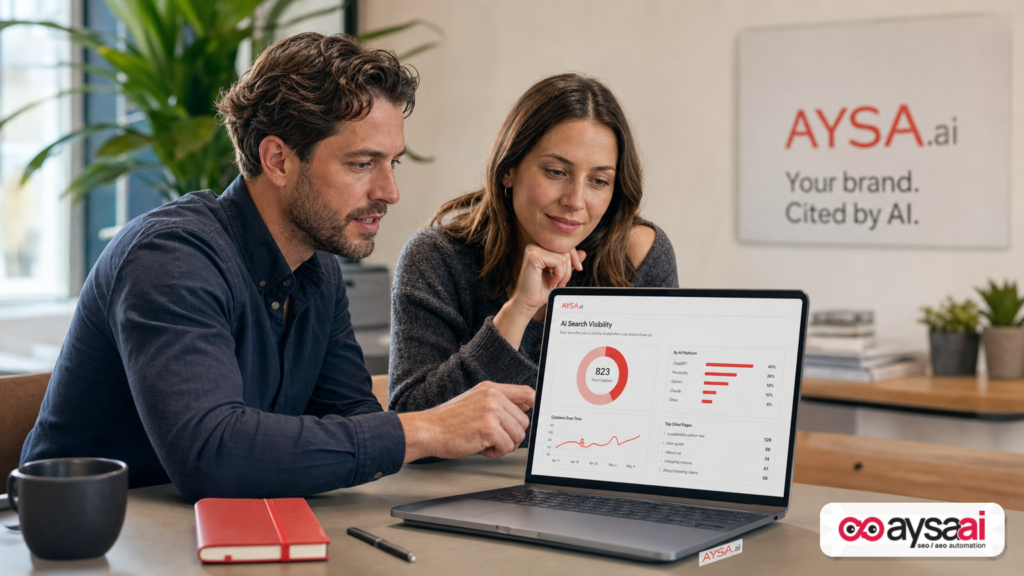
Search is changing in a very specific way: the most valuable “impression” is no longer a blue-link ranking—it’s being used as a source inside an AI-generated answer. That shift is why Microsoft’s latest update to Bing Webmaster Tools matters more than it looks at first glance.
Microsoft is rolling out four new features—Citation Share, Intents, Topics, and Compare—inside the AI Performance dashboard preview in Bing Webmaster Tools. The update was reported by Search Engine Journal and framed as a global rollout of features previously previewed at SEO Week.
This isn’t just “another dashboard.” It’s a signal: AI citations are becoming a first-class measurement layer. And the businesses that treat citations as an operational metric—monitored, diagnosed, improved, and protected—will win visibility in AI answers while others keep playing last decade’s game.
Below, I’ll break down what changed, what it means for SMEs and agencies, how to use these new Bing metrics without getting trapped in vanity reporting, and the exact execution model I recommend—one that fits how we built AYSA: monitor continuously, prepare changes, ask for approval, then execute the accepted updates with an audit trail.
Concise Summary

- Citation Share adds a relative metric: what percentage of citations your site captures for a given grounding query, not just raw counts.
- Intents and Topics cluster AI grounding queries so you can see patterns (informational vs commercial, theme clusters) without manually sorting hundreds of query variants.
- Compare enables period-over-period overlays to spot changes in citation activity and diagnose the impact of content/technical work.
- These features don’t show competitors directly and don’t equal traffic share—so you need a disciplined operating system to connect citations to revenue outcomes.
- AYSA fits as an execution layer: monitor AI visibility, prepare fixes, route approvals, and ship improvements that increase your chance of being cited.
Table of Contents
- Context: Why “Being Cited” Is The New Visibility Battle
- What Changed In Bing Webmaster Tools (And What It Actually Measures)
- Citation Share: The Metric Everyone Will Misread
- Intents & Topics: The Real Upgrade For Operators
- Compare: The Feature That Enables Real SEO Operations
- Why This Matters For SMEs (Not Just Publishers)
- Where AI Citation Optimization Goes Wrong
- A Practical Framework: Turn AI Visibility Into A Managed Funnel
- SME Scenario: A Local Clinic Competing For “Best Treatment” Queries
- Agency Reset: New Deliverables For The AI Answer Era
- Where AYSA Fits: Approved Execution For AEO/GEO At Scale
- What To Do Next (Action List)
- Sources & Further Reading
Context: Why “Being Cited” Is The New Visibility Battle
In classic SEO, you measured:
- Rank positions
- Clicks and sessions
- Conversions
- Share of Voice (via third-party tools)
In AI Search, a new unit of distribution shows up: the citation—the sources the system chooses to ground an answer. If your brand is cited, you get an endorsement-like effect and a pathway to discovery. If you’re not cited, you might be “ranked” somewhere, but functionally absent from the answer layer users increasingly rely on.
That’s why Microsoft’s AI Performance dashboard exists at all: to show publishers and site owners how often Bing’s AI experiences (including Copilot and Bing AI answers) cite their content, and for which queries/pages.
From an operator’s perspective, this matters because it makes AI visibility measurable—and what becomes measurable becomes budgetable.
But there’s a second, more important implication: citation performance is not identical to traditional SEO performance. You can be strong in classic rankings and still underperform in AI citations if your content is hard to extract, ambiguous, lacking clear entity signals, missing Structured data, or simply not the best “answer component” for the model to reuse.
This is the mindset shift I want SMEs to adopt: your website is no longer just a destination; it’s an input.
What Changed In Bing Webmaster Tools (And What It Actually Measures)
According to the Search Engine Journal report, Microsoft is rolling out four features globally inside the Bing Webmaster Tools AI Performance dashboard preview:
- Citation Share
- Intents
- Topics
- Compare
The key framing from Microsoft (as summarized by SEJ) is that Citation Share is an observational metric. It does not expose competitors and does not represent traffic share. That language is important: it’s a diagnostic layer, not a scoreboard you can fully reverse-engineer.
Also noted: a GEO-focused recommendation feature discussed previously (guidance on Crawlability, structured data, indexing) is not part of the rollout described in the SEJ piece. So, for now, Bing is giving more measurement, not prescriptive fixes.
This creates a gap—and it’s where systems like AYSA become valuable. Measurement without operational execution is just another dashboard.
Citation Share: The Metric Everyone Will Misread
Let’s define the concept in plain business language.
Previously, the AI Performance dashboard showed raw citations: “Your content was cited X times.” Useful, but incomplete. Raw counts can rise and fall due to:
- Seasonality (more people asking certain questions)
- News cycles
- Product launches
- Changes in how the AI experience displays citations
- Changes in how Bing groups/labels “grounding queries”
Citation Share adds a relative layer: for a specific grounding query, what share of all citations went to your site. SEJ’s example: if your site captured 3 out of 10 citations for a query, you’d see 30%.
That’s a big upgrade because it helps you answer a question raw counts cannot:
“Are we winning the citations that exist for the questions that matter?”
What Citation Share is not
If you treat Citation Share like market share, you’ll make bad decisions. Citation Share:
- Is not click share. Users may not click citations at all.
- Is not revenue share. You can be cited for top-of-funnel questions that don’t convert.
- Is not a competitor list. Bing isn’t handing you the full competitive map.
So how should you use it?
The right way to use Citation Share
Citation Share is excellent for:
- Prioritization: identify which high-value query themes you’re under-cited for.
- Validation: after you improve content structure or technical accessibility, see whether share improves (use Compare).
- Risk detection: if your share collapses for a topic that drives pipeline, you have an early warning.
It’s a new kind of “visibility KPI.” But like any KPI, it only matters if you connect it to business outcomes and operational action.
Intents & Topics: The Real Upgrade For Operators
Most SMEs do not have time to review hundreds of query variants. Even many agencies struggle because AI “grounding queries” aren’t the same as your keyword list; they are messy, natural-language prompts with lots of phrasing variation.
The SEJ summary notes that:
- Intents classify grounding queries (e.g., Informational, Commercial, Research, and more).
- Topics cluster related queries into themes (e.g., variations around “solar panels” rolling up under a broader label).
These two features are the difference between data you can see and data you can run a business on.
Why intent matters in AI citation work
Intent classification helps you answer questions like:
- Are we being cited mostly for informational queries but not commercial ones?
- Are we winning research-phase citations (comparisons, buying guides) but losing “how-to” citations?
- Is our brand becoming a default source for definitions, but not for procedures, pricing, or alternatives?
This matters because citation value varies by intent. A citation for “what is X” builds awareness. A citation for “best X for Y” can drive consideration. A citation for “X vs Y” can influence choice.
Intents and Topics let you see whether your AI visibility aligns with your revenue strategy, not just your content calendar.
Topics make optimization possible without drowning in queries
Topic clustering is the operational unlock. You can treat each topic as a “citation market” and build a playbook:
- Which pages are being cited for the topic?
- Which pages should be cited but aren’t?
- Where is content missing, thin, outdated, or poorly structured?
- Where do we need clarity (definitions, steps, constraints, pricing ranges, compatibility, safety notes)?
Microsoft also noted (per SEJ) that these classifications are still maturing and should improve with more data. That’s another reason to build a process: early metrics are directional, so you want to validate changes over time, not overreact week-to-week.
Compare: The Feature That Enables Real SEO Operations
If you’ve ever tried to prove SEO value, you already know: without comparisons, you’re arguing vibes.
The new Compare feature lets you overlay a previous time period on the current view (e.g., last 30 days vs prior 30, or custom ranges). This is foundational because AI systems are dynamic. If you change content today, your citation impact may:
- Lag
- Spike briefly, then normalize
- Shift from one page to another
- Vary by intent and topic
Compare is how you stop guessing and start doing controlled experiments.
What to compare (practical examples)
Here are comparisons that actually help operators:
- Before/after a site release: Did citations change after a redesign, migration, or CMS update?
- Before/after content restructuring: Not “we published 30 blogs,” but “we turned a messy service page into a structured answer hub.”
- Before/after schema deployment: Did adding structured data coincide with better citation share on key topics?
- Seasonal comparisons: If you’re in travel, healthcare, home services, or retail, compare the same season across periods to reduce noise.
None of this guarantees causality, but it drastically improves accountability.
Why This Matters For SMEs (Not Just Publishers)
The SEJ story frames AI Performance largely through the lens of publishers (which makes sense: publishers live on traffic). But SMEs should care for different reasons:
- Lead capture can happen without clicks: AI answers can “pre-sell” you. When users later search your brand or navigate directly, you feel it in pipeline, not necessarily in referral traffic.
- AI answers compress choice: Users often see a shortlist of sources. Being absent is more damaging than ranking #8 used to be.
- SMEs need defensible positioning: When AI summarizes markets, it tends to reward clarity, authority, and corroboration. That’s a brand moat.
In other words: citations are a credibility channel, not only a traffic channel.
The AI answer layer changes buying behavior
Traditional SERPs encouraged browsing: people compared tabs. AI answer interfaces encourage convergence: people accept a synthesized view and move on faster.
That means your job is increasingly to be included in the synthesis.
“But do I even care about Bing?”
Many SMEs default to “Google is all that matters.” But ignoring Bing is a strategic mistake for two reasons:
- Measurement leads the market: Microsoft is giving you a citation measurement interface. Even if your primary demand is Google, the operational discipline you build here is transferable.
- Ecosystem spillover: AI search behaviors, content patterns, and citation logic are converging across platforms. You want cross-engine readiness, not single-engine dependence.
SEJ also notes that Google is testing AI visibility reporting in Search Console, but that the products measure different things in different ecosystems. The point isn’t equivalence—the point is direction: AI visibility reporting is becoming standard.
Where AI Citation Optimization Goes Wrong
Whenever a new metric becomes available, the industry tends to do two things:
- Over-measure what’s easy.
- Under-fix what’s hard.
Here are the most common failure modes I see coming for SMEs and agencies as “citation share” becomes a KPI.
1) Chasing citations that don’t map to revenue
If you optimize for topics that generate lots of AI interactions but don’t match your offer, you’ll inflate citation metrics with no business impact.
Example: a local accounting firm that gets cited for “what is a W-2” but never for “best accountant for small business taxes in [city]” or “S-corp vs LLC tax implications.” The citations look good. The pipeline doesn’t move.
2) Publishing more content instead of better content
AI citations reward extractable, well-structured answers. “More blogs” is not the same as “more cite-worthy modules.” Often, the fastest gains come from:
- Re-structuring a service page to answer the 10 questions AI keeps grounding on
- Adding an FAQ that reflects real intent categories
- Clarifying definitions, constraints, and comparisons
- Making trust elements obvious (author/reviewer, dates, policies, contact)
3) Letting automation publish without approvals
AI is great at drafting. It’s also great at confidently introducing subtle inaccuracies, especially in regulated or high-stakes niches (health, finance, legal, safety).
If you chase citation share with ungoverned content automation, you risk:
- Brand trust damage
- Compliance issues
- Operational confusion (teams don’t know what changed)
This is exactly why we built AYSA around approved execution: the system prepares changes, you approve, then it executes and tracks what happened.
4) Ignoring the technical layer that enables citations
You can’t get cited consistently if AI systems can’t reliably crawl, understand, and extract your content.
Even without the GEO-recommendation feature (noted as absent in this rollout), the same fundamentals apply:
- Indexable pages (not blocked, not broken)
- Clean internal linking so key pages are discoverable
- Fast, stable pages that render critical content
- Structured data where appropriate (to clarify entities and page purpose)
AI citation optimization is not a “content-only” discipline.
A Practical Framework: Turn AI Visibility Into A Managed Funnel
To make Bing’s new AI Performance features useful, you need a management system. Here’s the framework I recommend for SMEs and agencies.
Step 1: Pick your “citation markets” (topics that actually matter)
Start with 5–10 topics tied directly to revenue, not curiosity. Examples:
- “Emergency plumbing” (local services)
- “Best CRM for nonprofits” (SaaS)
- “Hotel parking + airport shuttle” (hospitality)
- “Return policy + warranty” (ecommerce)
- “Pricing + timeline + what to expect” (clinics, contractors, agencies)
Use Bing Topics to validate whether these show up in grounding queries and where you’re being cited today.
Step 2: Map intent to assets (don’t mix everything together)
Use Intents to separate the work:
- Informational intent → definitions, explainers, FAQs, “how it works”
- Research intent → comparisons, pros/cons, alternatives, “best for”
- Commercial intent → pricing, packages, availability, location/service area, booking flows
Most SME websites collapse all of this into a single page that’s trying to sell and educate and compare at once. AI systems often prefer cleaner, purpose-built answer components.
Step 3: Improve “cite-ability” (structure beats volume)
“Cite-ability” is the likelihood that an AI system will reuse your content as a grounded source. It tends to increase when your pages have:
- Clear topical focus (one page = one job)
- Answer-first formatting (direct responses, then detail)
- Readable sections (H2/H3 hierarchy, concise paragraphs)
- Scannable elements (lists, tables where appropriate)
- Trust signals (who wrote it, who reviewed it, last updated, credentials where relevant)
- Entity clarity (what the product/service is, who it’s for, constraints)
None of this requires “SEO tricks.” It’s operational communication.
Step 4: Fix the technical friction that blocks reuse
AI experiences rely on accessible content. Watch for:
- Pages that require heavy client-side rendering for the main content
- Thin template pages that look similar across many URLs
- Unclear canonicalization and duplicates
- Orphan pages with no internal links
- Broken schema markup or irrelevant schema spam
Even if Bing doesn’t hand you prescriptive recommendations yet, you can still run a disciplined technical checklist and track whether fixes correlate with citation share improvement.
Step 5: Measure with Compare, but don’t confuse correlation with causation
Use Compare for directional confirmation:
- Did citation share improve for the targeted topics?
- Did citations shift to the pages you intended to promote?
- Did intent coverage change (more commercial/research citations)?
Then connect it to business KPIs you control:
- Branded search demand trend (directional)
- Direct traffic trend (directional)
- Lead quality and close rate
- Sales cycle velocity for specific offerings
The goal isn’t to pretend you can attribute every sale to a citation. The goal is to treat citations as an upstream visibility lever and manage it like one.
SME Scenario: A Local Clinic Competing For “Best Treatment” Queries
Let’s make this concrete with a realistic scenario.
Business: A regional clinic with two locations offering a specialized outpatient procedure. The clinic wants more high-intent bookings but faces heavy competition from larger hospital networks and aggregators.
What changes in an AI-answer world: Prospects increasingly ask AI-style queries like:
- “What’s the best treatment for [condition]?”
- “How long does [procedure] take?”
- “Is [procedure] painful?”
- “[Procedure] vs [alternative]”
- “Cost of [procedure] in [city]”
If the clinic’s website has only a sales page with generic marketing copy, it may rank okay locally but fail to get cited because:
- It doesn’t answer the question directly
- It buries specifics (timelines, candidacy, risks, preparation) behind fluff
- It lacks clear review/medical oversight disclosures (where appropriate)
- It doesn’t separate educational intent from booking intent
A citation-focused plan that doesn’t require publishing “100 blogs”
Using the Bing AI Performance dashboard features conceptually:
- Identify Topics that matter (treatment, recovery, cost, candidacy, alternatives).
- Check Intents: are citations mostly informational? Are you missing research/commercial?
- Restructure core pages:
- Create an “About the procedure” explainer that is answer-first
- Create a “Procedure vs alternative” comparison page
- Create a “Pricing & what affects cost” page that’s careful and transparent
- Create a “What to expect (timeline)” page
- Add trust modules: reviewer/medical oversight, update dates, references where appropriate, clear contact/location info.
- Measure with Compare after deployment: did citation share rise for those topics? Did citations shift to your intended pages?
This is where SMEs win: not by out-publishing national brands, but by being the clearest, most trustworthy local source that AI systems can confidently reuse.
Agency Reset: New Deliverables For The AI Answer Era
If you run an agency, Citation Share and query clustering should force a deliverable rethink.
Old deliverables that won’t age well
- “We published X blogs.”
- “We built Y links.”
- “We improved average position.”
These may still matter, but they don’t map cleanly to AI answer inclusion.
New deliverables clients will pay for
- Topic-level citation coverage: which topics you’re cited in and which you’re absent from.
- Intent alignment: are you cited where buyers make decisions (research/commercial)?
- Page-level citation ownership: ensuring the right page is being cited (not an outdated blog from 2019).
- Release-based reporting: compare citation metrics before/after specific approved changes.
- Risk controls: approvals, audit trails, and rollback plans for AI-assisted content changes.
The agencies that win will look less like “content factories” and more like visibility operators.
Where AYSA Fits: Approved Execution For AEO/GEO At Scale
Bing’s rollout is measurement. The market’s pain is execution.
Most organizations struggle with a predictable chain of failure:
- They see a visibility problem.
- They agree it matters.
- They open a ticket.
- Nothing ships for weeks (or ships inconsistently).
- Then they can’t confidently measure impact.
AYSA is built to break that chain.
AYSA’s operating model (why it fits AI search)
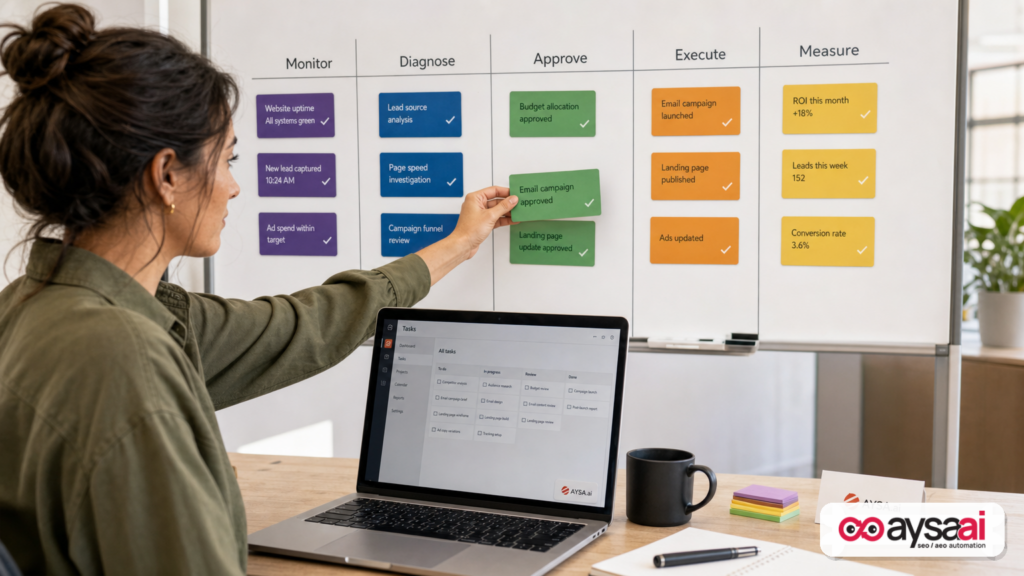
- Monitor: Always-on monitoring to detect visibility changes and technical/content drift. See: AYSA Monitoring
- Diagnose: Turn signals into prioritized actions (what to fix first, what’s blocking visibility).
- Prepare changes: Draft structured improvements—content modules, internal links, schema updates, technical fixes—based on approved strategy.
- Approval gate: You review and approve what gets shipped (brand safety, compliance, accuracy).
- Execute: Implement accepted changes and keep an audit trail.
This is exactly what AI search requires: you cannot afford to “spray and pray” changes across your site when AI answers amplify errors. You need controlled iteration.
Where to start with AYSA (relevant resources)
- AI SEO tools overview: AI SEO Tools
- AI search visibility: AI Search Visibility
- Monitoring: AYSA Monitoring
- Pricing (for teams budgeting this as an operating expense): AYSA Pricing
- More editorial guidance: AYSA Blog
AYSA’s role is not to replace your strategy—it’s to make strategy executable and repeatable, with the governance that AI-era search demands.
What To Do Next (Action List)
If you’re an SME, marketer, or agency lead, here’s a practical next-step list you can run this week—no hype, no jargon.
1) Define your 5–10 “money topics”
- Topics that directly influence purchasing decisions
- Topics that reduce sales friction (pricing, timelines, requirements, comparisons)
2) Audit your pages for cite-ability (fast checklist)
- Does the page answer the core question in the first screen?
- Is the structure clean (H2/H3, scannable lists)?
- Is it obviously current (dates, updates)?
- Are trust elements visible?
- Is the page accessible and indexable?
3) Rebuild one key page as an “answer hub”
Pick one high-impact service/product page and redesign it for clarity and extraction—not aesthetics. You can keep the branding while making the information architecture tighter.
4) Set a measurement rhythm
- Weekly: topic-level visibility signals, sudden drops/spikes
- Monthly: Compare period-over-period, review what changes shipped, decide next releases
5) Adopt approved execution (or you’ll stall)
Make it easy for your team to ship changes safely. If you want a system built for this, start with AYSA monitoring and execution workflows:
Sources & Further Reading
- Search Engine Journal: Bing Rolls Out AI Citation Share In Webmaster Tools (primary source for this editorial’s change summary)
- Bing Webmaster Tools entry point (official): Bing Webmaster Tools (official product page; feature availability may vary during rollout)
- AYSA.ai resources:
Note on sourcing: The supplied research context includes the SEJ report and general navigation links from SEJ. It does not include a Microsoft blog post URL or official detailed documentation for these specific dashboard features. Where official documentation exists, it should be preferred for implementation details; until then, treat feature definitions as described in the SEJ summary and validate directly inside your Bing Webmaster Tools account.
Continue the AI search topic inside AYSA.
Use these pages to connect the article with AI SEO tools, AI visibility monitoring, AI Overviews and approved website execution.
Turn this topic into a website action plan.
Use these AYSA hubs to move from reading to technical fixes, AI visibility monitoring, research, glossary context and approval-first SEO execution.

