ChatGPT “Core Updates” Are Here: What GPT-5.5 Citation Shifts Mean For Your SEO, Content, And Revenue
SISTRIX data suggests GPT-5.5 coincided with major changes in which sites ChatGPT cites—more local-language publishers and service brands, fewer global aggregators, and an even bigger role for Reddit. Here’s what changed, why it matters, and a practical playbook to win AI citations without guessing.
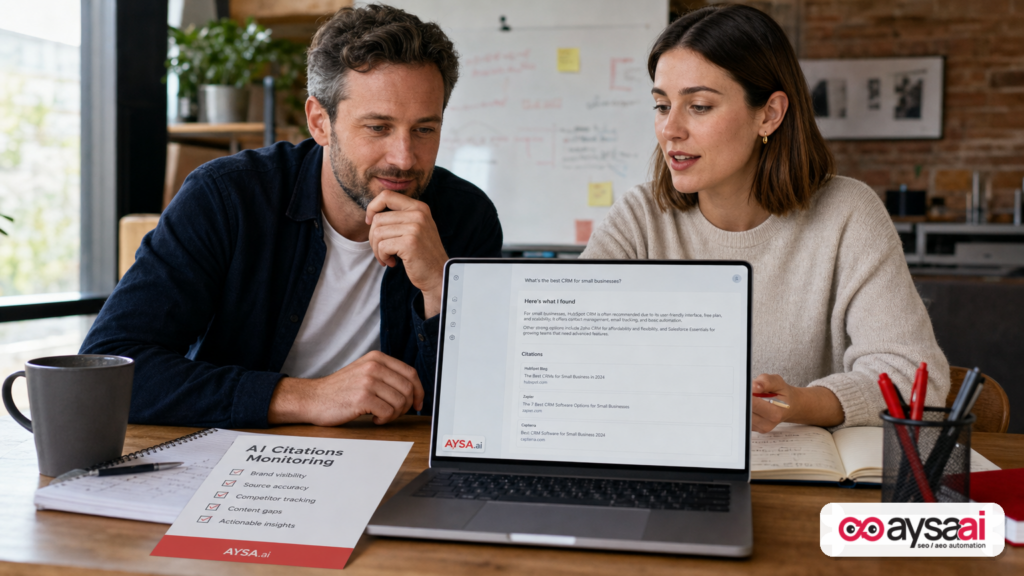
AI Search is becoming operational. If your business depends on organic discovery, you can’t treat ChatGPT citations as a novelty anymore—because they’re starting to move like rankings.
A recent analysis from SISTRIX (covered by Search Engine Journal) observed large shifts in what domains ChatGPT cited in German-language responses around the appearance of GPT-5.5. SISTRIX described it as a “ChatGPT core update” moment: the same feeling SEOs know well from Google—visibility changes quickly, winners and losers emerge, and nobody outside the platform can fully confirm the exact cause.
My take: whether you call it a “core update” or a model refresh, the implication for businesses is the same. AI systems are now a distribution channel. That means you need (1) Monitoring, (2) repeatable content and technical inputs that AI models trust, and (3) controlled execution so you can improve without breaking what already works.
This editorial breaks down what changed, why it matters beyond Germany, and a practical playbook for SMEs and agencies. I’ll also explain how AYSA fits as an execution system that monitors, prepares changes, asks for approval, and then implements accepted updates on your site—because in AI search, speed without control is how you create chaos.
Concise summary
- SISTRIX observed major citation volatility in German ChatGPT answers around a GPT-5.5 identifier change—far beyond normal daily fluctuation (correlation, not proof of causation).
- The pattern looked like localization: more German publishers and service brands cited; many international aggregators and big platforms lost share. Reddit was a notable exception, gaining even more citations.
- For businesses, “AI visibility” is increasingly about being cited, not just being ranked. That requires content that answers questions cleanly, demonstrates credibility, and is easy to attribute.
- Operationally, you need monitoring (what AI says + what it cites), change control (what you updated and why), and an execution loop that ships improvements without risky automation.
Key takeaways (for busy operators)
- Expect volatility. Citation patterns can change when models change—even if your site didn’t.
- Localization is a real lever. For local-language queries, local sources may be favored; global aggregators may not be as sticky as they used to be.
- UGC is a force multiplier. Reddit’s gains suggest discussions and first-person experiences can be “citation magnets.”
- Build “cite-able” pages. Not just blog posts—service pages, location pages, comparison pages, FAQs, and policy pages.
- Monitoring + Approved Execution wins. You can’t improve what you don’t track, and you shouldn’t deploy AI-driven site changes without review.
Table of contents
- What changed: GPT-5.5 and the “ChatGPT core update” idea
- What SISTRIX found: volatility, fewer citations per answer, and domain reshuffling
- Why this matters: citations are becoming a new layer of search visibility
- Why AI citations behave differently than Google rankings
- Winners and losers: what the pattern suggests (and what it doesn’t)
- Localization: the underrated strategy for AI visibility
- The Reddit exception: why UGC keeps showing up
- What can go wrong when you chase citations
- A concrete SME scenario: a multi-location clinic vs. aggregators (and Reddit)
- What to build on your site to earn citations (a practical blueprint)
- The monitoring layer: what to track weekly
- What agencies should rethink: reporting, deliverables, and change control
- Where AYSA fits: monitor → prepare → approve → execute
- What to do next (action list)
- Sources and further reading
What changed: GPT-5.5 and the “ChatGPT core update” idea
The SISTRIX analysis that sparked this conversation looked at how ChatGPT cited sources in German-language answers before and after a visible model identifier change (around GPT-5.5). The important nuance: SISTRIX did not claim definitive causation—only correlation—because from the outside, we can’t fully prove what changed inside the system or how rollout nuances affected outputs.
Still, the “core update” analogy is useful for business planning. It reframes AI answers as a surface that can fluctuate materially based on:
- Model version and system prompt changes
- Retrieval behavior (which sources the model is allowed to pull in)
- Ranking/selection logic for which sources to cite
- Localization and language handling
- Product decisions (how many citations to show, where to place them)
In other words: even if your website content stays the same, your AI visibility can change. That’s new for many SMEs who have learned to tie SEO outcomes mostly to their own actions (publish content, earn links, improve technical health). In AI search, platform behavior shifts can move the goalposts faster.
What SISTRIX found: volatility, fewer citations per answer, and domain reshuffling
According to the reporting by Search Engine Journal summarizing SISTRIX’s research, SISTRIX analyzed a large set of German-language ChatGPT responses and compared citation patterns in a short “before” window and a short “after” window around the model change.
Three points matter operationally:
- Volatility spiked. Citation patterns typically moved modestly day to day, but around the change they moved dramatically (SISTRIX reported a large jump in variation during that moment).
- Average citations per response dropped. The reported average number of cited sources per response declined after the change.
- Domain winners/losers emerged. German mainstream publishers and some German service brands gained, while several international aggregators and large global platforms lost share. Reddit gained notably.
Even if you ignore the specific domains, the structural message is clear: AI citation supply is not fixed. The “space” available for sources can shrink (fewer citations shown), and the selection logic can rotate which categories are favored.
Why this matters: citations are becoming a new layer of search visibility
If you’re an SME, you might be thinking: “Fine, but does a citation matter if someone can’t click it?” Two reasons it matters anyway:
- Brand preference forms upstream of Clicks. If your brand is mentioned or cited in AI answers, you become the default option in the user’s mind—even if they later search your name directly or buy offline.
- Some AI experiences are clickable; others are not. The exact UI varies by product and market. But the broader trend is that citations act like references that build legitimacy and can funnel traffic when links are present.
More importantly: citations are a proxy for something bigger—the model’s trust and Attribution behavior. If an AI system consistently cites certain kinds of sources for your topic, that’s a signal you can either align with or fight against. Most businesses should align.
This is why we built AYSA’s approach around monitoring and controlled execution. AI search is not a “set and forget” channel anymore.
Why AI citations behave differently than Google rankings
SEO veterans have strong instincts: rank #1, optimize title tags, earn links, improve Core Web Vitals. Those still matter—because the web is still the substrate AI draws from—but AI citations aren’t the same mechanism as classic rankings.
Here are the practical differences non-SEO operators should understand:
1) AI is trying to answer, not list options
Google’s classic results page is a menu. AI answers aim to be the meal. That changes which sources are useful: often, the “best cite” is the page with the clearest, most attributable statement—not the page with the strongest link graph.
2) A citation is closer to an editorial reference
To be cited, you need content that can be referenced safely: definitions, steps, policies, comparisons, specs, and statements that are stable over time.
3) There may be fewer “slots” than search results
If the average citations per answer drops, competition increases overnight. In classic SEO you fight for page-one positions; in AI answers you might fight for 3–10 citations depending on the product behavior.
4) Model updates can shift behavior fast
Google updates can be turbulent, but they’re usually framed as ranking changes. In AI, the entire “citation logic” can change—how many sources, which categories, whether it prefers local language, whether it prefers forums, etc.
Winners and losers: what the pattern suggests (and what it doesn’t)
From the SEJ summary of SISTRIX’s findings, the reported pattern in German-language results was broadly:
- Gainers: German mainstream publishers; some German service/streaming/sports platforms; specialized tools/knowledge sources; and Reddit (a major exception to the localization theme).
- Decliners: international aggregator platforms (travel/jobs); some large global tech platforms (e.g., broad encyclopedic or social platforms); and some German career/comparison portals.
It’s tempting to turn this into a simplistic rule like “publishers win, aggregators lose.” Don’t. The better interpretation is:
- AI systems may be getting stricter about attribution quality (preferring original sources over recompiled listings).
- Localization may be tuned more aggressively for non-English queries (preferring native-language, market-specific sources).
- UGC remains hard to ignore because it contains lived experience, edge cases, and candid comparisons.
And equally important: we cannot confirm the intent. SISTRIX itself flagged correlation rather than proof of causality.
Localization: the underrated strategy for AI visibility
If the pattern is truly localization-driven, that’s huge—because it gives SMEs a wedge against “big internet” domains.
Here’s what localization means in practice for AI citations (beyond translating your site):
Local proof beats generic coverage
AI answers are often trying to reduce user risk. Local proof reduces risk. For example:
- Local policies and compliance
- Local pricing conventions
- Local shipping timelines
- Local warranties, returns, or consumer rights
- Local availability and service areas
Clear entities help AI connect the dots
Even without getting technical, the idea is simple: make it easy for machines to understand “who you are, where you operate, what you offer, and what makes you credible.” That means consistent naming, addresses, service definitions, and page structure.
Partnering with local publishers becomes more valuable
If local mainstream publishers gain citation share, then local PR, interviews, expert commentary, and original data can become a real lever again—because it creates authoritative, attributable references in the local language.
The Reddit exception: why UGC keeps showing up
Reddit gaining citations, despite being predominantly English in many communities, is a signal we’ve seen repeatedly across AI products: real people’s discussions often contain the most useful “decision-making” content.
Why UGC is citation-attractive:
- It’s comparative. People naturally compare options (“X vs Y”), which matches commercial intent.
- It’s specific. Threads include niche use cases and constraints that product pages avoid.
- It’s candid. The tone can feel more trustworthy than marketing copy.
- It’s updated continuously. New comments keep topics fresh.
But here’s the business risk: if Reddit is what AI cites when users ask “best X,” then your brand story may be told by strangers. Sometimes that’s great. Sometimes it’s inaccurate or outdated.
This is where an AI-era strategy needs two tracks:
- On-site: publish cite-able, experience-rich content that reduces the need for AI to lean on forum threads.
- Off-site: monitor what’s being said, respond where appropriate, and seed legitimate expertise (not spam) in the ecosystems AI pulls from.
What can go wrong when you chase citations
When businesses hear “AI citations,” the worst instinct is to chase the tactic instead of the outcome. Common failure modes:
1) Producing thin “AI bait” pages
Pages written only to trigger AI citations—without real expertise or differentiated detail—tend to underperform long-term. They also risk confusing users and weakening brand trust.
2) Automating changes without review
AI tools can generate lots of pages quickly. If you publish them without approval, you may introduce:
- Wrong medical/legal/financial statements
- Contradictory pricing or policies
- Duplicate or cannibalizing pages
- Brand voice drift
AYSA’s model is deliberately conservative here: it prepares changes and asks for approval before executing accepted updates. That’s how you scale without losing control. Learn more about that workflow in our AI SEO tools overview.
3) Measuring the wrong KPIs
If you only track Google rankings, you may miss the shift happening in AI answers. If you only track AI citations, you may miss whether any of it converts. The right approach is blended measurement (more on this in the monitoring section).
A concrete SME scenario: a multi-location clinic vs. aggregators (and Reddit)
Let’s make this real.
Imagine a multi-location physical therapy clinic with 8 locations in one state. Historically, the clinic relied on:
- Google Business Profiles and local SEO
- Directory listings (Healthgrades-style sites, general business directories)
- A basic service page: “Physical Therapy”
- A contact page and a short “About” page
Now, a user asks ChatGPT: “Best physical therapy clinic for runners near me, do they take insurance, and what should I expect on the first visit?”
If AI citations shift toward local publishers and away from aggregators, your directory strategy alone becomes less protective. If Reddit is increasingly cited, the answer might lean on anecdotes from local running communities and threads like “Where did you go for PT after knee pain?”
How does the clinic win citations (and customers) in this environment?
What the clinic changes
- Create runner-specific service pages (e.g., “Running gait analysis,” “Return-to-run protocol,” “IT band pain rehab”) with clear steps and expectations.
- Build robust location pages that list clinicians, credentials, accepted insurance, parking/transit details, and appointment lead times.
- Publish a first-visit explainer that’s stable, detailed, and easy to cite (what to bring, typical timeline, paperwork, what’s evaluated).
- Add FAQs that map to conversational questions (insurance, referral requirements, cost ranges, cancellation policy).
- Earn local citations the old-fashioned way: partnerships with local running clubs, guest expert Q&As with local publishers, community pages.
This is not “AI hype.” It’s simply making your website the best reference for the questions people ask—so the model has a reason to cite you instead of a directory or forum thread.
AYSA’s role in a scenario like this is to keep it operational: monitor visibility, identify missing pages and weak sections, propose approved updates across all locations, and execute changes consistently after review. That’s the difference between “we should do AEO someday” and “we ship improvements every week.” Start with AI search visibility to see how we frame this.
What to build on your site to earn citations (a practical blueprint)
If you want to be cited, you must be cite-able. That sounds obvious, but most business websites are built for branding and lead forms, not for attribution.
Here is a practical blueprint that works across industries—ecommerce, local services, B2B SaaS, and even professional services.
1) Strengthen your “core truth” pages
These are pages AI can safely reference because they are stable and specific:
- About: who you are, what you do, where you operate, how long you’ve been doing it
- Pricing / costs: ranges, what affects price, what’s included
- Policies: returns, cancellations, warranties, shipping, privacy
- Contact: clear location info, hours, service areas, support channels
2) Turn generic service pages into “answer pages”
A service page that says “We offer X” is marketing. A service page that explains “When you need X, how X works, what it costs, what to expect, who it’s for, and alternatives” becomes a reference.
What to add:
- Step-by-step process
- Decision criteria (“choose X if…”)
- Limitations and contraindications (where relevant)
- Common mistakes and FAQs
- Case constraints (timeline, prerequisites, geographic limits)
3) Create comparison and alternatives content (carefully)
AI answers often summarize comparisons. If you don’t publish comparisons, someone else will define them for you.
Examples:
- “Shopify vs WooCommerce for small catalogs”
- “Teeth whitening: in-office vs at-home kits”
- “Hotel parking options: valet vs self-park vs nearby garages”
Be honest. Over-optimistic comparison pages are easy to dismiss and can damage trust.
4) For multi-location businesses: treat location pages as products
A location page isn’t just an address. It’s a mini-site that should answer local questions.
Minimum elements:
- Services available at that location (not a generic list)
- Staff/clinicians/team leads (where appropriate)
- Local FAQs (parking, accessibility, appointment lead times)
- Local proof (community involvement, local partnerships, press)
- Clear policies that match what customers ask about
5) Publish small, original “proof assets”
You don’t need massive studies. But you do need originality. Examples that are realistic for SMEs:
- A quarterly “most common customer questions” report for your niche
- A troubleshooting guide based on support tickets
- A buyer’s checklist downloadable PDF (with an HTML version)
- A “standards and methodology” page explaining how you test, price, or evaluate
These assets become cite-able because they’re unique and structured.
The monitoring layer: what to track weekly so you don’t get blindsided
If citation patterns can change like a core update, you need a lightweight monitoring habit. Not a big “quarterly SEO report”—a weekly or bi-weekly operational check.
Track what AI says about you (and what it cites)
- Brand queries: “Is [Brand] legit?”, “What is [Brand] pricing?”
- Category queries: “Best [category] for [use case]”
- Local queries (if relevant): “Best [service] near [city]”
- Competitor comparisons: “[Your brand] vs [competitor]”
For each query, log:
- Which domains were cited
- Whether your site appeared
- Whether the answer was accurate
- What page on your site would be the “right” citation (if any)
This is exactly the kind of workflow we focus on in AYSA Monitoring: keep a pulse on visibility so you can respond with controlled improvements.
Tie monitoring to a change log
If you change content, templates, or internal linking, log it. Model behavior changes; you need to separate “our changes” from “platform changes.”
Don’t abandon classic analytics
AI citations are not the only KPI. Continue tracking:
- Organic traffic quality (leads, revenue, not just sessions)
- Search Console patterns (queries, pages, impressions)
- Conversion rates by landing page type (service vs blog vs location)
If you need a practical starting point, explore our perspective on ongoing optimization in the AYSA blog.
What agencies should rethink: reporting, deliverables, and change control
If you’re an agency, this shift is both a threat and an opportunity.
Reporting must expand beyond rankings
Clients will increasingly ask: “Why is ChatGPT recommending them and not us?” Agencies that can’t answer will lose trust—even if Google rankings are stable.
What to add to reporting:
- AI share-of-voice snapshots for a fixed prompt set
- Top cited domains by intent cluster
- Accuracy audits (what AI gets wrong about the client)
- Content gap map: which questions have no cite-able page
Deliverables should become “systems,” not one-off content
The winning agencies will productize:
- Location page systems
- Service page systems
- FAQ systems
- Comparison systems
- Internal linking systems
Change control becomes a differentiator
As more AI tools generate content and recommend changes, clients will see more “fast” output. Your advantage is safe execution: reviewed, approved, consistent, documented.
That’s also why AYSA exists as an execution layer. Agencies can use a platform workflow to propose changes, get approvals, and execute without turning the website into an uncontrolled experiment. See AYSA pricing to understand how teams adopt it operationally.
Where AYSA fits: monitor → prepare → approve → execute
AI search has created a paradox for growth teams:
- You need to move faster because the environment changes faster.
- You need more control because mistakes are easier to publish at scale.
AYSA is designed to resolve that paradox with an “approved execution” model:
- Monitor: track visibility signals and content gaps, including AI search visibility patterns.
- Prepare: generate recommended updates (content improvements, page expansions, structure, internal linking) aligned to your goals.
- Ask for approval: you decide what goes live. No silent auto-publishing.
- Execute accepted changes: implement updates consistently across the site.
This is how you build durable AI visibility: not by chasing one prompt, but by continuously improving the underlying website inputs that models cite. If you want the product-level view, start at AI Search Visibility, then explore our AI SEO tools and monitoring approach.
What to do next (action list)
If you want a practical next-step checklist you can run this month:
- Pick 25 prompts that matter (brand, category, comparison, local). Keep them consistent.
- Log citations and accuracy weekly for those prompts. Note which domains keep showing up.
- Identify your “citation gaps”: questions where AI cites others because you have no dedicated page.
- Upgrade 5 high-intent pages first (service pages, pricing/policy pages, location pages) to be cite-able.
- Create 2 comparison/alternatives assets that are honest and structured.
- Add a lightweight change log so you can separate platform shifts from your changes.
- Implement with approval gates so you don’t publish risky or contradictory content at scale.
If you want a system to run that cycle continuously, that’s exactly the workflow we’ve built at AYSA. Start by exploring monitoring and pricing, or browse implementation guidance in our blog.
Sources and further reading
- Search Engine Journal: ChatGPT Citations Changed After GPT-5.5, SISTRIX Data Shows (primary source for the summary of the SISTRIX analysis referenced in this editorial)
- Search Engine Journal: Latest News (ongoing coverage of AI and search changes)
- Search Engine Journal: SEO section (broader context on search visibility strategies)
- Search Engine Journal: Local SEO section (relevant to localization implications)
- Search Engine Journal: Google algorithm updates history (useful backdrop for the “core update” analogy)
Note: This editorial relies on the supplied research context summarizing SISTRIX findings. Where motivations or mechanisms are discussed (e.g., localization intent), they are presented as analysis rather than confirmed platform statements.
Continue the AI search topic inside AYSA.
Use these pages to connect the article with AI SEO tools, AI visibility monitoring, AI Overviews and approved website execution.
Turn this topic into a website action plan.
Use these AYSA hubs to move from reading to technical fixes, AI visibility monitoring, research, glossary context and approval-first SEO execution.