Claude Referral Traffic Is Surging: What It Actually Means For SMEs (And How To Prepare For AI Search Without Chasing Noise)
New referral data shows Claude is the fastest-growing AI traffic source—nearly 4x in a few months—but it’s still tiny. The real story isn’t “Claude vs. ChatGPT,” it’s that AI platforms are becoming measurable acquisition channels. Here’s what changed, why the numbers can mislead, and the practical monitoring + execution plan SMEs and agencies need to win AI Search.

AI traffic is finally becoming measurable enough that we can talk about it like a real acquisition channel—not just a vague “brand awareness” effect.
That’s why a recent dataset highlighted by Search Engine Journal caught my attention: Claude (Anthropic) is reportedly the fastest-growing AI Referral traffic source in SE Ranking’s dataset this year, with almost 4x growth from January to April. At the same time, it remains the smallest AI referral source overall.
Both things can be true. And if you’re running a small or mid-sized business, the right response is neither panic nor dismissal. It’s disciplined preparation: set up Monitoring, understand what “AI referrals” can and can’t tell you, and build an execution system that improves your odds of being recommended—without destabilizing the website that pays your bills today.
Concise Summary (For Busy Operators)

- Claude referral traffic is growing fast (in one dataset), but AI referrals are still a small fraction of total sessions for most sites.
- “AI referrals” undercounts AI influence. Many AI-driven journeys don’t show up as a neat referral session in analytics.
- AI platforms already shape consideration (what gets mentioned, compared, and trusted). That impact tends to show up first in brand searches, direct traffic, and conversion quality.
- The winners won’t be the loudest publishers. They’ll be the businesses with the cleanest facts, best structured pages, and fastest Approved Execution loop.
- What to do now: fix tracking, monitor AI visibility, strengthen entity + product/service clarity, earn a few “citation-grade” mentions, and ship improvements safely through an approval workflow.
Table of Contents
- What Changed: Claude Became A Measurable Referral Channel (Even If It’s Still Small)
- What The Referral Data Really Means (And What It Doesn’t)
- Why The Numbers Can Mislead: “AI Referral Traffic” Is Only One Slice Of AI Influence
- Regional Timing: Why The US Usually Feels It First
- How AI Changes Search Behavior (Even When It Doesn’t Send Clicks)
- The SME Scenario: An Ecommerce Brand, A Local Clinic, And A B2B Service—How AI Traffic Shows Up Differently
- What To Monitor Weekly: The Metrics That Actually Predict Outcomes
- The On-Site Work That Increases AI Mentions: Clarity, Structure, Proof
- Authority That AI Can “Carry”: Digital PR, Links, And Citation-Grade Pages
- What Can Go Wrong: Bad Data, Over-Automation, And “Invisible” Reputation Problems
- The Operational Fix: Monitoring + Approved Execution (Where Most Teams Fail)
- Where AYSA Fits: An Execution System For AI Search Visibility
- What To Do Next (Action List)
- Sources And Further Reading
What Changed: Claude Became A Measurable Referral Channel (Even If It’s Still Small)

The biggest change isn’t that Claude “won” anything. It’s that Claude—like other AI platforms—is now part of the measurable web ecosystem in a way it wasn’t a year ago.
According to SE Ranking data referenced by Search Engine Journal, Claude’s share of traffic in that dataset rose materially between January and April, with a large jump around March. At the same time, Claude remained the smallest AI source tracked, and AI referrals overall were still a small percentage of total sessions.
This is exactly what early-channel formation looks like:
- High growth rates off a small base.
- Unstable month-to-month patterns.
- Confusion about whether it’s “real” because it’s not yet a top-line number.
As an operator, you don’t wait for AI referrals to be 10% of traffic. You treat it the way you treat any emerging channel: set up measurement, run controlled improvements, and build organizational muscle now so you’re not scrambling later.
What The Referral Data Really Means (And What It Doesn’t)
Let’s be precise about what “AI referral traffic” usually measures: sessions where the referrer is a domain like a chat product’s web interface (for example, a user clicked from a chat result to your site in a browser).
That’s useful, but it’s not the full story. Here’s what the data can tell you:
- AI platforms are sending clicks (somewhere, to some sites), not just answers-without-clicks.
- The mix is shifting among platforms over time (in this dataset, ChatGPT was the dominant AI referrer; others were smaller).
- Market timing matters (in the SE Ranking view highlighted by SEJ, the US led other regions).
Here’s what it can’t tell you (and many teams get this wrong):
- How much AI influenced decisions without clicking. If someone reads an AI answer, then later Googles your brand, that’s AI influence—but it won’t be labeled as Claude/ChatGPT referral.
- How often your brand was recommended in a response that didn’t create a click.
- What happened inside agent workflows (scripts, automations, integrations) that don’t look like a normal user browsing.
So yes: treat referral trends as an early signal. But don’t build strategy on it alone.
Why The Numbers Can Mislead: “AI Referral Traffic” Is Only One Slice Of AI Influence
If you’re an SME, your biggest risk right now isn’t “missing out on Claude referrals.” It’s misreading the channel and over-investing in the wrong output.
AI changes outcomes in at least four ways:
1) Recommendation and shortlist effects
AI tools are increasingly used to create shortlists: “best X for Y,” “compare A vs B,” “what should I buy.” If you’re not mentioned, you’re not in the consideration set—even if your SEO rankings are fine.
2) Interpretation effects (your pages get summarized)
AI systems summarize your policies, features, pricing approach, compatibility, and claims. If your site is vague or contradictory, the model will still produce a confident summary—sometimes a wrong one.
3) Query substitution
Some users ask the AI what they used to ask Google, especially for early-stage research. That can reduce top-of-funnel “how-to” clicks while increasing bottom-of-funnel clicks when the AI finally sends users somewhere to buy/book.
4) Brand recall acceleration
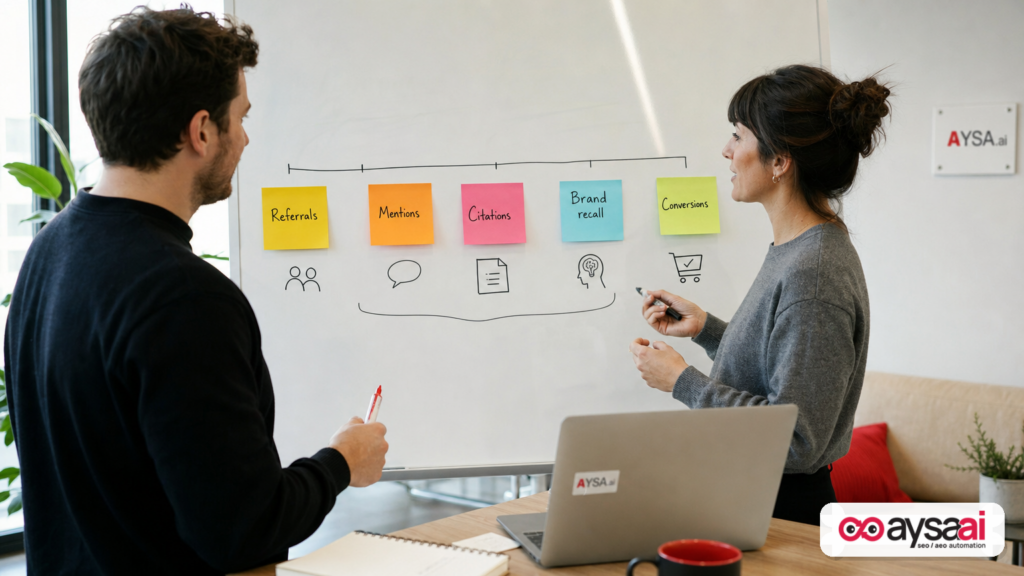
When AI recommends you, users often return later via Branded Search or direct. That can look like “Direct traffic increased” or “Brand queries increased” rather than “AI referral increased.”
This is why I tell teams: stop obsessing over one referrer label. The more durable approach is to improve the inputs AI uses to understand and trust you, then track the downstream outcomes.
Regional Timing: Why The US Usually Feels It First
The SE Ranking view highlighted by SEJ suggests the US market tends to lead in both scale and timing for Claude referral share compared to other regions.
Even if your business isn’t US-based, you should care, because the US often becomes a preview environment for:
- New product rollouts
- Behavior shifts
- Competitive pressure (your competitors learn there first)
If you serve US customers—or you’re in a category where US-led platforms set expectations—you should expect AI-driven discovery to materialize earlier, then propagate.
For operators, the takeaway is simple: if you’re waiting for your local market to “catch up,” you’ll end up copying strategies that are already commoditized.
How AI Changes Search Behavior (Even When It Doesn’t Send Clicks)
Traditional SEO trained us to think in a straight line:
- Query → ranking → click → page → conversion
AI adds loops:
- Query → AI answer → no click → brand search later
- Query → AI answer → shortlist → competitor comparison → your site
- Query → AI answer → user asks follow-ups → the “winning” brand is repeated → user converts later
This is why two businesses can have the same Google rankings and wildly different outcomes in 2026:
- Business A has clearer product data, better policies, consistent naming, and third-party validation.
- Business B has thin category pages, ambiguous service areas, missing shipping/returns info, and outdated “About” content.
When the AI summarizes both, Business A sounds credible and complete. Business B sounds uncertain. Users don’t click uncertainty.
The SME Scenario: An Ecommerce Brand, A Local Clinic, And A B2B Service—How AI Traffic Shows Up Differently
Here are three realistic scenarios I see (or expect) SMEs to experience as AI discovery expands.
Scenario 1: Ecommerce brand selling niche products
What changes: AI drives “shortlist” discovery. A user asks for the best option for a specific constraint (budget, skin sensitivity, material, compatibility, shipping speed). AI either mentions you—or doesn’t.
What you’ll notice first:
- More brand + product-name searches
- More visits landing on PDPs (product detail pages) instead of blog posts
- Higher Conversion rate from those sessions, but lower volume
What to do: make PDPs “citation-grade”: clean attributes, clear comparisons, credible claims, strong FAQs, explicit policies.
Scenario 2: Local clinic (dental, physical therapy, dermatology)
What changes: AI becomes a triage layer. Patients ask the AI whether they need urgent care, what treatment options exist, and how to choose a provider.
What you’ll notice first:
- Calls and form fills where the patient says “I read that you…”
- More “near me” behavior still happening in Google, but the decision is shaped earlier
What to do: tighten location pages, practitioner pages, insurance/payment clarity, and “what to expect” content so the AI can accurately represent you.
Scenario 3: B2B service (IT support, compliance, fractional CFO, marketing agency)
What changes: AI becomes an RFP assistant. Buyers ask for vendor shortlists, evaluation criteria, and “best for X industry.”
What you’ll notice first:
- More inbound leads with very specific expectations
- Fewer “educational” calls, more “validation” calls
What to do: publish clear service definitions, deliverables, boundaries, industries served, and proof (case studies where possible, but don’t inflate claims). Build pages that make it easy to quote your positioning accurately.
What To Monitor Weekly: The Metrics That Actually Predict Outcomes
Most teams monitor the wrong things because they’re easy. “AI referral sessions” is easy. But if you only monitor that, you’ll miss the real movement.
Here’s the monitoring stack I recommend for SMEs and lean teams.
1) AI referrals (yes, track it—but treat it as a signal)
Make sure your analytics can isolate AI referrers cleanly. If you use GA4, create an exploration or report view for known AI domains and keep a monthly baseline.
If you don’t see it yet, that’s normal. The goal is readiness and trend detection.
2) Branded search growth and brand+category queries
When AI starts mentioning you, brand demand tends to rise. Monitor:
- Google Search Console impressions for brand terms
- “Brand + product/service” queries
Use Google algorithm update timelines as context when patterns change; don’t assume every swing is AI.
3) Landing page mix (PDPs, location pages, pricing pages)
AI-driven visitors often land deeper. If you see a higher share of sessions starting on high-intent pages, that’s a good sign—even if total sessions are flat.
4) Conversion quality, not just conversion volume
AI can pre-qualify. Watch:
- Conversion rate by landing page type
- Lead-to-close rate (if you can)
- Average order value or first-visit purchase rate
5) AI visibility tracking (mentions and presence)
This is where most SMEs are blind: they don’t know what AI systems say about them.
At AYSA, we think of this as AI Search Visibility—the ability to monitor whether you appear in AI answers for the topics that matter to your revenue. If you’re not monitoring it, you’re reacting late.
Start here: AI Search Visibility
The On-Site Work That Increases AI Mentions: Clarity, Structure, Proof
AI systems don’t reward “AI content.” They reward clear, consistent, verifiable business information—because that reduces uncertainty.
Here are the site improvements that tend to help across industries.
1) Make your entity obvious: who you are, what you do, where you do it
- One canonical business name (no variations across pages)
- Clear service area/location coverage
- Strong About page with specifics (not fluff)
- Contact details consistent site-wide
For multi-location brands, each location page needs precise details. If you don’t control your facts, AI will fill gaps with guesses.
2) Structure your pages so answers are extractable
Use headings that mirror customer questions. Include short “definition paragraphs” near the top. Add FAQs that address:
- Who it’s for / not for
- Pricing ranges (even if not exact)
- Timeframes, availability, shipping, cancellation
- Compatibility, requirements, exclusions
If you’re on WordPress, don’t let theme chaos break your hierarchy. Clean structure beats “more words.”
3) Build proof that survives summarization
When AI summarizes your business, it compresses. What remains?
- Credentials and certifications (where relevant and accurate)
- Policies (returns, warranties, insurance, compliance)
- Customer support and service commitments
- Independent mentions (press, associations, reputable directories)
4) Keep critical pages current (not just blogs)
Many sites update blog posts weekly and leave:
- Pricing pages outdated
- Service pages vague
- Location pages missing hours
That’s backwards. For AI-driven conversion traffic, your “money pages” matter more than your content calendar.
5) Use tooling that turns insights into shipped improvements
This is where “AI SEO tools” should go beyond reporting and into execution. If your system can detect issues but your team can’t ship fixes, you lose months.
Explore: AI SEO Tools
Authority That AI Can “Carry”: Digital PR, Links, And Citation-Grade Pages
In classic SEO, links and mentions helped rankings. In AI discovery, they also help recommendability—because they increase the probability that a model will treat you as a real, credible option.
But here’s the nuance: you don’t need “more links.” You need the right kinds of references that an AI system can safely lean on.
What makes a page citation-grade?
- It’s specific, not vague
- It answers common comparison questions
- It has stable URLs and clear authorship/ownership
- It avoids exaggerated claims that trigger skepticism
What kind of off-site mentions help?
- Trade publications in your industry
- Local news (for local businesses)
- Professional associations
- Well-maintained directories with editorial standards
Be careful with low-quality syndication and mass guest-posting. AI models are trained to discount noise.
What Can Go Wrong: Bad Data, Over-Automation, And “Invisible” Reputation Problems
When operators hear “AI,” the instinct is to publish faster. That’s risky.
Risk 1: You optimize for the wrong metric
If you chase only AI referral sessions, you’ll neglect:
- Brand demand
- Conversion quality
- Share of voice in AI answers
Risk 2: You publish AI-written content that weakens your brand
“More content” can dilute trust if it’s generic, repetitive, or inconsistent with your actual offering. Many teams learned this the hard way in the last few years: content that doesn’t help users eventually stops working.
Risk 3: Inconsistent facts across pages
Different hours, different service descriptions, different pricing language—AI will merge it into a single narrative. You want that narrative to be correct.
Risk 4: You break your site trying to be “AI-ready”
Schema spam, plugin overload, rushed migrations—these are self-inflicted wounds. The best AI search strategy is worthless if your checkout breaks or your lead forms don’t work.
The Operational Fix: Monitoring + Approved Execution (Where Most Teams Fail)
Most businesses don’t lose because they lack ideas. They lose because they lack operational throughput.
Here’s the pattern I see repeatedly:
- Someone notices a trend (“AI traffic is up!”).
- They make a deck.
- They propose changes.
- Nothing ships for 6–10 weeks because approvals and dev cycles are clogged.
AI search is moving too fast for that.
Why “approved execution” matters
You want speed, but you also want governance. That’s why the best model is:
- Monitor (visibility, content issues, technical issues)
- Prepare recommended fixes with clear impact + risk notes
- Ask for approval from the business owner or site lead
- Execute accepted changes safely
That workflow is exactly how AYSA is designed: it’s not “set-and-forget.” It’s a system that respects the reality that your website is a revenue asset.
See monitoring: AYSA Monitoring
Where AYSA Fits: An Execution System For AI Search Visibility
At AYSA.ai, we think the next phase of SEO is less about producing endless pages and more about building a high-integrity web presence that AI can confidently recommend.
Practically, AYSA helps teams:
- Monitor AI search visibility and website health signals
- Identify gaps in content structure and entity clarity
- Prepare changes (technical + content + on-page improvements) for review
- Execute approved updates so progress doesn’t stall
If you’re trying to operationalize this (especially with a small team), that “approval-to-ship” loop is your competitive edge.
Start with the overview of AI visibility: AI Search Visibility
Explore the tooling approach: AI SEO Tools
And if you’re benchmarking costs and scope: AYSA Pricing
What To Do Next (Action List)
Here’s a practical plan you can run in the next 30 days without betting the company on hype.
1) Cleanly track AI referrals (so you can see trends early)
- Audit GA4 channel groupings and referral sources
- Create a simple monthly snapshot: AI referrals, landing pages, conversions
2) Monitor AI visibility for your core money topics
- Pick 10–30 high-intent queries customers ask before buying
- Track whether your brand is mentioned and how it’s described
- Note inaccuracies and fix the site inputs that cause them
3) Upgrade 5–10 “citation-grade” pages
- Top category/service page
- Top 3 products/services
- Pricing or “how it works” page
- About page (make it specific)
- Policies (shipping/returns/cancellations/warranty)
4) Fix fact consistency across your web presence
- Names, addresses, hours, service areas
- Primary phone/email
- Offer details that are often misquoted
5) Build an approval workflow so improvements ship weekly
- Define who approves what
- Limit changes to a safe weekly batch
- Keep a changelog with outcomes
6) Publish one “comparison” asset that customers actually need
- “X vs Y” (your approach vs alternatives)
- “Best for…” (use-case guidance, not keyword bait)
- “How to choose…” (decision framework)
Sources And Further Reading
- Search Engine Journal: Claude Is The Fastest-Growing AI Traffic Source, Per New Data
- Search Engine Journal: Latest News (context for ongoing AI/search shifts)
- Search Engine Journal: Google Algorithm Updates timeline (useful context when diagnosing traffic changes)
- AYSA.ai: AI Search Visibility
- AYSA.ai: Monitoring
- AYSA.ai: AI SEO Tools
- AYSA.ai: Pricing
- AYSA.ai Blog
Continue the AI search topic inside AYSA.
Use these pages to connect the article with AI SEO tools, AI visibility monitoring, AI Overviews and approved website execution.
Turn this topic into a website action plan.
Use these AYSA hubs to move from reading to technical fixes, AI visibility monitoring, research, glossary context and approval-first SEO execution.