
Google’s AI Answers Are Becoming a Marketplace: Payments, Measurement Gaps, and the New Rules of Visibility
Google is testing payments for content used in AI answers, admitting Search Console can’t report AI “positions” usefully, and Cloudflare is separating AI training permissions from search crawling. Here’s what changed, why it matters, and the practical playbook SMEs and agencies need now.
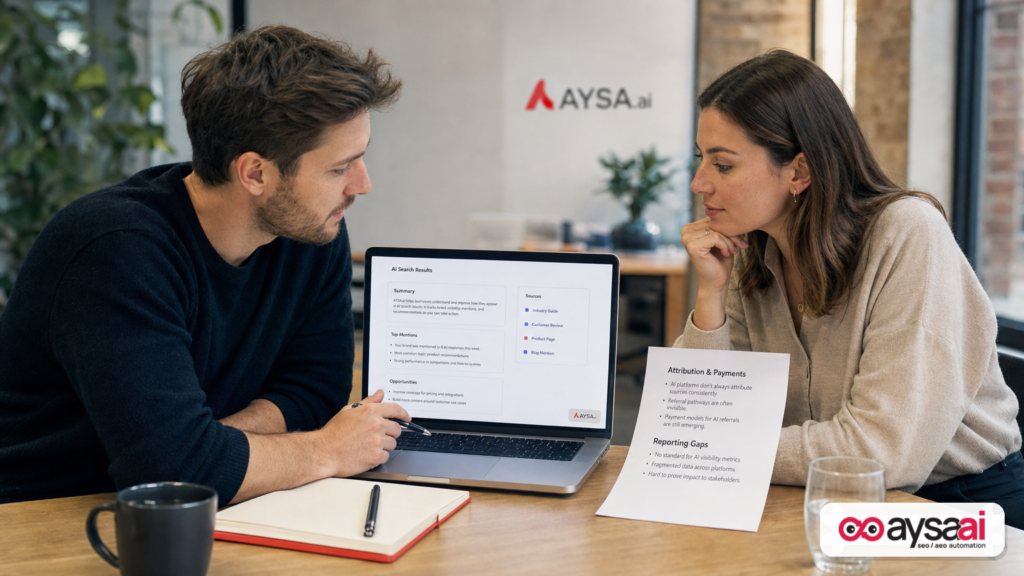
Google just signaled three things at once: AI answers are turning into a marketplace, measurement is becoming a product limitation (not a temporary bug), and Crawling permissions are splitting into separate lanes for search versus training.
That combination changes how visibility is earned, how performance is reported, and how businesses protect (or monetize) their content. It also forces a shift in mindset: the old “rank #1, win Clicks” model still matters, but it no longer explains outcomes on its own.
This editorial is based on reporting and context from Search Engine Journal’s SEO Pulse coverage. I’m using it as a research lead—not rewriting it—because the bigger story isn’t the news itself. It’s the operational reality behind it: what you can measure, what you can control, and what you can actually execute without breaking things.
Concise Summary
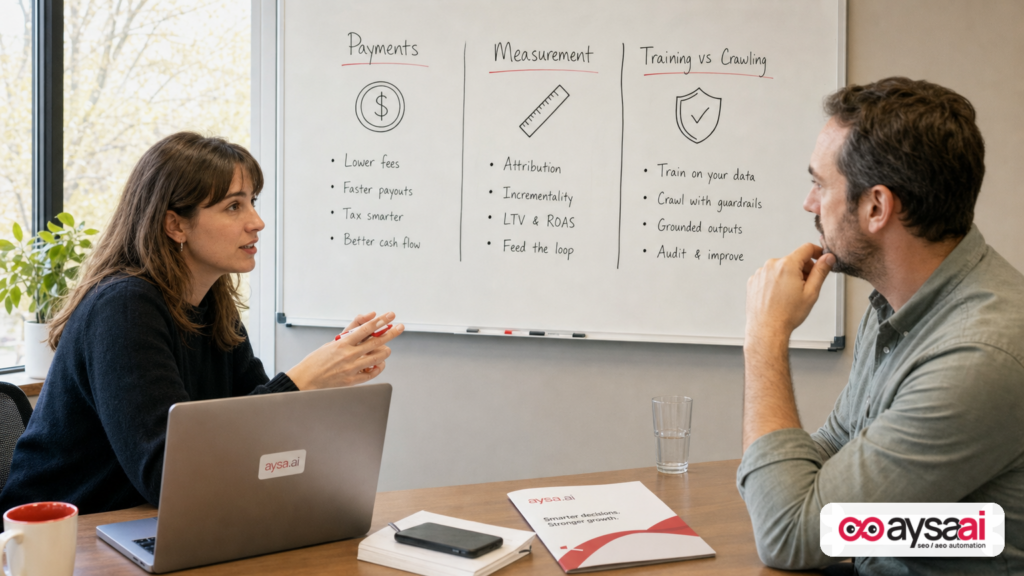
- Google is testing payments to sites whose content “contributes significantly” to AI answers (Gemini app, AI Overviews, and AI Mode). That’s a new incentive layer—but the Attribution logic is still largely opaque.
- Google Search Console’s AI reporting has a core limitation: AI “position” is hard to report usefully. If you’re waiting for neat rank-style reporting, you may be waiting forever.
- Cloudflare is separating AI training from search crawling via a “Disallow AI Training” option—an important move toward permission-based content control without sacrificing search visibility.
- Google Search profiles are now available at 10,000 followers (U.S. only), expanding another channel where “discovery” happens outside classic SERPs.
Key Takeaways (What To Do With This)

- Stop treating AI visibility like a ranking problem. Treat it like a mix of PR, product education, and technical eligibility.
- Build a reporting stack that doesn’t depend on “AI position.” Focus on: Impressions, citations/mentions, branded demand, assisted conversions, and lead quality.
- Decide your content posture: do you want to be crawled for search, used for training, both, or neither? Configure it intentionally.
- Execution is the moat. In AI search, the winners are the teams that can monitor changes, propose fixes, get approvals, and ship updates continuously—without “SEO chaos.”
Table Of Contents

- What Changed This Week (And Why It’s Not “Just SEO News”)
- From Ranking To Rendering: How AI Answers Change The Click Economy
- Payments For AI Contributions: A New Incentive Layer (With Familiar Problems)
- The Measurement Gap: Why “AI Position” Breaks The Old Model
- What To Measure Instead: A Practical AI Search Scorecard For SMEs
- Cloudflare’s Training-vs-Crawling Split: The First Real “Permission Architecture” For AI
- Search Profiles At 10,000 Followers: Discovery Is Becoming A Product Surface
- What Can Go Wrong: Real Risks For SMEs, Publishers, And Agencies
- The SME Scenario: “Why Did Our Leads Drop If We’re Still #1?”
- A 90-Day Action Plan: Build, Measure, And Execute For AI Search
- Where AYSA Fits: Monitoring + Approved Execution For AI-Era SEO
- What To Do Next (Checklist)
- Sources And Further Reading
What Changed This Week (And Why It’s Not “Just SEO News”)
Three updates—on the surface—look like separate headlines:
- Google is testing payments when a site’s content is used meaningfully in AI answers.
- Google (via John Mueller) is effectively acknowledging: position-style reporting doesn’t map cleanly to AI features.
- Cloudflare is giving site owners a clearer way to block AI training without blocking search crawling.
But in practice these are three sides of the same strategic coin:
- Money: If AI answers reduce outbound clicks, Google needs a story (and possibly a mechanism) for compensating content sources.
- Metrics: If AI answers change how results are shown, the old ranking metrics become less meaningful—even if they remain comforting.
- Permissions: If AI systems ingest content for training and retrieval, publishers demand granular control over usage rights.
Put differently: AI search is evolving into a platform economy. Platforms always end up with payments, measurement fights, and policy tooling. SEO is now living inside that reality.
From Ranking To Rendering: How AI Answers Change The Click Economy
Traditional search had a simple mental model:
- Google ranks pages.
- Users click results.
- Sites earn traffic and conversions.
AI Overviews and AI Mode add a new step that matters more than many businesses want to admit:
- Google renders an answer (a synthesized response) and only sometimes exposes sources prominently.
- Users may get what they need without clicking.
- When they do click, the click is often later-stage and more selective.
This is not inherently “bad.” It’s different. For some businesses, fewer clicks but higher intent can be a net win. For others—especially content-driven publishers and top-of-funnel ecommerce—click loss can be painful.
The urgent shift is this: visibility is no longer a single dimension (rank). It’s a multi-surface, multi-format outcome that depends on eligibility, clarity, and trust signals.
That’s why the rest of this editorial focuses on operations: payments, measurement, permissions, and execution.
Payments For AI Contributions: A New Incentive Layer (With Familiar Problems)
According to the SEO Pulse reporting, Google is piloting a program that pays participating sites when their content contributes significantly to AI answers in the Gemini app, AI Overviews, and AI Mode. The program reportedly includes a Search Console panel with monthly earnings and history and provides an opt-out via settings. (This is early-stage and limited, per the reporting.)
Source lead: Search Engine Journal.
Why payments are logical—and why they’ll be controversial
Payments solve a real tension: if AI answers reduce traffic, platforms need an alternate value exchange to keep the ecosystem producing high-quality content. If they don’t, the incentive to invest in content drops—and AI systems eventually degrade because the web degrades.
But payments introduce three familiar platform problems:
- Attribution opacity: “Your content contributed” is not the same as “here is exactly what was used, where, and how it was valued.” Without transparency, payments risk becoming public relations more than economics.
- Negotiation leverage: If a publisher accepts a payment pilot with unclear terms, it can weaken their negotiating position later (“we already compensate you”). The SEJ summary highlights this concern.
- Incentive distortion: If payouts reward certain types of content or formatting, the web will adapt to the payout algorithm—sometimes at the expense of user value.
What businesses should do now (even if you’re not invited)
Most SMEs won’t be approached for an AI payment pilot. But the existence of the pilot changes your strategic posture today:
- Inventory your “quotable” assets. These are pages AI systems love to cite: definitions, comparisons, policy pages, step-by-step guides, specs, pricing explanation, shipping/returns, service area coverage, and “who this is for” content.
- Separate content goals: some pages are built for conversion; some are built for explanation and trust; some are built to earn citations. You need all three.
- Track AI citations/mentions as an asset class. Even without payment, citations can drive branded search, direct traffic, and assisted conversion later.
In AYSA terms: this is exactly the kind of change where monitoring and governed execution matters. You don’t “do an AI project.” You build a system that continuously adapts content and technical signals. (More on that later.)
The Measurement Gap: Why “AI Position” Breaks The Old Model
John Mueller’s comments (as referenced in the SEJ reporting) are a rare moment of clarity: AI search features don’t map to the classic “position 1–10” model in a way that’s consistently useful.
Two key reasons this matters operationally:
- An impression doesn’t mean a view. If the AI feature loads on the page, it can count as an impression even if the user doesn’t scroll. Links behind “Show more” may not count until expanded. That’s structurally different from classic blue links.
- A link can inherit the block’s position. If the AI Overview is at the top, a cited link can get “credit” for the block position even if the link appears lower within the module. So even if Search Console reports something, it may not reflect the user’s real interaction path.
Source lead: Search Engine Journal.
The uncomfortable reality: “Position” is becoming a comfort metric
SMEs love rank reports because they feel concrete. Agencies love them because they’re easy to present. But in AI-era search, position is increasingly like measuring retail success by “shelf proximity to the entrance” without knowing:
- Whether shoppers saw your product,
- Whether a salesperson recommended a competitor first,
- Whether the customer bought online later,
- Whether your packaging answered the real question.
Rank still matters. But rank is no longer the full story—and in AI modules, it may not be the story at all.
What To Measure Instead: A Practical AI Search Scorecard For SMEs
If you can’t rely on “AI position,” you need a scorecard that reflects reality. Here’s a practical, small-business-friendly framework I recommend. It doesn’t require you to become a data scientist; it requires consistency and good judgment.
1) AI visibility signals (top-of-funnel)
- AI impressions (where available) in Google Search Console’s AI-related reporting, with the caveat that impressions ≠ views.
- Citations/mentions of your brand, products, and key pages in AI answers (manual spot checks and structured monitoring).
- Query coverage: the set of questions you want to “own” (e.g., “best running shoes for flat feet,” “how much does Invisalign cost,” “what’s the difference between X and Y”).
AYSA can support this through purpose-built AI search visibility monitoring: AI Search Visibility and ongoing monitoring workflows at AYSA Monitoring.
2) Behavior signals (mid-funnel)
- Branded search lift (trend, not fabricated attribution): if AI answers mention you, some users will search your brand later.
- Direct traffic trend (again: trend): citations can create “dark traffic” you won’t attribute to a click.
- Engagement quality on landing pages: time on page, scroll depth (if you track it), and conversion rate.
3) Outcome signals (bottom-of-funnel)
- Qualified leads / booked appointments / purchases (your real KPI).
- Lead-to-sale rate (quality indicator): AI can reduce volume but improve quality—or the opposite if your message is unclear.
- Assisted conversion narratives: sales calls and chat transcripts often reveal “I saw you recommended” even when analytics can’t.
4) Operational signals (the overlooked category)
Most teams measure outcomes, but ignore the operational system that produces outcomes. In AI search, this is the difference between compounding wins and random spikes.
- Time-to-ship SEO/AEO fixes: how long from “we discovered an issue” to “it’s live.”
- Backlog health: are content and technical improvements being executed weekly?
- Change governance: are updates approved and tracked, or are they chaotic and risky?
This is where AYSA’s model is designed to fit: it monitors, prepares recommended changes, asks for approval, and executes accepted website changes—creating a controlled execution loop rather than “SEO theater.” Explore: AYSA AI SEO Tools.
Cloudflare’s Training-vs-Crawling Split: The First Real “Permission Architecture” For AI
Cloudflare’s update is one of the most important operational shifts for publishers and businesses that care about content usage: the company introduced a “Disallow AI Training” setting that communicates a no-training preference in robots.txt while keeping major search crawlers able to crawl for search.
In the SEJ summary, Cloudflare also notes an ecosystem reality: some bots are “mixed-use” (used for both search and training). Cloudflare’s earlier “Block” approach could block search unintentionally; this new setting is designed to separate those intents.
Source lead: Search Engine Journal.
Why this matters beyond Cloudflare customers
Even if you don’t use Cloudflare, the direction is clear: the web is moving toward permission architecture, where site owners try to express:
- “You may crawl me for search.”
- “You may not use my content for training.”
- “You may use my content in answers (retrieval), but not for training.”
- “You may do none of the above.”
These are different economic relationships. Search crawling has historically been “free” in exchange for traffic. Training is a different value exchange—and that’s why the controls are emerging.
Practical guidance for SMEs: don’t accidentally disappear
Here’s the practical risk: a business owner hears “block AI,” flips a switch, and accidentally blocks search crawling—then traffic drops and nobody understands why.
If you’re on Cloudflare, the SEJ summary suggests existing settings may update automatically. Regardless, this is the moment to:
- Review your robots and bot controls (especially if you previously applied broad blocks).
- Clarify your business goal: Are you trying to prevent training? Prevent inclusion in AI answers? Or both?
- Document decisions so that future team members (or agencies) understand what was done and why.
Note: The SEJ reporting indicates that training controls don’t necessarily determine whether you show in AI Overviews/AI Mode—those are managed separately in Search Console. That’s another example of why “permissions” and “visibility” are not the same problem anymore.
Search Profiles At 10,000 Followers: Discovery Is Becoming A Product Surface
Google Search profiles (a feature that can appear in Discover) have lowered eligibility to 10,000 followers across major platforms (YouTube, Instagram, X, TikTok), per the SEJ summary. These thresholds have changed rapidly since launch, and the feature remains U.S.-only.
Source lead: Search Engine Journal.
Why Search profiles matter even if they don’t “rank” you
Google’s help documentation (as referenced in the SEJ summary) reportedly notes that Search profiles do not directly influence ranking. That’s believable—and it misses the point.
Discover is not classic search. It’s demand generation. If your content shows up more often for followers, you can create:
- More branded demand (people search your name later),
- More direct visits (people navigate to you),
- More familiarity (which influences click choice even in AI answers).
In other words: even if Search profiles don’t change ranking, they can change the business outcomes that ranking used to deliver.
SME angle: you don’t need to be a “media company” anymore
Lowering the threshold to 10,000 followers means more legitimate SMEs can qualify—especially ecommerce brands, clinics with educational content, local services with strong TikTok/YouTube presence, and B2B SaaS with a niche audience.
This is not an instruction to chase followers blindly. It’s an instruction to recognize that Google is blending search and social signals into the discovery layer. If your customer education already lives on social, Google wants it connected to how people discover your site.
What Can Go Wrong: Real Risks For SMEs, Publishers, And Agencies
These changes create opportunity—but also new failure modes. Here are the ones I’d be most worried about if I were running a small business or an agency.
Risk #1: You optimize for impressions and lose revenue
If AI reporting emphasizes impressions while clicks decline, teams may celebrate “visibility” while sales quietly fall. You need outcome-oriented KPIs (leads, bookings, revenue) paired with visibility KPIs (citations, impressions) so neither can lie.
Risk #2: You block the wrong thing
Training vs crawling is nuanced. A poorly configured block can reduce indexing or break discovery surfaces. Treat bot and robots changes like infrastructure changes: review, approve, log, and monitor.
Risk #3: You confuse “being cited” with “being chosen”
AI answers may cite you and still steer the user elsewhere. Citations are valuable, but they’re not a substitute for:
- clear positioning,
- unique differentiation,
- trust proof (reviews, policies, credentials),
- fast conversion paths.
Risk #4: Agencies sell the old deliverables
“We improved your average position” is not a strategy when the surface is a dynamic module and the click path is optional. Agencies need to evolve deliverables toward:
- AI visibility monitoring,
- structured content systems (AEO),
- entity and authority building (GEO),
- technical eligibility,
- governed execution.
The SME Scenario: “Why Did Our Leads Drop If We’re Still #1?”
Let’s make this real with a scenario I see constantly in different forms.
Scenario: A local clinic that “still ranks” but gets fewer calls
You run a dental clinic in the U.S. You’ve invested in SEO for years. You still rank well for “teeth whitening cost,” “emergency dentist,” and “Invisalign price.” Your agency report looks fine.
But over the last 60 days:
- phone calls dropped,
- form fills dropped,
- your front desk says fewer people mention “Google,”
- yet Search Console impressions are steady.
What likely changed
AI Overviews (and other SERP features) are answering common questions directly:
- Average cost ranges,
- Typical timelines,
- Pros/cons,
- Basic eligibility,
- Aftercare.
Users who only wanted general information stop clicking. Users who click are more specific—“best whitening for sensitive teeth near me,” “same-day emergency appointment,” “financing options.”
What you do next (in plain business terms)
- Create (or improve) pages that match higher-intent questions, not just broad ones. Example: “Whitening for sensitive teeth,” “Weekend emergency dentist,” “Invisalign financing and eligibility.”
- Make your page answer-ready: clear headings, direct answers, pricing context, and strong policies (what’s included, what varies).
- Strengthen trust signals: credentials, reviews, before/after policies (where compliant), and transparent next steps.
- Measure what matters: calls, booked appointments, and lead quality—not just impressions.
This is AEO/GEO in practice: you’re not “gaming an AI box.” You’re making your expertise easy to retrieve, cite, and choose.
A 90-Day Action Plan: Build, Measure, And Execute For AI Search
Here’s a practical plan that works for SMEs and agencies without requiring a full replatform or a massive content budget. It’s designed to be executed in parallel: measurement + content + technical + governance.
Days 1–15: Establish your baseline and your targets
- Identify 20–50 priority queries (questions people ask before buying). Include informational and transactional versions.
- Map each query to one “best page.” If no page exists, mark it as a gap.
- Define your scorecard: outcomes (leads/sales), visibility (impressions/citations), operational (time-to-ship).
- Set governance: who approves site changes, how often, and what gets logged.
AYSA fit: use monitoring to track visibility shifts and page-level opportunities: AYSA Monitoring.
Days 16–45: Build “answerable” content that still converts
AI answer readiness is not fluff. It’s the discipline of making content structured, direct, and trustworthy. For most SMEs, that means:
- Rewrite intros to answer the question in the first 2–3 sentences.
- Add short comparison blocks (A vs B, good/better/best, when to choose which).
- Use FAQs thoughtfully (not spam): focus on real objections and edge cases.
- Add “next step” CTAs that match user intent (quote, demo, booking, availability).
AYSA fit: prepare changes, request approval, and ship updates consistently across dozens of pages without turning your site into a patchwork: start with AI SEO Tools.
Days 46–75: Fix technical eligibility and permission settings
- Robots and bot controls: verify you haven’t blocked search crawling unintentionally.
- Structured data: where appropriate, use schema to clarify entities and page meaning (avoid spammy markup). If you don’t have a schema strategy, don’t guess—create one.
- Internal linking: connect explanation pages to money pages and back. AI visibility is great; conversion paths are required.
- Performance and UX: if a user does click from an AI answer, your page must load fast and answer immediately.
Days 76–90: Close the loop—report, learn, and iterate
- Review query coverage monthly: where are you showing, where not, where are competitors cited?
- Update content quarterly: the web changes; AI answers change faster.
- Build a “citation moat”: earn mentions from reputable sites, industry associations, partners, and consistent brand references.
- Make the organization faster: shorten approval cycles for changes that are low-risk but high-frequency.
AYSA fit: ongoing iteration is the point. See pricing and operational models here: AYSA Pricing.
Where AYSA Fits: Monitoring + Approved Execution For AI-Era SEO
In AI search, the edge isn’t a secret trick. It’s the ability to operate a continuous improvement loop without breaking your site, confusing your stakeholders, or burning months in meetings.
AYSA is built as an execution system for SEO/AEO/GEO:
- Monitors performance and visibility changes so you’re not blind when the surface shifts.
- Prepares recommended updates (content, internal linking, technical fixes) based on what’s happening.
- Asks for approval so humans stay in control—especially important for regulated industries, brand voice, and legal pages.
- Executes accepted changes consistently, so you don’t get stuck in “strategy without shipping.”
Relevant AYSA resources:
The bigger point: AI-era search rewards teams that treat SEO like product operations. Monitoring, prioritization, approval, execution, and learning. That’s the loop.
What To Do Next (Checklist)
- Decide your stance on training vs crawling (and review current bot controls so you don’t accidentally block search).
- Create an “AI visibility scorecard” that does not depend on AI position (include outcomes + visibility + operations).
- Identify 20–50 priority questions your customers ask before buying; map each to a page.
- Upgrade 10 high-impact pages for “answer readiness” (clear first answer, comparisons, FAQs, next steps).
- Strengthen conversion paths from informational pages to money pages (internal links, CTAs, trust proof).
- Set a weekly execution cadence: ship improvements every week, not once per quarter.
- Use a governed execution workflow (monitor → propose → approve → ship) so speed doesn’t create risk.
Sources And Further Reading
- Search Engine Journal – Google AI Payment Pilot, Search Profiles At 10,000 – SEO Pulse
- Search Engine Journal – AI Search coverage hub
- Search Engine Journal – SEO coverage hub
- Search Engine Journal – Technical SEO coverage hub
- Search Engine Journal – Paid Media coverage hub (useful context as AI ads evolve)
Note: This editorial references the above as research leads from the provided context. Where official primary documentation (e.g., specific Google or Cloudflare product docs for these exact updates) is not included in the supplied research context, I’ve intentionally avoided claiming details beyond what the source summary supports.
Final Perspective
AI search isn’t just a UI change. It’s a re-negotiation of the web’s economics: how content is used, how value is measured, and how creators and businesses are compensated—directly or indirectly.
If you’re an SME, the winning move is not to panic. The winning move is to become operationally excellent: measure what matters, make your expertise easy to retrieve and trust, and execute improvements continuously with governance.
That’s where the next decade of search growth will come from.
Continue the AI search topic inside AYSA.
Use these pages to connect the article with AI SEO tools, AI visibility monitoring, AI Overviews and approved website execution.
Turn this topic into a website action plan.
Use these AYSA hubs to move from reading to technical fixes, AI visibility monitoring, research, glossary context and approval-first SEO execution.

