Google’s New AI Search Controls: What Website Owners Should Do Next (and How to Win Without Guesswork)
Google is testing new Search Console controls and reporting for AI Overviews and AI Mode. That’s a big shift: you’ll have more choice, but also more responsibility to measure, decide, and execute fast. Here’s what changed, why it matters for SMEs and agencies, and a practical action plan you can run with AYSA.ai.

Generative AI in Search is no longer a concept you can ignore until “the dust settles.” Google is actively redesigning how answers are presented, how sources are linked, and now—most importantly—how website owners can control whether their content participates in those AI-driven experiences.
Google’s latest announcement introduces three themes that matter to every business with a website: (1) more visibility opportunities inside AI experiences, (2) a new Search Console control (a toggle) to manage participation, and (3) new reporting so you can understand where your pages appear in AI responses. The initial rollout is being tested with a subset of site owners in the UK, but the implications are global and immediate for planning.
This is an inflection point. For the last 20 years, most businesses treated Google as a ranking problem: “Where do we show up in the results?” Now it’s turning into a distribution decision: “Do we want to be included in AI answers—and if yes, under what conditions?” That’s a very different conversation, and it requires a very different operating system.
In this editorial, I’ll break down what changed, why it matters for SMEs and agencies, what can go wrong, and a practical playbook you can run without becoming an SEO expert. I’ll also explain where AYSA.ai’s AI Search Visibility approach fits: monitor what’s happening, prepare changes, ask for approval, and execute improvements fast—because speed and governance are now competitive advantages.
Concise summary
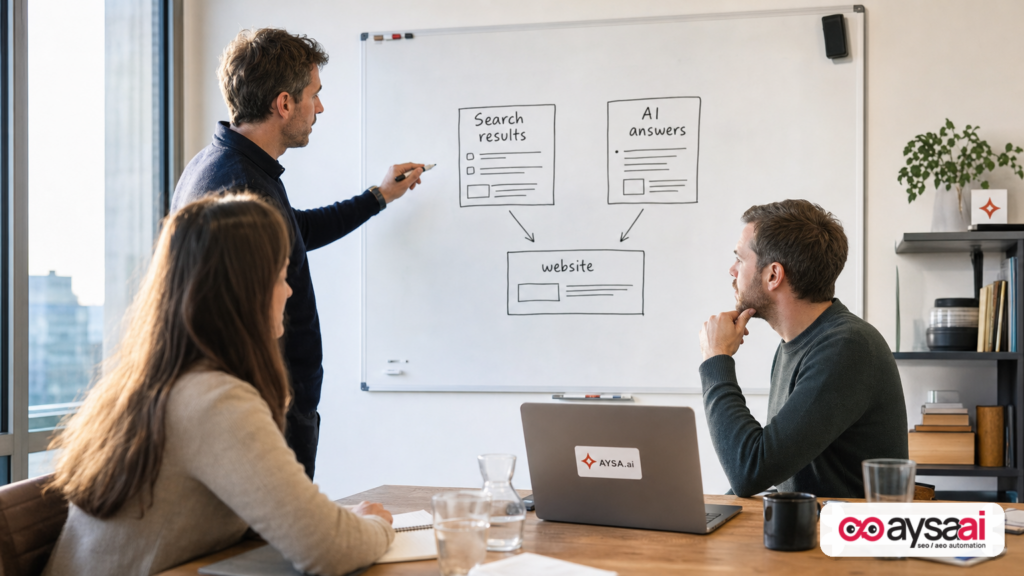
- Google is adding controls and reporting for AI Search features. Website owners may be able to decide if their site appears in and helps ground generative AI Search experiences like AI Overviews and AI Mode, via a Search Console toggle (testing in the UK first).
- Opting out is not “free.” If you opt out of AI features, you should expect to lose Impressions/traffic from those surfaces (while classic Search ranking outside those AI experiences should not be impacted by that toggle, per Google’s announcement).
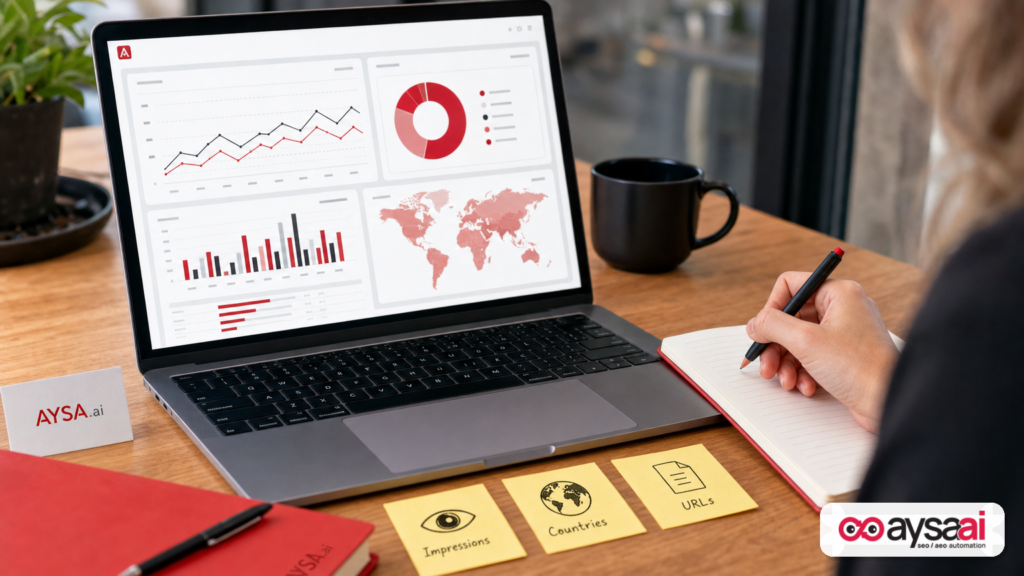
- Measurement is evolving. Google says Search Console will show new insights about appearance in generative AI features (impressions, which pages, and countries), with more metrics to come.
- Execution matters more than ever. Unique content, strong page experience, clean media, and clear content structure are becoming the baseline for visibility in AI-driven discovery.
- AYSA.ai is built for this moment. When the ground shifts, you need Monitoring plus Approved Execution—not endless tickets and guesswork. Start at Monitoring and expand into AI SEO tools that implement changes only after you approve them.
Table of contents
- The new reality: “AI visibility” is now a business decision, not just an SEO outcome
- What Google announced (and what’s actually new)
- Why this matters to SMEs (even if you don’t follow SEO)
- The Search Console toggle: what it does, what it doesn’t, and what to watch
- New Search Console insights: what you’ll likely learn (and what you still won’t)
- How AI Overviews and AI Mode change search behavior (practical implications)
- A practical framework for the new toggle: when to opt in, opt out, or test
- Content that wins in AI Search: “unique value” is the moat
- Technical and UX fundamentals that matter more in AI-driven discovery
- A concrete SME scenario: ecommerce brand vs local service business
- What agencies need to rethink: deliverables, reporting, and accountability
- Where AYSA.ai fits: monitoring, preparing changes, and approved execution
- What to do next (action list)
- Sources and further reading
The new reality: “AI visibility” is now a business decision, not just an SEO outcome
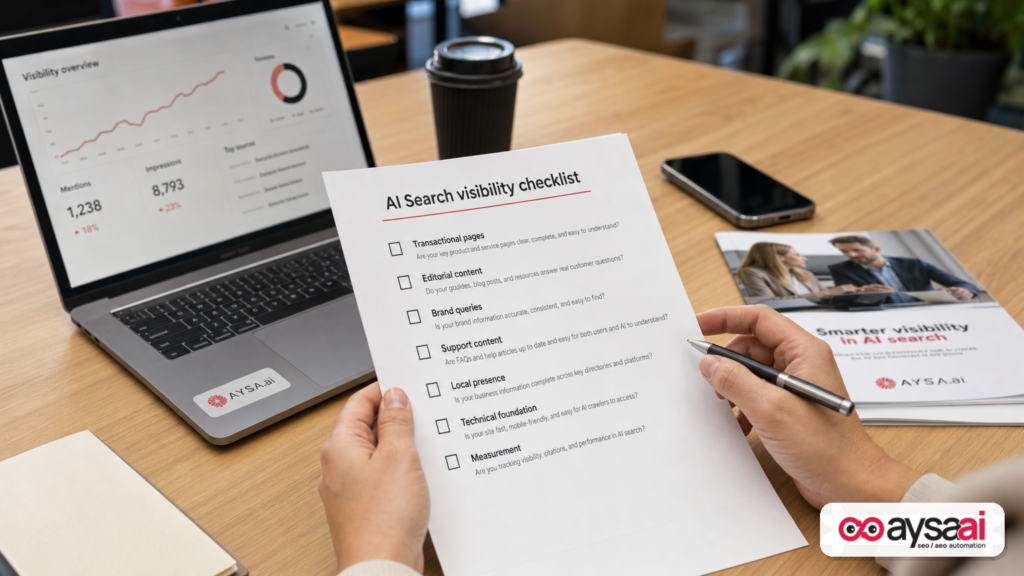
For most business owners, SEO historically felt like weather. You could prepare for it, but you couldn’t control it. Algorithms changed, rankings moved, and you adapted.
AI Search changes the metaphor. It’s closer to distribution—like deciding whether to sell through Amazon, list on DoorDash, publish on YouTube, or syndicate content to partners. Each channel brings reach, but also trade-offs: branding, attribution, and dependency.
Google’s new direction makes that explicit: if your content can appear inside AI answers, you get exposure within a new surface. But you also accept that the user may get more of what they need before clicking, and the click may go to a different source depending on how the AI response is composed and what the user prefers.
So the question is no longer “How do I rank #1?” It’s:
- Do we want to participate in AI answers at all?
- If yes, which parts of our site should be optimized to be cited and clicked?
- What are we willing to trade (visibility vs direct sessions, brand presence vs last-click attribution)?
- How do we measure success when the interface itself changes?
This is why governance matters. When a platform introduces a toggle that affects where you show up, you need an internal decision process, a measurement plan, and an execution system. Otherwise you get stuck in the worst place: reacting emotionally to screenshots, without knowing whether your pipeline is improving or declining.
What Google announced (and what’s actually new)
Google’s Search team published an update titled “New opportunities, control and insights for website owners”. The core message: generative AI features in Search are growing, and Google is introducing new tools to help website owners navigate those changes.
From a business perspective, three parts matter most:
1) More “opportunities” inside AI Search experiences
Google describes AI Overviews and AI Mode as experiences designed to help people find and visit websites, with changes like more inline links and website previews to encourage click-through. They also mention “Preferred Sources” and subscription labels so users can choose sites they want to see more prominently.
You don’t have to agree with every design choice to recognize the direction: Google is iterating rapidly on how links appear in AI answers and how users can express source preferences. That means the “shape” of traffic may change even if your rankings don’t.
2) A new Search Console control (toggle) for participation in AI experiences
This is the headline for site owners: Google says it is beginning to test a new control in Search Console that lets website owners decide if their site can appear in, and help ground responses in, generative AI Search features (examples given include AI Overviews, AI Mode, and AI Overviews in Discover).
Google also states two important constraints:
- If you opt out, your site would not receive traffic or impressions from those generative AI features.
- The control will not be used as a ranking signal for search results outside those AI experiences.
Google frames this as a continuation of its history of controls like snippet controls and Google-Extended. If you want to understand that lineage, Google’s official robots meta tag documentation is a useful baseline reference: Robots meta tag, data-nosnippet, nosnippet, max-snippet and related controls.
3) New Search Console reporting for appearance in AI experiences
Google says it is rolling out new insights in Search Console about how pages appear in generative AI Search features—mentioning impression metrics plus information about which pages appear in AI responses and in what countries. They also note they’ll add metrics over time.
Even if the metrics start simple, the strategic effect is big: once you can measure something, you can operationalize it. And once you can operationalize it, teams will be expected to improve it.
Rollout note: UK testing first
Google says these features will begin rolling out to a subset of website owners in the UK for testing before global expansion. If you’re outside the UK, don’t treat this as “not relevant.” Treat it as an early warning: this is where the product is heading.
Why this matters to SMEs (even if you don’t follow SEO)
If you run an SME, you probably care about three outcomes:
- Leads or sales (pipeline quality, not vanity traffic)
- Brand trust (being seen as the credible choice)
- Cost efficiency (not paying forever for every click)
AI-driven search experiences touch all three:
1) Your buyer may “pre-qualify” in the SERP
AI answers can help users narrow choices before they visit a website. That can reduce low-intent clicks (which isn’t always bad) but can also make it harder to communicate differentiation if the AI answer compresses nuance.
2) Attribution gets messier
Many SMEs already struggle to reconcile SEO, paid search, social, and email attribution. AI answers add another layer: you may influence consideration even when a click doesn’t happen immediately. If your measurement model is “last click or nothing,” you’ll make bad decisions.
3) The market will fragment into “visible in AI answers” vs “invisible”
If participation becomes a choice, you’ll have competitors who opt in and competitors who opt out. Your performance won’t just depend on your content quality; it will depend on your category’s appetite for AI-driven discovery and your own risk tolerance.
4) Speed of site improvement becomes a competitive advantage
When Google iterates link designs, preferred sources, and reporting, the winners won’t be the businesses with the best opinions. They’ll be the ones who can monitor changes and ship improvements weekly—without breaking their site or going through month-long ticket cycles.
This is exactly why we built AYSA around approved execution: your website is not a static brochure; it’s a living sales asset that must adapt to the reality of AI discovery.
The Search Console toggle: what it does, what it doesn’t, and what to watch
Let’s talk about the most sensitive part: control.
Google says the toggle allows site owners to decide whether their site can appear in and help ground responses in generative AI Search features. That sounds simple, but the operational implications aren’t.
What the toggle does (based on Google’s description)
- Gives a site-level choice about inclusion in generative AI Search features (as named in the post: AI Overviews, AI Mode, AI Overviews in Discover).
- Creates a clear consequence: opt-out means no traffic or impressions from those AI features.
- Separates classic ranking: Google states the toggle is not used as a ranking signal outside generative AI features.
What the toggle likely doesn’t solve
- It doesn’t guarantee clicks. Being included is not the same as being chosen by the user.
- It doesn’t fix thin content. If your pages are generic, the AI experience may cite more distinctive sources—or show you but with low engagement.
- It doesn’t answer “partial participation” questions. The announcement frames it as a site-level toggle. Many businesses will want granularity by section or template (blog vs product pages, for example). If that’s not available, you’ll need other methods and policies to manage risk.
What to watch as this expands
Google says it will introduce additional metrics over time. As the ecosystem adapts, expect follow-on questions to become urgent:
- Will there be more granular controls (directory / page / pattern)?
- How will reporting separate AI surfaces from classic web results?
- Will Search Console expose click metrics for AI features, or only impressions at first?
- How will AI inclusion interact with existing snippet controls?
I’m not going to invent answers. The point is: if you wait until the final form is known, you’ll be late. The right move is to build a testing discipline now.
New Search Console insights: what you’ll likely learn (and what you still won’t)
Google says Search Console will show new insights about your pages’ appearance in generative AI Search features: impressions, which pages appeared, and in what countries.
Here’s how to interpret that as an operator—not as an SEO theorist.
What these new insights are good for
- Spotting winners and losers by page type. You can separate “helpful, cite-worthy” pages from “invisible” pages.
- Understanding geographic mismatch. If you’re a UK business and AI inclusion shows up in countries you don’t serve, you can adjust content, hreflang, localization, or targeting strategy.
- Measuring impact of improvements. If you rewrite product guides, add media, or improve structure, you can watch whether AI impressions change.
What Search Console still won’t magically tell you
- True incremental revenue impact without connecting analytics, CRM, and lead quality.
- Why you were chosen in a given AI response (attribution inside the model is still opaque).
- Competitor benchmarking unless you do external research and inference.
That’s not a criticism. It’s simply the reality: platform-provided reporting rarely answers the questions that businesses actually need for resource allocation.
This is why an execution system matters. In AYSA, we treat Search Console signals as triggers: monitor, identify opportunities, prepare changes, then ask for approval and implement. Learn more about our approach at AYSA Monitoring.
How AI Overviews and AI Mode change search behavior (practical implications)
Google’s post highlights that users are asking “entirely new kinds of questions” and that AI experiences are intended as a “jumping-off point.” Whether that results in more or fewer clicks for your specific business will vary by query type.
Instead of debating abstractly, segment search behavior into four buckets that any SME can understand:
1) Quick facts (lowest click need)
Hours, definitions, basic comparisons—users may not need to click. If your business depends on this traffic, you were already exposed. AI answers make that exposure more obvious.
2) Consideration research (high influence, mixed clicks)
“Best X for Y,” “pros and cons,” “what to ask before buying,” “is this safe,” “how much does it cost.” AI can compress research and highlight sources. This is where brand presence and authority matter, and where unique content can win.
3) Transactional intent (clicks still matter)
When users want to buy, book, request a quote, or schedule, they still need a site or app experience. AI may route them faster to the right page—if your site is structured and trustworthy.
4) Post-purchase support (deflection risk, but also trust leverage)
AI answers can reduce support tickets by answering common questions, but that can cut visits to your help center. If your help center is monetized (ads, upsells) that’s a risk. If support cost is a pain point, it’s an opportunity.
The operational takeaway: you should not evaluate AI Search with one metric. You need a query and page-type strategy.
A practical framework for the new toggle: when to opt in, opt out, or test
If you’re an SME, you don’t have the luxury of philosophical debates. You need a decision framework you can execute in a week, not a quarter.
Here’s a practical approach I recommend:
Step 1: Map your site into “value categories”
- Commodity content: basic definitions, generic tips, content you could swap with any competitor.
- Differentiated content: proprietary processes, original research, real experience, unique inventory, unique offers.
- Transactional pages: product, service, pricing, booking, quote forms.
- Brand trust pages: about, reviews/testimonials (where appropriate), case studies, policies, credentials.
Step 2: Decide what you’re optimizing for
Pick one primary objective for the first 60–90 days:
- More qualified leads (even if fewer total clicks)
- More top-of-funnel visibility for brand building
- Stability and risk reduction (if your business is highly dependent on organic)
Step 3: Choose one of three participation stances
A) Opt in (default for many SMEs)
Best if you want discovery, you have strong differentiated content, and you can improve quickly based on reporting.
B) Opt out (only with a clear business rationale)
Best if your content is heavily monetized via pageviews alone, if you have strict licensing constraints, or if you operate in a niche where summaries substitute too well for visits. If you opt out, you’re betting that classic search traffic will remain sufficient and that AI surfaces won’t become the dominant entry point for your customers.
C) Test-first (recommended if the toggle or reporting is new to you)
Testing is the adult approach: maintain inclusion initially, then run controlled experiments on content types and track downstream outcomes (leads, bookings, revenue per session, assisted conversions).
Note: Google’s announcement frames the control as a site-level toggle. If you can’t segment participation directly, segment your content strategy and your measurement instead. That’s still actionable.
Content that wins in AI Search: “unique value” is the moat
Google’s post references updated guidance emphasizing “unique, non-commodity content,” good organization, page experience, and high quality images and video.
That aligns with what we’ve seen across every major platform shift: when distribution changes, the average content gets crushed, and the distinct content compounds.
What “unique” means for an SME (not a publisher)
You don’t need to publish 3,000-word essays every week. You need to capture the knowledge your business already has and express it in a way that’s hard to copy.
Examples that work:
- Process transparency: “How we diagnose X,” “How we price Y,” “Our step-by-step installation checklist.”
- Inventory reality: for ecommerce: fit notes, real photos, comparison tables you actually maintain.
- Local expertise: for service businesses: permits, timelines, weather considerations, neighborhood-specific advice.
- Decision tools: calculators, selectors, checklists, printable guides.
- Experience content: common mistakes, what customers wish they knew, “what we’d do if…” scenarios.
What to stop doing
- Don’t publish interchangeable SEO filler. If you can swap your logo for a competitor’s and the article still reads the same, it’s commodity.
- Don’t rely on one “ultimate guide” forever. AI-driven discovery rewards freshness and clarity in answering evolving questions.
- Don’t hide key information behind three clicks. If users (and systems) can’t find it quickly, it won’t be used.
If you want a practical starting point, use AYSA to identify pages that already earn impressions and then upgrade them: expand differentiation, improve media, add structured sections, and make the next step obvious. Explore our toolset at AYSA AI SEO Tools and our broader thinking at AYSA Blog.
Technical and UX fundamentals that matter more in AI-driven discovery
When teams hear “AI Search,” they often jump straight to prompts and model behavior. For most SMEs, that’s a distraction. The businesses that win tend to do the fundamentals better and faster.
1) Content structure that’s easy to extract and cite
Use consistent headings, short sections, and direct answers. Think in terms of “Can a human find the answer in 10 seconds?” If not, you’re relying on luck.
2) Page experience and performance
Even if an AI answer drives a click, a slow, cluttered page wastes the opportunity. You don’t need perfection—you need “fast enough and frictionless.”
3) Media quality and relevance
Google specifically calls out high quality images and video. For ecommerce and local services, original media is also a trust signal. Stock imagery is easy to ignore and easy to replicate.
4) Clear internal linking
If an AI-driven user lands on an informational page, they need a clear next step: related product, booking page, quote form, or comparison. Internal linking is your conversion infrastructure.
5) Governance: change control and rollback
This is the unsexy part most teams miss. In a world of frequent platform changes, you need to know:
- What changed on the site?
- Why was it changed?
- Who approved it?
- Did it help?
- Can we revert quickly if it hurts?
This is where AYSA’s model is intentionally conservative: we prepare recommended changes, you approve, and only then do we execute. That’s how you move fast without breaking trust. Start with Monitoring and expand into Pricing when you’re ready to operationalize execution.
A concrete SME scenario: ecommerce brand vs local service business
Let’s make this real with two scenarios. No hype, no magic—just how decisions and actions change.
Scenario A: Ecommerce brand selling premium skincare
What changes with AI Search: Users search “best moisturizer for rosacea,” “retinol vs bakuchiol,” “how to build a routine,” “is this ingredient safe during pregnancy.” AI answers can summarize and list sources. If your product pages are thin, you’ll be absent from consideration.
Risks:
- AI answers satisfy some questions without clicks, reducing blog sessions.
- Competitors with stronger educational content become the cited “experts.”
What to do:
- Create or upgrade 10–20 “routine builder” and “ingredient explainer” pages that are uniquely yours (formulation philosophy, before/after protocols, real usage instructions).
- Add original photos and short product usage videos to support trust.
- Build internal links from every educational page to the relevant product category and a “routine quiz” or curated bundle.
- Use Search Console’s AI insights (as they roll out) to see which pages appear and where. Treat that list as your priority backlog.
How AYSA fits: AYSA monitors your visibility, prepares page upgrades (structure, internal linking, metadata, content improvements), asks for approval, and executes accepted changes. That keeps your team focused on product and brand, not tickets.
Scenario B: Local service business (HVAC company)
What changes with AI Search: Users ask “why is my AC blowing warm air,” “how much does a compressor replacement cost,” “what size unit do I need,” “how to choose an HVAC contractor.” AI answers may show checklists and cite sources. The win is not “traffic”; it’s trust and conversion.
Risks:
- If you opt out of AI experiences, you may lose early-stage discovery where homeowners are learning before they call.
- If your pages are generic, you won’t be cited, and you’ll become invisible in the research stage.
What to do:
- Create a “diagnosis library” (symptoms → likely causes → when to call a pro) written from field experience.
- Publish transparent pricing ranges with caveats (what changes price, what to ask, financing options).
- Improve page experience on mobile and make calling/booking frictionless.
- Track leads, not just clicks. If AI reduces low-quality traffic but increases booked jobs, you’re winning.
How AYSA fits: AYSA can help keep service pages technically sound, content structured, and conversion pathways clear—while monitoring AI Search visibility signals as they appear.
What agencies need to rethink: deliverables, reporting, and accountability
Agencies are going to feel this shift sharply, because clients will ask new questions:
- “Why did impressions change if rankings didn’t?”
- “Are we showing up in AI answers?”
- “Should we opt out?”
- “Why are we getting fewer clicks but the same revenue?”
The agencies that thrive will change three things:
1) Move from ranking reports to outcome reports
Rankings still matter, but they’re an input metric. Clients pay for pipeline, revenue, and cost efficiency. As AI surfaces evolve, you need to connect visibility to outcomes.
2) Package “AI visibility optimization” as an ongoing system
This isn’t a one-time project. Link formats, preferred sources, and reporting will evolve. You need an operating cadence: monitor → prioritize → ship → review.
3) Reduce execution friction
Most agencies die by a thousand delays: waiting for dev teams, approval bottlenecks, unclear ownership, broken staging processes. An approved execution system (like AYSA) is a structural advantage because it turns strategy into shipping.
If you run an agency, start by building an “AI Search readiness backlog” for each client, then implement the top 5–10 items that improve clarity, structure, and differentiation. If you want a system that makes that repeatable across accounts, explore AYSA’s approach to AI Search visibility and our broader platform options on Pricing.
Where AYSA.ai fits: monitoring, preparing changes, and approved execution
Let me be blunt: AI Search is going to create more meetings, more opinions, more anxiety—and more opportunity for businesses that can execute calmly.
AYSA is not “another dashboard.” It’s an execution engine built for SEO/AEO/GEO realities:
- Monitor: keep watch on visibility signals and changes so you don’t rely on anecdotes. Start here: AYSA Monitoring
- Prepare: translate insights into specific, actionable site changes (content structure, internal linking, page improvements).
- Ask for approval: you stay in control—nothing ships without a yes.
- Execute: implement accepted changes so you’re not stuck in backlog purgatory.
This model matters more as Google introduces toggles and reporting for AI experiences. Why? Because the businesses that win will run controlled tests and ship iterative improvements. The businesses that lose will argue about what Google “really means” and do nothing for 90 days.
If you want to see how we think about the future of visibility across AI answers and classic search, start with AI Search Visibility and then browse practical guides in our blog.
What to do next (action list)
Here’s a practical, no-drama checklist you can run over the next 2–4 weeks.
1) Establish your AI Search stance
- Decide whether your default is: opt in, opt out, or test-first.
- Write down the reason (traffic dependency, brand goals, monetization model).
2) Inventory your “unique value” assets
- List the 20 pages that best represent your real expertise (not your most generic content).
- Prioritize upgrading those pages first.
3) Improve clarity and structure on priority pages
- Add concise answers near the top.
- Use clean H2/H3 sections that match real customer questions.
- Add original media where it matters (photos, short videos, diagrams).
4) Strengthen conversion pathways
- Make the next step obvious (buy, book, request a quote, subscribe).
- Ensure mobile UX is frictionless.
5) Put monitoring and execution on rails
- Set up ongoing monitoring so you’re not surprised by new surfaces or metrics.
- Adopt an approved execution workflow so improvements ship weekly.
To operationalize this without building an internal SEO department, start with AYSA Monitoring, then expand into our AI SEO tools when you’re ready to execute at scale.
Sources and further reading
- Google Search Blog (The Keyword): New opportunities, control and insights for website owners
- Google Search Central documentation: Robots meta tag and snippet controls
- Google Research blog (context on Google’s AI work): Google Research Blog
- Google DeepMind blog (context on model development): Google DeepMind Blog
- Google Developers Blog (implementation ecosystem): Google Developers Blog
- Google Cloud blog (AI infrastructure and tooling context): Google Cloud Blog
Note: Google’s announcement indicates that the new Search Console control and reporting are being tested with a subset of website owners in the UK first, with broader rollout later. If you don’t see these options yet, treat this article as a planning guide—and build the monitoring and execution muscle now, before the change reaches your market.
Continue the AI search topic inside AYSA.
Use these pages to connect the article with AI SEO tools, AI visibility monitoring, AI Overviews and approved website execution.
Turn this topic into a website action plan.
Use these AYSA hubs to move from reading to technical fixes, AI visibility monitoring, research, glossary context and approval-first SEO execution.