
Google Search Hit a Usage Record During the World Cup. Here’s What That Really Means for AI Search, Visibility, and Business Growth in 2026.
Google says Search hit an all-time usage high during a World Cup match—proof that “live intent” still drives massive demand. But higher usage doesn’t automatically mean more clicks to your site. Here’s how SMEs and agencies should adapt for AI Overviews, AEO/GEO, and measurable search visibility in 2026—with an execution plan you can actually run.

Google recently said Search hit an all-time usage high during a World Cup match—right after a dramatic winning goal. The headline is easy to read as “Search is back” or “AI didn’t change anything.” That’s the wrong takeaway.
The right takeaway is more useful (and more uncomfortable): search demand can surge while your traffic and revenue don’t. In 2026, “more searching” often means “more answers on the SERP,” “more AI summaries,” and “more zero-click behavior.” If you’re a business owner or marketer, you need to treat this as a visibility and execution problem—not a vibes problem.
This editorial breaks down what this record usage claim really signals, what likely changed about search behavior, where measurement gets misleading, and what SMEs and agencies should do next. I’ll also show where AYSA’s AI search visibility approach and monitoring fit into an execution-first strategy: we monitor what’s happening, prepare recommended website changes, ask for approval, then execute accepted updates so you can move fast without losing control.
Concise summary
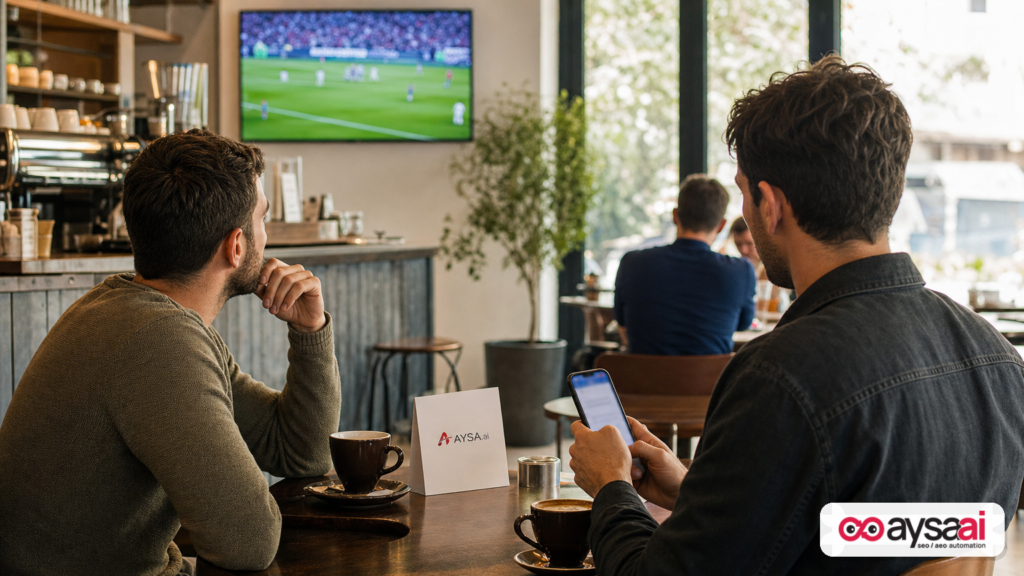
- Google says Search usage hit an all-time high during a live World Cup moment—a reminder that Search is still the default “second screen” when something happens in real time.
- Usage doesn’t equal Clicks. A record day for Google can still be a flat day for publishers and businesses if AI answers and SERP Features satisfy intent without outbound traffic.
- AI changes the funnel. Your job is no longer just ranking; it’s earning visibility inside AI summaries and being the next best click when a click does happen.
- Execution speed matters. Spikes are short. Businesses that can publish, update, and validate content quickly are the ones that capture demand.
Key takeaways for SMEs and agencies
- Stop treating “Search volume” as the win. Start measuring share of visibility across classic results, AI Overviews-style placements, and SERP features.
- Build pages that answer live intent better than everyone else: quick facts, schedules, pricing, availability, location accuracy, and plain-English explanations.
- Instrument your work: change logs, annotations, GA4 events where appropriate, and consistent query grouping in Search Console.
- Invest in “Approved Execution” workflows: move faster without letting uncontrolled changes break the site.
Table of contents
- What Google said—and what it didn’t
- The World Cup spike is the clearest reminder: search is still the “second screen”
- “Record usage” is not the same as “record opportunity” for your website
- What changed in 2025–2026: AI answers moved from “feature” to “default behavior”
- The 4 intent types that spike during live events (and how businesses can ride them)
- How to measure what matters when clicks are no longer guaranteed
- A concrete SME scenario: a local clinic + ecommerce add-on during a live spike
- What agencies should rethink: deliverables, reporting, and accountability
- What can go wrong (and usually does)
- The SME playbook for “live demand” + AI search: an execution-first plan
- Where AYSA fits: monitoring → recommendations → approval → execution
- What to do next (checklist)
- Sources and further reading
What Google said—and what it didn’t
According to reporting from Search Engine Journal, Google’s Nick Fox said Google Search reached its highest usage on record during a World Cup match—right after a winning goal. No figures were shared, and the methodology wasn’t explained. The report also notes an important nuance: record usage on Google’s side does not necessarily imply record clicks to publisher sites.
The specific claim and context are covered here: Search Engine Journal: Google Says Search Hit All-Time Usage High During World Cup.
Two things can be true at once:
- Search can be more used than ever because it’s still the default interface for questions.
- Businesses can receive fewer clicks per query than ever because the SERP is designed to resolve more intent without sending users away.
If you run an SME website, the second point is the one that changes your strategy.
The World Cup spike is the clearest reminder: search is still the “second screen”
Live sports is one of the few environments that reliably triggers a massive, synchronous curiosity wave. A goal happens and millions of people ask versions of the same questions within seconds:
- “Who scored?”
- “Is that offside?”
- “What does this mean for the bracket?”
- “What time is the next match?”
- “Where can I watch highlights?”
That “second screen” behavior matters beyond sports, because it mirrors what happens in business:
- A competitor goes viral on TikTok → people search the brand, the product category, and “alternative to…”
- A weather event hits → people search emergency services, shipping delays, hotel availability, and local resources
- A product recall or outage happens → people search the issue, fixes, and safe replacements
- A celebrity mentions a product → people search pricing, reviews, where to buy, and authenticity
In each case, the businesses that win are the ones with:
- pages that answer fast (technical performance and clarity),
- content that matches the new questions,
- and operations that can publish or update within hours—not weeks.
“Record usage” is not the same as “record opportunity” for your website
Let’s separate the terms people casually blend together:
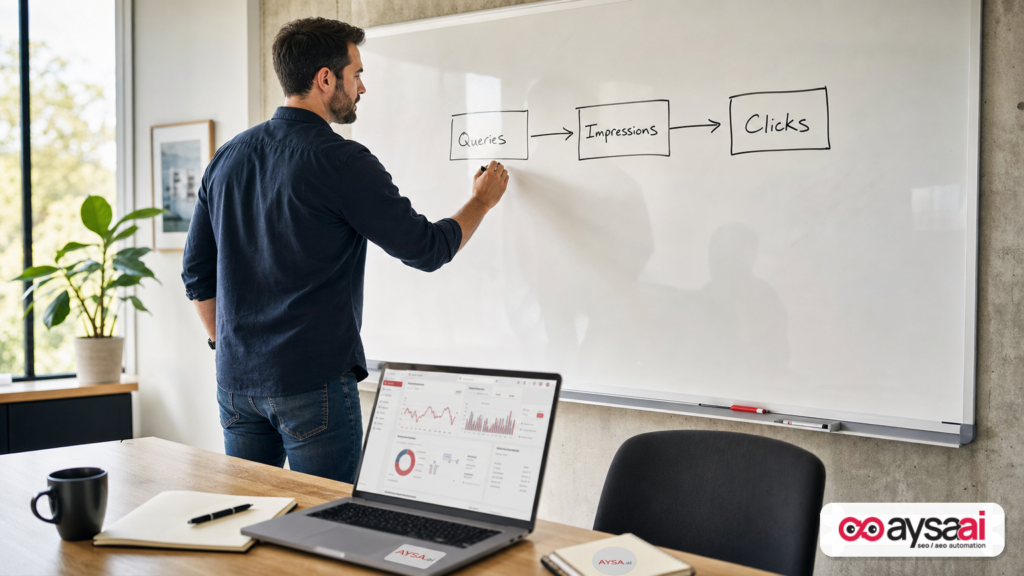
- Usage/queries: how much searching happens.
- Impressions: how often your site appears as an option.
- Clicks: how often users actually visit your site.
- Outcomes: leads, sales, bookings, calls, subscriptions.
In 2026, a spike in queries can increase impressions while clicks remain flat—or decline. Why? Because the SERP experience keeps absorbing intent:
- AI summaries and “answer-first” layouts
- knowledge panels and instant facts
- maps/local packs for local intent
- shopping modules for product intent
- sports and live event modules
So when you hear “record search usage,” don’t celebrate yet. Ask the operational question that affects your P&L:
Did the spike create incremental outcomes for our business—and can we prove it?
A note on automated traffic (bots) and why it complicates everything
The SEJ report notes that Google did not define “usage” or clarify whether bots are excluded. It also references Imperva’s general estimate that automated traffic exceeded half of web traffic in 2025.
Important: that doesn’t mean Google’s record claim was driven by bots. It means the ecosystem contains enough automation that transparency and definitions matter. If you’ve ever opened GA4 and wondered why engagement looks weird, you already feel this problem.
If you’re building strategy on “record highs,” insist on definitions—especially when those highs are used as signals that “everything is fine.”
What changed in 2025–2026: AI answers moved from “feature” to “default behavior”
For years, SEO teams optimized for a fairly stable loop:
- User searches
- Google shows ten blue links (plus ads and a few features)
- User clicks a site
- Site converts
That loop is not gone—but it’s no longer the default for many queries. AI-style answers (including summary experiences often discussed as “AI Overviews”) compress the journey:
- User searches
- Google synthesizes an answer and highlights a few sources
- User either stops (zero click) or clicks one of a smaller set of sources
This changes strategy in two ways:
- Visibility expands beyond rankings. You can “win” without a click if your brand becomes the cited authority—but you still must measure downstream impact.
- Competition narrows. Instead of competing with ten results, you may be competing for two or three citations and one “next click.”
The playbook becomes: be the source AI wants and be the best destination when users want depth, purchase, booking, or trust.
The 4 intent types that spike during live events (and how businesses can ride them)
World Cup matches aren’t your business. But the underlying intent mechanics are. Most “live intent” spikes fall into four categories, and each has a different content and execution requirement.
1) Instant facts: “What just happened?”
This intent is fast, repetitive, and often satisfied directly on the SERP. Businesses can still benefit when the “fact” relates to them:
- service status pages (outages, maintenance windows)
- shipping cutoff pages (holiday changes)
- inventory availability pages (limited drops)
- event updates (schedule changes)
Execution note: your goal is accuracy and speed. The “win” is being referenced, not being poetic.
2) Explanation: “Why did this happen?”
This is where AI answers thrive, because the user wants a synthesized explanation. You can compete by building clear, structured content:
- glossaries and “what it means” pages
- policy explainers (returns, warranties, insurance)
- comparison pages (alternatives, differences)
- root-cause pages (common issues + fixes)
Execution note: aim for the cleanest answer with credible sourcing, then provide depth (examples, edge cases) that AI summaries can’t fully replace.
3) Transaction: “Where can I get it right now?”
Spikes often convert when you remove friction:
- accurate pricing and availability
- clear delivery estimates
- local pickup details
- trust elements (returns, support, reviews)
Execution note: this is where many SMEs lose because their site is slow, product data is inconsistent, or key pages aren’t internally linked.
4) Local: “Who can help me near me?”
Local spikes are brutal because they’re time-bound. If a storm hits or an event ends, demand shifts immediately. Your local pages must be accurate:
- hours, holiday closures, emergency availability
- service area definitions that match reality
- contact options that work on mobile
- location-level FAQs (parking, accessibility, appointment policy)
Execution note: inaccurate location data is one of the fastest ways to waste “record usage” moments. If people show up and you’re closed, you didn’t just lose a click—you burned trust.
How to measure what matters when clicks are no longer guaranteed
If AI answers reduce clicks, measurement must mature. Not become more complicated for sport—just more aligned with reality.
Principles that keep you honest
- Separate branded vs non-branded. Brand spikes can mask category decline.
- Track topic clusters, not single keywords. AI changes phrasing; intent remains.
- Measure visibility, then outcomes. Impressions and presence are leading indicators; leads/sales are the goal.
- Annotate changes. If you don’t log what changed and when, you can’t attribute.
What SMEs should watch weekly (not once a quarter)
- Google Search Console: impressions and clicks by query group (brand vs category), and by page type (product, category, guide, location).
- GA4: landing page conversion rate and revenue/lead quality—not just sessions.
- SERP feature presence: are you showing in formats that users actually see?
Even without special tooling, this is doable. But it’s operationally painful if your team is small—because it’s ongoing.
This is one reason we built AYSA as an execution system: monitoring shouldn’t be a monthly ritual; it should be continuous, with clear recommended actions tied to measurable outcomes.
“Prove it” doesn’t mean “invent a perfect metric”
There’s a temptation to create a single “AI visibility score” and call it done. Be careful. Visibility is multi-surface, and attribution is messy. The honest approach is:
- Define what “good” looks like for your business (calls, bookings, add-to-carts, demo requests)
- Track leading indicators (impressions, presence, ranking ranges)
- Run changes in controlled batches where possible
- Validate with outcomes over time
A concrete SME scenario: a local clinic + ecommerce add-on during a live spike
Let’s make this real with a business that exists everywhere: a local physical therapy clinic that also sells a small catalog of home rehab products (bands, braces, foam rollers) through its site.
Now imagine a live sports moment triggers a spike in searches around an injury type—“ankle sprain recovery timeline,” “taping ankle for support,” “should I see a physio,” “best brace for sports.”
What happens in 2026?
- Some users get an AI summary and stop.
- Some users want a local provider now.
- Some want to buy something today.
- Some want a credible guide and will bookmark it.
What the clinic needs to capture the spike
- A fast, clear guide page (symptoms, what to do first 48 hours, when to seek care) written in plain English.
- A location page that answers local intent: appointment availability, insurance basics, parking, and “same-week appointments” if true.
- Product pages that don’t feel like spam: clinician-approved recommendations, sizing help, and realistic expectations.
- Internal links connecting guide → clinic services → booking, and guide → recommended products (if appropriate).
The clinic doesn’t need to “win SEO.” It needs to win the next action the user takes after the AI summary.
What usually breaks (and costs the business the moment)
- Hours are outdated on a location page.
- The booking link goes to a generic contact form with no urgency.
- The guide exists but is long, vague, and doesn’t answer the top questions quickly.
- The product pages are missing sizing and returns info, so users bounce.
- No one notices the spike until it’s over, because reporting is monthly.
This is why “record search usage” can be true while your revenue doesn’t move. The demand wave is real; your ability to catch it is the variable.
What agencies should rethink: deliverables, reporting, and accountability
If you’re an agency, AI search will punish the old model:
- monthly keyword ranking reports with no tie to outcomes
- content calendars that ship slowly
- technical audits that never get implemented
- “we sent recommendations” as the definition of done
Clients don’t pay for recommendations. They pay for changes that ship and results that follow.
New deliverables that survive AI search
- Visibility reporting across SERP surfaces: what pages appear, where, and for which intents.
- Execution velocity: time from insight → approved change → deployed change.
- Content refresh systems: what gets updated, how often, and why.
- Proof framework: annotations, controlled rollouts when possible, and outcome tracking.
AYSA’s model is designed for this reality: we don’t just “audit.” We monitor, prepare changes, request approval, and execute accepted updates. That’s how agencies scale without relying on endless back-and-forth tickets.
If you want to see how we frame this for modern search, start here: AYSA AI SEO tools and AI search visibility.
What can go wrong (and usually does)
Whenever search behavior shifts, a few predictable mistakes show up. These are the ones I’d bet on for 2026.
Mistake #1: Confusing “being mentioned” with “being chosen”
Even if AI summaries cite you (or paraphrase you), that doesn’t guarantee:
- brand recall
- trust
- click-through
- conversion
You still need conversion-ready pages and a business offer that makes sense.
Mistake #2: Publishing more content instead of fixing the pages that already earn demand
Most SMEs already have “money pages” that receive the majority of relevant impressions. Usually they’re under-optimized, outdated, or unclear.
In AI search, refreshing and clarifying existing assets often beats publishing brand-new posts.
Mistake #3: Treating technical SEO as optional
AI doesn’t remove the need for crawlable, fast, structured websites. If anything, it increases the penalty for messy websites because competition compresses into fewer visible placements.
Mistake #4: Slow approvals = missed moments
This is the silent killer for SMEs and regulated industries (healthcare, finance, legal). A live demand wave might last hours or days. If your workflow takes three weeks to approve a content update, you’re not competing—you’re documenting.
The SME playbook for “live demand” + AI search: an execution-first plan
This is the section to print, share with your team, or turn into a quarterly operating rhythm.
Step 1: Identify your “spike topics” before the spike
You don’t need to predict the World Cup. You need to identify the topics that reliably spike in your business:
- seasonality (holidays, back-to-school, tax season)
- weather (storms, heat waves)
- industry events (product launches, conferences)
- regulatory deadlines
- viral social patterns
Then create a simple map: topic → best page to satisfy it → how you will update it quickly.
Step 2: Build “answer-first” structure on your most important pages
AI and humans both reward clarity. For your key pages (top products, top categories, top services, top locations), ensure:
- the first screen answers “what is this” and “who is it for”
- FAQs that match real objections
- plain-language summaries before deep detail
- internal links that guide the next step (book, buy, compare)
This is not about gaming AI. It’s about eliminating confusion.
Step 3: Refresh accuracy signals relentlessly
AI search surfaces tend to amplify errors. Fix accuracy issues before you chase new content:
- location details (hours, address, phone)
- pricing, availability, and shipping estimates
- policy pages (returns, cancellations)
- outdated stats and claims (remove or qualify)
If you run multiple locations, this is even more critical. A single wrong hour can trigger bad reviews—and reviews are not an “SEO metric,” they’re revenue reality.
Step 4: Turn monitoring into alerts, not reports
Monthly reporting is too slow for AI-era volatility. You want alerts for:
- sudden impression spikes or drops on high-value pages
- brand vs non-brand divergence
- indexing issues and technical regressions
- content drift (when pages become outdated)
This is where AYSA monitoring is designed to help: detect, prioritize, and translate signals into executable changes.
Step 5: Ship improvements with an approval-first workflow
SMEs need speed, but they also need safety. The best workflow is:
- system identifies issues/opportunities
- system prepares recommended changes (content, internal links, schema where appropriate)
- human approves (or rejects) the changes
- system executes accepted updates
- results are measured and documented
That’s the core of AYSA’s approach: approved execution. It’s how you scale without turning your website into a constant experiment.
Step 6: Build “next click” experiences that AI can’t replace
When a user chooses to click, it’s because they want something the SERP can’t fully deliver:
- trust (proof, credentials, guarantees)
- transaction (checkout, booking)
- specificity (inventory by location, real timelines, policies)
- depth (detailed comparisons, expert guidance)
Design your pages so the user immediately sees: “I’m in the right place.”
Where AYSA fits: monitoring → recommendations → approval → execution
If AI search is compressing visibility and shortening the time window to act, then “strategy” without execution is theatre.
AYSA is built as an execution system for modern SEO/AEO/GEO workflows:
- Monitor search visibility and site signals continuously: AYSA Monitoring
- Prepare website updates that align with how AI and traditional search surfaces present answers
- Ask for approval so SMEs and agencies keep control (no surprise changes)
- Execute accepted changes so work doesn’t die in a ticket queue
If you’re evaluating whether an execution system is worth it, this is the real test: can it reduce the time from “we learned something” to “the site reflects it”?
If yes, it pays for itself during the exact kind of demand spikes that produce record usage headlines.
Explore the product entry points here:
- AI search visibility
- AI SEO tools
- Pricing
- AYSA blog (more execution playbooks)
What to do next (action list)
If you want a practical next week, not a theoretical next quarter, do this in order:
- Pick 10 pages that matter most (products, categories, services, locations) and rewrite the first screen to answer the main intent clearly.
- Split reporting into branded vs non-branded in Search Console and watch the trend weekly.
- Refresh accuracy signals: hours, policies, pricing, availability, contact paths.
- Add internal links from informational pages to the most logical conversion path (book/buy/quote), without being aggressive.
- Create a spike-ready update workflow: who can approve changes within 24 hours?
- Set up monitoring and alerts so you notice spikes while they’re happening, not after they’re gone.
- Document changes (even a simple change log) to connect actions to outcomes.
If you want help operationalizing this with approved execution, start with monitoring and then expand into AI search visibility.
Sources and further reading
- Search Engine Journal (source): Google Says Search Hit All-Time Usage High During World Cup
- Search Engine Journal: Latest News (context)
- Search Engine Journal: SEO coverage (context)
- Search Engine Journal: Google Algorithm Updates (context)
Continue the AI search topic inside AYSA.
Use these pages to connect the article with AI SEO tools, AI visibility monitoring, AI Overviews and approved website execution.
Turn this topic into a website action plan.
Use these AYSA hubs to move from reading to technical fixes, AI visibility monitoring, research, glossary context and approval-first SEO execution.

