
Microsoft Web IQ and the Rise of Search Built for AI Agents: What It Means for SEO, Content, and SMEs
Microsoft’s new Web IQ grounding APIs signal a major shift: search results are being designed for AI agents—not humans. Here’s what changes, why traditional SEO signals matter differently, and a practical execution plan for SMEs and agencies preparing for agentic discovery.

Search is changing in a way that most business owners won’t notice—until the lead flow shifts.
Microsoft’s release of Web IQ, a “grounding API” suite designed for AI agents, is a clear signal that the web is entering a new phase: discovery is being optimized for systems that read, extract, verify, and synthesize, not for humans scrolling ten blue links.
This isn’t a hype cycle. It’s an infrastructure change. And infrastructure changes don’t ask permission—they quietly reshape incentives until everyone else has to adapt.
Below is a practical, business-first guide to what Web IQ represents, why it matters to your SEO/content strategy, what can go wrong, and what SMEs and agencies should do next. I’ll also explain how we think about this at AYSA: monitor, prepare, ask for approval, then execute—because in the agentic era, strategy without implementation is just commentary.
Concise summary
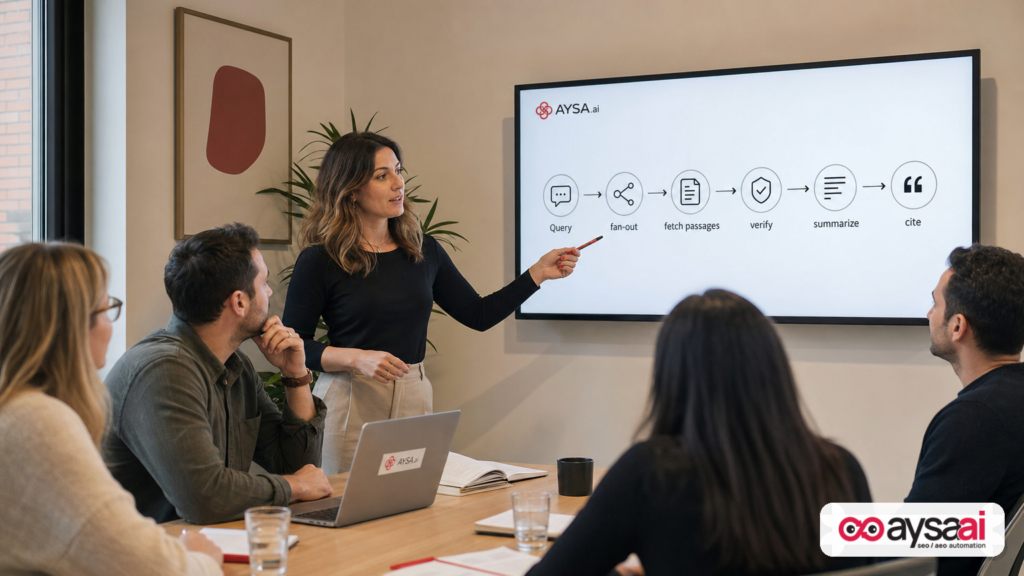
- Microsoft Web IQ is a suite of grounding APIs powered by Bing’s index, designed specifically for how AI agents search and retrieve information, not how humans browse SERPs. Source: Search Engine Land.
- Agents behave differently: they fan out across many queries/sources, prioritize passage extraction and verification, and care about cost (tokens) and speed (latency) as product constraints.
- This shifts SEO from “rank a page” toward “be the most usable, citable, and current source” across a topic—often at the entity and fact level.
- SMEs should plan for more ‘zero-click’ outcomes where the agent answers without sending traffic, while still influencing purchasing decisions.
- Execution speed becomes a moat. Monitoring, technical hygiene, Structured data, content clarity, and fast updates will matter more than publishing volume.
Table of contents
- The headline isn’t “Microsoft launched an API.” It’s “search has a new primary user.”
- What Web IQ is (and what it isn’t)
- How AI agents search differently than people
- Why Microsoft is doing this now (and why it’s not just a Bing story)
- What changes for SEO when ranking is less important than extraction
- Content built for agents: clarity, structure, and “answerability”
- Technical SEO for agentic discovery: the unsexy basics that become decisive
- Measurement: what to track when clicks and rankings stop telling the truth
- What can go wrong: confident wrong answers, brand risk, and cost blowouts
- A practical SME scenario: the local clinic that loses “new patient discovery” without noticing
- What agencies should rethink: from deliverables to outcomes and execution
- Where AYSA fits: approved execution for SEO/AEO/GEO in an agent-first web
- What to do next: an execution-first action plan
- Sources and further reading
The headline isn’t “Microsoft launched an API.” It’s “search has a new primary user.”

For two decades, the default assumption behind search strategy was simple: humans are the user. We optimized for what humans see and do:
- They type a query.
- They scan results.
- They click.
- They evaluate a page.
- They convert (or not).
Even when Google and Bing became better at interpretation, personalization, and Rich results, that basic loop held.
Agentic search breaks that loop.
Now, the “user” is increasingly an AI system that:
- Runs multiple queries (often dozens) to complete a task.
- Fetches documents and extracts passages rather than “reading” the whole page like a person might.
- Synthesizes an answer and may never send a click.
- Optimizes for latency, reliability, and cost—because inference isn’t free.
That’s why Web IQ matters: it’s an explicit admission from Microsoft that the future of search infrastructure is agent-first.
What Web IQ is (and what it isn’t)
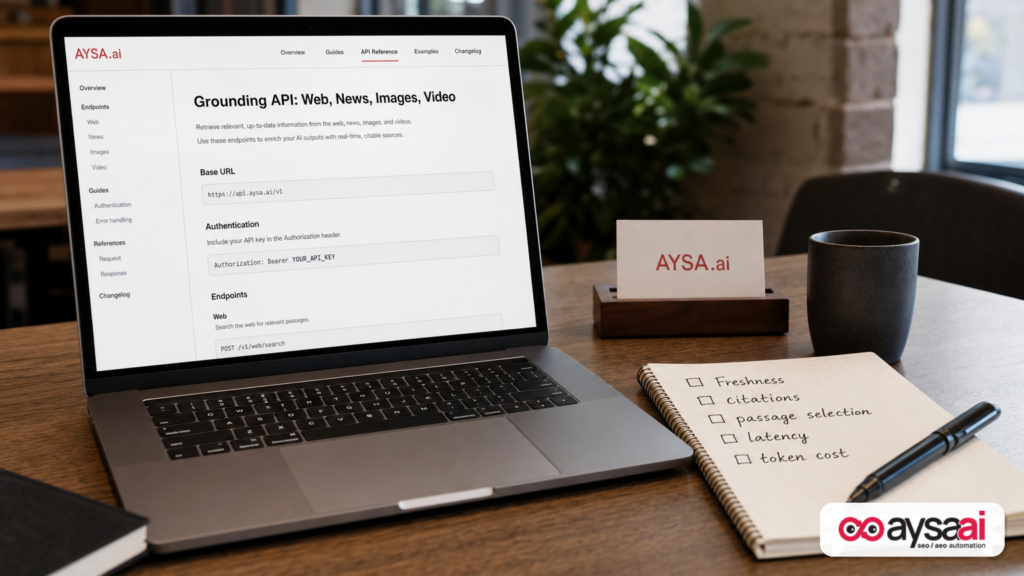
According to Search Engine Land’s coverage, Microsoft has released a new grounding API suite called Web IQ. Microsoft describes it as “AI-native grounding APIs built for the agentic era,” connecting AI systems and agents to fresh web intelligence across:
- web pages
- news
- images
- videos
It’s powered by Bing’s index and built to support inference-time grounding—meaning: the model (or agent) can reference fresh external information while generating answers.
What it isn’t:
- It’s not a consumer-facing search engine redesign you can “opt into.” It’s infrastructure other systems can call.
- It’s not the same as classic web search APIs that return a ranked list intended for a human UI.
- It’s not “SEO is dead.” It’s “SEO incentives are shifting,” especially around how content gets selected and cited.
Microsoft also indicated Web IQ uses the same underlying infrastructure used inside Copilot and in other systems (including ChatGPT for some web answers), but has been rebuilt for efficiency, speed, and relevance for agent workloads (per the reporting).
How AI agents search differently than people
If you want to make the right marketing decisions, don’t start with “How do I rank?” Start with: How does the new buyer journey actually work?
In an agentic journey, the customer may still be the human, but the researcher is increasingly an AI assistant or agent. That changes how information is found and used.
1) Agents “fan out,” they don’t “search once”
A human might search “best accounting software for small construction company,” click two results, get distracted, and come back later.
An agent can run a workflow like:
- Search best accounting software for contractors
- Search for pricing pages for top candidates
- Search for integrations (QuickBooks, payroll, job costing)
- Search reviews and complaints
- Verify availability in region, compliance requirements, etc.
- Compile a comparison and recommend 2–3 options
This is not “one query.” It’s a multi-step research pipeline.
2) Agents care about the best passage, not the best page
Traditional SEO rewards the best page overall for a query. Agents often reward the most extractable passage that answers a sub-question cleanly:
- What’s the refund policy?
- Is pricing monthly or annual?
- What’s included in the base plan?
- Do you accept my insurance?
- What are shipping times to my state?
This shifts emphasis toward:
- clear headings
- tight definitions
- bulleted constraints
- explicit numbers where appropriate
- structured data when relevant
3) Cost and speed are part of “relevance”
With human search, a slow page is bad UX but search can still show it.
With agents, slow retrieval and verbose documents can become an economic problem. If an API is optimized for fewer tokens and faster responses—as Microsoft claims Web IQ is—then content that’s easier to extract from (and pages that are reliably accessible) can be favored in practice, even if indirectly.
Important nuance: we can’t claim exactly how Web IQ weights these factors beyond what’s in the provided coverage, but the direction is obvious: agent systems will prefer sources that minimize cost and maximize certainty.
Why Microsoft is doing this now (and why it’s not just a Bing story)
This move sits in a broader trend: search is becoming a layer inside products, not just a destination website. If AI assistants are embedded into operating systems, browsers, CRMs, and devices, then “search” becomes a capability every product wants.
Microsoft is positioned uniquely because it has:
- a large web index (Bing)
- Copilot distribution
- enterprise relationships
- a reason to supply infrastructure to other AI systems
The key strategic shift: Microsoft is productizing “fresh web grounding” for agents, rather than treating web search as purely a consumer UI business.
If you’re an SME, this matters because your visibility won’t only be “Google traffic.” It will be:
- How assistants describe you
- Whether you’re included in comparisons
- Whether your policies/prices/services are correctly represented
- Whether you’re the default recommendation for a constrained use case
What changes for SEO when ranking is less important than extraction
Let’s be blunt: many SEO routines are optimized for a world that is fading.
You can still do “classic SEO” and get results—especially for high-intent queries. But as agentic discovery increases, the ROI profile changes.
Shift #1: from “traffic” to “influence”
Agents can answer without clicking, but they still influence decisions.
So the question becomes:
- Are we being referenced?
- Are we being recommended?
- Are we being cited (where citations exist)?
- Are we being compared fairly?
This aligns with what many in the industry have been calling AEO (Answer Engine Optimization) and GEO (Generative Engine Optimization). The terms aren’t as important as the operational reality: your content must be easy for a model to use correctly.
Shift #2: from keywords to entities and facts
In agentic search, the “unit of value” isn’t always a page. It’s often an entity (your brand, product, location, practitioner, hotel property, SKU line) plus facts (hours, pricing, return policy, guarantees, certifications, availability, service area).
If your site buries facts across PDFs, outdated blog posts, and inconsistent pages, agents will either:
- skip you, or
- get you wrong
Shift #3: from “ranking signals” to “selection signals”
Traditional SEO asks: “How do I rank higher?”
Agentic search asks: “Which sources are safe to use?”
Selection signals include (conceptually):
- clarity
- consistency
- freshness
- explicit policies
- structured context
- credible corroboration (other reputable mentions)
Some of these overlap with SEO. But the intent is different: you’re optimizing to be consumed by an agent, not merely clicked by a human.
Content built for agents: clarity, structure, and “answerability”
Most businesses already have “content.” The problem is it’s written for marketing, not for extraction. In the agentic era, you need both.
Build “answer pages” for high-stakes questions
Pick 20–50 questions that:
- decide purchase eligibility (pricing, service area, insurance, shipping)
- create friction (returns, cancellations, availability)
- require accuracy (specs, safety, compliance)
Then create pages/sections where each question is answered:
- in the first 2–3 sentences
- with constraints clearly listed
- with “as of” dates when facts change
This doesn’t have to be boring. It has to be unambiguous.
Make comparisons easy (even if you’re not “the cheapest”)
Agents frequently build comparison tables. If your product’s differentiators are only “brand story,” you’ll lose to a competitor with explicit, structured claims.
Practical move: publish a “Who we’re best for / not best for” section. That helps agents match you to the right use case and reduces mis-selling.
Internal linking becomes “routing for extraction”
Internal links aren’t just for PageRank. They’re how systems discover canonical answers quickly.
- Link from blog posts to policy pages.
- Link from product pages to shipping/returns details.
- Link from service pages to coverage areas and pricing.
Less scavenger hunt, more reference manual.
Technical SEO for agentic discovery: the unsexy basics that become decisive
Agentic search increases the cost of technical debt. If your site is hard to crawl, inconsistent, or fragile, agents will either fail to retrieve your content or retrieve the wrong version.
This is where SMEs often lose—not because they “lack content,” but because their website is not a reliable knowledge base.
Crawlability and indexation hygiene
Make sure:
- important pages are indexable
- duplicate versions are controlled (canonicals)
- thin location/service variants don’t create confusion
- XML sitemaps are clean and up to date
Structured data where it truly helps
Structured data isn’t magic, but it helps disambiguate facts. Use it where it aligns with your business type and pages (e.g., organization, product, FAQ where appropriate). Don’t spam it; keep it accurate.
Freshness systems, not “content campaigns”
Agents value current information. So instead of “Let’s publish 10 blogs this month,” implement a freshness workflow:
- Which pages change often (pricing, availability, promotions, menus, hours, inventory)?
- Who owns updates?
- How fast can changes ship after approval?
This is where execution discipline beats creativity.
Measurement: what to track when clicks and rankings stop telling the truth
Agentic discovery creates a measurement problem: your brand can “win” without getting a click, and you can “lose” while rankings appear stable.
So you need a new monitoring stack that includes—but doesn’t worship—classic metrics.
Keep tracking the fundamentals (they still matter)
- Index coverage and crawl health
- Branded search demand
- Conversions and assisted conversions
- Local pack visibility (for local businesses)
Add AI visibility monitoring
At AYSA, we treat AI visibility as a distinct layer. You want to know:
- Are we mentioned for our category?
- Are we recommended for specific use cases?
- Are key facts correct (pricing, locations, policies)?
- Which competitors are being surfaced instead?
If you’re building your own process, even manual monthly checks across major assistants can reveal pattern changes. The point is consistency: run the same prompts, track deltas, and tie changes back to site updates.
Related AYSA resources you can use as starting points:
What can go wrong: confident wrong answers, brand risk, and cost blowouts
If you’ve spent any time with AI systems in production, you’ve seen the same failure modes repeat.
Even Search Engine Land has highlighted broader concerns about AI behavior in the wild. For additional context from the provided research leads, see: “AI in the wild: Confident, wrong, and weirdly expensive”.
Risk #1: The agent is confident and wrong—about you
Common examples:
- Outdated pricing
- Wrong service area
- Incorrect “best for” recommendations
- Mixing your brand with a similarly named competitor
In classic SEO, a wrong snippet is annoying. In agentic discovery, a wrong answer can become the default narrative.
Risk #2: Hidden cost escalation (for platforms and for you)
Microsoft’s positioning (per the coverage) emphasizes efficiency and fewer tokens—because agent workloads can become expensive fast.
For businesses, the parallel risk is operational cost: teams get dragged into endless content rewrites and “AI optimization” experiments without a clear execution plan or approval workflow.
Risk #3: “Selection crisis” and commoditization
As candidate sets expand, the competition isn’t just “rank higher.” It becomes “be one of the few sources selected.” Search Engine Land has covered related dynamics around selection and expanded candidate sets: Google’s expanded candidate set and the selection crisis.
In plain English: more content exists than any agent can use. So the bar for being selected rises.
A practical SME scenario: the local clinic that loses “new patient discovery” without noticing
Let’s make this real.
Imagine a local clinic (family medicine, physical therapy, dental—doesn’t matter). Historically, they relied on:
- ranking for “clinic near me”
- a decent Google Business Profile
- a few service pages
- word of mouth
Now the patient journey changes. Instead of searching and clicking around, a patient asks an assistant:
“Find me a clinic that takes my insurance, has appointments this week, and is good with sports injuries.”
The agent runs multiple searches, checks multiple sources, and tries to answer constraints:
- Insurance accepted (where stated clearly)
- Appointment availability (sometimes implied, often not available)
- Specialization (sports injuries)
- Location and hours
- Reviews and reputation signals
The clinic might be great—but if its website doesn’t clearly state:
- accepted insurance plans (or at least a clear process)
- services and practitioner specialties
- new patient policy
- hours, location, contact methods
…the agent may exclude it as “uncertain.” Not because the clinic is bad, but because the evidence is hard to extract.
This is the new competitive battlefield: being verifiable at machine speed.
What agencies should rethink: from deliverables to outcomes and execution
Agencies have a choice:
- Keep selling deliverables (X articles, Y links, Z audits), or
- Sell outcomes tied to discoverability across human + AI journeys.
The agency skill set shifts from “keyword manager” to “system optimizer.” Search Engine Land has touched adjacent PPC shifts with a similar theme: The new PPC skill set: From keyword manager to system optimizer. The same idea applies to organic: your job is less “ship content” and more “optimize the whole discovery system.”
The biggest agency bottleneck: approvals and implementation
In 2026, many businesses aren’t failing because they don’t know what to do. They’re failing because they can’t execute quickly and safely:
- Marketing recommends fixes
- Dev team is busy
- Legal needs review
- Nothing ships for 6–12 weeks
- Meanwhile, discovery behavior changes again
That’s the execution gap. And it’s exactly where an “approved execution” model becomes valuable.
Where AYSA fits: approved execution for SEO/AEO/GEO in an agent-first web
At AYSA, we treat this shift as a practical operations problem, not a philosophy debate.
Our stance:
- Monitoring: you can’t manage what you don’t measure—especially when AI visibility shifts without obvious traffic changes. Start here: AYSA Monitoring
- Preparation: the system should prepare specific website changes (content, technical, internal linking, schema where appropriate) tied to discoverability and accuracy.
- Approval: businesses need governance. You should review and approve changes before anything goes live.
- Execution: once approved, changes must ship quickly—because the window for being “current” is shrinking.
This is why we describe AYSA as an SEO/AEO/GEO execution system: it monitors, prepares, asks for approval, and executes accepted website changes.
If you want to explore the tooling angle, these are good entry points:
Why “approved execution” matters more as agents get more powerful
Agentic systems increase the value of:
- fast corrections (fix wrong/outdated facts)
- consistent entity data (same name, address, policies everywhere)
- structured, extractable answers
- reliability (no broken pages, no conflicting versions)
But they also increase the risk of reckless changes. That’s why governance (approval) is non-negotiable.
What to do next: an execution-first action plan
This is the part most articles skip. Here’s the plan I’d use if I were running an SME or advising one.
In the next 30 days: stabilize your “machine-readable truth”
- List your top 25 “decision questions.” Pricing, returns, shipping, service area, availability, guarantees, compliance, eligibility.
- Audit where the answers live. Are they consistent? Are they buried? Are they outdated?
- Create or revise 10 high-stakes answer sections. Put the answer first. Add constraints. Add “last updated” where appropriate.
- Fix obvious technical blockers. Indexation issues, duplicate pages, broken canonicals, conflicting versions, slow or inaccessible pages.
- Set a monitoring cadence. Monthly AI visibility checks plus weekly site health checks.
In the next 90 days: build an “agent-friendly knowledge base” on your site
- Create a structured hub for policies and facts. One canonical source for shipping, returns, cancellations, warranties, pricing logic.
- Strengthen internal linking. Route from high-traffic pages to canonical answer sources.
- Reduce ambiguity. Add definitions, “best for/not for,” eligibility rules, and scoped claims.
- Improve credibility signals. Case studies, certifications, practitioner bios, editorial policies—whatever applies to your category.
In the next 180 days: operationalize execution
- Implement an approval workflow. Decide who signs off on pricing/policy claims, medical/legal statements, and brand messaging.
- Create an update SLA. If pricing changes today, the website updates today (or within 24–48 hours), not next quarter.
- Connect AI visibility to revenue outcomes. Train sales/support to ask: “How did you hear about us?” and include “AI assistant” as an option.
What to do next (quick checklist)
- Document your top decision questions and publish clean, extractable answers.
- Make your website the canonical source of truth (not PDFs, not scattered posts).
- Fix crawl/indexation hygiene and reduce duplicate/conflicting pages.
- Monitor AI visibility consistently (not once), and track accuracy of key facts.
- Adopt an “approved execution” workflow so improvements ship fast and safely.
Sources and further reading
- Search Engine Land: Microsoft releases Web IQ, powered by Bing but designed for how AI-agents search
- Search Engine Land: AI in the wild: Confident, wrong, and weirdly expensive
- Search Engine Land: Google’s expanded candidate set and the selection crisis
- Search Engine Land: Google Search Console AI performance reports and controls to block your content in AI responses
- Search Engine Land: What to do now that AI Overviews turned search into reading sessions
- Search Engine Land: Beyond RAG: Why every AI search platform is now agentic and what that means for your content
Note: The Web IQ details above are based on the provided Search Engine Land reporting. For additional official documentation, Microsoft’s primary links were not included in the supplied research context; where specifics cannot be verified from primary sources here, I’ve framed them as analysis rather than hard product guarantees.
Continue the AI search topic inside AYSA.
Use these pages to connect the article with AI SEO tools, AI visibility monitoring, AI Overviews and approved website execution.
Turn this topic into a website action plan.
Use these AYSA hubs to move from reading to technical fixes, AI visibility monitoring, research, glossary context and approval-first SEO execution.

