The NYT vs. Brave Allegations: What “Privacy-First” Means When AI Needs Your Content
The New York Times’ allegations against Brave aren’t just a publisher drama—they’re a blueprint for the next search war: who gets to copy, summarize, sell, and monetize content when AI answers replace clicks. Here’s what changed, why it matters for SMEs and agencies, and the practical playbook to protect and grow visibility in AI search.

When a major publisher alleges that a browser and search company is scraping, repackaging, and selling access to its journalism—while also enabling paywall bypass—it’s easy to file it under “publisher wars.” That’s a mistake.
The New York Times’ allegations against Brave (as reported by Search Engine Journal) are a preview of a bigger fight that will define the economics of the open web in the AI Search era: who gets to ingest content, who gets to monetize it, and who gets blamed when the traffic disappears.
I’m writing this from the perspective of building AYSA.ai—an SEO/AEO/GEO execution system designed for real businesses that need outcomes, not debates. Whether you’re a publisher, an ecommerce brand, a clinic, a SaaS company, or an agency, the practical question is the same:
How do you protect your content and revenue while staying visible in AI-driven discovery?
Concise summary (read this first)
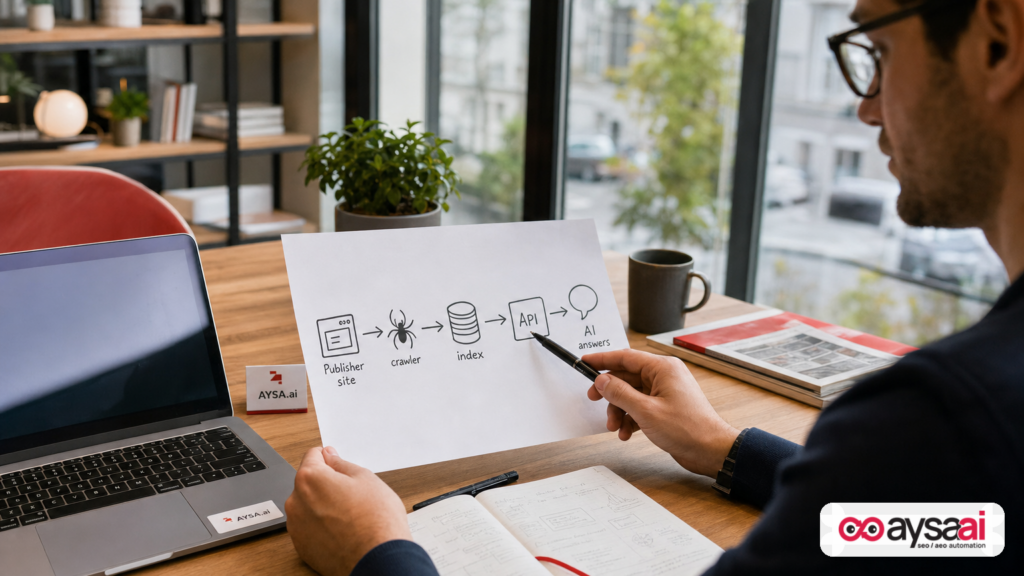
- What changed: The allegation isn’t just “scraping.” It’s commercializing publisher content via APIs and AI answers—turning content into a product layer that can replace the original source.
- Why it matters for SMEs: Even if you don’t run a newsroom, the same mechanics can reduce Clicks to your site, alter Attribution, and shift value from “visits” to “answers.”
- What can go wrong: Paywall bypass, ad removal/substitution, opaque crawlers, and answer experiences that satisfy intent without sending traffic.
- What to do: Treat AI visibility as a new surface area (AEO/GEO). Build content that is both answer-eligible and brand/offer-completing. Tighten technical controls, improve entity clarity, and measure AI referral & assisted conversions.
- Where AYSA fits: AYSA monitors what changes, prepares prioritized fixes, asks for approval, and executes accepted changes—so you can respond quickly without breaking your site.
Table of contents

- What happened (and what we can responsibly say)
- What changed: from “search engine” to “content broker”
- The uncomfortable truth: privacy-first for users can still be hostile to publishers
- Why this matters beyond publishers: SMEs are collateral damage (and sometimes beneficiaries)
- The real economic fight: who funds the web when answers replace clicks?
- The operational reality: you can’t “SEO” your way out of a rights dispute—so plan for volatility
- Risk map: 7 ways AI search can drain value from your content
- Visibility playbook: how to stay discoverable when the interface is an answer
- Measurement in 2026+: stop over-trusting last-click organic
- A concrete SME scenario: the local clinic that loses leads to “instant answers”
- What agencies should rethink right now
- The AYSA perspective: approved execution beats advice-only SEO
- An action plan you can run in 30 days (without a legal department)
- What to do next (checklist)
- Sources and further reading
What happened (and what we can responsibly say)

According to Search Engine Journal’s coverage, The New York Times filed a lawsuit alleging that Brave (the company behind Brave Browser and Brave Search) engaged in unauthorized copying and monetization of Times content, including paywalled journalism, and that it sold access to scraped publisher content to AI companies via a Search API. The report also describes allegations that Brave’s AI chat features generate answers that can substitute for visiting publishers’ sites, and that Brave’s browser functionality can enable paywall circumvention.
Important
Continue the AI search topic inside AYSA.
Use these pages to connect the article with AI SEO tools, AI visibility monitoring, AI Overviews and approved website execution.
Turn this topic into a website action plan.
Use these AYSA hubs to move from reading to technical fixes, AI visibility monitoring, research, glossary context and approval-first SEO execution.