Search Central Live Returns to Brazil & Argentina: Why SMEs Should Treat It Like a 2026 Search Operating System Upgrade
Google is bringing Search Central Live back to São Paulo and Buenos Aires in 2026. That’s more than an event announcement—it’s a signal to treat Search fundamentals, technical hygiene, and AI-era visibility as operational work, not an annual SEO project. Here’s the business playbook for SMEs and agencies, plus how AYSA turns guidance into approved execution.

Google Search Central just announced that Search Central Live is returning to South America, with events planned for So Paulo (Brazil) and Buenos Aires (Argentina) in 2026. If youre a business owner, marketer, or agency lead in the regionor if you serve customers theredon t treat this like a calendar note. Treat it like a signal.
Search isn t a single channel anymore. It s an ecosystem: classic results, Rich results, Discover surfaces, image search, shopping integrations, and increasingly AI-driven experiences that synthesize answers. But the foundation is still the same: can Google understand your pages, trust them, and surface them in ways that match user intent? That s why Search Central Live matters: it s where Google s Search team leans in to help the market raise its technical and strategic baseline.
My perspective (Marius Dosinescu, AYSA.ai): the winners in 2026 won t be the teams with the most SEO knowledge. They ll be the teams with the best execution systemthe ability to monitor, decide, approve, and ship improvements continuously. That s exactly what we re building with AYSA: an Approved Execution system for SEO/AEO/GEO that monitors your site, prepares changes, asks for your approval, and executes what you accept.
Concise summary
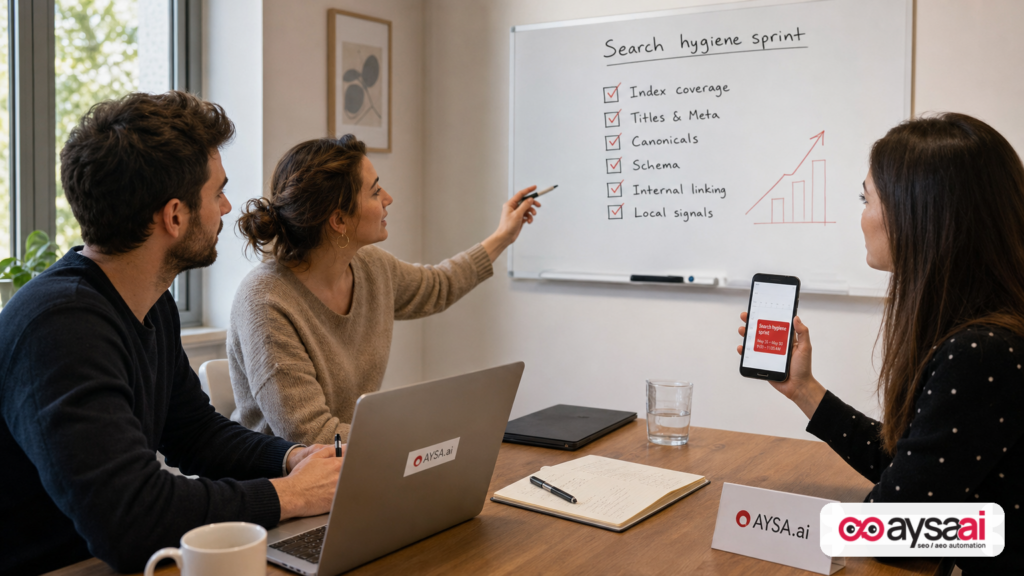
Search Central Live returning to Brazil and Argentina in 2026 is a practical reminder that:
- Search fundamentals still decide outcomes (Crawlability, indexability, Canonicalization, Structured data, helpful content).
- AI-era visibility is built on the same base: if your site is messy, AI experiences will misread or ignore you.
- SMEs need an operating cadence for Search improvementsnot one-off SEO projects.
- Agencies need to productize execution, not just audits and decks.
Key takeaways (read this if you re busy)

- If you can t explain your site s crawl and index status, you don t have an SEO strategyyou have hope.
- Search Console is not optional. It s the closest thing you get to a direct relationship with Google Search for your site. Start here: Google Search Central and documentation.
- Technical hygiene pays compounding dividends: sitemaps, robots rules, canonical cleanup, redirects, JavaScript rendering, and snippet-quality fundamentals.
- AI optimization isn t magic. It s clarity: structured, consistent, verifiable content with clean architecture. Use Google s starting point: Optimizing for generative AI search.
- Execution is the bottleneck. AYSA is designed to remove it: monitoring > prepare changes > approve > execute.
Table of contents
- The signal hidden inside Search Central Live is coming back
- What s changed in search (and what hasn t)
- What to expect in 2026: less SEO tips, more operational maturity
- Get support, resources, tools: the real stack behind the event
- The SME smell test: are you actually ready for modern Search?
- Technical SEO foundation: crawl, index, canonicalize, render
- Search appearance basics that still move the needle
- AI-era visibility (AEO/GEO): what businesses should do without guessing
- Local and international realities for South America (and anyone selling into it)
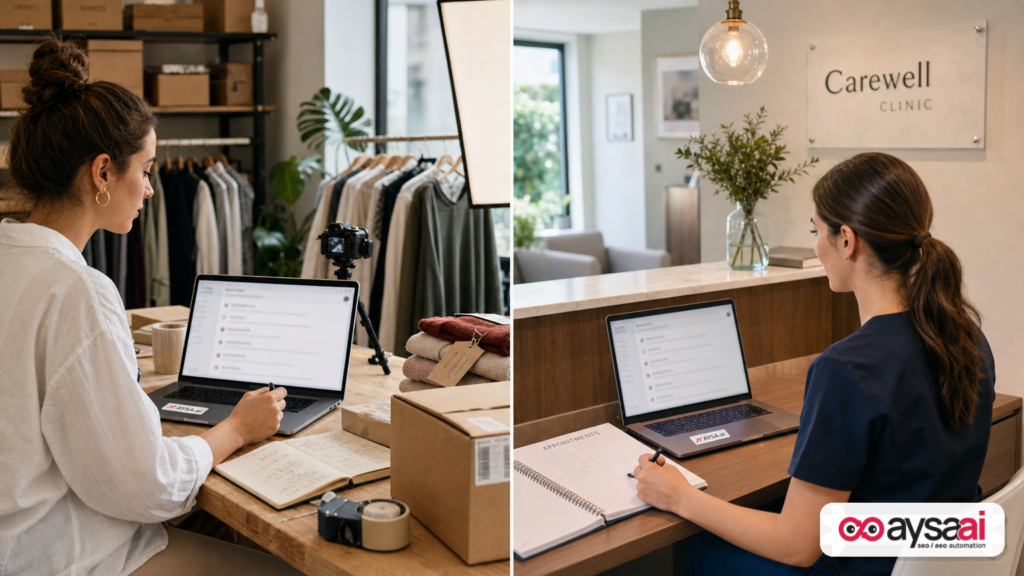
- The SME scenario: a So Paulo ecommerce brand and a Buenos Aires clinic
- What agencies should rethink before 2026
- How AYSA turns guidance into approved execution1d
- A 30/60/90-day action plan (practical, not aspirational)
- What to do next
- Sources and further reading
The signal hidden inside Search Central Live is coming back
Google doesn t host in-person Search events everywhere, every year, for fun. When Search Central Live returns to a region, it usually reflects three realities:
- The market has momentum: more businesses are competing online, and organic visibility is becoming a core growth lever.
- The implementation gap is wide: plenty of people know what they should do, but few teams can ship improvements consistently.
- Search complexity is increasing: new surfaces, new formats, and new AI-driven behaviors make it easier to fall behind if you re not operating with discipline.
So, yes, it s an event announcement. But it s also a nudge: raise your baseline. If you re still doing SEO as audit once, then rewrite some pages, you re not behindyou re playing a different game.
What s changed in search (and what hasn t)
Let s strip away the noise.
What changed
- Search experiences are more diversified. Google can show classic blue links, images, videos, local packs, product units, and a growing set of AI experiences.
- User expectations are higher. People expect immediate answers, clear comparisons, and reassurance (policies, trust signals, reviews, clear pricing).
- Measurement needs to be tighter. When surfaces fragment, you can t rely on one top keyword ranking report to tell you how the business is doing.
What didn t change (this is the part businesses ignore)
- If Google can t crawl a page, it can t rank it.
- If Google indexes the wrong URL version, you leak authority and confuse relevance.
- If your content doesn t answer the query, you don t deserve the click.
- If your site s structure is chaotic, AI-era systems will have less reliable signals to synthesize from.
Google s own documentation remains the best public grounding for these fundamentals. If you haven t reviewed it in a while, start with Search Essentials and the SEO Starter Guide.
What to expect in 2026: less SEO tips, more operational maturity
Most SMBs show up to SEO education looking for tactics. What they usually need is a management system. That s the mindset shift I d expect the best teams to bring into 2026.
Operational maturity in Search looks like this:
- Defined ownership: someone owns crawling/indexing health, someone owns content quality, someone owns releases.
- Release hygiene: no redesign or platform migration without an SEO checklist and rollback plan.
- Monitoring with thresholds: you don t check Search Console sometimesyou watch for anomalies and act.
- Change management: updates are proposed, reviewed, approved, executed, and tracked.
This is where SMEs typically fail: they either do nothing, or they do too much without controls (random plugins, random advice, random AI content). Both paths create risk.
Get support, resources, tools: the real stack behind the event
The source announcement page is wrapped in Search Central navigation that points to the real point: Google is building a learning and support ecosystem, not just a conference stop.
Get support
When your traffic drops or pages don t index, you need to troubleshoot systematically. Google has specific guidance for understanding how Search works and where issues occur. Start here:
- How Google Search Works (crawl, index, servethe mental model you need)
- Do you need an SEO? (helpful if you re deciding between DIY, hiring, or agency)
Resources
If you re managing a site, these are not reads00they00 re operating manuals:
Tools
Tooling is where theory meets reality. If you can only pick a few concepts to operationalize, make them these:
- Sitemaps: Sitemaps overview
- robots.txt: robots.txt intro
- Meta tags: Meta tags and controls
- Canonicalization: Consolidate duplicate URLs
- Redirects: 301 redirects
- JavaScript SEO basics: JavaScript SEO
- Requesting recrawls / crawler management: Crawler management / recrawl
- Removals: Control what you share / removals
Notice what s missing: 10 new hacks. That s the point. The playbook is stable. The operational rigor is not.
The SME smell test: are you actually ready for modern Search?
If you re an owner or GM and you want to know whether your team s Search work is real, ask these questions. If you don t get clear answers, you don t have a system.
- Do we know how many pages are indexed vs. not indexed? And do we know why?
- Do we have one preferred URL per page? (Or do we have duplicates: HTTP/HTTPS, www/non-www, trailing slash variants, faceted parameters?)
- Can Google access our important pages? Or are we accidentally blocking them via robots rules or auth walls?
- Do we have structured data where it matters? (Product, organization info, FAQs where appropriate, etc.)
- When we publish something new, do we see it discovered and indexed predictably?
- If traffic drops 20% next week, do we have an incident process?
These aren t SEO nerd questions. They re revenue protection questions.
Technical SEO foundation: crawl, index, canonicalize, render
This is the boring part that makes (or breaks) everything else. If you re a small business, you re tempted to skip it because it feels like infrastructure. But Search performance is infrastructure.
1) Crawlability: can bots reach your important URLs?
Start with robots guidance: robots.txt is powerful and easy to misuse. Common SME mistakes include:
- Blocking entire directories that contain product or service pages.
- Allowing faceted navigation to spawn infinite crawlable URL combinations.
- Blocking parameter URLs inconsistently, leading to duplicate indexing.
Operational rule: treat robots changes like production changes. Log them. Review them. Monitor impact.
2) Sitemaps: are you helping discovery or just dumping URLs?
A sitemap is not a magic indexing button. It s a discovery assist. Google s guidance on sitemaps is straightforwardand many sites still get it wrong by including non-canonical URLs, redirects, 404s, or low-value pages.
SME takeaway: your sitemap should be a curated list of pages you re proud of and want indexed.
3) Canonicalization: are you consolidating authority or leaking it?
If your site can be accessed with multiple URLs for the same content, you re splitting signals. Google s canonicalization guidance exists for a reason: consolidate duplicate URLs.
Common duplication patterns for SMEs:
- Ecommerce filter pages creating new indexable URLs.
- UTM-tagged marketing URLs getting indexed.
- Printer-friendly versions and session IDs.
- Localization variants without a clear preferred structure.
4) Redirects: do you preserve equity when URLs change?
Redesigns, migrations, and category cleanups are normal. Losing traffic because you didn t handle redirects is optional. Use Google s 301 redirects guidance as a baseline.
Operational rule: every removed URL should have a deliberate destination (or a deliberate removal strategy). No guesswork.
5) JavaScript: can Search interpret what users see?
Modern sites often render critical content via JavaScript. That s not inherently badbut it can create indexing delays or failures if your content isn t reliably rendered for crawlers. Start with JavaScript SEO basics.
SME reality: many teams don t need complex frameworks. But if you use them, you need operational checks: ensure key content and internal links are accessible, not buried behind client-side state.
6) Meta controls and removals: do you control what s public?
Sometimes you need to prevent indexing (staging sites, internal search pages, thin filter pages). Use proper meta controls: meta tags. When you need to remove or manage sensitive exposures, use official guidance: control what you share / removals.
Business framing: this is about brand and legal risk as much as rankings.
Search appearance basics that still move the needle
It s easy to overthink Search appearance and ignore basics. But basics still dominate CTR.
Title links: your first impression at scale
Many SMEs still write titles like internal file names or keyword lists. That s not a strategy; it s negligence. Google s documentation on title links is a good reference point.
Practical rule:
- Make the title understandable to humans.
- Align it with the page s true purpose.
- Differentiate pages that are currently competing with each other.
Snippets: if you don t control the summary, you don t control the click
Google may generate snippets based on page content. The best way to influence snippets is to write content that answers the query cleanly and uses descriptive headings. Reference: snippets.
Images: not just decoration, but discoverability
If you sell products, show services, or depend on visual trust, image optimization matters. See: Google Images and the Visual Elements gallery for understanding how results can appear.
SME rule: your images should be original where possible, properly described, and embedded in context that clarifies what they represent.
AI-era visibility (AEO/GEO): what businesses should do without guessing
In 2026, most businesses will be tempted to chase AI optimization as if it s a new cheat code. Don t. The durable strategy is clarity, credibility, and structure.
Google has published a starting resource specifically for this topic: Optimizing for generative AI search. We won t pretend to know every future ranking signal, but we can operate on what s consistently true across systems: machines prefer content that is unambiguous and verifiable.
AEO/GEO actions that are safe and practical
- Make entity facts consistent: business name, address, phone, service areas, pricing ranges where appropriate, policies, and credentials.
- Write answer-first1d sections: add short, direct answers near the top, then expand with detail, proof, and examples.
- Build content clusters around decisions: Which option is right for me?1d What does it cost?1d What can go wrong?1d This isn t fluff; it s buyer enablement.
- Use structured data where appropriate (without spam). It s a communication layer.
- Make internal linking intentional: connect related pages so both users and systems understand hierarchy and relationships.
What to avoid (this is where businesses burn money)
- Publishing generic AI-written pages with no unique experience, no specificity, no proof, and no differentiation.
- Stuffing structured data to trick1d rich results.
- Copying competitor templates until your entire category looks identicalwhich makes you easier to ignore.
AYSA position: AI can help you execute faster, but your brand still needs a truth layerreal policies, real products, real experience, and a site architecture that reflects it.
Local and international realities for South America (and anyone selling into it)
Search Central Live returning to So Paulo and Buenos Aires matters because local market realities impact technical and content decisions. Even if you re not based in South America, you might ship there, serve tourists, or target Spanish/Portuguese speakers globally.
Language: Spanish and Portuguese aren t nice to have1d
Many SMEs attempt a single English site and hope it works everywhere. If your revenue depends on local buyers, language is not a brand choice; it s a conversion requirement. The technical SEO layer has to support whatever language strategy you choose (site structure, URL paths, consistent metadata, and avoiding duplicate or thin translations).
We re not adding extra sources beyond the provided research context, but Google s Search Central documentation contains extensive guidance for international and multilingual sites within its navigation ecosystem. If this is your situation, validate your approach against Search Central docs before you scale content.
Trust signals: in competitive markets, reassurance wins clicks
For ecommerce, travel, clinics, and local services, trust1d is not a feelingit s information architecture:
- Clear returns, shipping, and warranty policies.
- Transparent pricing or quoting process.
- Service coverage areas and business hours.
- Credentials, licensing, and responsible claims.
Even when you re not thinking about rankings, these elements improve on-page behaviorwhich tends to improve overall performance over time.
The SME scenario: a So Paulo ecommerce brand and a Buenos Aires clinic
Let s get concrete with two scenarios that match real-world constraints: limited headcount, limited engineering time, and a need for predictable outcomes.
Scenario 1: So Paulo ecommerce brand (category sprawl + duplicate URLs)
You run a small ecommerce operation. Over time, you ve added filters, collections, and seasonal landing pages. Traffic is fine1duntil it isn t. You discover:
- Google is indexing thousands of low-value filter URLs.
- Your sitemap includes parameterized URLs and redirects.
- Canonical tags are inconsistent, and internal links point to multiple URL variants.
What to do:
- Pick your canonical structure (one URL per product/category).
- Fix sitemaps to list only canonical, index-worthy pages (sitemaps).
- Control crawl space using robots rules carefully (robots.txt) and meta directives where appropriate (meta tags).
- Consolidate duplicates (canonicalization) and redirect retired URLs (redirects).
What can go wrong: block the wrong directory and you tank revenue pages. That s why you need controlled execution and monitoring, not random edits.
Scenario 2: Buenos Aires clinic (thin service pages + unclear expertise)
You operate a clinic. You have service pages, but they read like brochures. Patients search for symptoms, procedures, and risks. Your pages don t answer those questions clearly. You also have multiple near-duplicate pages because different staff created them over the years.
What to do:
- Rewrite service pages for real questions: who it s for, who it s not for, what the process is, preparation, aftercare, risks, and when to contact a professional.
- Consolidate duplicates so each service has one authoritative page (canonicalization guidance).
- Improve titles/snippets so they set expectations (title links, snippets).
What can go wrong: over-optimizing language or making claims you can t substantiate. In regulated or sensitive categories, credibility and accuracy are non-negotiable.
What agencies should rethink before 2026
If you run an agency, Search Central Live returning to the region should be a warning label: client expectations are rising, and generic SEO deliverables are aging out.
Audits without implementation are losing power
Audit decks don t move rankings. Changes do. If your service ends at recommendations, your clients will increasingly view SEO as expensive uncertainty.
Agencies that win in 2026 will productize execution:
- Recurring technical hygiene releases (sitemaps, canonicals, redirects).
- Content operations with editorial standards and structured templates.
- Search appearance optimization (titles, snippets, media).
- Measurement and incident response.
AI search doesn t remove the need for SEOit removes the tolerance for sloppiness
AI experiences heighten the value of clean, structured, consistent information. If your client s site is riddled with duplicates, inconsistent naming, missing policies, or thin content, it s harder for any system to represent them accurately.
Point of view: the future of SEO services is less about cleverness and more about governance. That s not sexy, but it s bankable.
How AYSA turns guidance into approved execution1d
Here s the practical issue we see over and over: businesses read Google documentation, attend events, and even hire helpthen nothing ships. Or worse, changes ship with no control and break something important.
AYSA exists to close that gap as an execution system:
- Monitor: continuously watch your site and visibility signals (what changed?). See AYSA Monitoring.
- Prepare: generate prioritized recommendations and change sets (technical + content) based on goals.
- Ask for approval: you review what will change and why (no black-box pushes).
- Execute: implement accepted changes reliably and log them for accountability.
This model is especially relevant for:
SMEs who can t staff a full SEO function, and agencies that need scalable, controlled implementation across many sites.
If you want the bigger picture on AI-era visibility, start here: AYSA AI Search Visibility. If you want to understand the toolset, see: AYSA AI SEO Tools. And if you re evaluating fit and cost, go to pricing.
A 30/60/90-day action plan (practical, not aspirational)
If Search Central Live is your inspiration moment, this is how you convert it into outcomes.
Days 0141430: establish baselines and stop obvious leaks
- Inventory your index footprint: what should be indexed vs. what is indexed.
- Fix sitemap hygiene: remove redirects, duplicates, and low-value URLs. Reference: Sitemaps.
- Review robots rules for accidental blocks. Reference: robots.txt.
- Pick canonical rules and apply consistently. Reference: Canonicalization.
- Title and snippet triage for top pages. Reference: Title links, Snippets.
Days 31141460: build repeatable content and internal linking structure
- Define 5141410 priority topics that map to revenue-driving services/products and customer questions.
- Consolidate duplicates and redirect retired pages correctly. Reference: Redirects.
- Build internal links intentionally: top pages link to supporting pages and vice versa.
- Establish content QA: accuracy, claims, freshness, and differentiation.
Days 61141490: optimize for AI-era clarity and measurement discipline
- Add answer-first sections to priority pages and improve structured clarity.
- Document your entity facts (brand, locations, policies) and keep them consistent.
- Create an incident playbook for traffic drops: what to check first, who s responsible, what changes occurred.
- Operationalize ongoing improvements using a monitoring + approval + execution loop (this is where AYSA is designed to fit).
If you need a steady stream of practical strategy pieces like this, bookmark the AYSA blog.
What to do next
- Read Google s announcement and share it internally as a trigger for your next Search sprint: Search Central Live is coming back to South America.
- Assign one owner for crawl/index health (even if it s part-time).
- Run the smell test section above and list gaps in plain language.
- Implement the 30-day fixes (sitemaps, robots, canonicalization, redirects, title/snippet triage).
- Set up an execution workflow so changes don t get stuck in Jira forever.
- Evaluate AYSA if your main bottleneck is shipping improvements safely:
AI SEO tools,
monitoring,
pricing.
Sources and further reading
- Google Search Central Blog: Search Central Live is coming back to South America
- Google Search Central
- Google Search Central Documentation
- Search Essentials
- SEO Starter Guide
- How Google Search Works
- Optimizing for generative AI search
- Sitemaps
- robots.txt
- Canonicalization: consolidate duplicate URLs
- 301 redirects
- JavaScript SEO basics
- Title links
- Snippets
- Google Images SEO
- Visual Elements gallery
Disclosure: AYSA.ai is an SEO/AEO/GEO execution system. The goal of this editorial is to help SMEs and agencies operationalize Google s published guidance rather than chase shortcuts.
Continue the AI search topic inside AYSA.
Use these pages to connect the article with AI SEO tools, AI visibility monitoring, AI Overviews and approved website execution.
Turn this topic into a website action plan.
Use these AYSA hubs to move from reading to technical fixes, AI visibility monitoring, research, glossary context and approval-first SEO execution.