Summergeist 2026 and the New Search Reality: How Seasonal Trends Rewrite Your SEO Playbook (and How to Execute Fast)
Google’s Summergeist 2026 shows a clear signal: search behavior is getting more seasonal, more intent-rich, and more “maxxed.” For SMEs, the winners won’t be the loudest brands—they’ll be the fastest executors with pages that match real summer questions, products, and local demand.

By Marius Dosinescu / AYSA.ai
Every summer, marketers talk about “seasonality” like it’s a weather report: interesting, inevitable, and mostly outside your control. But Google’s new Summergeist 2026 trend report is a louder signal than a simple list of vibes. It’s evidence that search demand is reorganizing itself around micro-seasons, new language, and intent-rich questions—and that businesses that can ship website changes quickly will win disproportionate share.
Google describes Summergeist as a new seasonal report built on U.S. Google Trends data, capturing what people are searching for across food, fashion, entertainment, and travel this summer. You can read the source here: Google Search Blog — “What’s trending on Google this summer”.
This editorial isn’t about copying trend lists into your blog. It’s about treating seasonal search data like a practical demand forecast, then building an execution system that turns that forecast into traffic, revenue, and customer trust—without publishing fluff or making risky claims.
Concise summary (read this first)

- Summergeist 2026 points to an important shift: people aren’t just searching for products; they’re searching for optimized outcomes (the “maxxing” pattern), how-to’s, and very specific seasonal variants (recipes, colors, styles, sub-genres, destinations).
- This matters because AI-driven search experiences reward clarity and intent-match, not just Keyword presence. If your pages aren’t structured to answer the real question behind the trend, you’ll lose visibility even if you “cover the topic.”
- Seasonal SEO is now an execution game: the businesses that update category pages, FAQs, internal links, merchandising modules, and local pages faster will win.
- AYSA fits here as an Approved Execution system: monitor what’s changing, prepare recommended site changes, ask for your approval, then execute accepted updates—so trend response doesn’t stall in backlog. See Monitoring and AI search visibility.
Table of contents

- What Summergeist 2026 really means for businesses
- The signal in Summergeist: trends are no longer fluff—they’re demand forecasts
- The AI search layer: why seasonal intent is amplified (AEO/GEO reality)
- “Maxxing” as a content pattern: how language shifts create new keyword universes
- What categories Summergeist highlights—and how to translate them into pages that rank
- Practical SME scenario: an ecommerce snack brand riding “fibermaxxing” without making health claims
- Local and travel intent: vacation reads, destinations, and “near me” seasonality
- What content works now: page types, templates, and internal linking patterns
- What can go wrong: trend-chasing, thin pages, and compliance mistakes
- What SMEs should monitor weekly (not quarterly)
- The execution gap: why “knowing the trend” is useless without shipping changes
- A practical 30-day action plan for seasonal search wins
- Where AYSA fits: approved execution for SEO/AEO/GEO at seasonal speed
- What to do next
- Sources and further reading
What Summergeist 2026 really means for businesses
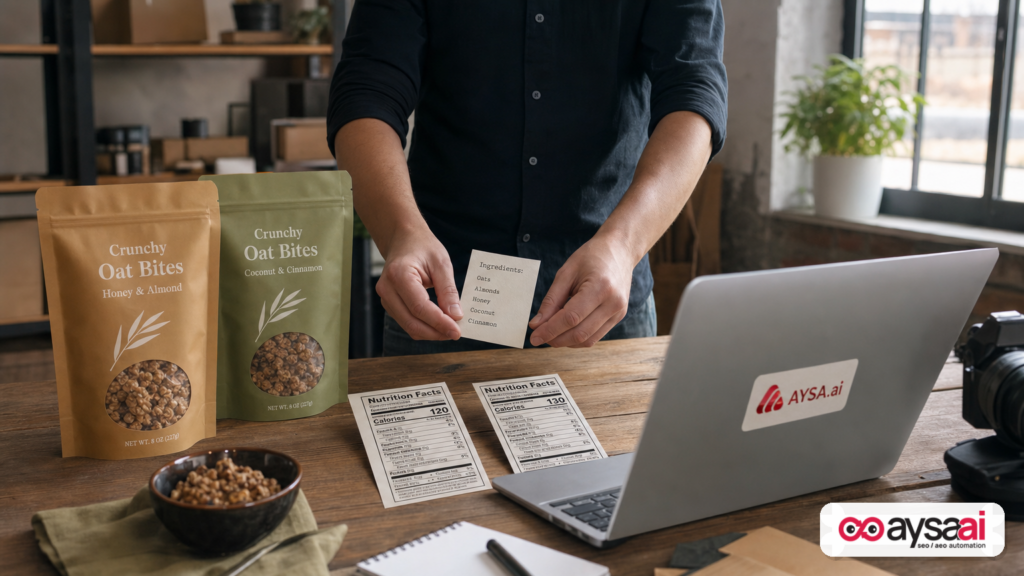
Google’s Summergeist framing matters because it’s not just “these things are popular.” It’s a public reminder that Google Trends is essentially a live feed of intent—what people are curious about, trying to buy, trying to do, trying to fix, or trying to experience.
From the Google Search Blog post, several specific patterns show up:
- Language patterns are shifting: Google calls it “the summer of maxxing,” with searches for “maxxing” and related queries rising.
- Food and wellness trends get more specific: fiber searches hitting an all-time high (per Google’s report), “fibermaxxing,” and highly specific drink recipes like “how to make a hugo spritz at home.”
- Style is in the details: not “sunglasses,” but “yellow lens sunglasses,” not “shoes,” but “jelly slides,” “square toe flip flops,” “wedge flip flops.”
- Entertainment is niche-first: “summerween movies” and “slasher” as a top related sub-genre.
- Travel intent is packaged with content intent: “books to read on vacation” with Italy trending as a destination modifier.
Each of these has an SEO lesson: demand isn’t only seasonal; it’s combinatorial. People search in “bundles”—a product plus a color, a recipe plus a at-home constraint, a genre plus a seasonal theme, a reading list plus a destination. That creates countless long-tail opportunities, but only if your site is structured to catch them.
The signal in Summergeist: trends are no longer fluff—they’re demand forecasts
For years, many businesses treated Google Trends as something PR teams use to justify content calendars. That’s outdated. If you’re an SME, trend data is closer to:
- Inventory planning (what product variants might spike next month)
- Merchandising (what to feature on category pages and homepages)
- Content planning (what questions people will ask right before they buy)
- Customer support prevention (what to explain before returns/refunds happen)
- Local service scheduling (what services spike seasonally and how to staff)
Summergeist is also a reminder that Google is comfortable saying: “Here’s what we see in search data.” That’s not a ranking manual, but it is a behavioral map. If you sell anything touched by seasonality—food, beverages, apparel, events, travel, wellness, home goods—then this map should influence what you publish and what you update.
What changed? The volume of seasonal “micro-intents” is increasing: people want the exact variant that matches their current aesthetic, diet, party plan, or trip itinerary. Seasonal search is becoming more “shoppable,” but also more “instructional.” That means you need both commercial pages and supporting explanatory content that connects directly to the commercial page.
The AI search layer: why seasonal intent is amplified (AEO/GEO reality)
Even though Google’s Summergeist post is about Trends, the bigger context is the ongoing evolution of search experiences. Search results pages increasingly try to satisfy intent faster—sometimes by summarizing, sometimes by suggesting next steps, sometimes by emphasizing certain sources.
For businesses, that changes the job:
- Classic SEO was often “rank for keyword X.”
- Modern SEO for AI-shaped search is “be the source for question Y, with clear evidence, structure, and relevance.”
This is why AEO (Answer Engine Optimization) and GEO (Generative Engine Optimization) are not buzzwords in practice—they’re constraints. Your pages need to be extractable: easy to interpret, clearly scoped, and trustworthy.
If your competitor publishes a “Hugo spritz at home” page that includes a clear ingredient list, step-by-step instructions, substitutions, and a short FAQ, while your site has a vague cocktail round-up with no structure, AI-driven experiences are more likely to lift the structured page as the “answer.”
AYSA’s approach to this problem is executional: you monitor visibility shifts and coverage gaps, prepare changes that improve extractability and intent-match, then ship them with approval. Learn more about the positioning here: AI Search Visibility.
“Maxxing” as a content pattern: how language shifts create new keyword universes
Google calls out “maxxing” explicitly—an umbrella pattern where people search for optimized outcomes (looksmaxxing, fibermaxxing, etc.). Whether you love the term or not, it’s a linguistic container that spawns infinite query variations.
Why this matters: language containers are how new keyword universes are born. When a term becomes a suffix/prefix people attach to goals, your SEO strategy needs to recognize it as a taxonomy opportunity.
How to turn “maxxing” into a safe, durable content strategy
- Don’t chase slang with cringe copy. You can address the concept in a professional tone: “increasing fiber intake” or “high-fiber meal planning” while still capturing the intent.
- Create a hub page that defines your stance. Example: “High-Fiber Summer Snacks: A Practical Guide” that naturally captures the “fibermaxxing” intent without overusing slang.
- Build a cluster of supporting pages. FAQs, ingredient explainers, “how to choose,” “how much is too much,” storage tips, and recipes—each linked to relevant products/services.
- Use internal links like a map. Hub → supporting articles → product/category pages. Also link laterally between supporting pages when user questions overlap.
Most SMEs fail here by doing the opposite: they publish one blog post and never connect it to the money pages. The result is “content that gets Impressions, but not outcomes.”
What categories Summergeist highlights—and how to translate them into pages that rank
Let’s translate Summergeist’s themes into practical page opportunities. I’ll keep the examples business-oriented and safe (no invented statistics, no “guaranteed ranking” claims).
1) Summer bites: fiber and “better-for-you” demand
Google’s report notes rising interest in fiber and “fibermaxxing.” If you sell packaged foods, supplements, meal plans, dietitian services, or even kitchen tools, there’s a clear play:
- Create a seasonal landing page (not just a blog): “High-Fiber Summer Snacks” or “Fiber-Friendly Picnic Ideas.”
- Add an FAQ section with neutral phrasing and citations where appropriate (avoid medical claims; encourage professional advice when needed).
- Merchandise product bundles that match the use case (road trip, beach day, post-workout).
- Update existing category pages with summer variants and internal links to the seasonal hub.
2) Summer sips: recipes and at-home intent
Google points out seasonal spikes in spritz-related queries and a sharp rise in “how to make a hugo spritz at home.” If you’re a retailer, bar, restaurant, alcohol brand, or even a hospitality property, this is a content + conversion combo:
- Recipe page template with ingredients, steps, variations, and a short “what to pair with it” section.
- Local tie-in for bars/restaurants: “Hugo spritz near me” style pages are risky if spammy, but event pages, menu pages, and location pages can naturally capture intent.
- Retail tie-in: “Shop the ingredients” modules and substitutions.
3) Summer sweets: black sesame and dessert variations
Google says people are searching for “black sesame” more than ever and specifically for desserts; it also notes increased interest in frozen yogurt in NYC. The SEO move is not “black sesame is trending.” The move is to create pages that meet specific dessert intents:
- “Black sesame ice cream recipe”
- “Black sesame dessert ideas”
- “Where to buy black sesame paste”
- For local: “Frozen yogurt in [neighborhood]” (only if you’re a real local business with a real location and differentiation)
4) Summer fashion: slides, flip flops, and color modifiers
Google’s trend notes highlight “jelly slides” and the rise of flip flop variants like square toe and wedge. This is a pure ecommerce information architecture problem:
- Create/optimize subcategories for “jelly slides,” “square toe flip flops,” “wedge flip flops.”
- Add filterable attributes that align with how people search: toe shape, heel type, material, color.
- Publish buying guides that reduce returns: sizing, comfort, durability, beach vs city wear.
5) Summer yellows: butter yellow nails, yellow lens sunglasses
These are classic modifier opportunities: color + product + occasion. If you’re in beauty, accessories, or retail:
- Create a “Butter Yellow” collection page that includes multiple product types (if you sell them), not just one SKU.
- Write a short explainer on “how to style butter yellow” or “what outfits pair with yellow lens sunglasses.”
- Use onsite search insights to see which modifiers your customers type (often earlier than Google keyword tools will show you).
6) Entertainment: “summerween” and niche genre terms
If you’re a publisher, streaming guide site, local theater, cinema, or event organizer, “summerween” is a programming signal: create curated lists and event pages that match the theme.
Important: don’t create thin “Top 10 summerween movies” pages that add no value. If you do this, add:
- Clear selection criteria
- Where to watch (if relevant and accurate)
- Age ratings / content notes (useful, non-sensational)
- Internal links to related themes (slashers, camp horror, etc.)
7) Summer reads + travel: content bundles
Google notes increased interest in “books to read on vacation,” with Italy as a top destination modifier. This is a reminder that “content intent” and “destination intent” merge in the same query.
Hotels, travel businesses, and publishers can respond with:
- “Books to read on vacation in Italy (and where to read them)” style editorial
- Hotel blog posts that are actually helpful: best reading spots, quiet hours, local bookstores
- Local SEO pages that reflect real amenities: reading nooks, poolside service, book exchanges
Practical SME scenario: an ecommerce snack brand riding “fibermaxxing” without making health claims
Let’s make this real.
Business: a DTC ecommerce snack brand selling granola, bars, and trail mixes.
Constraint: they want to capture summer demand around fiber without drifting into medical claims or implying outcomes they can’t substantiate.
The wrong approach (common)
- Publish a quick blog post titled “Fibermaxxing: The Summer Trend You Need”
- Stuff it with broad claims and generic advice
- Forget to link to product collections
- No FAQ, no comparisons, no guidance on choosing products
The better approach (what I’d recommend)
Step 1: Create a seasonal hub page
- Title: “High-Fiber Summer Snack Ideas (Simple, Packable, Travel-Friendly)”
- Content blocks: “for beach days,” “for road trips,” “for office AC days,” “for post-gym”
- Each block links to a curated product set (collection page or filtered category)
Step 2: Build two supporting pages that answer the real questions
- “How to read a nutrition label for fiber” (educational, no promises)
- “High-fiber snacks for travel: what packs well” (practical, return-reducing)
Step 3: Add FAQ modules to money pages
- Shipping heat considerations
- Storage tips
- Ingredient transparency
- Who it may not be for (as appropriate; encourage professional guidance)
Step 4: Tighten internal linking
- Homepage → seasonal hub (temporary module)
- Seasonal hub → collections
- Collections → supporting guides (“Need help choosing?”)
Step 5: Monitor query drift weekly
As the summer progresses, the same intent might drift into different phrasing: “high fiber snacks,” “fiber snacks for beach,” “road trip snacks,” etc. Your monitoring needs to pick this up early and adjust titles, headings, and FAQ copy accordingly.
This is exactly where an execution system matters: you shouldn’t need a monthly SEO meeting to swap a heading or add a missing FAQ.
Local and travel intent: vacation reads, destinations, and “near me” seasonality
Even though Summergeist is U.S.-wide trend data, local businesses feel these changes sharply because seasonal demand is concentrated in time and geography.
Hotels and hospitality
- Create summer landing pages with real offers and real amenities (pool, beach access, family rooms, quiet workspace).
- Publish itineraries that match current intent (“3-day summer itinerary,” “rainy day itinerary,” “heatwave itinerary”).
- Make sure your location pages are complete: parking, check-in times, policies, and seasonal FAQs.
Restaurants and bars
- Menu pages should be indexable, structured, and updated with seasonal items.
- Add FAQ content for summer needs: patio seating, reservations, large parties, allergens.
- Create event pages for themed nights (e.g., “summerween screening + cocktails”) only if you truly host them.
Retailers (local + ecommerce hybrid)
- Use “available in-store” structured messaging (without spamming) via store pages and inventory highlights.
- Create summer “collections” that mirror real searches: colors, materials, specific use cases.
Local SEO isn’t just your Google Business Profile (though it matters). It’s also the completeness and usefulness of your local landing pages—especially in a world where people ask AI-shaped search experiences “where should I go?” and “what should I do?” rather than only typing “near me.”
What content works now: page types, templates, and internal linking patterns
If you want a practical takeaway from Summergeist, it’s this: seasonal wins come from choosing the right page type for the intent.
Use these page types deliberately
- Seasonal hub pages: durable, updated annually (e.g., “Summer Cocktails Guide,” “Summer Sandals”).
- Collection/category pages: where ecommerce conversion happens; should include helpful copy, FAQs, and filters aligned with search modifiers.
- How-to pages: recipe/instructions with clear steps and variations.
- Comparison/chooser pages: “best for X,” “X vs Y,” sizing guides, materials guides.
- Local landing pages: one per real location, with seasonal FAQs and real differentiators.
- Event pages: only when you actually host events; keep them updated and archived appropriately.
Internal linking: the underpriced advantage
Trend-chasing content fails when it sits alone. A seasonal content program should have a clear linking pattern:
- Hub → subtopics → commercial pages
- Commercial pages → “help me choose” guides
- Guides → FAQs and related guides
This is also where AI search visibility is won: when your site is internally consistent and semantically structured, it becomes easier for systems (and humans) to understand what you’re authoritative about.
If you want to build this with less manual overhead, this is the type of ongoing work AYSA is designed for: monitoring + proposed changes + approval + execution. Start here: AI SEO Tools.
What can go wrong: trend-chasing, thin pages, and compliance mistakes
Seasonal SEO is powerful—and also a great way to accidentally damage your site quality if you’re careless.
1) Publishing thin “trend” posts that add nothing
AI-assisted content makes it easy to publish fast. But if you publish a dozen near-identical “summer trend” posts that don’t offer unique value, you create index bloat and dilute authority.
Fix: publish fewer, better pages. Make them templates you can refresh every year. Tie them to products/services and actual user decisions.
2) Over-optimizing for slang
Not every audience uses “maxxing.” If you’re a clinic, a finance brand, or a B2B SaaS, forcing slang can hurt trust.
Fix: mirror intent, not necessarily phrasing. Use the professional equivalent while acknowledging common terms in a neutral way when appropriate.
3) Health, nutrition, and claim risk
Trends around diets and nutrition are especially risky. Even if Google Trends shows demand, you still have to be careful about claims.
Fix: focus on practical guidance, cite reputable sources when you have them, and avoid implying outcomes you can’t substantiate. If you need medical-level advice, involve qualified professionals and legal review.
4) Ignoring operational realities
Nothing is worse than ranking for a trend page that points users to out-of-stock products, outdated menus, or expired events.
Fix: connect SEO to ops. If you can’t stock it, don’t promote it. If you can stock it, feature it prominently with clear delivery timelines and alternatives.
What SMEs should monitor weekly (not quarterly)
If Summergeist tells us anything, it’s that micro-trends move fast. Quarterly SEO reviews are too slow for seasonal capture.
Your weekly monitoring checklist
- Search query shifts (what phrases are emerging around your categories)
- Page-level impressions vs clicks (where you’re visible but not compelling)
- Top converting pages (and whether they match current seasonal intent)
- Internal site search terms (often the earliest indicator of demand)
- Out-of-stock / out-of-service friction (high traffic to unavailable offers)
- Content decay (last year’s summer guide still ranking but now inaccurate)
AYSA is built around this cadence: monitoring that leads to proposed improvements you can approve and ship—without turning every update into a project.
The execution gap: why “knowing the trend” is useless without shipping changes
Most SEO teams aren’t failing at strategy. They’re failing at execution velocity.
Here’s the common pattern inside SMEs and even agencies:
- Someone sees a trend (on Google Trends, TikTok, competitor sites, or Summergeist).
- They add it to a content calendar or backlog.
- Two weeks later, someone drafts a post.
- Two more weeks for approvals.
- Dev can’t fit the template update until next sprint.
- The trend peak passes.
Seasonal SEO requires a different operating model: monitor → decide → ship → measure → refresh. Fast cycles beat perfect plans.
This is also why I’m opinionated about “SEO tools” that only produce audits or recommendations. Recommendations don’t rank; shipped changes rank. AYSA’s philosophy is to close that gap by making execution part of the system—with approval, so changes don’t go rogue. Learn more: AI SEO tools.
A practical 30-day action plan for seasonal search wins
Here’s a realistic plan an SME can run without hiring a 10-person SEO team. The goal is to build a repeatable “seasonal capture” machine, not a one-off summer campaign.
Days 1–3: Pick your seasonal battlefields
- List 3–5 seasonal themes that connect directly to revenue (products, services, bookings).
- Identify the modifiers customers use: color, destination, “at home,” “near me,” “best for,” “how to.”
- Decide which themes deserve a hub page vs a quick supporting article.
Days 4–10: Build or refresh your seasonal hubs
- Create/update one core hub page per theme.
- Add clear sections, tables where helpful, and short FAQs.
- Link to relevant products/services and local pages.
Days 11–18: Fix your commercial pages to match seasonal intent
- Create missing subcategories that match search modifiers (e.g., “jelly slides”).
- Add short copy blocks that clarify selection criteria.
- Add FAQs that prevent returns and support tickets.
Days 19–24: Publish supporting content that answers decision questions
- “How to choose” guides
- Recipe/how-to content (if relevant)
- Comparison pages
Days 25–30: Tighten internal links + measure + iterate
- Add internal links from high-authority pages (homepage, top categories) to seasonal hubs.
- Review query changes and adjust headings/titles where needed.
- Plan a weekly refresh cadence for the rest of the season.
If you want the system to run without living in spreadsheets, you need monitoring and execution tied together. That’s the operating model behind AYSA’s workflow (monitor, prepare, approve, execute). You can explore how it’s positioned here: AI search visibility, and see more resources on the AYSA blog.
Where AYSA fits: approved execution for SEO/AEO/GEO at seasonal speed
At AYSA.ai, we’re focused on the gap that most teams feel but rarely name: the space between “we know what to do” and “it’s live on the site.”
Summergeist-style seasonality makes that gap painful because:
- Trends move faster than quarterly roadmaps.
- Intent shifts require small but frequent updates (titles, FAQs, internal links, collections).
- AI-shaped search increases the reward for well-structured, clearly scoped content.
AYSA is positioned as an SEO/AEO/GEO execution system that:
- Monitors your site and visibility signals (see Monitoring).
- Prepares recommended website changes aligned to what’s happening now (not last quarter).
- Asks for approval so you stay in control (no black-box changes).
- Executes accepted changes so your site actually updates at the pace trends demand.
If you’re evaluating whether this fits your team, start by clarifying what’s currently slowing you down: strategy, content production, approvals, dev deployment, or measurement. Different bottlenecks need different workflows. AYSA’s pricing and packaging are here: AYSA Pricing.
What to do next
- Pick one Summergeist-adjacent seasonal theme that matches your revenue (food, fashion, travel, events, local services).
- Create or refresh a seasonal hub page that you can update annually (not a one-off post).
- Upgrade your commercial pages with the modifiers people actually search (variants, colors, styles, “at home”).
- Add a short FAQ section to reduce friction and improve extractability for AI-shaped results.
- Set a weekly monitoring cadence for query drift and page performance.
- Close the execution gap by assigning an owner and a ship-by date for every change (or use an approved execution workflow).
Sources and further reading
- Google Search Blog: “What’s trending on Google this summer” (Summergeist 2026)
- Google DeepMind blog (contextual research lead from the source page)
- Google Research blog (contextual research lead from the source page)
- Google Developers blog (contextual research lead from the source page)
- Google Cloud blog (contextual research lead from the source page)
- Google Ads & Commerce blog (contextual research lead from the source page)
- Waze blog (contextual research lead from the source page)
- Google Security blog (contextual research lead from the source page)
Related AYSA resources
Note: This editorial uses Summergeist as an intent signal and planning framework. When data points are attributed to Google (e.g., percentage spikes mentioned in the Summergeist post), they are treated as Google’s reporting rather than independently verified measurements.
Continue the AI search topic inside AYSA.
Use these pages to connect the article with AI SEO tools, AI visibility monitoring, AI Overviews and approved website execution.
Turn this topic into a website action plan.
Use these AYSA hubs to move from reading to technical fixes, AI visibility monitoring, research, glossary context and approval-first SEO execution.