Walmart Connect audiences in DV360: the retail media “walled garden” just got a side door (and your measurement plan needs to change)
Google is bringing Walmart Connect audiences and sales measurement into Display & Video 360, starting with YouTube. That sounds like a media-buying upgrade—but it’s really a signal that retail media is becoming the measurement backbone for brand advertising. Here’s what changed, why it matters for SMEs and agencies, what can break, and the exact action plan to capture value without losing control of incrementality and attribution.

Retail media has been trying to answer one stubborn question for more than a decade: Can we prove that advertising caused a real purchase? Not a click. Not a view-through. Not a “likely in-market” audience segment. A verified sale tied to a real shopper.
The newest move in that direction is the partnership that brings Walmart Connect audiences and sales measurement into Google Display & Video 360 (DV360), starting with YouTube campaigns. It was reported by Search Engine Land.
On the surface, this looks like a targeting integration: Walmart shopper segments become available in a familiar buying tool (DV360) so advertisers can reach Walmart shoppers on YouTube. But in practice, it’s bigger: it’s a sign that retail media networks are becoming the measurement backbone for broad-reach channels like video—precisely because they have purchase data that most brands and publishers can’t match.
As someone who cares about outcomes more than headlines, my take is simple: this changes your measurement plan as much as it changes your media plan. And it increases the premium on execution—landing pages, merchandising, feed hygiene, SEO/AEO discoverability, and operational readiness—because the gap between “created demand” and “captured demand” is where most budgets go to die.
Concise summary
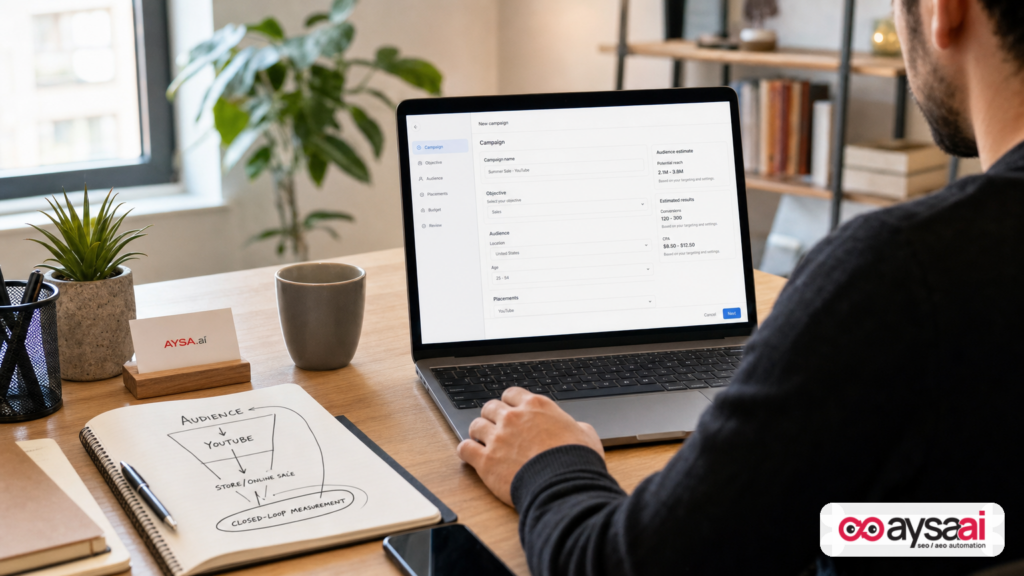
Google and Walmart are enabling advertisers to use Walmart Connect audience targeting and closed-loop sales measurement inside DV360, beginning with YouTube. That means you can potentially reach shoppers based on Walmart retail behavior and measure sales at Walmart after ad exposure—without leaving the DV360 workflow. The strategic implication is that retail purchase data is increasingly powering offsite media, and teams that treat this as “just another audience segment” will mis-measure impact, over-credit last-touch, and under-invest in onsite execution.
Key takeaways (what matters to a business owner)

- Retail data is leaking out of the retail site. Walmart shopper audiences are moving into broader media pipes (starting with YouTube via DV360).
- Measurement is the real prize. Being able to connect exposure to Walmart purchases is more valuable than another targeting checkbox.
- Attribution is not incrementality. “Sales after exposure” doesn’t automatically mean “sales caused by ads.” You still need holdouts and clean test design.
- Creative and landing pages become the bottleneck. If you create demand with video but your product pages, content, or merchandising can’t catch it, the measurement won’t save you.
- SMEs can benefit—if they focus. This is not just for the biggest CPG brands, but smaller sellers must be disciplined about setup, budgets, and KPIs.
- Execution speed is a competitive advantage. Teams that can monitor, prepare changes, approve them quickly, and ship improvements will out-iterate everyone else. That’s where AYSA fits.
Table of contents
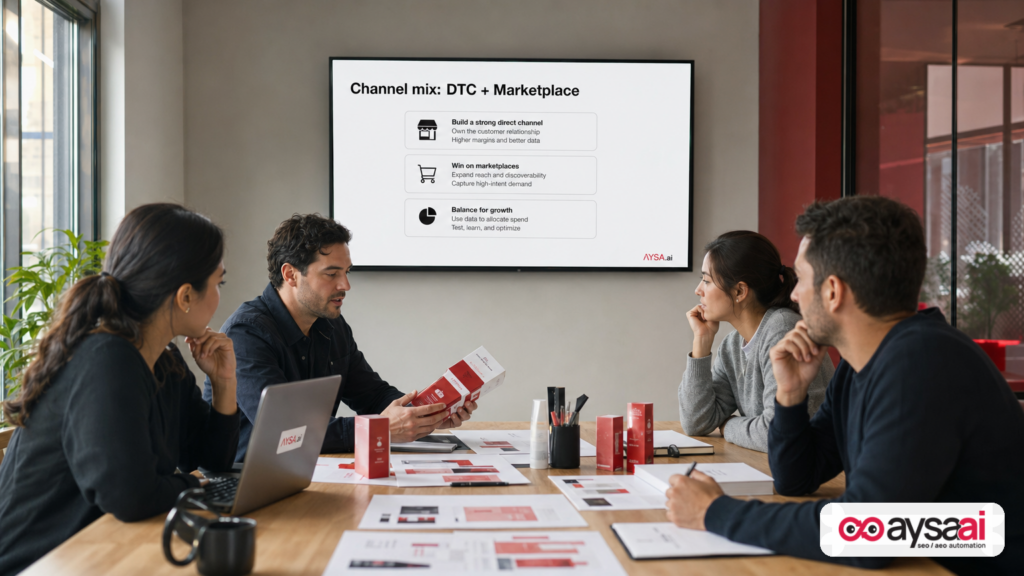
- What changed: Walmart shopper audiences + sales measurement inside DV360 (starting with YouTube)
- Context: why retail media is expanding offsite
- Why this matters: retail data is becoming the new currency of performance
- Who wins (and who loses) when retail audiences go programmatic
- Measurement reality check: attribution, incrementality, and what “closed-loop” can’t tell you
- What can go wrong: privacy, controls, overlap, and reporting traps
- The SME scenario: a $3–10M ecommerce brand that sells on Walmart and DTC
- What agencies should rethink: planning, creative, and reporting
- Where search (SEO/AEO) connects: demand capture after YouTube
- A practical action plan (90 days) to make this work
- Where AYSA fits: execution is the bottleneck (not ideas)
- What to do next
- Sources and further reading
What changed: Walmart shopper audiences + sales measurement inside DV360 (starting with YouTube)
Per Search Engine Land, Google and Walmart are partnering so advertisers can:
- Activate Walmart Connect audiences in DV360 (initially for YouTube campaigns).
- Measure Walmart sales outcomes within DV360—connecting ad exposure to purchases at Walmart.
If you’re not in the weeds every day, here’s what that means in plain terms:
- YouTube gives you reach (people, attention, scale).
- Walmart gives you purchase truth (what households actually buy in Walmart’s ecosystem).
- DV360 becomes the bridge where you plan/activate and then see outcome reporting—without stitching as many parts together manually.
Search Engine Land also notes a key strategic breadcrumb: Walmart previously had an exclusivity arrangement tied to a partnership with The Trade Desk, and that exclusivity ended—opening the door to more integrations. That context matters because it signals Walmart’s intent: be the data and measurement layer across the open web, not just within Walmart.com.
Context: why retail media is expanding offsite
Retail media started as a simple value exchange: brands pay retailers to show sponsored products on retailer-owned pages. It worked because it sat close to purchase intent and because retailers could prove performance inside their own environment.
But growth hits a ceiling if retail media is only “onsite.” Why?
- Limited inventory: there are only so many search results pages and category pages to monetize.
- Limited funnel coverage: onsite ads mostly harvest existing demand; they don’t reliably create new demand.
- Brands want reach: budgets are already committed to channels like YouTube because video shapes preference and memory.
So retail media networks (RMNs) expand offsite, bringing their data and measurement to where budgets already live. That is the direction implied by this Walmart–Google move, and it mirrors the broader market pattern: the retail network becomes a “people + purchase” graph that powers media beyond the retailer’s site.
Why YouTube first?
Starting with YouTube makes sense because it’s both high-scale and increasingly performance-optimized. Many brands already treat YouTube as a hybrid channel: awareness at the top, conversions and assisted conversions in the middle, and retargeting toward the bottom.
What Walmart brings is a different kind of “bottom.” Not just a website conversion—but a verified purchase in a retail ecosystem. That’s the plot twist.
Why this matters: retail data is becoming the new currency of performance
For years, advertisers relied on third-party signals (cookies, inferred interests) and platform-specific measurement. Today, those signals are weaker, more regulated, and less portable. Retailers, however, sit on a robust asset:
- Logged-in users
- Transaction history
- Product-level purchase behavior
- Repeat purchase cycles
When that asset is made available in a buying platform that already controls major inventory (YouTube), the competitive advantage shifts again—from “who has the cleverest targeting hack” to “who has access to the best purchase-based audiences and can measure outcomes credibly.”
In other words: performance marketing is being rebuilt around first-party commerce signals.
What businesses are really buying here
Most marketers will talk about “Walmart audiences on YouTube.” The more important purchase is:
- A measurement narrative that the CFO understands: “We spent X; we drove Y sales at Walmart.”
- A planning lever for video budgets: if Walmart sales lift is visible, it’s easier to justify always-on video.
- A reallocation lever: budgets can shift away from channels that look good on Clicks but don’t show retail outcomes.
That last point is where politics begins inside companies: every channel owner has their “best-looking report.” Retail sales measurement threatens that comfort.
Who wins (and who loses) when retail audiences go programmatic
This integration is broadly positive, but not everyone benefits equally.
Winners
- Brands with real distribution on Walmart: if you can’t win the shelf (digital or physical), measurement won’t rescue you.
- Teams with strong creative operations: YouTube outcomes often hinge on creative variation and sequencing.
- Marketers with measurement discipline: holdouts, pre/post analysis, GEO tests—anything that helps separate causation from correlation.
- Organizations that can execute quickly: campaigns create demand faster than most websites can adapt. Speed matters.
Losers
- Teams that treat this as a “set it and forget it” audience buy.
- Brands with messy product data: inconsistent naming, weak imagery, unclear value props—especially painful when video creates curiosity but the product detail page doesn’t close.
- Companies addicted to last-click reporting: they will mis-credit outcomes, chase the wrong optimizations, and burn budget.
Measurement reality check: attribution, incrementality, and what “closed-loop” can’t tell you
“Closed-loop measurement” is a powerful phrase, but it’s also one of the easiest phrases to misunderstand.
Here are the three layers you must separate:
- Attribution: a sale is associated with an ad exposure based on rules and windows.
- Contribution: the ad likely played a role among other touchpoints.
- Incrementality: the sale would not have happened without the ad (the gold standard).
This Walmart–Google integration improves layer #1 (and possibly parts of #2) because it can connect exposure to purchases at Walmart. But it does not automatically deliver #3.
Why incrementality is hard (and still necessary)
If you target Walmart shoppers, a portion of them were going to buy anyway. That’s the nature of shopper audiences: they contain a lot of “already buyers.” That’s also why the results can look great in reporting.
To estimate incrementality, you need some version of:
- Holdout groups
- Geo experiments
- Pre/post matched market tests
If you can’t do any of that, at least frame your reporting honestly: “sales associated with exposure,” not “sales caused by ads.” It sounds like semantics; it’s actually the difference between scaling profitably and scaling illusions.
What to ask your team or platform rep (non-technical)
- What is the attribution window for sales?
- Is the measurement based on ad exposure, clicks, or both?
- How are repeat buyers handled?
- Can we run an experiment / holdout?
- What level of detail do we get (category, SKU, brand)?
If you can’t get clear answers, don’t assume the most favorable interpretation.
What can go wrong: privacy, controls, overlap, and reporting traps
Integrations like this can create new failure modes. A few to watch closely:
1) Audience overlap and double counting across platforms
If you’re already buying audiences in other environments (search, social, other retail media), you may be paying multiple times to reach the same high-propensity households. That’s not automatically bad—but it can inflate reported performance if each system claims credit.
2) Creative fatigue masquerading as “audience quality” problems
When performance drops, teams often blame targeting. In video, creative fatigue is frequently the culprit. If the integration makes it easier to scale audiences, you can burn through attention faster. Your creative testing plan becomes non-optional.
3) Inventory and merchandising constraints
Video can create a surge. If your item is out of stock, suppressed, or poorly positioned on the shelf, your measurement will understate potential and your customers will form a bad first impression. Offsite demand creation is only as good as your ability to fulfill demand.
4) Reporting traps: “better data” can still be misused
Better data doesn’t automatically mean better decisions. The trap is when teams:
- Optimize to the easiest-to-measure outcome
- Ignore long-term brand lift
- Confuse correlation with causation
Retail sales measurement is valuable, but it can also encourage short-termism if you don’t set guardrails.
The SME scenario: a $3–10M ecommerce brand that sells on Walmart and DTC
Let’s make this real with a scenario I see constantly:
Company: a small-to-mid ecommerce brand selling a consumable home product (think cleaning, wellness, or pet). They sell on their own Shopify site and also through Walmart’s marketplace/retail ecosystem. They have a lean team: a founder, one marketer, one ops person, and an agency on retainer.
The problem they’re actually trying to solve
- DTC is profitable but growth is plateauing.
- Walmart has scale, but the team struggles to prove that upper-funnel ads contribute to Walmart sales (especially when shoppers don’t click directly).
- The founder is skeptical of YouTube because “views aren’t revenue.”
How this integration changes the plan (if used well)
Instead of buying YouTube based on interest targeting and measuring via site traffic alone, the team can attempt to:
- Target audiences linked to Walmart shopper behavior (activation via DV360, per the Search Engine Land report).
- Measure Walmart purchase outcomes after exposure.
This gives the founder a business-credible narrative: “Our YouTube spend is associated with Walmart sales.” It also changes the internal conversation from “YouTube is awareness” to “YouTube is demand creation with retail validation.”
What they must fix first (the unsexy part)
Before spending more on video, this SME should ensure:
- Product detail pages are conversion-ready: clear value prop, strong imagery, FAQs, usage instructions.
- Brand consistency: naming, pack sizes, claims (avoid confusion across channels).
- Inventory stability: avoid out-of-stock during learning periods.
- Search capture: people will Google the brand after seeing video; your site must answer those queries with authoritative pages.
That last bullet is where many video + retail plans quietly fail: video creates curiosity, but the brand is not discoverable (or credible) in search results and AI answers when people research.
What agencies should rethink: planning, creative, and reporting
If you run paid media for clients, this integration is both an opportunity and a trap.
Planning: move from channel plans to outcome plans
Clients don’t want “a YouTube plan.” They want “a plan that grows sales with controlled risk.” If Walmart sales measurement becomes visible in DV360, agencies should restructure plans around:
- Business goals (new buyers, repeat rate, distribution priorities)
- Measurement design (what will prove impact)
- Creative testing roadmap (what variations will be tested and when)
Creative: treat video like an iterative product
YouTube is not one hero asset. It’s a system of variants:
- Different hooks in the first 3–5 seconds
- Different offers (subscribe, bundle, trial)
- Different proofs (reviews, demonstrations, “why it’s different”)
Retail measurement can validate which creative angles lead to purchase—not just which ads get views. But only if you have enough creative throughput.
Reporting: be honest about causality
As retail measurement gets easier, clients will ask for simpler answers. Agencies should proactively educate:
- What is measured vs what is inferred
- What is attributable vs incremental
- How budget shifts will be decided (rules, thresholds, confidence)
This is how you prevent “great results” from turning into “why did results disappear when we doubled spend?” six weeks later.
Where search (SEO/AEO) connects: demand capture after YouTube
Even though this is a paid media integration, it has a very predictable side effect: video creates search demand. People see an ad, then they:
- Google your brand name
- Search “reviews”
- Search “price”
- Ask an AI assistant “is this product legit?”
If your site doesn’t answer those questions clearly, you lose the demand you paid to create. That’s why I consider modern retail media and modern SEO/AEO part of the same revenue system.
In AYSA terms, this is where we focus on AI Search visibility and execution: not just Monitoring rankings, but making sure your web presence captures the downstream intent created by video.
- Explore how we think about AI discovery: AI Search Visibility
- See the toolset that supports the workflow: AI SEO Tools
What to build on your site to capture retail-driven demand
If you’re an SME, you don’t need a “content strategy.” You need a demand capture kit:
- A strong “Why us” page that explains the product in plain English
- Comparison pages (vs alternatives) where appropriate and truthful
- FAQ sections that address hesitation
- Retail availability page (“Where to buy”) that is always up to date
These pages also help AI-driven search experiences understand your product and brand, and they reduce leakage to competitors when shoppers research after exposure.
A practical action plan (90 days) to make this work
Here’s the pragmatic approach I’d use if I were advising a resource-constrained team.
Days 1–15: Get the measurement and governance right
- Define success: Is the goal Walmart sales, new buyers, repeat rate, share-of-category? Pick one primary KPI and 2–3 supporting KPIs.
- Write the measurement rules: windows, reporting cadence, who signs off on claims.
- Set a baseline: document the last 4–12 weeks of sales trend (whatever is available) so you can interpret lift responsibly.
Days 16–45: Build creative and onsite capture assets
- Produce 6–12 video variants from the start (different hooks and proofs).
- Fix the landing experience: message match, speed, clarity, and “where to buy.”
- Publish the research-capture pages (reviews, comparisons, FAQs) so search demand has somewhere to land.
Days 46–90: Run disciplined tests and iterate
- Start with a controlled budget and clear learning goals (which audience, which creative angle, which product).
- Rotate creatives deliberately to manage fatigue and isolate effects.
- Review weekly and change one variable at a time when possible.
The point is not to “launch.” The point is to build a repeatable system where you can scale what works with confidence.
Where AYSA fits: execution is the bottleneck (not ideas)
Most teams don’t fail because they lack insight. They fail because they can’t execute the necessary changes fast enough, safely enough, and consistently enough—especially when paid media creates new demand patterns every week.
AYSA is designed for that reality: it monitors, prepares recommended changes, asks for approval, and then executes accepted website changes. That’s critical when you need to keep your site aligned with fast-moving campaigns without introducing risk.
Here’s how it connects to this Walmart–Google moment:
- Monitoring: detect shifts in branded demand, category visibility, and content gaps created by new campaigns. AYSA Monitoring
- AI search visibility readiness: ensure your product and brand narratives are discoverable when people ask AI-driven search questions after seeing video. AI Search Visibility
- Execution workflow: ship improvements with approvals (no surprise changes), so marketing and leadership stay aligned.
If you’re evaluating systems, also check what we offer and how we price it: AYSA Pricing.
And if you want more tactical thinking from us, we keep this kind of analysis in the AYSA blog: AYSA Blog.
What to do next
- If you sell on Walmart: treat this as a measurement opportunity first, a targeting opportunity second. Write the rules of interpretation before you launch.
- If you don’t sell on Walmart: watch the pattern, not the brand. Retail data will keep moving into offsite buys; choose partners based on where your customers actually buy.
- If you’re an agency: redesign reporting to separate attribution from incrementality, and build a creative throughput plan that matches the new measurement power.
- If you’re an SME: invest in the “demand capture kit” on your site so video-driven curiosity doesn’t leak to competitors.
- Operationally: set up a monitoring + Approved Execution process so improvements ship weekly, not quarterly.
Sources and further reading
- Search Engine Land: Walmart Connect audiences come to Google Display & Video 360
- Search Engine Land: Google Ads shifts Demand Gen billing to CPM for some Discover campaigns
- Search Engine Land: Microsoft Ads expands LinkedIn targeting with job seniority filters
- Search Engine Land: How AI is merging paid and organic visibility
- Search Engine Land: Bing Webmaster Tools updates AI reporting with Intents, Topics, Citation Share and Compare
- Search Engine Land: Meta launches AI Mode in Facebook search to answer questions
- Search Engine Land: OpenAI launches product feed ads in Ads Manager beta
- Search Engine Land: Schema.org now shows you how many sites are using each schema type
Note: This editorial is based on the reporting and context available in the supplied source. Where details (like exact attribution windows, experiment availability, or segment taxonomy) are not specified in the source material, I’ve treated them as implementation considerations rather than stated facts.
Continue the AI search topic inside AYSA.
Use these pages to connect the article with AI SEO tools, AI visibility monitoring, AI Overviews and approved website execution.
Turn this topic into a website action plan.
Use these AYSA hubs to move from reading to technical fixes, AI visibility monitoring, research, glossary context and approval-first SEO execution.