The 2026 SEO “Wins” That Actually Change Execution: From AI Visibility Reports To Cleaner Measurement (And What To Do Next)
2026 didn’t just add more AI noise—it finally delivered measurable signals SEOs and business owners can act on. Here’s what changed across Google, Bing, and ChatGPT, why it matters for SMEs, and how to turn new reporting into approved, repeatable execution with AYSA.

In SEO, we’re wired to notice what’s broken: rankings volatility, opaque Attribution, “AI ate my traffic,” and reporting that doesn’t match how people actually discover brands anymore. But 2026 delivered something we haven’t had enough of in the AI era: new, measurable signals from major platforms that (when used correctly) translate into better decisions and faster execution.
This editorial is my take—Marius Dosinescu, from AYSA.ai—on the most practical changes highlighted in Search Engine Journal’s roundup of 2026 SEO wins, and what they mean if you run a business, manage marketing, or operate an agency.
Not as a “news recap,” but as a field guide: what changed, why it matters, what can go wrong, what you should monitor, and how to turn new visibility data into approved actions that ship.
Concise summary
- AI visibility is becoming measurable in Google Search Console, Bing Webmaster Tools, and OpenAI’s ChatGPT Business Hub—mostly through Impressions, citations, and mentions.
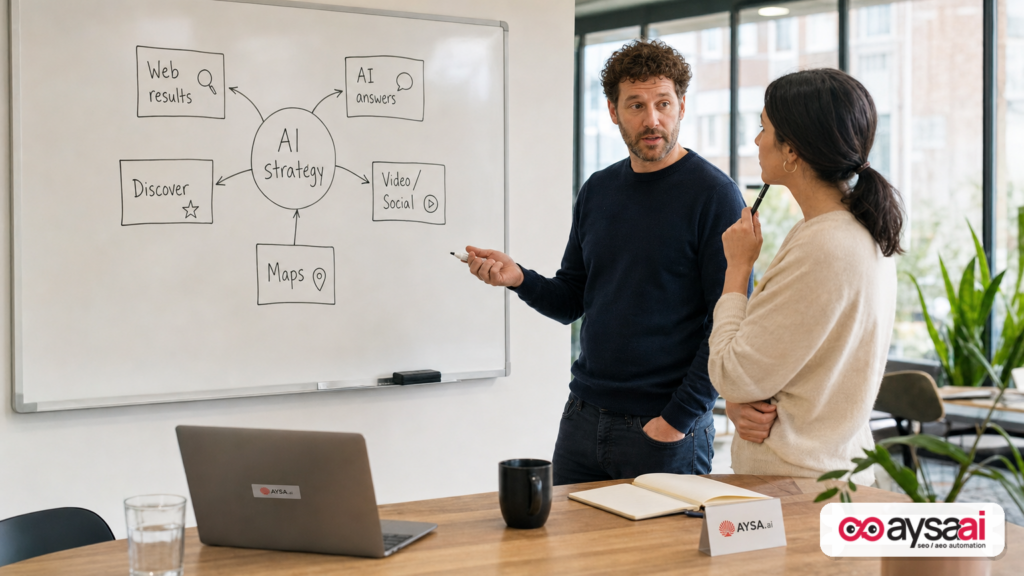
- Search is fragmenting into surfaces (AI answers, web results, Discover, video/social posts, Maps), which requires segmented measurement and segmented execution.
- Operational SEO is the advantage: the winners aren’t the teams with the most dashboards—they’re the teams who can convert signals into approved, repeatable website changes.
- AYSA’s role is to connect Monitoring → preparation → approval → execution → validation, so insights don’t die in spreadsheets.
Key takeaways (bookmark this)
- Start tracking AI visibility separately from classic web performance wherever platforms allow it—even if click attribution is imperfect.
- Adopt an “entity + intent” content model: answer questions clearly, support answers with structure, and build pages that AI systems can cite with confidence.
- Audit your discovery surfaces: your YouTube, TikTok, Instagram, and X posts now have clearer reporting inside Search Console for how they show up in Google Search.
- Expect measurement gaps (especially AI Clicks vs web clicks). Build process resilience rather than chasing perfect attribution.
- Ship fewer, higher-confidence changes more often. Execution velocity with guardrails beats quarterly “SEO projects.”
Table of contents

- Context: Why 2026 matters for SEO execution
- The big shift: from “rankings” to “visibility surfaces”
- 1) Google Search Console AI reports: the first real breakout we’ve needed
- 2) Bing’s AI performance report: citations, grounding queries, and share
- 3) ChatGPT Business Hub: mentions and discovery topics (and what not to assume)
- 4) Social and video reporting in Search Console: discovery isn’t optional
- 5) Branded queries filter: cleaner segmentation, fewer regex nightmares
- 6) Business Profile post views returned: local teams get feedback loops again
- 7) TikTok search ads impression share: search is not only Google anymore
- 8) Back button hijacking policy: a “technical SEO” win with real UX impact
- The gap that still hurts: AI clicks vs web clicks
- A concrete SME scenario: a local clinic navigating AI answers, Maps, and social visibility
- What to monitor weekly/monthly in 2027 (without drowning in dashboards)
- Where AYSA fits: monitoring, preparation, approval, execution
- What to do next: a 30-day action plan you can actually run
- Sources and further reading
Context: Why 2026 matters for SEO execution
Most years in SEO are defined by algorithms. 2026 is defined by interfaces.
We’re watching search providers reshape how answers are delivered: AI summaries, AI modes, chat-based discovery, and blended results that elevate social and video content right inside “traditional” search.
The business problem is simple: if your buyers discover you in more places, but you only measure one place, you’ll misallocate resources.
The second business problem is harder: even when measurement improves, most organizations can’t operationalize it. They see signals but don’t have an execution system to ship fixes safely and consistently.
That’s why the “wins” in SEJ’s 2026 list matter: they aren’t just features. They’re new measurement hooks—and measurement is the first domino that makes scalable execution possible.
The Big Shift: From “Rankings” To “Visibility Surfaces”
Old SEO questions:
- “What do we rank for?”
- “How many sessions did organic bring?”
- “Can we get to position #1?”
New SEO questions (the ones executives actually care about):
- “Where do customers encounter us—web, AI answers, Maps, video, social?”
- “Are we being cited or mentioned when AI answers our category questions?”
- “Which pages are becoming the source of truth for AI systems?”
Rankings still matter, but they’re no longer the whole story. A page can “perform” without earning a click, because the click might be replaced by an AI answer, a Local pack action, or a video view. That changes how we prioritize work.
This is also where many teams get stuck: they treat these shifts as “SEO is dead” drama. The reality is more practical: SEO is becoming multi-surface discovery optimization. The teams who win will build a process that maps content and technical work to each surface.
1) Google Search Console AI Reports: The First Real Breakout We’ve Needed
One of the most important 2026 changes is that Google Search Console (GSC) now provides dedicated reporting for impressions in AI features (as described in SEJ’s coverage). The core “win” isn’t that the data exists—it’s that AI visibility is no longer fully blended into traditional metrics.
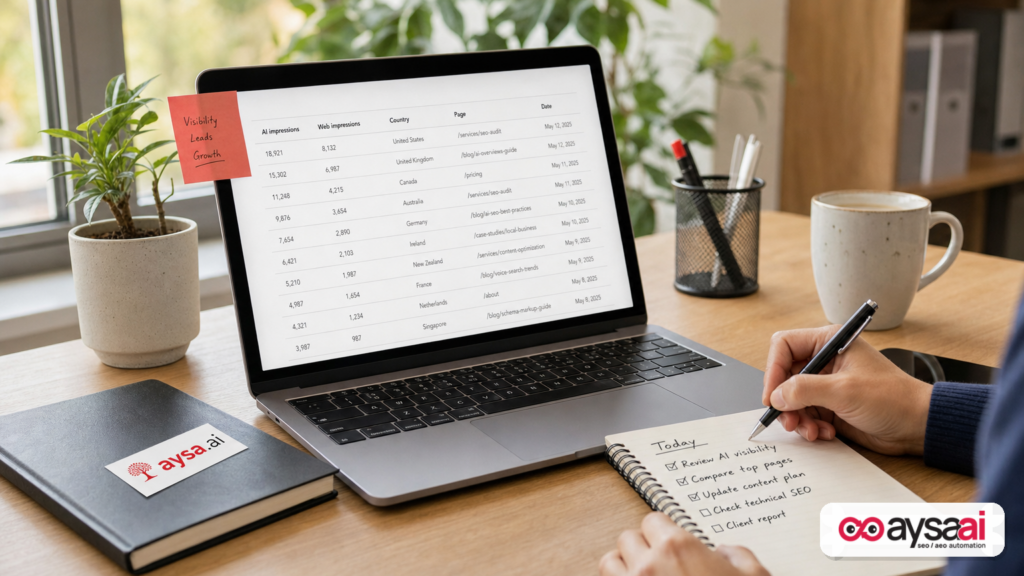
SEJ reports that GSC is showing dedicated reports for impressions in AI Overviews, AI Mode, and generative AI features in Discover, segmented by page, country, and date, with a rollout completed worldwide. Source: Search Engine Journal.
Why this matters for businesses
- Visibility can rise while clicks fall. Without segmentation, you might conclude content “got worse” when the truth is your content is being used higher in the funnel (AI answers).
- Page-level decisions get sharper. If a handful of pages generate AI impressions, those pages should become your “AI citation targets” for clarity, freshness, and trust signals.
- Country segmentation matters. AI features don’t roll out uniformly; your international performance strategy needs localized observation.
What can go wrong
- Overreacting to impressions. Impressions are not revenue. Treat them as directional signals, then test downstream behaviors.
- Misaligned incentives. Teams may chase AI impressions even when the business needs conversion-ready traffic. Keep a balanced scorecard.
What to do with this report (practical workflow)
- Identify AI-visibility pages: list pages with recurring AI impressions.
- Classify intent: informational, comparison, local/service, transactional.
- Improve “answer extractability”: strengthen headings, definitions, steps, FAQs, and concise summaries.
- Reinforce trust: add author/editorial info where appropriate, cite primary sources when you make claims, and keep content updated.
- Validate outcomes: track assisted conversions, branded search lift, and lead quality—don’t expect clean “AI referral” reporting.
In AYSA terms, this is a classic moment where monitoring should trigger preparation and execution, not a meeting. Learn more about our approach to AI-era visibility measurement: AI Search Visibility and monitoring workflows: AYSA Monitoring.
2) Bing’s AI Performance Report: Citations, Grounding Queries, And Share
Google isn’t the only platform giving marketers AI visibility signals. SEJ notes that Microsoft Bing Webmaster Tools introduced an AI performance report (public preview) showing how often Copilot, Bing AI summarizations, and some partner integrations reference your content—plus the referenced pages and “grounding query” used to retrieve it. SEJ also mentions a “Citation Share” preview feature that estimates your share of citations for a query. Source: Search Engine Journal.
Why “grounding query” is strategically valuable
In classic SEO, keywords were often treated as targets. In AI search, the “grounding query” is more like a retrieval trigger: it reveals the language models use to pull sources. That can inform:
- How you title pages and sections
- Which synonyms you must include (naturally)
- Which comparisons or “best for” modifiers matter
- Where your content lacks direct answers
How to use citation share without fooling yourself
- Use it as competitive intelligence, not a KPI bonus. A higher share suggests your pages are considered reference-worthy, but you still need conversion paths.
- Find the missing “supporting pages”. Citation share often reveals you’re cited for top-of-funnel questions, but you don’t have middle-funnel explainers or bottom-funnel landing pages.
- Protect against fragility. AI citations can change quickly. Invest in durable authority: clear expertise, consistent coverage, and earned mentions.
Execution ideas that usually work
- Create a “definition + decision” structure: what it is, who it’s for, how to choose, pitfalls, and next steps.
- Build internal link “clusters” so your cited page points toward conversion content.
- Refresh pages that are cited but outdated—AI systems are more likely to quote content that appears maintained.
3) ChatGPT Business Hub: Mentions, Website Clicks, And Discovery Topics (And What Not To Assume)
SEJ reports that OpenAI launched ChatGPT Business Hub in beta, where eligible businesses can claim their business and see mentions, website clicks, and discovery topics over the past 28 days. SEJ notes that a mention occurs when ChatGPT references your website, not merely names your brand, and also emphasizes that claiming a business does not guarantee greater visibility. Source: Search Engine Journal.
Why this is a major shift—even in beta
Historically, LLM-driven discovery has been a blind spot. Even if customers said “I found you through ChatGPT,” analytics rarely confirmed it. A dashboard that reports mentions and clicks (even imperfectly) is a step toward operationalizing AI discovery.
What businesses should not assume
- Don’t assume claiming equals ranking. Treat verification as table stakes, not as a growth lever.
- Don’t assume mentions correlate to revenue. Mentions can reflect informational value, not purchase intent.
- Don’t overfit content to ChatGPT. If you contort your site for one assistant, you risk harming clarity for humans and other systems.
What businesses should do instead
- Claim and verify if eligible—because it’s the doorway to visibility data.
- Map discovery topics to your content gaps: if people discover you for “how to choose X,” ensure you have the best, most practical page on “how to choose X.”
- Strengthen sourceworthiness: clear policies, contact details, product/service specificity, pricing ranges when possible, and citations for factual claims.
At AYSA, we treat AI discovery data as a new monitoring input that should lead to controlled execution. If you want a system to manage those changes safely, start here: AI SEO Tools.
4) Social And Video Posts In Search Console: Discovery Isn’t Optional
Google’s expansion of Search Console to include reporting for social and video accounts is easy to overlook, but it signals where discovery is heading. SEJ reports that Google introduced platform properties for social and video accounts, with reporting for posts on Instagram, TikTok, X, and YouTube appearing in Google Search, including clicks, impressions, CTR, and average position, plus Discover and Google News reporting when applicable. Source: Search Engine Journal.
Why this matters beyond “social metrics”
Most businesses already produce social content. The missing link has been: how does that content contribute to search discovery and demand capture?
When Search Console starts treating social/video accounts like measurable properties, it’s a hint that Google expects those assets to be part of your search footprint.
Practical implications for SMEs
- Your SEO and social teams need a shared plan. If they operate independently, you’ll create content that competes rather than compounds.
- Repurposing gets measurable. A strong YouTube explainer can appear in Google Search and now be tracked in the same reporting ecosystem.
- Brand safety and consistency matter. If social posts rank for business-critical queries, their accuracy, tone, and claims need the same scrutiny as your website pages.
What to do with platform properties
- Connect eligible accounts to Search Console (if available for your organization).
- Identify top queries/pages where social posts appear.
- Align content: ensure your website has a “canonical” answer page that social posts can reinforce.
- Build CTAs that match the search intent (not just “follow us”).
5) Branded Queries Filter: Cleaner Segmentation, Fewer Regex Nightmares
This is not flashy, but it’s one of those changes that improves decision-making every single week. SEJ explains that Google’s branded queries filter lets you split Performance report queries into branded (including misspellings) vs non-branded, and that this also arrived in the Search Analytics API—reducing the need for maintaining complex regex lists. Source: Search Engine Journal.
Why this matters for ROI conversations
- Non-branded growth is often closer to “market expansion.”
- Branded queries often reflect demand you already earned (PR, word of mouth, ads, social, partnerships).
If you mix branded and non-branded performance, you can misread what’s driving growth—and you’ll argue about the wrong budget lines.
How to use the branded split (simple model)
- Branded down, non-branded up: you may be expanding discovery but losing loyal demand—investigate reputation, product issues, or competitors bidding on brand.
- Branded up, non-branded flat: marketing is generating demand, but SEO content isn’t expanding reach—invest in topic clusters and comparison pages.
- Both up: you’re compounding—protect the system and scale execution.
6) Post View Counts Available Again For Business Profiles: Local Teams Get Feedback Loops Back
Local search is one of the highest-ROI channels for many SMEs, but local teams have been operating with partial feedback loops. SEJ notes that Google removed post metrics from Business Profiles in 2023 and is now rolling out view counts again for posts (from Search and Maps activity) for up to 18 months of posts, though not accessible via API yet (per SEJ’s summary). Source: Search Engine Journal.
Why this matters
- Local content can be optimized again. Without metrics, posting becomes superstition (“post more”). With views, it becomes iteration.
- Operators can justify effort. If you run a clinic, hotel, or service business, you need proof before investing staff time.
How to turn view counts into a local growth loop
- Catalog which post themes get views (promos, FAQs, seasonal updates, trust/credentials).
- Compare views to real business outcomes (calls, bookings, direction requests) where possible.
- Update your website to match what’s working locally (FAQ sections, service pages, pricing explanations).
7) TikTok Highlights Impression Share For Paid Search Advertisers: Search Is Not Only Google
“Search” now happens inside social platforms—especially for younger audiences and product discovery categories. SEJ notes that TikTok Ads Manager highlighted an Impression Share metric for Search Ads campaigns (availability varying by market/account) and also added Keyword Packs to speed up keyword list creation. Source: Search Engine Journal.
Why impression share matters operationally
Impression share is a blunt but useful instrument: it shows whether you’re leaving eligible visibility on the table. For businesses used to Google Ads metrics, this helps translate “TikTok search” into familiar optimization language.
How SEO teams should think about this (even if you don’t run ads)
- Keyword demand patterns discovered in paid search often reveal organic content opportunities.
- Creative testing in paid search can validate messaging before you commit to website rewrites.
- Cross-surface consistency becomes critical: the promise in an ad must match the promise on the landing page and the page must be AI-citable.
8) Google’s Spam Policies On Back Button Hijacking: A “Technical SEO” Win With Real UX Impact
Not all wins are measurement dashboards. Some are basic hygiene improvements that protect user experience and reduce the incentive for manipulative behavior. SEJ reports that Google began treating back button hijacking as malicious, with enforcement beginning mid-2026, and that Google clarified the policy applies when hijacking occurs in a user’s browser, including visits from social media. Source: Search Engine Journal.
Why this matters even if you “don’t do spam”
- Bad actors degrade the ecosystem. When manipulation works, honest businesses pay the tax through higher ad costs and lower trust.
- Some hijacking is accidental. Poorly implemented scripts, overlays, or aggressive interstitial logic can mimic malicious behavior.
What to do
- Audit redirects, popups, interstitial scripts, and history-manipulating JavaScript behavior.
- Test your key landing pages in multiple browsers and mobile devices. Press back. See what happens.
- If you rely on third-party widgets, demand documentation on how they handle browser history events.
The Gap That Still Hurts: AI Clicks vs Web Clicks
SEJ closes with a request that I strongly agree with: the ability to differentiate AI clicks from web clicks in Search Console. As SEJ describes, currently clicks from AI Overviews/AI Mode links can be counted in the same Performance report as other search result clicks, making attribution and optimization harder. Source: Search Engine Journal.
Why this matters
- Funnel interpretation: AI clicks may behave differently than classic clicks (different expectations, different bounce patterns).
- Experimentation: without segmentation, it’s harder to run clean tests on titles, snippets, and page structures.
How to operate anyway (until the gap closes)
- Use the AI impression reporting as the top signal.
- Validate with on-site engagement quality (time, scroll depth, conversion rate by landing page) rather than “total organic.”
- Focus on outcome metrics: leads, calls, purchases, qualified demos—not perfect attribution.
A Concrete SME Scenario: A Local Clinic Navigating AI Answers, Maps, And Social Visibility
Let’s make this real. Imagine a multi-location physical therapy clinic. They rely on:
- Google search for “physical therapy for runner’s knee”
- Local search for “physical therapist near me”
- YouTube short videos demonstrating exercises
- Occasional paid campaigns when a new location opens
What changed in 2026 for them
- They can start seeing AI impressions tied to specific pages in GSC (per SEJ’s summary).
- They can evaluate Business Profile post views again to see if seasonal posts (“Back pain during holiday travel”) get traction.
- They can track whether YouTube posts show up in Google Search via Search Console platform properties (per SEJ’s summary).
What they should do (a realistic plan)
- Pick 10 pages most likely to be used in AI answers: top conditions, insurance/payment pages, “what to expect” pages.
- Rewrite for extractability: short definitions, step-by-step, contraindications, and when to see a professional.
- Connect pages to local intent: embed location selectors and clear “book now” CTAs without being spammy.
- Use local posts strategically: test post themes, then expand what works into evergreen website content.
- Operationalize approvals: clinical and legal review must approve health claims before publishing.
This is the kind of environment where execution breaks down: the marketing team sees AI impressions but can’t ship updates without clinical approval. That’s exactly why “approved execution” is not a buzzword—it’s a necessity.
What To Monitor Weekly/Monthly In 2027 (Without Drowning In Dashboards)
More data does not mean better decisions. The goal is tight feedback loops that reliably produce action.
Weekly (operator cadence)
- AI visibility movement: which pages gained/lost AI impressions (from GSC AI reports per SEJ’s description).
- Non-branded query trend: are you expanding discovery? (using the branded filter mentioned by SEJ).
- Top landing pages: are high-visibility pages converting or leaking users?
- Local post view deltas: what topics are resonating (per SEJ’s note on Business Profile post views).
Monthly (strategic cadence)
- Content gap map: discovery topics (including those surfaced in AI tools) vs your existing coverage.
- Authority checks: are your best pages supported by expertise signals and clear editorial ownership?
- Surface coverage: are your video/social assets reinforcing your core pages?
If you want to build this as an operational system rather than ad-hoc reporting, start with AYSA monitoring: AYSA Monitoring.
Where AYSA Fits: Monitoring, Preparation, Approval, Execution
Here’s my blunt take: the biggest SEO bottleneck in 2026 wasn’t lack of data. It was lack of shipping.
AI search moved faster than most organizations’ ability to update pages, fix technical debt, and iterate content. And many teams are still stuck in a workflow that looks like this:
- Collect insights
- Make a deck
- Wait for dev
- Lose momentum
AYSA is built as an execution system for modern SEO/AEO/GEO:
- Monitors visibility and site signals (including AI-era considerations)
- Prepares proposed changes (content, technical, internal linking, structured improvements)
- Asks for approval before anything ships
- Executes accepted changes and then validates the outcome
If you want the overview of capabilities, start here: AI SEO Tools. If you want to understand our visibility approach specifically for AI-driven discovery, see: AI Search Visibility. If you’re evaluating cost and fit, see pricing: AYSA Pricing. For more operator-focused thinking, browse the blog: AYSA Blog.
Why “approved execution” matters more in the AI era
- More surfaces = more risk. A small factual error can propagate across AI answers and harm trust.
- More stakeholders. Legal, compliance, medical, finance, and brand teams need guardrails.
- Faster iteration. AI-driven discovery shifts quickly; quarterly updates are too slow.
What To Do Next: A 30-Day Action Plan You Can Actually Run
This plan is designed for SMEs and lean marketing teams. It’s intentionally operational.
Days 1–7: Build your measurement baseline
- In Google Search Console, review any available AI-specific reporting described by SEJ and identify top pages with AI visibility.
- Turn on/query branded vs non-branded segmentation where available (SEJ notes the branded queries filter).
- If relevant to your business, check local post view counts in Business Profile (per SEJ’s summary) and list themes that perform.
- List your top 10 revenue-driving pages and top 10 discovery pages (these are not always the same).
Days 8–14: Prioritize pages that AI systems can cite
- Pick 5–10 pages with the best combination of business value + AI visibility signals.
- For each page: write a clear opening definition, add scannable headings, and include direct answers to common questions.
- Make sure each page has a next step: contact, booking, quote, demo, or product category pathway.
Days 15–21: Build “surface reinforcement”
- Choose 3 topics where you can create a short video or social post that points back to the canonical website page.
- If platform property reporting is available (per SEJ’s summary), start tracking search visibility of those posts.
- Ensure messaging consistency: the same promise, the same terminology, the same constraints.
Days 22–30: Operationalize execution
- Create a simple approval workflow: who approves factual claims, pricing, medical/legal statements, and brand language?
- Batch changes weekly rather than “big bang” releases.
- Validate: track landing page engagement, conversions, and branded demand trends—not just impressions.
If you want to run this as a system (not a one-time sprint)
- Use a monitoring layer to detect changes early: AYSA Monitoring
- Use an execution layer that requires approval before shipping updates: explore AYSA tools: AI SEO Tools
- Align AI visibility goals with business outcomes: AI Search Visibility
My AYSA perspective: why these “wins” point to one conclusion
The pattern across Google, Microsoft, and OpenAI is clear: platforms are slowly exposing AI-era performance signals—impressions, citations, mentions, and surface-level visibility. That’s the first step.
The second step—the one most businesses still struggle with—is turning those signals into shipped improvements without breaking the site, violating compliance, or wasting months in internal backlog purgatory.
In 2027, competitive advantage looks less like “who has the best SEO tricks” and more like “who has the best execution system.”
Sources and further reading
- Search Engine Journal: What SEOs Can Be Thankful For: 8 Wins To Celebrate In 2026 (primary source for the 2026 roundup and feature descriptions referenced above)
- Explore related SEJ topic hubs referenced on the source page (useful for ongoing updates):
What to do next (action list)
- Segment visibility: use any AI-specific reporting available and separate branded vs non-branded trends.
- Choose your “citation targets”: identify the pages that should become your reference-grade sources.
- Rewrite for clarity: improve extractable answers, update content freshness, and strengthen internal links.
- Connect surfaces: ensure social/video content reinforces canonical web pages that drive outcomes.
- Adopt approved execution: establish who approves what, then ship changes weekly with validation.
- If you need a system: evaluate AYSA for monitoring and approved execution: AI SEO Tools and AYSA Pricing.
Continue the AI search topic inside AYSA.
Use these pages to connect the article with AI SEO tools, AI visibility monitoring, AI Overviews and approved website execution.
Turn this topic into a website action plan.
Use these AYSA hubs to move from reading to technical fixes, AI visibility monitoring, research, glossary context and approval-first SEO execution.