
Search ROAS Isn’t “Winning” — It’s Borrowing Demand: How Paid Social (and Upper-Funnel) Quietly Controls Your Paid Search Performance
If your paid search ROAS looks unbeatable while paid social looks weak, you may be measuring two different jobs with one scoreboard. Here’s how to quantify the halo effect, avoid budget whiplash, and build an execution system that protects total growth—not just last-click efficiency.

Paid search ROAS can look like your strongest growth engine—until you turn off the upstream channels and watch that “efficiency” quietly disappear. This isn’t a conspiracy or an Attribution gimmick. It’s how demand works: upper-funnel exposure changes who searches, what they search, and how likely they are to convert once they arrive via Google Ads or Microsoft Ads.
This editorial is a practical guide to diagnosing the paid social → paid search halo effect, measuring it with defensible methods, and building an execution system so your budget decisions don’t accidentally starve future demand.
Primary research lead: Why search ROAS depends on paid social more than you think (Search Engine Land).
Concise summary
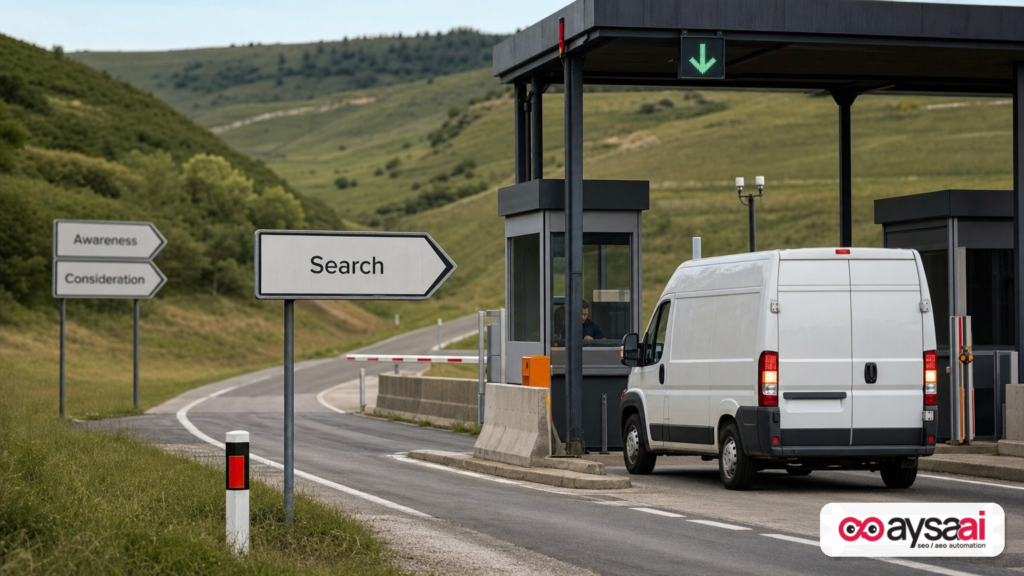
- Search doesn’t just “perform”—it often inherits demand created by paid social, YouTube, and other discovery channels.
- Channel ROAS comparisons are structurally unfair because click- and last-touch-heavy measurement ignores most exposure effects.
- The damage from cutting upper funnel is delayed (often weeks), which creates false confidence and bad budget decisions.
- You can measure halo effects with leading indicators (brand query trends), incrementality approaches (GEO holdouts), and modeling (MMM frameworks—when you’re ready).
- AYSA.ai helps by Monitoring leading indicators, preparing measurement and SEO/AEO changes, asking for approval, and executing accepted website improvements—so attribution and performance don’t depend on heroics.
Table of contents

- The core problem: search is a “toll booth,” not the road
- What changed (and why it matters more in 2026 than it did in 2016)
- The hidden symptoms: how halo effects show up in real accounts
- Measurement reality: why channel ROAS comparisons are structurally unfair
- The lag problem: why the decay is delayed (and why teams misdiagnose it)
- Upper funnel isn’t only Meta/TikTok: it’s any exposure engine
- A concrete SME scenario: the ecommerce brand that “optimized” itself into a slowdown
- How to measure the halo effect (from simple to rigorous)
- Better budget decisions: replace ROAS debates with outcome experiments
- What SMEs should monitor weekly (without building a data science team)
- What agencies should rethink: planning, testing, and client reporting
- Where AYSA.ai fits: monitoring + approved execution for compounding gains
- What to do next (checklist)
- Sources and further reading
The core problem: search is a “toll booth,” not the road
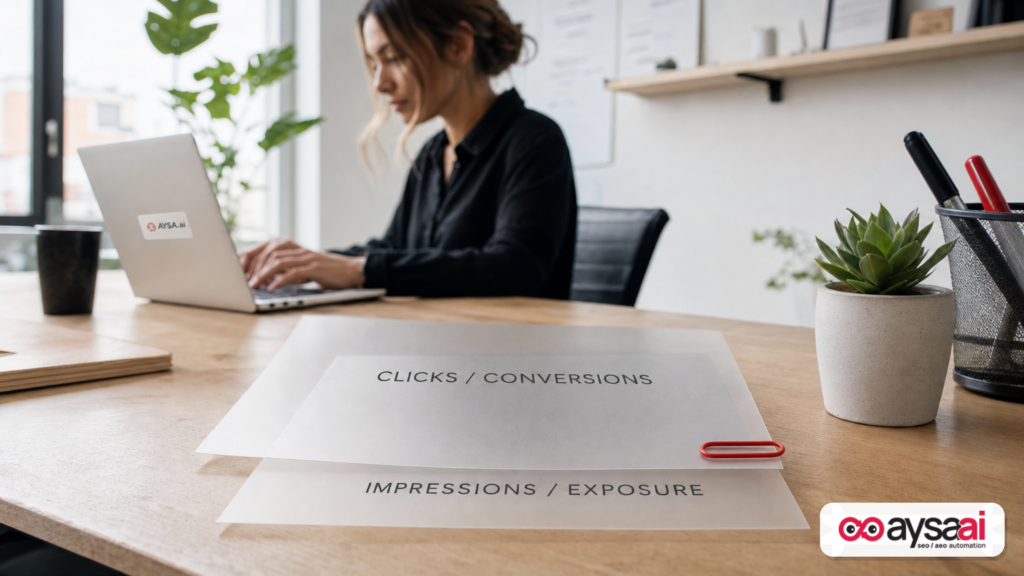
Paid search is incredibly good at one job: capturing demand at the moment someone expresses intent. That moment is visible—a query, an auction, a click, a conversion. It feels concrete and controllable.
But a search click does not begin with the click. It begins with awareness and memory:
- A person sees a product in a short-form video and stores the brand name.
- They hear about a clinic from a friend and later search for it.
- They notice your offer in a feed, don’t click, and still become more likely to convert when they eventually search.
Search “wins” the conversion because it’s the last door the customer walks through. Often, it didn’t build the building.
This is why the Search Engine Land piece resonated: it describes a pattern nearly every performance team has lived. The paid search dashboard looks fantastic while paid social looks mediocre; budgets shift; then search performance erodes later—and everyone acts surprised.
What changed (and why it matters more in 2026 than it did in 2016)
The paid social → paid search halo effect isn’t new. What’s new is how much more common it has become for SMEs and mid-market brands—and how much harder it is to “see” inside default analytics.
1) Customer journeys are more fragmented—and more “view-based”
In many categories, social and video are discovery engines. The critical step isn’t a click; it’s a mental bookmark. That makes exposure valuable even when it doesn’t produce platform-attributed conversions.
2) Search capture is more competitive, so upstream quality matters more
When the search auction is crowded, the difference between a cold searcher and a pre-exposed searcher is huge:
- Pre-exposed users are more likely to click your ad (higher expected CTR signals).
- They’re more likely to convert (higher CVR).
- They are often less price-sensitive (higher AOV or higher lead quality).
Even without inventing numbers, we can say this confidently as a mechanism: better response signals tend to improve efficiency within auction-driven systems. The Search Engine Land article also highlights this dynamic and why it’s rarely credited to upstream channels.
3) Executive pressure has increased—so “simple” ROAS comparisons win meetings
When budgets tighten, teams default to what looks measurable and immediate. Paid search tends to look better in last-click or click-heavy reporting precisely because it sits closest to conversion. This makes it dangerously easy to over-fund capture and under-fund creation.
The hidden symptoms: how halo effects show up in real accounts
If you only look at channel ROAS, you’ll miss the real story. The halo effect typically shows up in a few repeatable ways (the source article calls out similar signals):
Brand demand indicators move with upstream spend
When you run meaningful awareness/discovery campaigns, you often see changes in:
- Brand query Impressions (in Google Ads / Microsoft Ads)
- Brand query volume trends (in Search Console, if relevant to your business)
- Direct traffic trends (with caveats: direct is messy, but directional moves can matter)
The point isn’t to claim perfect causality from a single chart. The point is that these indicators are often leading signals that your capture channels are being fed.
Non-brand search conversion rates improve when discovery is running
One of the most misunderstood effects: social/video can lift performance on generic keywords. The keywords are the same. The landing pages are the same. The auctions are the same. But the people behind the searches are warmer.
If you’re wondering why your non-brand CVR is drifting, don’t only ask “Did we break the landing page?” Ask “Did we stop reminding the market that we exist?”
Branded adjacency becomes cheaper to win
Auction systems are probabilistic. Better click-through behavior and brand familiarity can translate into improved efficiency for brand-adjacent terms and sometimes broader terms.
You don’t need to overclaim the mechanics here to act on the principle: upstream demand makes downstream capture easier.
Measurement reality: why channel ROAS comparisons are structurally unfair
This is the crux: most attribution views overweight what they can see and underweight what they can’t.
What GA4 typically “sees” well
- Clicks that arrive with clean UTM parameters
- Sessions that behave predictably with consent and browser constraints
- Last-touch and near-last-touch journeys
What GA4 (and many platform dashboards) often miss or downplay
- Non-click exposure effects (view-based influence)
- Cross-device journeys where identity is fragmented
- Long-lag journeys where the first exposure is weeks before the search
Social platforms may provide view-through reporting, but many teams don’t trust self-reported platform lift. On the other hand, if you set view-through to “zero” by policy, you’re not being conservative—you’re choosing to be blind to a real consumer behavior pattern.
This is exactly why channel ROAS comparisons are a trap. You’re comparing a demand capture mechanism to a demand creation mechanism with a scorekeeper that only counts captures.
Search Engine Land frames this clearly: search tends to “inherit” credit because it’s closest to conversion. That’s not a moral failure—it’s a measurement and reporting design failure.
The lag problem: why the decay is delayed (and why teams misdiagnose it)
The most dangerous part of the halo effect is the timing.
When you reduce discovery spend, demand doesn’t collapse the next day. Awareness decays. Memory fades. The audience pool you warmed last month may keep converting this month.
So you cut social on Monday, and for a few weeks:
- Search ROAS stays stable.
- Someone declares the cut a smart optimization.
- Capture gets even more budget because it “proved itself.”
Then later:
- Brand query volume softens.
- Non-brand CVR starts to drift down.
- CPAs creep up.
By the time the drop is obvious, teams blame seasonality, competitors, the economy, or “Google being weird.” Sometimes those are real factors. But the most common, boring explanation is also the most ignored: you stopped feeding the funnel.
Upper funnel isn’t only Meta/TikTok: it’s any exposure engine
A useful clarification from the source: the mechanism isn’t about a specific platform. It’s about exposure creating future searches.
In practice, upper-funnel exposure can come from:
- Paid social (e.g., feed-based discovery)
- Video placements (often discovery/lean-back contexts)
- Visual discovery and native placements
- Display-like inventory, depending on targeting and creative
The key decision is not “Do we run paid social?” The key decision is “What will reliably create future intent in our market, and how will we measure its incremental effect on total outcomes?”
Separately, if you’re a PPC team that only controls search budgets, the Search Engine Land piece notes a pragmatic reality: you can often run upper-funnel inside the same advertising ecosystem you already manage. That can simplify approvals, but it doesn’t automatically solve attribution. Cross-campaign halo still exists even inside one platform interface.
A concrete SME scenario: the ecommerce brand that “optimized” itself into a slowdown
Let’s make this real with a scenario most SME owners will recognize. No made-up stats—just a realistic chain of events.
The business
A 12-person ecommerce brand selling a specialty product (think: premium home goods, consumables, or beauty). They’re profitable, but growth depends on expanding brand awareness beyond existing customers.
The dashboard story
- Google Ads Search shows high ROAS, especially on branded and bottom-funnel terms.
- Paid social shows lower ROAS because many purchases happen later through search or direct.
- The team compares the two channels side by side and shifts budget from social to search.
The first month after cutting social
- Search keeps performing (because recently exposed users still convert).
- The cut looks validated.
- The team feels disciplined.
Month two and three
- Brand search volume trends down.
- Non-brand search efficiency declines; CPAs rise.
- Leadership asks the search specialist to “fix performance.”
What actually happened
The brand removed a major source of future demand creation. Search didn’t break—it ran out of warm people to convert. Paid social looked “inefficient” in last-click reporting, but it was doing a different job: creating the customer’s mental availability so that the later search click would occur and would convert.
This is why budget decisions based on channel ROAS can accidentally optimize a business into stagnation.
How to measure the halo effect (from simple to rigorous)
Most teams avoid measuring halo because they think the only option is expensive attribution software or a PhD-level marketing mix model. That’s not true. You can start simple, then add rigor as you earn confidence.
Level 1: Track brand search demand as a leading indicator
What to do:
- Create a weekly chart of brand query impressions (and/or clicks) in your search ad platform.
- Overlay weekly paid social spend (or video/discovery spend) with a 1–3 week lag view.
- Look for directional relationships and turning points after major spend changes.
What it’s good for:
- Early warning that you’re starving demand creation
- A simple story for executives: “Brand demand is a pipeline, not a switch.”
What it’s not good for:
- Proving incrementality definitively (correlation is not causation)
Level 2: Compare search performance for exposed vs. unexposed cohorts (when possible)
If your stack allows it (without overpromising identity resolution), you can attempt cohort comparisons:
- Users exposed to upstream campaigns vs. users not exposed
- Compare downstream search CVR, branded search propensity, or lead quality
This can be powerful, but it’s sensitive to selection bias. The people you choose to target upstream may already be more likely to buy. Treat this as directional insight unless you can control for bias.
Level 3 (recommended for budget decisions): Geo holdout tests
If you want something defensible in a budget meeting, geo holdouts are often the most attainable “gold standard.”
What it looks like:
- Select matched regions (or clusters) where you can control spend.
- Reduce (or increase) upper-funnel spend in test regions while holding control regions steady.
- Observe changes over a long enough window to capture lag—often multiple weeks.
What to measure:
- Brand search volume / impressions
- Non-brand CVR changes
- Total conversions (not just platform-attributed conversions)
Key operational warning: run tests long enough to avoid false confidence from delayed decay. The Search Engine Land piece emphasizes that lag is what makes teams misread the results.
Level 4: Modeling (MMM) and third-party incrementality tooling
At scale, you may add modeling to estimate cross-channel effects and lag structure. The source article references open-source MMM frameworks (as a lead). If you pursue this path, treat it as an analytics initiative that needs careful data hygiene and periodic real-world calibration (for example, with holdout tests).
Caution: This editorial can’t verify the best MMM setup for your business without additional primary sources in the provided context. If you pursue MMM, involve analysts who understand causal inference and measurement limits—and keep the output grounded in business decisions, not just model fit.
Better budget decisions: replace ROAS debates with outcome experiments
The wrong question: “Which channel has better ROAS?”
The right question: “What happens to total outcomes if we move a dollar from discovery to capture (or vice versa)?”
Those questions can produce opposite answers.
A practical way to reframe the conversation
Instead of presenting two ROAS numbers side by side, present an operating view:
- Capture efficiency (search CPA/ROAS) as a downstream result
- Demand creation (brand demand indicators + incremental lift) as an upstream driver
- Total outcomes (blended CAC, total revenue, total qualified leads) as the north star
Search is not “better” than social. It’s later. That’s the point.
What SMEs should monitor weekly (without building a data science team)
Most small and mid-sized businesses don’t need more dashboards. They need the right few signals, consistently reviewed, with decisions tied to them.
Weekly signals that tend to predict the next month of performance
- Brand query impressions/clicks in your search ad platform
- Non-brand search CVR (directional, not absolute)
- Share-of-voice proxies you can access (impression share on key campaigns, if applicable)
- Creative freshness cadence upstream (how long since new concepts launched)
- Landing page health (speed, UX breakage, form issues) so you don’t blame halo for site problems
Monthly review questions
- Did we change upstream spend materially in the last 4–8 weeks?
- Did brand demand indicators move after that change?
- If search efficiency changed, did we check whether the “pool” changed (audience temperature) before rewriting the search account?
What agencies should rethink: planning, testing, and client reporting
If you’re an agency, this topic isn’t academic. It’s a retention issue.
1) Stop letting last-click reporting turn channels into enemies
When you present “Search ROAS” vs. “Social ROAS” as if they’re directly comparable, you train clients to cut the thing that makes the other thing work. Then you inherit the blame when performance falls.
2) Build an explicit “halo measurement” product
Offer it as a package:
- Baseline brand demand indicators
- Lag-aware reporting
- Quarterly geo holdout tests where feasible
- Clear decision rules (what spend moves trigger a test, what metrics decide success)
3) Protect creative and landing page iteration as first-class work
Upper-funnel performance is often more sensitive to creative freshness than search. If creative decays, search will feel it later. Agencies that operationalize creative testing (and landing page iteration) are the ones that maintain stable blended CAC over time.
Where AYSA.ai fits: monitoring + approved execution for compounding gains
At AYSA.ai, we think the biggest failure in modern marketing isn’t strategy. It’s execution drift: teams know what to do, but it doesn’t ship consistently, and the measurement foundation stays messy.
That’s why our approach is an approved execution system:
- Monitor what matters over time (not just rankings—also the signals that indicate demand and visibility) via AYSA Monitoring.
- Prepare changes that improve how your site captures and retains demand (information architecture, content updates, technical fixes, structured data, internal links, CRO-supportive improvements).
- Ask for approval so stakeholders keep control.
- Execute accepted website changes so improvements actually compound.
How that connects to paid social → paid search halo:
1) You need reliable visibility and intent signals
When you can’t trust your measurement, you overreact to short-term ROAS. AYSA helps maintain a consistent monitoring baseline and a place to track changes over time so you can separate “site broke” from “funnel starved.” Start with AI Search Visibility and monitoring workflows at aysa.ai/monitoring.
2) You need a site that converts warm demand efficiently
Upper-funnel spend is wasted if the site can’t convert warmed users. AYSA’s execution model helps businesses implement the recurring improvements that raise conversion probability: cleaner pages, stronger messaging alignment, better internal linking, and content that answers the questions people search after exposure.
3) You need SEO/AEO that supports branded and non-branded capture
Paid search is not the only capture channel. Organic search, AI answers, and “AI mode” experiences increasingly shape how people discover and validate brands (even if attribution lags behind reality). AYSA tools support this shift with practical execution—see AYSA AI SEO tools and resources on the AYSA blog.
4) You need governance: changes should ship without chaos
Most SMEs lose weeks to: “Who will update the page?” “Who will fix the tracking?” “Who will rewrite the FAQs?” An approved execution system reduces that friction so you can run tighter experiments and keep the site aligned with what your ads are promising.
If you’re evaluating whether AYSA fits your team, start with pricing and map it to the cost of wasted spend from misallocated budgets and unshipped fixes.
What to do next (action list)
- Stop comparing search ROAS vs. social ROAS as a verdict. Replace it with a narrative about demand creation vs. capture.
- Put a brand demand chart next to ROAS. Review weekly brand query impressions/clicks alongside upstream spend.
- Create a lag rule. Any major cut to discovery must be evaluated over a full decay window (often weeks), not days.
- Run one geo holdout test this quarter if your business has enough volume and geographic dispersion to do it responsibly.
- Audit your site for “warm traffic leakage.” If warmed users bounce, you’ll wrongly blame channels instead of fixing conversion friction.
- Operationalize execution. Use a system (like AYSA) to monitor, propose, approve, and ship site changes continuously instead of in quarterly scrambles.
Sources and further reading
- Search Engine Land: Why search ROAS depends on paid social more than you think
- Search Engine Land: Why CPC inflation starts before the auction (context on broader efficiency pressures)
- Search Engine Land: Google tests Performance Max network controls (context lead on inventory controls)
- Search Engine Land: Google expands AI ad disclosures across Search, YouTube, Discover (context lead on evolving ad surfaces)
- AYSA.ai Monitoring
- AYSA.ai AI Search Visibility
- AYSA.ai AI SEO Tools
- AYSA.ai Blog
- AYSA.ai Pricing
Note on sourcing: This editorial uses Search Engine Land as the provided research input and links to relevant related context discovered in that environment. Where additional official primary documentation would normally be cited (e.g., platform-specific attribution settings, incrementality measurement documentation, or MMM framework documentation), it is not included in the supplied research context—so this article avoids making narrow, unverifiable claims about those implementations.
Continue the AI search topic inside AYSA.
Use these pages to connect the article with AI SEO tools, AI visibility monitoring, AI Overviews and approved website execution.
Turn this topic into a website action plan.
Use these AYSA hubs to move from reading to technical fixes, AI visibility monitoring, research, glossary context and approval-first SEO execution.

