
The Plumbing Under AI Search: Why Click Loss, Page Speed, And Agent Access Now Decide Your Visibility
AI Overviews are reducing organic clicks—and evidence suggests they aren’t just “low-value” clicks. Meanwhile, Core Web Vitals wins often fail because teams optimize the wrong LCP element, and AI agents increasingly skip pages they can’t render—then quote third parties instead. Here’s the practical, business-first playbook to stay discoverable and cited in the AI layer, with an execution plan you can actually ship.

Search is no longer just a contest to “rank #1.” It’s increasingly a contest to be measurable, readable, and reachable by the systems sitting between you and your customer: AI summaries, agentic browsers, crawlers, renderers, and performance scoring engines.
This week’s search news highlighted a pattern I think every business should treat as a strategic shift: the plumbing under search is now where visibility is won or lost. Not because SEO suddenly became more “technical,” but because AI-driven discovery adds new choke points that quietly change outcomes—Clicks, citations, and conversions.
Below is a practical editorial playbook for SME teams and agencies: what changed, why it matters, what to monitor, and what to actually do next—plus how AYSA fits as an execution system that monitors, prepares changes, asks for approval, and then ships what you accept.
Concise summary
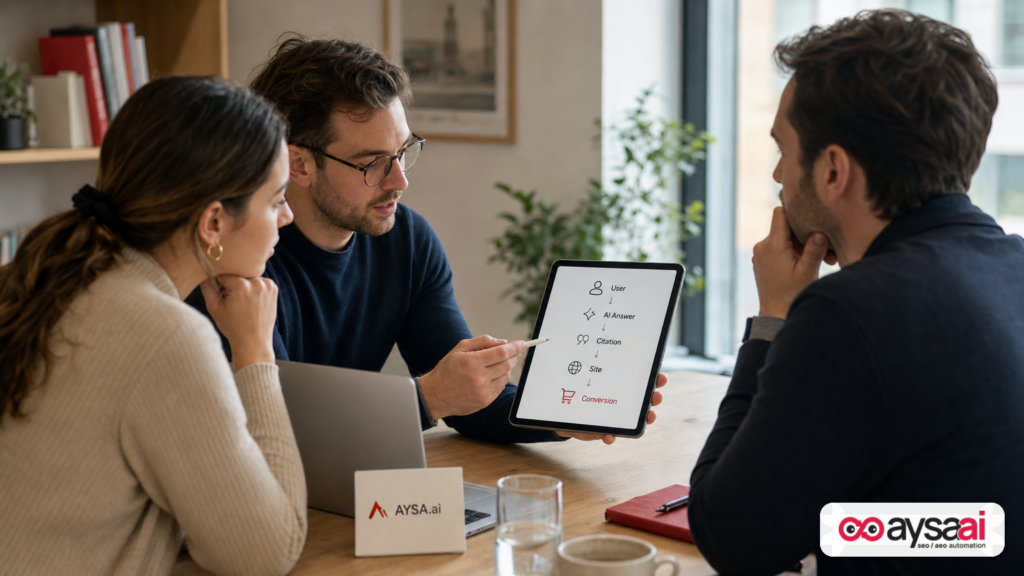
- AI Overviews can materially reduce organic clicks, and evidence discussed in industry coverage suggests the lost clicks aren’t obviously “lower quality.” Treat this as a real demand shift, not a bounce-filtering story.
- Core Web Vitals work often fails because teams optimize what they assume is LCP, while the browser is measuring something else. Confirm the measured element before you optimize.
- AI agents can’t act on content they can’t read. If pricing/features load in JavaScript or are hidden, agents may “answer anyway” using third-party sources—which can be wrong and harmful.
- Blocking agentic browsers blindly is a new self-inflicted visibility risk. Quality guidelines aren’t changing, but technical accessibility is now a competitive advantage.
- Execution is the bottleneck. You don’t need more alerts; you need a system to turn insights into approved, deployed fixes.
Table of contents

- The new reality: search visibility is shifting from rankings to “being usable by systems”
- 1) AI Overviews and the click squeeze: why “we only lost bad clicks” is a risky assumption
- 2) Measurement in the AI layer: what to track when the SERP keeps the user
- 3) Core Web Vitals: why many LCP fixes fail (and how to stop optimizing the wrong thing)
- 4) AI agents can’t buy what they can’t read: pricing pages, JavaScript, and third-party substitution
- 5) “Don’t blindly block agentic browsers”: access rules are now SEO strategy
- 6) Why Bing still matters (especially now)
- A concrete SME scenario: the local clinic that loses bookings to “helpful” AI answers
- What agencies should rethink: deliverables, reporting, and the new definition of “technical”
- The 60-day action plan: make your site measurable, readable, and reachable
- Where AYSA fits: monitoring → preparation → approval → execution
- What to do next (checklist)
- Sources and further reading
The new reality: search visibility is shifting from rankings to “being usable by systems”
For most of SEO’s history, the user journey was predictable:
- User searches
- Search engine lists blue links
- User clicks your page
- Your site persuades them to act
AI summaries, AI chat results, and agentic browsing introduce a new architecture:
- User searches
- An AI layer synthesizes an answer and decides what to cite (or whether to cite at all)
- An agent may attempt to navigate your site on the user’s behalf
- The user might click—or they might convert without ever visiting, or they might visit later with higher intent
In this world, your content has two audiences:
- Humans (who care about clarity, trust, and experience)
- Systems (that care about accessibility, renderability, structured interpretation, and reliable extraction)
This is why the most important question is no longer “what did Google rank?” It’s “what could the AI layer reliably use from our site?” If the system can’t parse your pricing, can’t load your main content fast enough, or can’t access your pages because you blocked the wrong user agent, it will route around you.
The SEO Pulse coverage at Search Engine Journal tied these themes together: AI Overview click loss and click quality; Core Web Vitals measurement pitfalls; agent failures on pricing pages; guidance not to blindly block agentic browsers; and a notable leadership transition at Bing. Read it as a single message: the plumbing matters now.
1) AI Overviews and the click squeeze: why “we only lost bad clicks” is a risky assumption
When a SERP starts answering the question directly, fewer people click. That’s not controversial. The controversy is the justification: that the clicks you lost were “low-value” clicks anyway.
Industry coverage highlighted research from a randomized field experiment that found a substantial drop in organic clicks when AI Overviews appear—and importantly, it reported no measurable difference in common “click quality” behaviors (like bouncing or returning to search) between clicks with summaries and clicks without summaries.
I’m not going to extend the study beyond what’s been reported, because we don’t have the full dataset here. But the business takeaway is still clear:
- Don’t assume click loss is harmless. If “extra” clicks (when summaries are removed) don’t behave worse, the argument that AI Overviews only remove junk traffic looks shaky.
- Informational queries are often top-of-funnel revenue. In many industries, the first informational touch is where trust starts. If you lose that touch, your brand can disappear from consideration—even if transactional queries are less affected.
- The new KPI is not just clicks; it’s outcomes. Fewer clicks may still be acceptable if assisted conversions hold. But you can’t know that without measurement discipline (we’ll cover it next).
What changed for SMEs (in plain language)
If you run a clinic, a local service business, an ecommerce brand, or a B2B SaaS company, you likely publish pages that answer questions like:
- “How much does X cost?”
- “What’s the best X for Y?”
- “How do I choose between X and Z?”
AI Overviews compress that learning into the SERP. If you’re cited, you may get fewer clicks but better-qualified visitors. If you’re not cited, you may get fewer clicks and less brand imprinting—and your competitor may be the “default answer.”
What businesses should do about AI Overview click loss
You don’t “optimize for more clicks” by chasing loopholes. You respond by engineering citation eligibility and brand preference:
- Make your page the easiest source to cite. Clear definitions, explicit numbers (when appropriate), concise summaries, and structured answers.
- Make your claims verifiable. If you cite your own methodology, policies, location details, pricing rules, or guarantees, write them in a way that can be extracted and checked.
- Win the “next step.” AI answers reduce curiosity clicks; they don’t eliminate the need to act. Build the best next action: appointment booking, quote request, comparison tool, demo scheduler, calculator, inventory view.
This is where AEO/GEO (Answer Engine Optimization / Generative Engine Optimization) is not a buzzword; it’s a change in distribution.
AYSA’s role: we focus on turning these requirements into a monitored, repeatable execution loop: see what’s changing, prepare fixes, get approval, and deploy. Start with AI search visibility and then connect it to monitoring so you’re not relying on vibes.
2) Measurement in the AI layer: what to track when the SERP keeps the user
The hardest part about AI search isn’t the model—it’s attribution. Classic SEO reporting assumes users click and then you measure on-site behavior. But AI search can:
- Answer without a click
- Send fewer clicks, but higher intent
- Send traffic via new referrers or embedded experiences
- Influence conversions later via brand preference rather than immediate sessions
So what do you do when clicks fall, leadership panics, and your “organic traffic” line is no longer the whole story?
Adopt a “visibility → usage → outcome” measurement model
At minimum, track three layers:
- Visibility: Are you being cited/mentioned in AI answers for your priority topics and locations?
- Usage: When you do receive visits, are users taking meaningful next steps (calls, form starts, add-to-cart, booking views)?
- Outcome: Are leads closing? Are bookings holding? Is revenue stable for the query clusters that matter?
Practical measurement moves (SME-friendly)
- Cluster your queries by intent: informational vs navigational vs transactional. Click loss concentrated in informational clusters changes your “top-of-funnel” math first.
- Stop reporting only sessions. Report assisted outcomes: branded search lift, direct traffic changes, email signups, phone calls, quote requests.
- Use controlled testing where possible. If you’re changing templates, content structures, or access rules, ship in stages so you can see cause and effect.
Even when you can’t run perfect experiments, you can avoid the biggest failure mode: making 15 changes at once and then arguing over what worked.
AYSA’s role: you want monitoring that detects shifts early and ties them to action. That’s why we position AYSA as an execution system, not just a reporting tool. Explore AYSA’s AI SEO tools and how they connect monitoring to deployable changes.
3) Core Web Vitals: why many LCP fixes fail (and how to stop optimizing the wrong thing)
Core Web Vitals debates can feel like theology: does speed “really” matter for rankings? does it “really” matter for conversions? Meanwhile, the practical problem is simpler: many teams don’t improve their scores because they optimize the wrong target.
The SEJ coverage highlighted a case study (published on web.dev) that showed how browsers can latch onto the wrong element as “Largest Contentful Paint” in template-driven storefronts. If the browser thinks a carousel tile or placeholder is the LCP, you can compress hero images for months and still not move the metric that’s actually being scored.
The business translation
- Performance work is measurement work. If you don’t know what’s being measured, you can’t improve it reliably.
- Templates and dynamic layouts create mismeasurement risk. The more your page depends on late-loading components, personalization, and client-side assembly, the more likely the “main content” arrives too late—or isn’t recognized as main content.
- Fixes that help humans can still fail the metric. Your page can feel fast to a person and still score poorly if the discovered LCP element is delayed.
A simple diagnostic workflow (before you touch images)
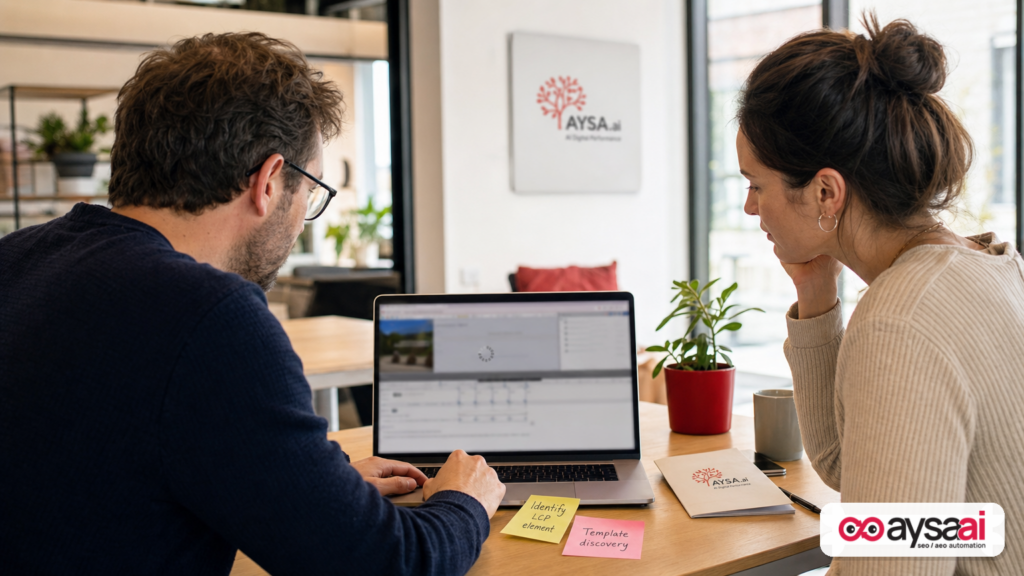
- Identify the LCP element on real pages (not just in staging) across device types and template variants.
- Confirm consistency: does the LCP element change between merchants, locations, or categories?
- Only then optimize: prioritize discovery (HTML order), preload hints (when appropriate), server response, and critical resources.
Why this matters more in the AI era
AI systems and agents prefer sources that are reliably accessible and fast. If your pages are fragile—slow to discover content, inconsistent in templates, hard to render—you’re not just risking a metric. You’re risking being excluded from the extractable, citeable set of pages.
If you need a broader educational baseline on Core Web Vitals, Google’s documentation and web.dev are the right primary references; SEJ’s point here is the operational nuance: verify the measured element before you optimize.
4) AI agents can’t buy what they can’t read: pricing pages, JavaScript, and third-party substitution
This is the part too many teams are underestimating.
Agents aren’t just summarizing—they’re trying to complete tasks: compare options, find pricing, extract plan limits, understand return policies, check availability, and sometimes initiate next steps.
SEJ reported on a Siteline experiment where an AI agent attempted to retrieve B2B software pricing across many vendor sites. When it encountered access errors or pricing it couldn’t read, it often pulled information from third-party sites instead. The core failure modes called out were:
- Pricing loaded via JavaScript that agents don’t render
- Key pricing hidden behind “contact sales” gates
Why this is a direct revenue risk (not an SEO nuance)
If an agent can’t read your pricing page, one of three things happens:
- It gives up and recommends a competitor with transparent pricing
- It guesses (worst case) or gives a vague answer that reduces intent
- It uses a third party that may be outdated, inaccurate, or framed against you
In any of those outcomes, you lost control of the buying narrative. Not because your product isn’t good—because your site wasn’t readable to the system making the shortlist.
What “agent-readable” actually means
For most SMEs, this isn’t about building an agent. It’s about ensuring your site works in a lowest-common-denominator mode:
- Critical facts in the initial HTML: prices, tiers, key inclusions/exclusions, service area, hours, policies.
- Text is extractable: avoid rendering critical details as images.
- Don’t hide the answer behind fragile UI: accordions are fine; “load pricing after 6 API calls” is not.
- Canonical, stable URLs for pricing, policies, and comparison pages.
How to handle “contact sales” without disappearing from AI discovery
Some businesses must gate pricing. Fine. But you still need to give the agent enough structure to represent you accurately:
- Publish starting prices or typical ranges with clear qualifiers
- Publish what changes the price (seats, locations, integrations, volume)
- Publish packaging rules (what’s included, what’s add-on)
If you don’t, you’re inviting the agent to fill the gap from elsewhere.
AYSA’s role: we help teams detect and fix “readability gaps” that impact AI visibility. If you’re not sure whether your key pages are extractable, start with AI search visibility, then use monitoring to track whether changes correlate with better inclusion and outcomes.
5) “Don’t blindly block agentic browsers”: access rules are now SEO strategy
John Mueller’s comments (as covered by SEJ) are a strong signal of where this is going: quality principles still apply because humans remain the end customer—but technical access is becoming a new best practice. In other words: you can do everything “right” content-wise and still lose if you block the wrong class of visitors.
Why teams block agents in the first place
Usually it’s one of these reasons:
- Cost: bot traffic drives bandwidth and infrastructure spend
- Fear: content scraping, competitive intelligence, model training
- Security: abuse patterns that look like automation
Those are real concerns. The mistake is treating “agentic browsers” as automatically hostile or non-valuable.
The strategic nuance: blocking vs controlling
In practice, you want a policy that distinguishes between:
- Abusive automation (rate-limited, blocked, challenged)
- Legitimate crawlers (search indexing and discovery)
- Legitimate agentic browsing (user-delegated tasks, accessibility-like behaviors)
It’s early, and the ecosystem will evolve, but the direction is clear: if users rely on agents to make decisions, businesses that are inaccessible to those agents will gradually disappear from the “consideration layer.”
Practical steps (without getting lost in bot policy wars)
- Audit robots.txt and WAF rules for unintended blocks that affect discovery.
- Monitor logs for new agent user agents and failure patterns (403, 429, timeouts).
- Prefer rate limiting and caching to broad blocking when possible.
- Protect sensitive endpoints (checkout, account) while keeping informational and commercial pages accessible.
This is “technical SEO,” but it’s also plain business distribution strategy: let the systems that represent users actually reach your content.
6) Why Bing still matters (especially now)
It’s easy to treat Bing as a rounding error because of consumer share. But Bing’s index has influence beyond bing.com, powering web results in AI products and experiences. SEJ also reported that Fabrice Canel, a longtime Bing search leader associated with crawling/indexing and IndexNow, is retiring.
I’m not going to speculate on what that means internally at Microsoft. But the business-level takeaway remains:
- Multi-engine visibility is now multi-product visibility. Your presence in one index can influence exposure in other AI surfaces.
- Technical fundamentals carry further. Clean crawling, stable canonicals, sensible sitemaps, and fast, readable pages matter across engines and AI layers.
If you’ve neglected Bing Webmaster considerations because “our customers use Google,” that assumption is increasingly incomplete. Visibility is being syndicated.
A concrete SME scenario: the local clinic that loses bookings to “helpful” AI answers
Let’s make this real.
Business: A multi-location physical therapy clinic.
Core revenue driver: New patient bookings from organic search.
What changes when AI summaries and agents become the front door
- A user searches “how long does PT take for knee pain” and gets an AI Overview. Fewer clicks happen.
- The AI Overview cites a general health site and a forum, not the clinic’s detailed guide.
- Another user asks “PT near me cost” and an agent tries to find pricing, but the clinic’s “pricing” page loads details via JavaScript and shows little in initial HTML.
- The agent pulls a price range from an outdated directory listing.
- The user never visits the clinic site. They call a competitor or decide it’s too expensive.
What the clinic should do (and why it’s not “more content”)
- Create extractable, clinic-specific answers for the questions AI summarizes: typical timelines, what changes them, insurance notes, and what to expect. Keep it precise and verifiable.
- Make “cost” readable in initial HTML: ranges, what affects price, and next step (verify benefits / consult).
- Strengthen local clarity: each location page should have consistent services, practitioner details (where appropriate), hours, policies, and booking steps.
- Monitor AI visibility and citations by location, not just “rankings.” The AI layer may cite one location’s page and ignore another if templates differ.
This is the new playbook: make the systems confident they can quote you correctly.
What agencies should rethink: deliverables, reporting, and the new definition of “technical”
If you run an agency, AI search is not just a new channel—it’s a new client expectation problem. Because “we maintained rankings” won’t satisfy a client whose leads dropped due to click compression, citation loss, or agent unreadability.
1) Reporting: move from rankings to decision coverage
Clients don’t buy rankings. They buy pipeline. Agencies should report:
- Priority topics and whether the brand is cited in AI answers
- Click and lead trends by intent cluster
- Technical accessibility issues that block agents and crawlers
2) Content: treat “extractability” as a first-class requirement
Great writing is necessary but insufficient. Agencies should add a new rubric:
- Can a system extract the direct answer?
- Is the answer explicitly stated (not implied)?
- Are constraints and exceptions described?
- Is there a citeable structure (headings, bullets, definitions)?
3) Technical: bot policy and rendering now impact revenue
Old technical SEO was “sitemaps, canonicals, speed.” New technical SEO also includes:
- Agent access and user-agent handling
- Server-side rendering decisions for critical commercial content
- Template consistency across locations/products
4) Execution: speed of shipping becomes the edge
The winners will be the teams that can ship changes safely and repeatedly. Which is exactly why we built AYSA around approved execution: monitor what’s happening, prepare the changes, route them for approval, and deploy without turning every fix into a multi-week ticket chain.
If that resonates, start at AYSA’s blog for implementation-minded guidance, then explore pricing when you’re ready to operationalize it.
The 60-day action plan: make your site measurable, readable, and reachable
Here’s a practical plan you can run without waiting for perfect certainty.
Days 1–10: establish baselines and failure points
- Baseline your most valuable query clusters (by intent) and map them to specific pages and conversion actions.
- List your “AI answer targets”: pricing, comparisons, return policies, shipping timelines, eligibility rules, service coverage, location availability.
- Audit accessibility for systems:
- Do pricing/features appear in initial HTML?
- Are key pages blocked or challenged by WAF rules?
- Are there template variations that might confuse LCP or extraction?
Days 11–30: fix the highest-risk extraction and access issues
- Make commercial facts readable without rendering (pricing, plan limits, availability, policies).
- Stabilize canonical sources for “truth pages” (pricing, returns, shipping, service areas, hours).
- Adjust bot policies carefully: avoid blanket blocking; use rate limiting and targeted protections.
Days 31–60: improve citeability and “next-step” conversion
- Rewrite key pages for answer extraction: add clear summaries, definitions, and structured sections.
- Strengthen trust signals: transparent policies, clear author/org context, updated timestamps where meaningful.
- Build the best next action: calculators, booking, quote flows, inventory visibility, demo flows—whatever is the natural continuation after the AI answer.
What can go wrong (and how to avoid it)
- Overreacting to click loss: cutting content investment because “SEO is dead.” Better move: reframe content to be citeable and conversion-adjacent.
- Speed theater: compressing images and chasing Lighthouse scores while LCP is measured on a different element. Better move: confirm measured LCP first.
- Blocking the future: aggressive anti-bot rules that block legitimate agentic browsing. Better move: targeted protections, monitor logs, iterate.
Where AYSA fits: monitoring → preparation → approval → execution
Most teams fail in the gap between knowing and doing.
You can read every post about AI Overviews, Core Web Vitals, and agentic browsing and still lose visibility because:
- Changes aren’t prioritized
- Ownership is unclear (marketing vs dev vs ops)
- Approvals take too long
- Fixes ship without measurement
AYSA is built to close that gap as an approved execution system:
- Monitors what’s happening across visibility and site health (Monitoring).
- Prepares recommended changes (content/technical) aligned to AI search visibility and business outcomes.
- Asks for approval so stakeholders control what ships.
- Executes accepted changes so fixes don’t die in a backlog.
If you’re evaluating how to operationalize AEO/GEO without adding more manual process, start with AI Search Visibility and then explore the broader toolkit at AI SEO Tools. When you want to move from ideas to implementation, review Pricing and our implementation-minded articles on the AYSA blog.
What to do next (checklist)
- Decide your “truth pages”: pricing, policies, comparisons, locations, availability. Make them stable, readable, and easy to cite.
- Verify LCP measurement on your top templates before investing in performance work.
- Audit your bot/access rules for accidental blocks and overzealous challenges on public pages.
- Move key facts into initial HTML (especially pricing and plan limits) or provide a clear, extractable range.
- Update reporting from “rankings + sessions” to “visibility/citations + outcomes.”
- Ship in stages so you can tell which changes moved which results.
Sources and further reading
- Search Engine Journal – SEO Pulse: Where Clicks Go, What Agents Skip, Who’s Leaving Bing
- Search Engine Journal – Latest search news (category page)
- Search Engine Journal – SEO coverage (category page)
- web.dev (Google) – performance and Core Web Vitals guidance
- Search Engine Journal – Google algorithm updates history (context)
Note: The SEJ Pulse references additional primary items (e.g., specific studies and threads) that are not included in the supplied research context here. Where those aren’t directly available, I’ve kept claims at the “reported by SEJ” level and focused on practical implications rather than adding unverifiable specifics.
Continue the AI search topic inside AYSA.
Use these pages to connect the article with AI SEO tools, AI visibility monitoring, AI Overviews and approved website execution.
Turn this topic into a website action plan.
Use these AYSA hubs to move from reading to technical fixes, AI visibility monitoring, research, glossary context and approval-first SEO execution.

