
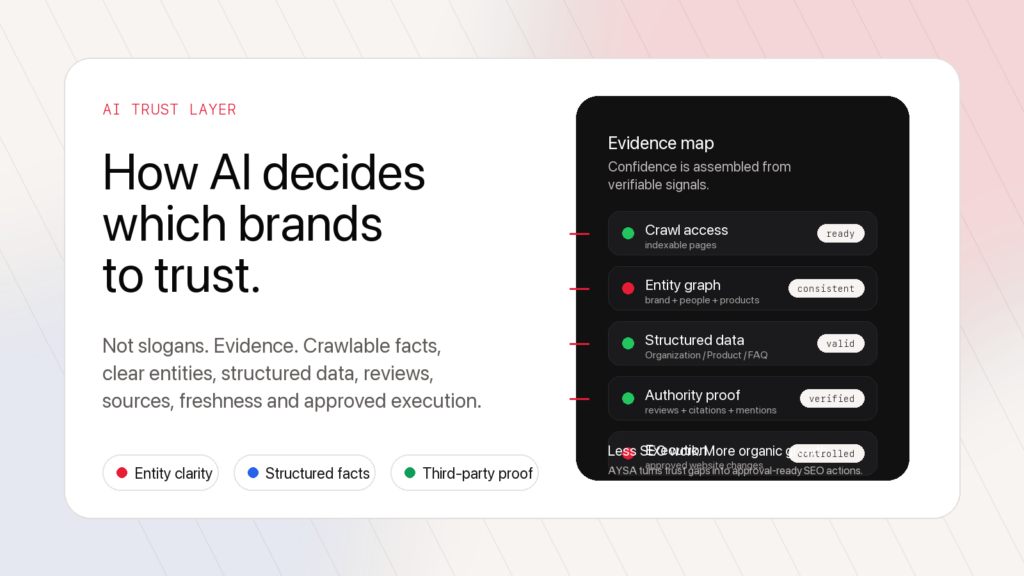
How AI Decides Which Brands To Trust: The New SEO Trust Layer
AI systems do not trust brands because of slogans. They build confidence from crawlable facts, entity clarity, structured data, source consistency, third-party proof and useful content.
AYSA SEO Magazine
AI systems do not trust brands because of slogans. They build confidence from crawlable facts, entity clarity, structured data, source consistency, third-party proof and useful content.
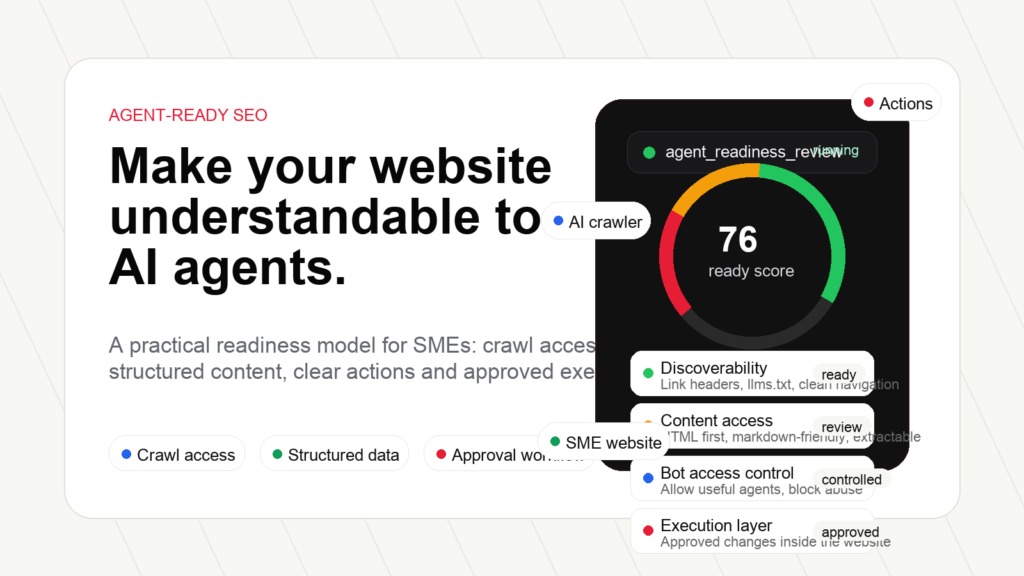
Cloudflare’s Agent Readiness Score is not a new ranking factor. It is a signal that websites now need to be understandable, controllable and useful for AI agents, crawlers and answer engines.
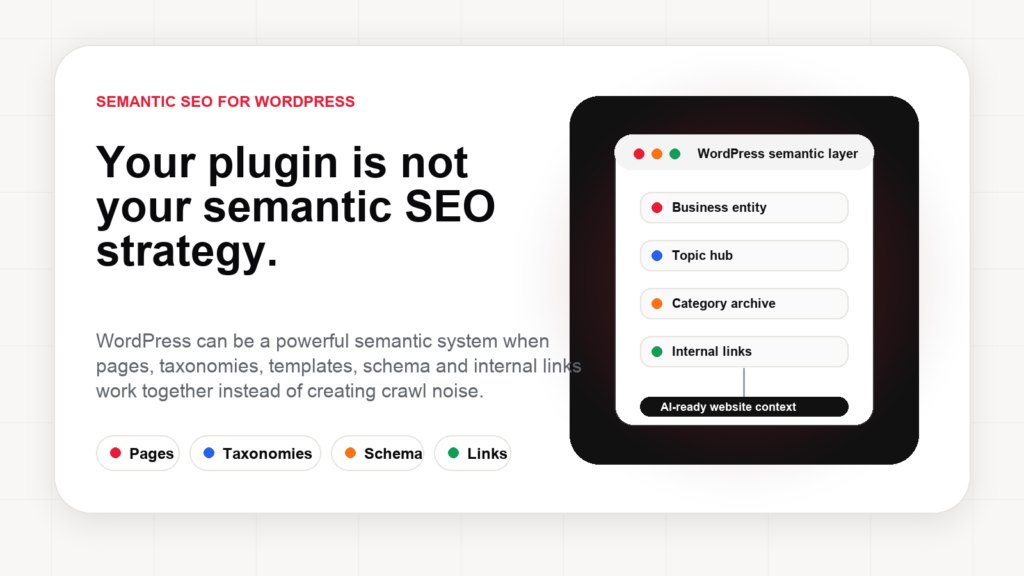
Semantic SEO for WordPress means turning pages, categories, tags, schema, internal links and business context into a coherent meaning system, not simply installing an SEO plugin.
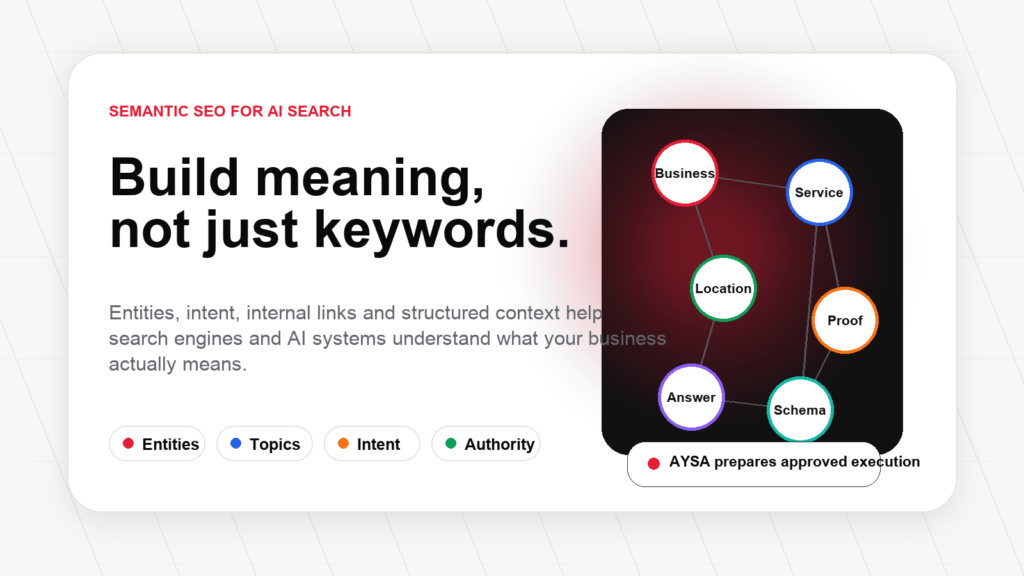
Semantic SEO is no longer a specialist trick. In the AI search era, it is how websites make entities, intent, expertise and relationships clear enough to be understood, cited and acted on.
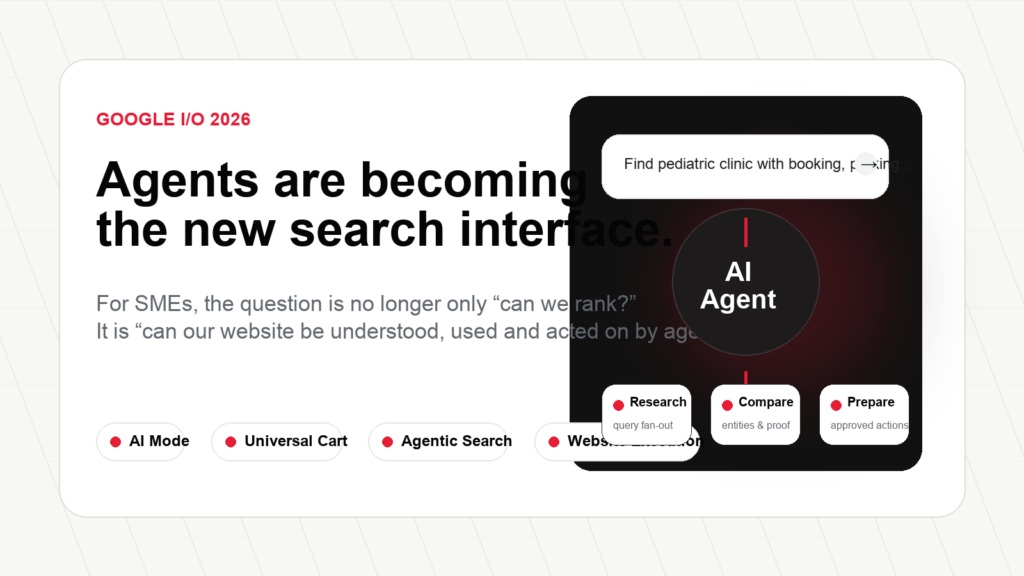
Google I/O 2026 did not end SEO. It confirmed something more practical: Search is becoming agentic, multimodal and task-oriented, which means websites must become easier for machines to understand, compare and act on.
Microsoft Clarity grounding queries add a new layer to AI search measurement: retrieval visibility behind AI citations.
A practical guide to AI SEO tools, from writing assistants and audits to AI visibility monitoring and approved website execution.
LLM guidance is not one universal SEO checklist. This article explains why AI search visibility requires platform-specific monitoring, experimentation and approved execution.
Google I/O 2026 did not kill SEO. It made the real risk clearer: query fan-out, AI Mode, information agents and generative interfaces can satisfy user demand before a website earns the visit.
A practical, modern explanation of SEO: how technical SEO, content, authority, AI search visibility and approved execution fit together for SMEs in 2026.
AYSA monitors your website, prepares the work, asks for approval, and executes approved changes inside your website.

A small robots.txt “quirk” can make Googlebot ignore the rules you thought protected you—especially during search box spam attacks. Here’s what changed, why it matters, and a practical…
Read articleAlphabet’s Q2 filings make Search revenue feel perfectly measurable. Google’s public statements about traffic to the open web…
Google’s AI & Economy report shows people use Gemini and AI Mode disproportionately for high-friction tasks—government paperwork, health,…
Google’s John Mueller clarified what Search Console’s “Validate Fix” actually does: it samples affected URLs and, if they…